Kirjojen hintavertailu. Mukana 11 244 527 kirjaa ja 12 kauppaa.

Kirjahaku

Etsi kirjoja tekijän nimen, kirjan nimen tai ISBN:n perusteella.

1000 tulosta hakusanalla Brian K. Grodsky

Costs of Justice

Costs of Justice

Brian K. Grodsky

University of Notre Dame Press
2011
nidottu
In The Costs of Justice, Brian K. Grodsky provides qualitative analyses of how transitional justice processes have evolved in diverse ways in postcommunist Poland, Croatia, Serbia, and Uzbekistan, by examining the decision-making processes and goals of those actors who contributed to key transitional justice policy decisions. Grodsky draws on extensive interviews with key political figures, human rights leaders, and representatives of various international, state, and nongovernmental bodies, as well as detailed analysis of international and local news reports, to offer a systematic and qualitatively compelling account of transitional justice from the perspective of activists who, at the end of a previous regime, were suddenly transformed from downtrodden victim to empowered judge. Grodsky challenges the argument that transitional justice in post-repressive states is largely a function of the relative power of new versus old elites. He maintains that a new regime's transitional justice policy is closely linked to its capacity to provide goods and services expected by constituents, not to political power struggles. In introducing this goods variable, so common to broad political analysis but largely overlooked in the transitional justice debate, Grodsky argues that we must revise our understanding of transitional justice. It is not an exceptional issue; it is but one of many political decisions faced by leaders in a transition state.
Costs of Justice

Costs of Justice

Brian K. Grodsky

UNIVERSITY OF NOTRE DAME PRESS
2022
sidottu
In The Costs of Justice, Brian K. Grodsky provides qualitative analyses of how transitional justice processes have evolved in diverse ways in postcommunist Poland, Croatia, Serbia, and Uzbekistan, by examining the decision-making processes and goals of those actors who contributed to key transitional justice policy decisions. Grodsky draws on extensive interviews with key political figures, human rights leaders, and representatives of various international, state, and nongovernmental bodies, as well as detailed analysis of international and local news reports, to offer a systematic and qualitatively compelling account of transitional justice from the perspective of activists who, at the end of a previous regime, were suddenly transformed from downtrodden victim to empowered judge. Grodsky challenges the argument that transitional justice in post-repressive states is largely a function of the relative power of new versus old elites. He maintains that a new regime's transitional justice policy is closely linked to its capacity to provide goods and services expected by constituents, not to political power struggles. In introducing this goods variable, so common to broad political analysis but largely overlooked in the transitional justice debate, Grodsky argues that we must revise our understanding of transitional justice. It is not an exceptional issue; it is but one of many political decisions faced by leaders in a transition state.
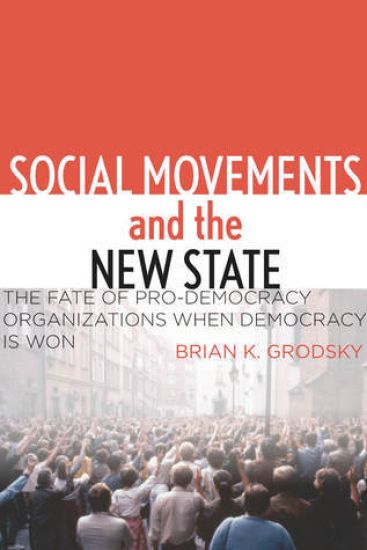
Social Movements and the New State

Social Movements and the New State

Brian K. Grodsky

Stanford University Press
2012
sidottu
The world's democracies cheered as the social movements of the Arab Spring ended the reigns of longstanding dictators and ushered in the possibility of democracy. Yet these unique transitions also fit into a broader pattern of democratic breakthroughs around the globe, where political leaders emerge from the pro-democracy movement that helped affect change. In Social Movements and the New State, Brian Grodsky examines the relationships between new political elites and the civil society organizations that brought them to power in three culturally and geographically disparate countries—Poland, South Africa, and Georgia. This book argues that the identities and personal networks developed during the struggle provide "movement activists" with opportunities to influence minor issues, but that new and differing institutional pressures create schisms on broader policy that can turn prior bonds into a liability rather than an asset. Drawing on media analyses and more than 150 elite interviews, Grodsky offers a rare empirical assessment of the degree to which social movement organizations shape activists' beliefs and actions over the long term.
Social Movements and the New State

Social Movements and the New State

Brian K. Grodsky

Stanford University Press
2012
pokkari
The world's democracies cheered as the social movements of the Arab Spring ended the reigns of longstanding dictators and ushered in the possibility of democracy. Yet these unique transitions also fit into a broader pattern of democratic breakthroughs around the globe, where political leaders emerge from the pro-democracy movement that helped affect change. In Social Movements and the New State, Brian Grodsky examines the relationships between new political elites and the civil society organizations that brought them to power in three culturally and geographically disparate countries—Poland, South Africa, and Georgia. This book argues that the identities and personal networks developed during the struggle provide "movement activists" with opportunities to influence minor issues, but that new and differing institutional pressures create schisms on broader policy that can turn prior bonds into a liability rather than an asset. Drawing on media analyses and more than 150 elite interviews, Grodsky offers a rare empirical assessment of the degree to which social movement organizations shape activists' beliefs and actions over the long term.
The Democratization Disconnect

The Democratization Disconnect

Brian K. Grodsky

Rowman Littlefield
2016
sidottu
The most recent wave of democratic revolutions has convinced many in the West of the triumph of political rights. But in this provocative book, Brian Grodsky argues forcefully that nothing could be further from the truth. Today’s revolutionaries—both democratic and non-democratic—are much like those who preceded them throughout history. They’ve all come into power promising enhanced political, but especially economic, rights: higher wages, better living standards, more security. The difference between today’s pro-democracy leaders and yesterday’s non-democratic ones, the author demonstrates, rests on the perceived international legitimacy of the democratic template. Now, when even the most abusive regimes feel the need to label themselves democracies, opponents delegitimize rulers by calling them undemocratic. This sets the stage for what Grodsky calls the “democratization disconnect.” Leaders and followers fight for political change not as an end, but as the most acceptable means to attain economic rights. But by selling democracy as a panacea for the ills of the preceding regime, new elites simultaneously cheapen the notion of democracy and, by creating unrealistic popular expectations, set it up for failure. Putting a fresh new spin on hotly debated current events, this clear-eyed and informed book will be essential reading for all politically engaged readers.
The Democracy Disadvantage

The Democracy Disadvantage

Brian K. Grodsky

BLOOMSBURY PUBLISHING PLC
2024
sidottu
Populists are conventionally maligned as impediments to effective policymaking. They tend to undermine state institutions, exercise personalistic rule, and offer simplistic solutions to complex societal problems. But is populism always a hindrance to good governance? In this book, Brian Grodsky argues that the interplay between populism and regime type can upend expected levels of political responsiveness based on regime considerations alone. The result can be a reversal of the so-called “democratic advantage,” according to which public accountability in democratic regimes drives action beyond what is typically expected under authoritarianism. Grodsky explores the government policy response to the COVID19 pandemic in three populist states: the United States (a democracy); China (a non-democracy); and Russia (a hybrid regime). This insightful, exploratory analysis is essential reading for students and scholars of comparative politics, populism, and disaster management.
The Democracy Disadvantage

The Democracy Disadvantage

Brian K. Grodsky

BLOOMSBURY PUBLISHING PLC
2024
nidottu
Populists are conventionally maligned as impediments to effective policymaking. They tend to undermine state institutions, exercise personalistic rule, and offer simplistic solutions to complex societal problems. But is populism always a hindrance to good governance? In this book, Brian Grodsky argues that the interplay between populism and regime type can upend expected levels of political responsiveness based on regime considerations alone. The result can be a reversal of the so-called “democratic advantage,” according to which public accountability in democratic regimes drives action beyond what is typically expected under authoritarianism. Grodsky explores the government policy response to the COVID19 pandemic in three populist states: the United States (a democracy); China (a non-democracy); and Russia (a hybrid regime). This insightful, exploratory analysis is essential reading for students and scholars of comparative politics, populism, and disaster management.
Cooking with Author Chef (Not Iron Chef) Brian K. Larson
Come cook with Author-Chef (not Iron-Chef) Brian K. Larson. Yes, that's right, I'm not an Iron Chef, just an ordinary author that cooks for their family. You'll find easy to make, kid friendly, healthy recipes that your entire family will enjoy. This cookbook comes complete with instructions and photos from prep to rest. It's about my cooking journey and my unique challenges. From great successes to major failures, warts n'all, I'll lay it all out on the line with a bit of levity added to liven it up. These are so easy and economic, even your kiddos will enjoy helping and cooking with you. Try it out today and grab yours, now.
Bones and Cartilage

Bones and Cartilage

Brian K. Hall

Academic Press Inc
2015
sidottu
Bones and Cartilage provides the most in-depth review and synthesis assembled on the topic, across all vertebrates. It examines the function, development and evolution of bone and cartilage as tissues, organs and skeletal systems. It describes how bone and cartilage develop in embryos and are maintained in adults, how bone is repaired when we break a leg, or regenerates when a newt grows a new limb, or a lizard a new tail. The second edition of Bones and Cartilage includes the most recent knowledge of molecular, cellular, developmental and evolutionary processes, which are integrated to outline a unified discipline of developmental and evolutionary skeletal biology. Additionally, coverage includes how the molecular and cellular aspects of bones and cartilage differ in different skeletal systems and across species, along with the latest studies and hypotheses of relationships between skeletal cells and the most recent information on coupling between osteocytes and osteoclasts All chapters have been revised and updated to include the latest research.
Classifying the Universe

Classifying the Universe

Brian K. Smith

Oxford University Press Inc
1994
nidottu
This is a comprehensive examination of the `varna' system - a classificatory scheme laid out in the classical Hindu Vedic literature and thought to underlie the concept of caste, which continues to exert a powerful and pervasive influence over Indian life.
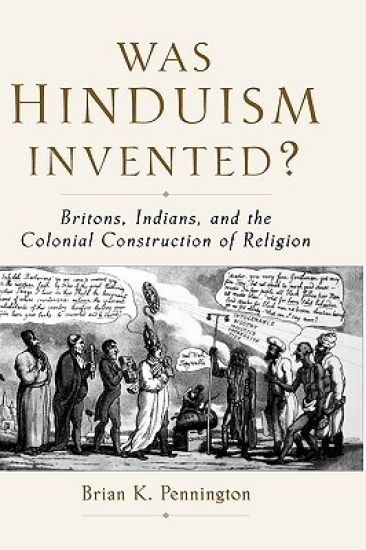
Was Hinduism Invented?

Was Hinduism Invented?

Brian K. Pennington

Oxford University Press Inc
2005
sidottu
The appearance of "religion" as a category describing a set of practices and beliefs allegedly an aspect of all cultures dates only from the modern period, emerging as Europe expanded trade abroad and established its first colonial relations in the 17th and 18th centuries. The invention of Hinduism can be seen in the encounter between modernity's greatest colonial power, Britain, and the jewel of her imperial crown, India. This encounter was deeply shaded by the articulation and development of the concept of "religion," and it produced the now common idea that Hinduism is a religion. The Bengal Presidency, home of Calcutta - the capital of colonial India and center of economic gravity in the eastern hemisphere - emerged as the locus of ongoing and direct contact between Indians and colonial officials, journalists, and missionaries. Drawing on a large body of previously untapped literature, including documents from the Church Missionary Society and Bengali newspapers, Brian Pennington offers a fascinating portrait of the process by which "Hinduism" came into being. He argues against the common idea that the modern construction of religion in colonial India was simply a fabrication of Western Orientalists and missionaries. Rather, he says, it involved the active agency and engagement of Indian authors as well, who interacted, argued, and responded to British authors over key religious issues such as image-worship, sati, tolerance, and conversion. Pennington retells the story of Christians' and Hindus' reception of each other in the early 19th century in a way that takes seriously the power of their religious worldviews to shape the encounter itself and help to produce the very religions that colonialism thought it "discovered." While post-colonial theory can illuminate issues of power and domination, he demonstrates, history of religions reminds us of the continuing importance of the sacred and spiritual dimensions of the peoples under colonial rule.
Was Hinduism Invented?

Was Hinduism Invented?

Brian K. Pennington

Oxford University Press Inc
2007
nidottu
Drawing on a large body of previously untapped literature, including documents from the Church Missionary Society and Bengali newspapers, Brian Pennington offers a fascinating portrait of the process by which "Hinduism" came into being. He argues against the common idea that the modern construction of religion in colonial India was simply a fabrication of Western Orientalists and missionaries. Rather, he says, it involved the active agency and engagement of Indian authors as well, who interacted, argued, and responded to British authors over key religious issues such as image-worship, sati, tolerance, and conversion.
Adolescents and War

Adolescents and War

Brian K Barber

Oxford University Press Inc
2009
sidottu
Hundreds of thousands of children are forced or legally recruited combatants in no fewer than 70 warring parties across the world. In addition to these child soldiers, thousands of youth voluntarily participate in politically related conflict. Why, how, and in what capacities are such large numbers of teenagers involved in war and how are they affected? Adolescents and War brings together world experts in an evidence-based volume to thoroughly understand and document the intricacies of youth who have had substantial involvement in political violence. Contributors argue that the assumption that youth are automatically debilitated by the violence they experience is much too simplistic: effective care for youth must include an awareness of their motives and beliefs, the roles they played in the conflict, their relationships with others, and the opportunities available to them after their experiences with war. The book suggests that the meaning youth make of a conflict may protect them from mental harm. For example, Palestinian teens who were actively engaged in the first Intifada have fared better than Bosnian teens who were virtual sitting ducks to the sniper and grenade launches of the hidden forces during the siege of Sarajevo. Covering youth involvement in conflicts in Afghanistan, Angola, Sierra Leone, Mozambique, Northern Ireland, Israel/Palestine, and Bosnia, the volume will be of interest to psychologists, sociologists, and political scientists and should be adopted for courses in social psychology, crisis intervention, and international conflict.
Hybrid Phonons in Nanostructures

Hybrid Phonons in Nanostructures

Brian K. Ridley

Oxford University Press
2017
sidottu
The book provides a technical account of the basic physics of nanostructures, which are the foundation of the hardware found in all manner of computers. It will be of interest to semiconductor physicists and electronic engineers and advanced research students. Crystalline nanostructures have special properties associated with electrons and lattice vibrations and their interaction. The result of spatial confinement of electrons is indicated in the nomenclature of nanostructures: quantum wells, quantum wires, quantum dots. Confinement also has a profound effect on lattice vibrations. The documentation of the confinement of acoustic modes goes back to Lord Rayleigh's work in the late nineteenth century, but no such documentation exists for optical modes. It is only comparatively recently that any theory of the elastic properties of optical modes exists, and a comprehensive account is given in this book. A model of the lattice dynamics of the diamond lattice is given that reveals the quantitative distinction between acoustic and optical modes and the difference of connection rules that must apply at an interface. The presence of interfaces in nanostructures forces the hybridization of longitudinally and transversely polarized modes, along with, in polar material, electromagnetic modes. Hybrid acoustic and optical modes are described, with an emphasis on polar-optical phonons and their interaction with electrons. Scattering rates in single heterostructures, quantum wells and quantum wires are described and the anharmonic interaction in quantum dots discussed. A description is given of the effects of dynamic screening of hybrid polar modes and the production of hot phonons.
Quantum Processes in Semiconductors

Quantum Processes in Semiconductors

Brian K. Ridley

Oxford University Press
2013
sidottu
This book sets out the fundamental quantum processes that are important in the physics and technology of semiconductors in a relatively informal style that graduate students will find very attractive. The fifth edition includes new chapters that expand the coverage of semiconductor physics relevant to its accompanying technology. One of the problems encountered in high-power transistors is the excessive production of phonons and the first new chapter examines the hot-phonon phenomenon and the lifetime of polar optical phonons in the nitrides. In the burgeoning field of spintronics a crucial parameter is the lifetime of a spin-polarised electron gas, and this is treated in detail in the second of the new chapters. The third new chapter moves from the treatment of bulk properties to the unavoidable effects of the spatial limitation of the semiconductor, and to the influence of surface states and the pinning of the Fermi level. As with previous editions the text restricts its attention to bulk semiconductors. The account progresses from quantum processes describable by density matrices, through the semi-classical Boltzmann equation and its solutions, to the drift-diffusion description of space-charge waves, the latter appearing in the contexts of negative differential resistance, acoustoelectric and recombination instabilities. Besides being a useful reference for workers in the field, this book will be a valuable text for graduate courses.
Quantum Processes in Semiconductors

Quantum Processes in Semiconductors

Brian K. Ridley

Oxford University Press
2013
nidottu
This book sets out the fundamental quantum processes that are important in the physics and technology of semiconductors in a relatively informal style that graduate students will find very attractive. The fifth edition includes new chapters that expand the coverage of semiconductor physics relevant to its accompanying technology. One of the problems encountered in high-power transistors is the excessive production of phonons and the first new chapter examines the hot-phonon phenomenon and the lifetime of polar optical phonons in the nitrides. In the burgeoning field of spintronics a crucial parameter is the lifetime of a spin-polarised electron gas, and this is treated in detail in the second of the new chapters. The third new chapter moves from the treatment of bulk properties to the unavoidable effects of the spatial limitation of the semiconductor, and to the influence of surface states and the pinning of the Fermi level. As with previous editions the text restricts its attention to bulk semiconductors. The account progresses from quantum processes describable by density matrices, through the semi-classical Boltzmann equation and its solutions, to the drift-diffusion description of space-charge waves, the latter appearing in the contexts of negative differential resistance, acoustoelectric and recombination instabilities. Besides being a useful reference for workers in the field, this book will be a valuable text for graduate courses.
Refining Sound

Refining Sound

Brian K. Shepard

Oxford University Press Inc
2013
sidottu
Refining Sound is a practical roadmap to the complexities of creating sounds on modern synthesizers. As author, veteran synthesizer instructor Brian K. Shepard draws on his years of experience in synthesizer pedagogy in order to peel back the often-mysterious layers of sound synthesis one-by-one. The result is a book which allows readers to familiarize themselves with each individual step in the synthesis process, in turn empowering them in their own creative or experimental work. The book follows the stages of synthesis in chronological progression, starting readers at the raw materials of sound creation and ultimately bringing them to the final "polishing" stage. Each chapter focuses on a particular aspect of the synthesis process, culminating in a last chapter that brings everything together as the reader creates his/her own complex sounds. Throughout the text, the material is supported by copious examples and illustrations as well as by audio files and synthesis demonstrations on a related companion website. Each chapter contains easily digestible guided projects (entitled "Your Turn" sections) that focus on the topics of the corresponding chapter. In addition to this, one complete project will be carried through each chapter of the book cumulatively, allowing the reader to follow - and build - a sound from start to finish. The final chapter includes several sound creation projects in which readers are given types of sound to create as well as some suggestions and tips, with final outcomes is left to readers' own creativity. Perhaps the most difficult aspect of learning to create sounds on a synthesizer is to understand exactly what each synthesizer component does independent of the synthesizer's numerous other components. Not only does this book thoroughly illustrate and explain these individual components, but it also offers numerous practical demonstrations and exercises that allow the reader to experiment with and understand these elements without the distraction of the other controls and modifiers. Refining Sound is essential for all electronic musicians from amateur to professional levels of accomplishment, students, teachers, libraries, and anyone interested in creating sounds on a synthesizer.
Refining Sound

Refining Sound

Brian K. Shepard

Oxford University Press Inc
2013
nidottu
Refining Sound is a practical roadmap to the complexities of creating sounds on modern synthesizers. As author, veteran synthesizer instructor Brian K. Shepard draws on his years of experience in synthesizer pedagogy in order to peel back the often-mysterious layers of sound synthesis one-by-one. The result is a book which allows readers to familiarize themselves with each individual step in the synthesis process, in turn empowering them in their own creative or experimental work. The book follows the stages of synthesis in chronological progression, starting readers at the raw materials of sound creation and ultimately bringing them to the final "polishing" stage. Each chapter focuses on a particular aspect of the synthesis process, culminating in a last chapter that brings everything together as the reader creates his/her own complex sounds. Throughout the text, the material is supported by copious examples and illustrations as well as by audio files and synthesis demonstrations on a related companion website. Each chapter contains easily digestible guided projects (entitled "Your Turn" sections) that focus on the topics of the corresponding chapter. In addition to this, one complete project will be carried through each chapter of the book cumulatively, allowing the reader to follow - and build - a sound from start to finish. The final chapter includes several sound creation projects in which readers are given types of sound to create as well as some suggestions and tips, with final outcomes is left to readers' own creativity. Perhaps the most difficult aspect of learning to create sounds on a synthesizer is to understand exactly what each synthesizer component does independent of the synthesizer's numerous other components. Not only does this book thoroughly illustrate and explain these individual components, but it also offers numerous practical demonstrations and exercises that allow the reader to experiment with and understand these elements without the distraction of the other controls and modifiers. Refining Sound is essential for all electronic musicians from amateur to professional levels of accomplishment, students, teachers, libraries, and anyone interested in creating sounds on a synthesizer.
Extraordinary Circumstances

Extraordinary Circumstances

Brian K. Burton

Indiana University Press
2010
pokkari
The first campaign in the Civil War in which Robert E. Lee led the Army of Northern Virginia, the Seven Days Battles were fought southeast of the Confederate capital of Richmond in the summer of 1862. Lee and his fellow officers, including "Stonewall" Jackson, James Longstreet, A. P. Hill, and D. H. Hill, pushed George B. McClellan's Army of the Potomac from the gates of Richmond to the James River, where the Union forces reached safety. Along the way, Lee lost several opportunities to harm McClellan. The Seven Days have been the subject of numerous historical treatments, but none more detailed and engaging than Brian K. Burton's retelling of the campaign that lifted Southern spirits, began Lee's ascent to fame, and almost prompted European recognition of the Confederacy.
One Heart and So Many Stones

One Heart and So Many Stones

Brian K. Barber

St Martin's Press
2008
sidottu
Through their own voices, this book tells the story of the Palestinian adolescents of Intifada on the frontline of the struggle against Israeli occupation. A unique group of youth talk of their motivations for joining and the complex emotions they felt during battles. They are surprisingly well adjusted, though their experiences are extraordinary.