Kirjahaku
Etsi kirjoja tekijän nimen, kirjan nimen tai ISBN:n perusteella.
1000 tulosta hakusanalla Brian Lee Wilson

Brian Lee Cathey Champion: Memory Jar Book
Tracy Renee Lee
Createspace Independent Publishing Platform
2016
nidottu
This book contains family pictures and the fondest memories as written at the funeral and visitation services for Mr. Brian Champion by his friends and family at Queen City Funeral Home.

Jake's Mountain Road: The Murder of Jeni Gray, the Kidnapping of Leigh Cooper and the Trial of Daniel Brian Lee
Wayne Clawson
Createspace Independent Publishing Platform
2018
nidottu
A heinous crime. A genuine heroine. A quest for justice. The defendant, ladies and gentlemen of the jury, led his victim down that old Jake's Mountain Road and into the valley of the shadow of death. Then he came out alone; he left her there. And now, your path is clear. It is the time to be strong. The State is obliged to ask you to cast out from the living this Daniel Brian Lee, for it was he who dared to pluck the very flower of humanity -Thomas Rusher, District Attorney for the State of North Carolina You must now be aware, ladies and gentlemen of the jury, that a weakness in the wall of a minute blood vessel in the defendant's brain set in motion a sequence of events that led to unbelievable human tragedy. You now know the dispensing of justice is not simple and sometimes requires an awesome measure of intelligence, maturity, and compassion. You also know that to execute a brain damaged person is to demean this State and this nation. Has our great State come to that? Have we come to that? -Chester Whittle, Defense Attorney for Daniel Brian Lee

Brian Lee's study of American fiction from 1865 to 1940 draws on a wealth of material by, amongst others, Twain, James, Dreiser, Hemingway, Fitzgerald and Faulkner. Though the works of these writers have been closely scrutinised by postwar critics in Europe and America, few attempts have yet been made to utilise the new critical approaches and theories in the service of literary history. Brian Lee does so in this book, relating the writers of the period - both major and minor - to its patterns of immense economic, social and intellectual change.

Before the Industrial Revolution Cardiff was a sleepy little town on the South Wales coast. That was until mules started arriving laden with coal from the Welsh valleys. The Industrial Revolution took hold, the coal and iron trade took off and a vast complex of docks spread rapidly around the town's natural harbour. The Glamorganshire Canal was built to transport the iron and coal, the railway arrived, and by the late nineteenth century Cardiff had become the largest coal-exporting port in the world.Ships sailed in and out of the harbour from all over the globe. Large numbers of migrant workers were attracted to the area creating the vibrant multi-national community of Butetown. but the decline in the coal and iron industries after the Second World War sounded the death knell for Cardiff's Docklands. By the 1960s Tiger Bay had become a scene of dereliction and with a final sweep of the bulldozers a whole way of life disappeared.Brian Lee tells the fascinating story of this exciting period in Cardiff's history, illustrated with his selection of more than 200 remarkable photographs which capture the spirit of the era: huge new docks opening, cargoes swinging from ship to shore, warehouses filled to overflowing, streets and pubs a flurry of activity, royal visits and carnivals, and a multitude of different vessels.

Cardiff author Brian Lee is well known to Cardiffians through his many best-selling local history books and his popular weekly 'Cardiff Remembered' column in the Cardiff Post. His latest book inlcudes a brand new selection of fascinating photographs that his many readers will enjoy.
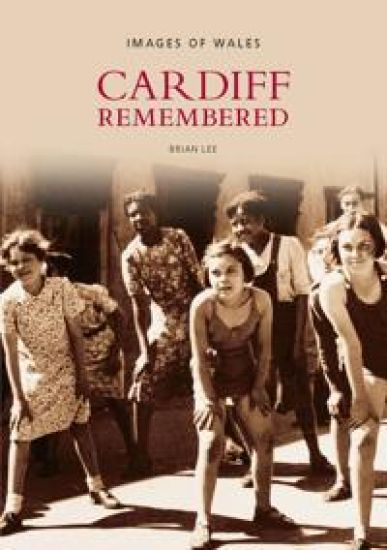
Cardiff Remembered
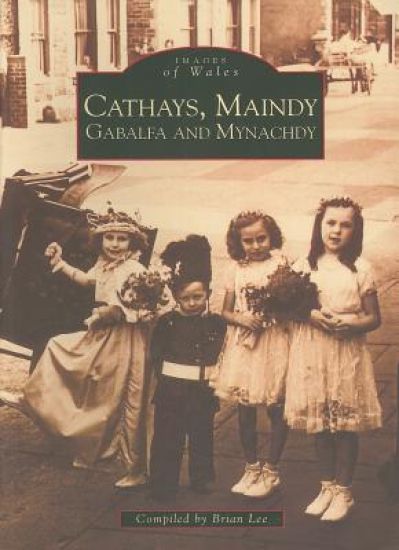
A history of Cathays, Maindy, Gabalfa and Mynachdy

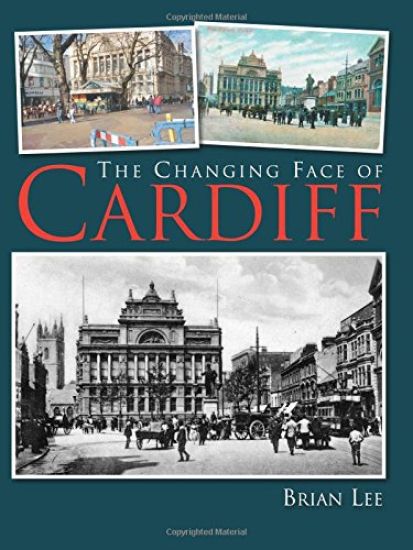
A history of central Cardiff
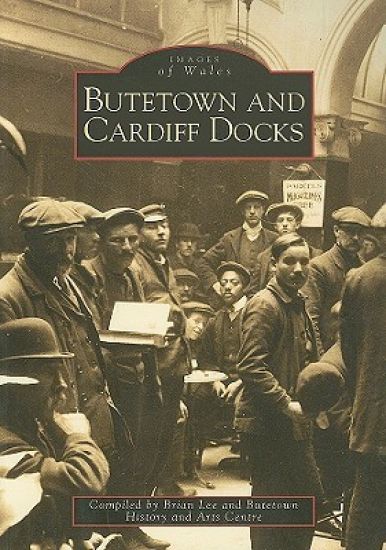
This fascinating collection of 200 photographs tells the story of Cardiff's disappearing docklands, known throughout the world as 'Tiger Bay'. It illustrates the history of the docks and the associated residential area of Butetown with its eclectic mix of nationalities and cultures; a fact highlighted by a researcher in the 1950s, who counted fifty-seven different nationalities residing in the area. The reader will encounter street scenes, with buildings that are long gone, demolished to make way for what is now knows as the Cardiff Bay Millennium Waterfront. The book provides glimpses of the metamorphosis of the docks from a small harbour to become the heart of a coal exportation and a centre from production. It will provide older residents of the area with a nostalgic look at the recent past and new residents with a view of what life was really like for those who lived in Tiger Bay. This endearing collection, selected mainly from the Butetown History and Arts Centre archives, provides an unparalleled insight into Butetown and Cardiff Docks and introduces the reader to some of the personalities that inhabited Butetown. In this selection , the authors bring alive the sights and scenes of Butetown to portray the area's rich historical heritage.
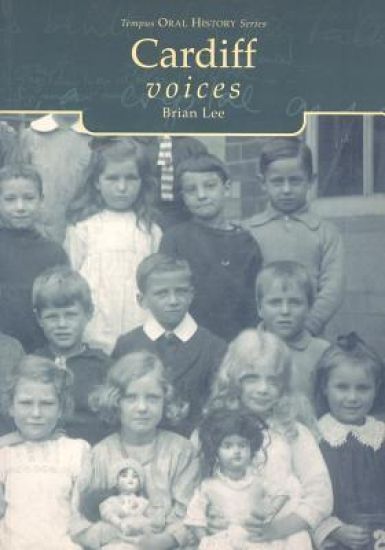
THROUGH the reminiscences of local people, accompanied by around 100 photographs, this volume remembers the Cardiff of yesteryear. From the town as it was in the 1920s and ’30s to the city it became in 1955 and beyond, stories and memories from the local community are recorded here, providing a lasting memorial to Cardiff’s history. Taking in personal and public life, it offers a social history of the neighbouring communities that now form the city and, with great good humour and affection, the reminiscences preserve the memory of people and places long forgotten. In their own words Cardiff people tell us about the way that they have lived their lives and the conditions in which they have lived through over the past one hundred years. This excellent volume of memories and photographs paints a revealing picture of life in Cardiff over the past century, revealing a period of immense change that will fascinate readers both young and old. Also by Brian Lee in the Archive Photographs Series: Cardiff remembered, Cathays Maindy Gabalfa and Mynachdy, Central Cardiff, Central Cardiff: the Second Selection and Butetown and Cardiff Docks.

This book is part of the Images of Wales series, which uses old photographs and archived images to show the history of various local areas in Wales, through their streets, shops, pubs, and people.

A history of Cathays, Maindy, Gabalfa and Mynachdy
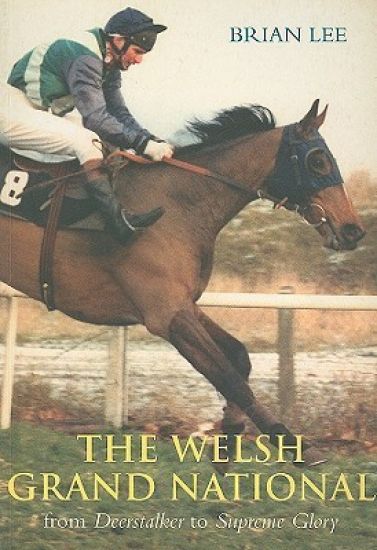
A history of the Welsh Grand National
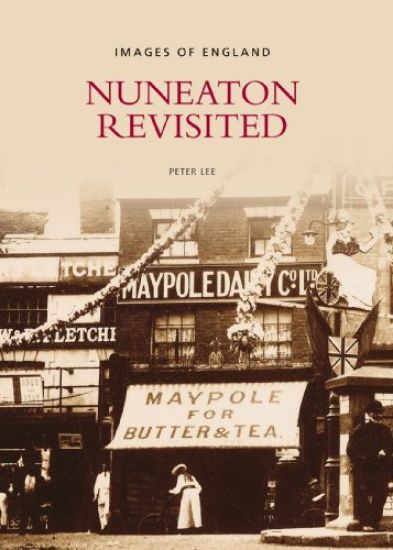
A collection of images and captions.

Brian Lee's study of American fiction from 1865 to 1940 draws on a wealth of material by, amongst others, Twain, James, Dreiser, Hemingway, Fitzgerald and Faulkner. Though the works of these writers have been closely scrutinised by postwar critics in Europe and America, few attempts have yet been made to utilise the new critical approaches and theories in the service of literary history. Brian Lee does so in this book, relating the writers of the period - both major and minor - to its patterns of immense economic, social and intellectual change.

T. S. Eliot’s literary criticism is often described as ‘the criticism of a poet’. Mr Lee asks what happens if we take that description seriously and read the criticism as if it was as much the expression of the man, it its way, as the poetry; continuous with the poetry and the preoccupations of the poetry. This essay in interpretation is an attempt to follow out such a programme and to account for the contradictions and seemingly discrepant utterances that Eliot himself left unexplained. The opening chapter offers an outline of Eliot’s main ‘theories’ and the connection between them, and subsequent chapters deal with critical approaches to Eliot; ‘Tradition and the Individual Talent’ and impersonality; Eliot’s ideas on personality; and the relation between individual personality and society.