Kirjojen hintavertailu. Mukana 11 244 527 kirjaa ja 12 kauppaa.

Kirjahaku

Etsi kirjoja tekijän nimen, kirjan nimen tai ISBN:n perusteella.

1000 tulosta hakusanalla Brian M Clarke

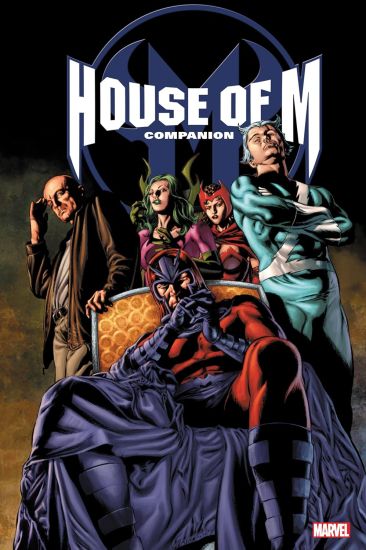
House of M Omnibus Companion

House of M Omnibus Companion

Chris Claremont; Brian Michael Bendis; Aaron Lopresti

MARVEL COMICS
2024
sidottu
Return to the world of HOUSE OF M, where mutants rule and familiar heroes lead new, unfamiliar lives In a prelude to the event, Professor X and Magneto struggle to help the Scarlet Witch...and in the aftermath, the New Avengers face an unimaginably powerful new threat Then, the House of M's history is revealed as the fugitive Luke Cage assembles the band of rebels who will come to be called the Avengers But how exactly did Magneto conquer Earth? And which human villains will the Hood recruit as his Masters of Evil? Plus: On Doctor Doom's Battleworld, the House of Magnus is a house divided Collecting EXCALIBUR (2004) #8-14, NEW AVENGERS (2004) #16-20, HOUSE OF M: AVENGERS #1-5, CIVIL WAR: HOUSE OF M #1-5, HOUSE OF M: MASTERS OF EVIL #1-4, WHAT IF? SPIDER-MAN: HOUSE OF M, HOUSE OF M (2015) #1-4 and material from WHAT IF? HOUSE OF M.
Natural Dualities for the Working Algebraist

Natural Dualities for the Working Algebraist

David M. Clark; Brian A. Davey

Cambridge University Press
1998
sidottu
The theory of natural dualities, as presented in this text, is broad enough to encompass many known dualities through a rich assortment of substantive theorems, yet concrete enough to be used to generate an array of previously undiscovered dualities. This text will serve as a user manual for algebraists, for category theorists and for those who use algebra in their work, particularly mathematicians and computer scientists interested in non-classical logics. It will also give the specialist a complete account of the foundations, leading to the research frontier of this rapidly developing field. As the first text devoted to the theory of Natural Dualities, it provides an efficient path through a large body of results, examples and applications in this subject which is otherwise available only in scattered research papers. To enable the book to be used in courses, each chapter ends with an extensive exercise set. Several fundamental unsolved problems are included.
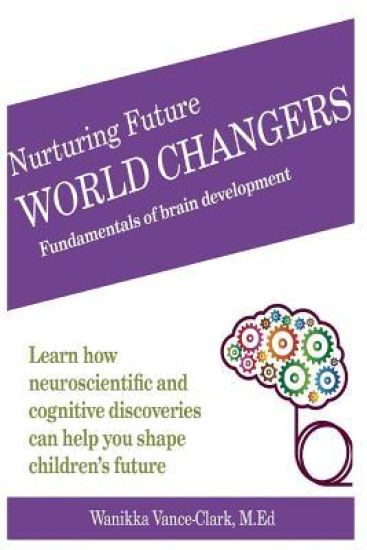
Nurturing Future World Changers: Fundamentals of Brain Development

Nurturing Future World Changers: Fundamentals of Brain Development

M. Ed Wanikka Vance-Clark

Createspace Independent Publishing Platform
2018
nidottu
What if we could help children prepare for the future? What if we can impact them with our actions to be able to learn better and ultimately succeed in life? Many have thought about this possibility in the past but only recently have modern science been able to reveal that we can actually achieve this. 90% of all childhood brain development occurs before the age of five years and their experience during this period will have a lifelong impact. We can take advantage of this new information to help children to nurture their physiological and cognitive development. Lack of knowledge has hindered our understanding but now we know that foundational education is a priority. This book offers insights for parents and preschool teachers on: -Understanding child brain development -Harnessing the power of purposeful play -How different experience affect children's brain structure -Learning various proven strategies to teach children including storytelling, games, visualization and more -Tips on building retentive memory Children need our help to be able to cope with the future environment which will be very different from ours as technology continues to change the way we live and interact. We can use these powerful new discoveries about children's brain development to effectively shape the mind of future generations. Nurturing future world changers will help both early educators and parents to create an engaging learning experience to foster a child's positive brain development while sowing the seed for an enriching love of learning.
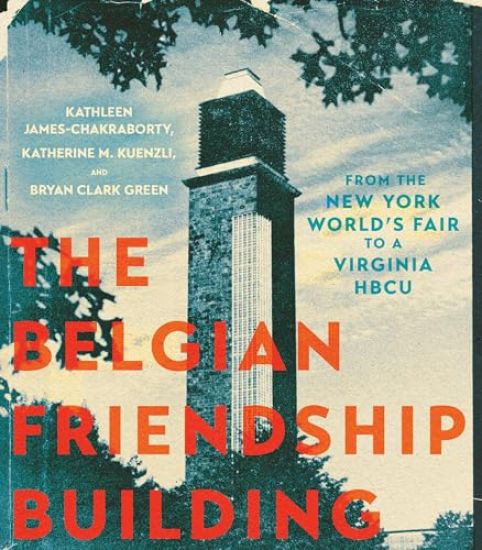
The Belgian Friendship Building

The Belgian Friendship Building

Kathleen James-Chakraborty; Katherine M. Kuenzli; Bryan Clark Green

UNIVERSITY OF VIRGINIA PRESS
2025
sidottu
A singular architectural landmark bridging western Europe and the American South How did the Belgian Friendship Building, originally constructed for the 1939 New York World’s Fair—and one of only a few surviving buildings from that celebrated exhibition—end up on the campus of an HBCU in Richmond, Virginia? In this richly illustrated book, Kathleen James-Chakraborty, Katherine Kuenzli, and Bryan Clark Green relate the fascinating story, spanning three continents, of a distinctly modern structure that has towered over Virginia Union University, in a city characterized by its traditional architecture, for more than eighty years. It is a structure whose original purposes—to present modern Belgian design and to extol its racist, colonial regime—stand in stark contrast to its dedication in 1941 to Robert L. Vann, longtime editor of one of America’s most illustrious historic Black newspapers. And it is an enduring example of prewar modernism that has until now been all but forgotten in histories of American architecture. This indispensable, multifaceted account ties together the history of modern European architecture, colonial exploitation, and African American achievement in a brilliant and compelling case study.
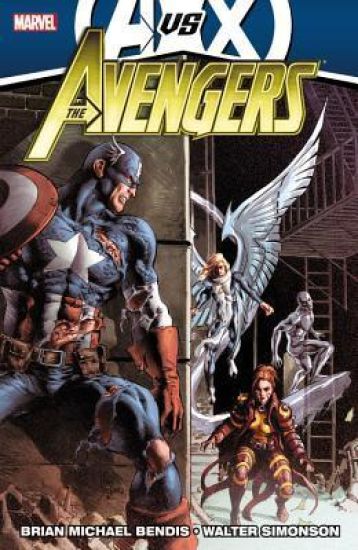
Avengers By Brian Michael Bendis - Volume 4 (avx)
AVX tie-in When the cosmic Phoenix Force threatens the planet, it's up to Earth's Mightiest Heroes to stop it - but the X-Men have a different plan. The struggle between the two teams becomes a battle unlike any the Avengers have ever faced - and every Avenger will be challenged like never before. For Captain America, an encounter with A.I.M. could provide a win he sorely needs, even if the accompanying morale boost proves to be tragically short-lived. For Red Hulk, following his brilliant strategic instincts against his team's wishes could prove to be a miscalculation - one that could cost him his life. For Wolverine, taking sides means fighting old friends and recruiting an unlikely ally. And for one Avenger, the war against the Phoenix will lead to betrayal COLLECTING: Avengers 25-30
The Awful Truths: Famous Myths, Hilariously Debunked
ho was Mario Puzo's model for the Don Corleone character in The Godfather? Was it Joseph "Joe Bananas" Bonanno? The infamous Salvatore Maranzano? No . . . it was Puzo's mother Senator Joseph McCarthy was responsible for the infamous "Hollywood Blacklist," right? Well, actually . . . no, he had nothing to do with it.Perfect for the cocktail party pundit or trivia buff, the quirky tidbits in The Awful Truths turn history, culture, sports, and entertainment upside down. The book examines some of our culture's oldest, most popular myths, and tells the fascinating, hilarious, and shocking stories behind what really happened, accompanied by funny illustrations that bring the players to life. Each truth is supported with ironclad evidence that skillfully explains how and where our misconceptions originated. Sometimes the truth hurts&#8212but with The Awful Truths, it doesn't have to.
Ancient Lives

Ancient Lives

Brian M. Fagan

Routledge Member of the Taylor and Francis Group
2011
irtolehti
Theory and Methods in Archaeology and PrehistoryWritten for complete beginners in a narrative style, Ancient Lives is aimed at introductory courses in archaeology and prehistory that cover archaeological methods and theory, as well as world prehistory. The first half of Ancient Lives covers the basic principles, methods, and theoretical approaches of archaeology. The second half is devoted to a summary of the major developments of human prehistory: the origins of humankind and the archaic world, the origins and spread of modern humans, the emergence of food production, and the beginnings of civilization. Learning GoalsUpon completing this book, readers should be able to:Understand the basic principles of archaeologySummarize the major developments of human prehistory
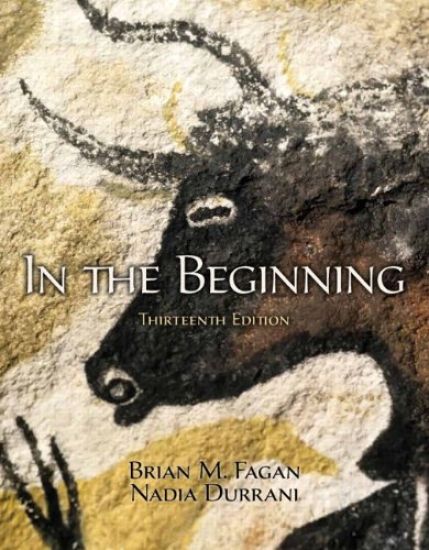
In the Beginning

In the Beginning

Brian M. Fagan; Nadia Durrani

Routledge Member of the Taylor and Francis Group
2013
irtolehti
Demonstrates the importance of archaeology today In the Beginning: An Introduction to Archaeology presents the history and methods of archaeology and explores its significance today. The text introduces archeology's basic principles along with numerous examples from all over the world. Authors Brian Fagan and Nadia Durrani provide a comprehensive summary of the field for people who have little or no experience. Features: Provides A Comprehensive Overview – Readers gain a broad understanding of archaeology, including its interdisciplinary nature, major scientific contributions, international research, and methods and theories. A special chapter covers career opportunities in archaeology. A new organization moves archaeological theory to the beginning, so readers can develop a deeper understanding of this field.Offers an Engaging Introduction – The jargon-free narrative provides an accessible introduction to the study of archaeology. In the Beginning is now four-color for a livelier and enriching experience. Explores Significant Historical Events – Seven photo essays titled People of the Past appear throughout the book, covering such luminaries as pharaoh Ramses II and societies like the Cro-Magnons of late Ice Age Europe. Spectacular findings featured in Discovery boxes reflect new developments in archaeology.Incorporates Fresh Ideas from a New Co-Author – Esteemed colleague, Nadia Durrani, has been brought on board as a co-author. She brings a wealth of field experience in Arabia, Britain, and elsewhere as well as extensive editorial experience as the former Editor of Current World Archaeology, to the team.
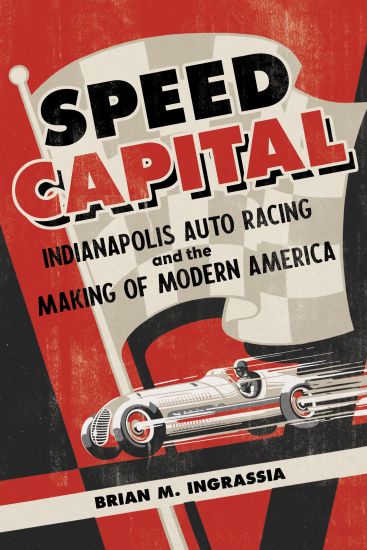
Speed Capital

Speed Capital

Brian M. Ingrassia

UNIVERSITY OF ILLINOIS PRESS
2024
sidottu
How a speedway became a legendary sports site and sparked America’s car culture The 1909 opening of the Indianapolis Motor Speedway marked a foundational moment in the history of automotive racing. Events at the famed track and others like it also helped launch America’s love affair with cars and an embrace of road systems that transformed cities and shrank perceptions of space. Brian Ingrassia tells the story of the legendary oval’s early decades. This story revolves around Speedway cofounder and visionary businessman Carl Graham Fisher, whose leadership in the building of the transcontinental Lincoln Highway and the iconic Dixie Highway had an enormous impact on American mobility. Ingrassia looks at the Speedway’s history as a testing ground for cars and airplanes, its multiple close brushes with demolition, and the process by which racing became an essential part of the Golden Age of Sports. At the same time, he explores how the track’s past reveals the potent links between sports capitalism and the selling of nostalgia, tradition, and racing legends.
Speed Capital

Speed Capital

Brian M. Ingrassia

UNIVERSITY OF ILLINOIS PRESS
2024
nidottu
How a speedway became a legendary sports site and sparked America’s car culture The 1909 opening of the Indianapolis Motor Speedway marked a foundational moment in the history of automotive racing. Events at the famed track and others like it also helped launch America’s love affair with cars and an embrace of road systems that transformed cities and shrank perceptions of space. Brian Ingrassia tells the story of the legendary oval’s early decades. This story revolves around Speedway cofounder and visionary businessman Carl Graham Fisher, whose leadership in the building of the transcontinental Lincoln Highway and the iconic Dixie Highway had an enormous impact on American mobility. Ingrassia looks at the Speedway’s history as a testing ground for cars and airplanes, its multiple close brushes with demolition, and the process by which racing became an essential part of the Golden Age of Sports. At the same time, he explores how the track’s past reveals the potent links between sports capitalism and the selling of nostalgia, tradition, and racing legends.
The Architecture of Law

The Architecture of Law

Brian M. McCall

University of Notre Dame Press
2018
sidottu
This book argues that classical natural law jurisprudence provides a superior answer to the questions "What is law?" and "How should law be made?" rather than those provided by legal positivism and "new" natural law theories. What is law? How should law be made? Using St. Thomas Aquinas's analogy of God as an architect, Brian McCall argues that classical natural law jurisprudence provides an answer to these questions far superior to those provided by legal positivism or the "new" natural law theories. The Architecture of Law explores the metaphor of law as an architectural building project, with eternal law as the foundation, natural law as the frame, divine law as the guidance provided by the architect, and human law as the provider of the defining details and ornamentation. Classical jurisprudence is presented as a synthesis of the work of the greatest minds of antiquity and the medieval period, including Cicero, Aristotle, Gratian, Augustine, and Aquinas; the significant texts of each receive detailed exposition in these pages. Along with McCall's development of the architectural image, he raises a question that becomes a running theme throughout the book: To what extent does one need to know God to accept and understand natural law jurisprudence, given its foundational premise that all authority comes from God? The separation of the study of law from knowledge of theology and morality, McCall argues, only results in the impoverishment of our understanding of law. He concludes that they must be reunited in order for jurisprudence to flourish. This book will appeal to academics, students in law, philosophy, and theology, and to all those interested in legal or political philosophy.
The Architecture of Law

The Architecture of Law

Brian M. McCall

UNIVERSITY OF NOTRE DAME PRESS
2023
nidottu
This book argues that classical natural law jurisprudence provides a superior answer to the questions "What is law?" and "How should law be made?" rather than those provided by legal positivism and "new" natural law theories. What is law? How should law be made? Using St. Thomas Aquinas's analogy of God as an architect, Brian McCall argues that classical natural law jurisprudence provides an answer to these questions far superior to those provided by legal positivism or the "new" natural law theories. The Architecture of Law explores the metaphor of law as an architectural building project, with eternal law as the foundation, natural law as the frame, divine law as the guidance provided by the architect, and human law as the provider of the defining details and ornamentation. Classical jurisprudence is presented as a synthesis of the work of the greatest minds of antiquity and the medieval period, including Cicero, Aristotle, Gratian, Augustine, and Aquinas; the significant texts of each receive detailed exposition in these pages. Along with McCall's development of the architectural image, he raises a question that becomes a running theme throughout the book: To what extent does one need to know God to accept and understand natural law jurisprudence, given its foundational premise that all authority comes from God? The separation of the study of law from knowledge of theology and morality, McCall argues, only results in the impoverishment of our understanding of law. He concludes that they must be reunited in order for jurisprudence to flourish. This book will appeal to academics, students in law, philosophy, and theology, and to all those interested in legal or political philosophy.
Pancreatic Cancer, An Issue of Hematology/Oncology Clinics of North America

Pancreatic Cancer, An Issue of Hematology/Oncology Clinics of North America

Brian M. Wolpin

Elsevier - Health Sciences Division
2015
sidottu
This issue of Hematology/Oncology Clinics of North America is devoted to Pancreatic Cancer. Guest Editor Brian Wolpin, MD has assembled a group of expert authors to review the following topics: Biology and genetics of pancreatic adenocarcinoma; Mouse models of pancreatic adenocarcinoma; Epidemiology and inherited predisposition for sporadic pancreatic adenocarcinoma; Familial pancreatic adenocarcinoma; Imaging and endoscopic approaches to pancreatic cancer; Diagnosis and management of pancreatic cystic neoplasms; Surgical management of pancreatic cancer; Peri-operative therapy for surgically resectable pancreatic adenocarcinoma; Diagnosis and management of borderline resectable pancreatic adenocarcinoma; Treatment approaches to locally advanced pancreatic adenocarcinoma; Therapeutic approaches for metastatic pancreatic adenocarcinoma; Supportive and end-of-life care for patients with pancreatic adenocarcinoma; and Novel therapeutics for pancreatic adenocarcinoma.