Kirjojen hintavertailu. Mukana 11 424 844 kirjaa ja 12 kauppaa.

Kirjahaku

Etsi kirjoja tekijän nimen, kirjan nimen tai ISBN:n perusteella.

1000 tulosta hakusanalla Brian M. Ingrassia

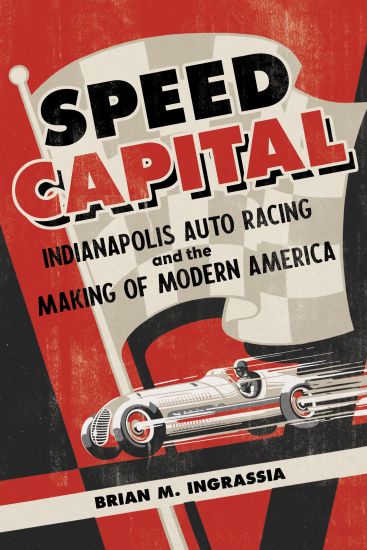
Speed Capital

Speed Capital

Brian M. Ingrassia

UNIVERSITY OF ILLINOIS PRESS
2024
sidottu
How a speedway became a legendary sports site and sparked America’s car culture The 1909 opening of the Indianapolis Motor Speedway marked a foundational moment in the history of automotive racing. Events at the famed track and others like it also helped launch America’s love affair with cars and an embrace of road systems that transformed cities and shrank perceptions of space. Brian Ingrassia tells the story of the legendary oval’s early decades. This story revolves around Speedway cofounder and visionary businessman Carl Graham Fisher, whose leadership in the building of the transcontinental Lincoln Highway and the iconic Dixie Highway had an enormous impact on American mobility. Ingrassia looks at the Speedway’s history as a testing ground for cars and airplanes, its multiple close brushes with demolition, and the process by which racing became an essential part of the Golden Age of Sports. At the same time, he explores how the track’s past reveals the potent links between sports capitalism and the selling of nostalgia, tradition, and racing legends.
Speed Capital

Speed Capital

Brian M. Ingrassia

UNIVERSITY OF ILLINOIS PRESS
2024
nidottu
How a speedway became a legendary sports site and sparked America’s car culture The 1909 opening of the Indianapolis Motor Speedway marked a foundational moment in the history of automotive racing. Events at the famed track and others like it also helped launch America’s love affair with cars and an embrace of road systems that transformed cities and shrank perceptions of space. Brian Ingrassia tells the story of the legendary oval’s early decades. This story revolves around Speedway cofounder and visionary businessman Carl Graham Fisher, whose leadership in the building of the transcontinental Lincoln Highway and the iconic Dixie Highway had an enormous impact on American mobility. Ingrassia looks at the Speedway’s history as a testing ground for cars and airplanes, its multiple close brushes with demolition, and the process by which racing became an essential part of the Golden Age of Sports. At the same time, he explores how the track’s past reveals the potent links between sports capitalism and the selling of nostalgia, tradition, and racing legends.
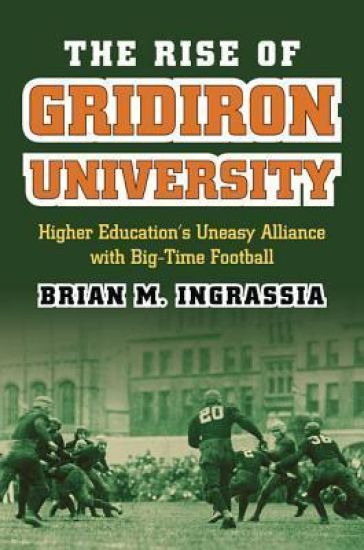
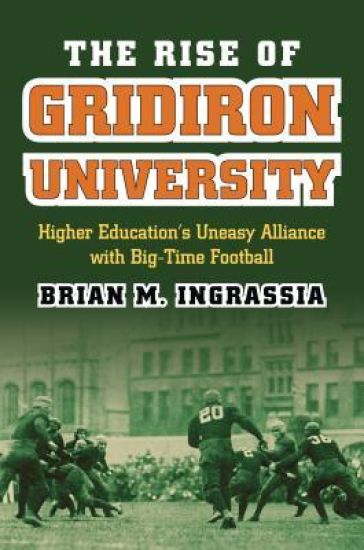
The Rise of Gridiron University

The Rise of Gridiron University

Brian M. Ingrassia

University Press of Kansas
2012
sidottu
The quarterback sends his wide receiver deep. The crowd gasps as he launches the ball. And when he hits his man, the team’s fans roar with approval—especially those with the deep pockets. Make no mistake; college football is big business, played with one eye on the score, the other on the bottom line. But was this always the case? Brian M. Ingrassia here offers the most incisive account to date of the origins of college football, tracing the sport’s evolution from a gentlemen’s pastime to a multi-million dollar enterprise that made athletics a permanent fixture on our nation’s campuses and cemented college football’s place in American culture. He takes readers back to the late 1800s to tell how schools embraced the sport as a way to get the public interested in higher learning—and then how football’s immediate popularity overwhelmed campuses and helped create the beast we know today. Contrary to conventional wisdom, Ingrassia proves that the academy did not initially resist the inclusion of athletics; rather, progressive reformers and professors embraced football as a way to make the ivory tower less elitist. With its emphasis on disciplined teamwork and spectatorship, football was seen as a “middlebrow” way to make the university more accessible to the general public. What it really did was make athletics a permanent fixture on campus with its own set of professional experts, bureaucracies, and ostentatious cathedrals. Ingrassia examines the early football programs at universities like Michigan, Stanford, Ohio State, and others, then puts those histories in the context of Progressive Era culture, including insights from coaches like Georgia Tech’s John Heisman and Notre Dame’s Knute Rockne. He describes how reforms emerged out of incidents such as a section of grandstands collapsing at the University of Chicago. He also touches on some of the problems facing current day college football. The Rise of Gridiron University shows us where and how it all began, highlighting college football’s essential role in shaping the modern university—and by extension American intellectual culture. It should have wide appeal among students of American studies and sports history, as well as fans of college football curious to learn how their game became a cultural force in a matter of a few decades. This book is part of the CultureAmerica series.
The Rise of Gridiron University

The Rise of Gridiron University

Brian M. Ingrassia

University Press of Kansas
2015
nidottu
The quarterback sends his wide receiver deep. The crowd gasps as he launches the ball. And when he hits his man, the team's fans roar with approval--especially those with the deep pockets. Make no mistake; college football is big business, played with one eye on the score, the other on the bottom line. But was this always the case?Brian M. Ingrassia here offers the most incisive account to date of the origins of college football, tracing the sport's evolution from a gentlemen's pastime to a multi-million dollar enterprise that made athletics a permanent fixture on our nation's campuses and cemented college football's place in American culture. He takes readers back to the late 1800s to tell how schools embraced the sport as a way to get the public interested in higher learning-and then how football's immediate popularity overwhelmed campuses and helped create the beast we know today. Contrary to conventional wisdom, Ingrassia proves that the academy did not initially resist the inclusion of athletics; rather, progressive reformers and professors embraced football as a way to make the ivory tower less elitist. With its emphasis on disciplined teamwork and spectatorship, football was seen as a ""middlebrow"" way to make the university more accessible to the general public. What it really did was make athletics a permanent fixture on campus with its own set of professional experts, bureaucracies, and ostentatious cathedrals. Ingrassia examines the early football programs at universities like Michigan, Stanford, Ohio State, and others, then puts those histories in the context of Progressive Era culture, including insights from coaches like Georgia Tech's John Heisman and Notre Dame's Knute Rockne. He describes how reforms emerged out of incidents such as Teddy Roosevelt's son being injured on the field and a section of grandstands collapsing at the University of Chicago. He also touches on some of the problems facing current day college football and shows us that we haven't come far from those initial arguments more than a century ago. The Rise of Gridiron University shows us where and how it all began, highlighting college football's essential role in shaping the modern university-and by extension American intellectual culture. It should have wide appeal among students of American studies and sports history, as well as fans of college football curious to learn how their game became a cultural force in a matter of a few decades.
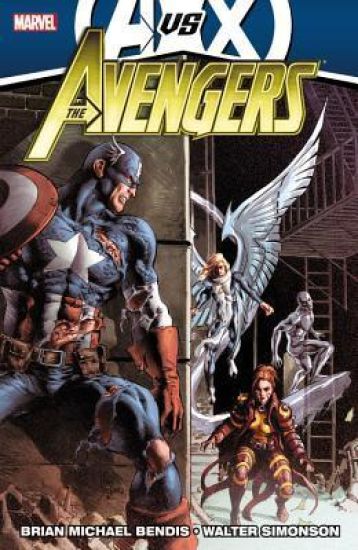
Avengers By Brian Michael Bendis - Volume 4 (avx)
AVX tie-in When the cosmic Phoenix Force threatens the planet, it's up to Earth's Mightiest Heroes to stop it - but the X-Men have a different plan. The struggle between the two teams becomes a battle unlike any the Avengers have ever faced - and every Avenger will be challenged like never before. For Captain America, an encounter with A.I.M. could provide a win he sorely needs, even if the accompanying morale boost proves to be tragically short-lived. For Red Hulk, following his brilliant strategic instincts against his team's wishes could prove to be a miscalculation - one that could cost him his life. For Wolverine, taking sides means fighting old friends and recruiting an unlikely ally. And for one Avenger, the war against the Phoenix will lead to betrayal COLLECTING: Avengers 25-30
The Awful Truths: Famous Myths, Hilariously Debunked
ho was Mario Puzo's model for the Don Corleone character in The Godfather? Was it Joseph "Joe Bananas" Bonanno? The infamous Salvatore Maranzano? No . . . it was Puzo's mother Senator Joseph McCarthy was responsible for the infamous "Hollywood Blacklist," right? Well, actually . . . no, he had nothing to do with it.Perfect for the cocktail party pundit or trivia buff, the quirky tidbits in The Awful Truths turn history, culture, sports, and entertainment upside down. The book examines some of our culture's oldest, most popular myths, and tells the fascinating, hilarious, and shocking stories behind what really happened, accompanied by funny illustrations that bring the players to life. Each truth is supported with ironclad evidence that skillfully explains how and where our misconceptions originated. Sometimes the truth hurts&#8212but with The Awful Truths, it doesn't have to.
Ancient Lives

Ancient Lives

Brian M. Fagan

Routledge Member of the Taylor and Francis Group
2011
irtolehti
Theory and Methods in Archaeology and PrehistoryWritten for complete beginners in a narrative style, Ancient Lives is aimed at introductory courses in archaeology and prehistory that cover archaeological methods and theory, as well as world prehistory. The first half of Ancient Lives covers the basic principles, methods, and theoretical approaches of archaeology. The second half is devoted to a summary of the major developments of human prehistory: the origins of humankind and the archaic world, the origins and spread of modern humans, the emergence of food production, and the beginnings of civilization. Learning GoalsUpon completing this book, readers should be able to:Understand the basic principles of archaeologySummarize the major developments of human prehistory
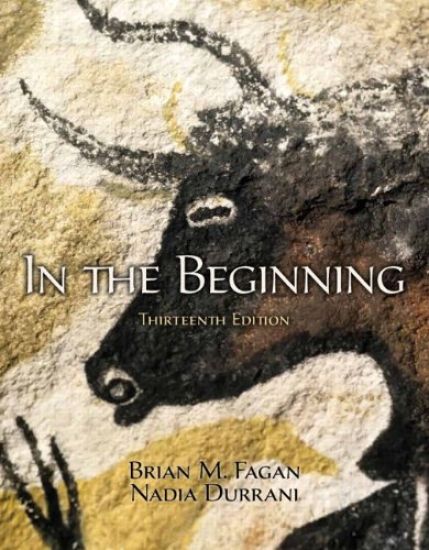
In the Beginning

In the Beginning

Brian M. Fagan; Nadia Durrani

Routledge Member of the Taylor and Francis Group
2013
irtolehti
Demonstrates the importance of archaeology today In the Beginning: An Introduction to Archaeology presents the history and methods of archaeology and explores its significance today. The text introduces archeology's basic principles along with numerous examples from all over the world. Authors Brian Fagan and Nadia Durrani provide a comprehensive summary of the field for people who have little or no experience. Features: Provides A Comprehensive Overview – Readers gain a broad understanding of archaeology, including its interdisciplinary nature, major scientific contributions, international research, and methods and theories. A special chapter covers career opportunities in archaeology. A new organization moves archaeological theory to the beginning, so readers can develop a deeper understanding of this field.Offers an Engaging Introduction – The jargon-free narrative provides an accessible introduction to the study of archaeology. In the Beginning is now four-color for a livelier and enriching experience. Explores Significant Historical Events – Seven photo essays titled People of the Past appear throughout the book, covering such luminaries as pharaoh Ramses II and societies like the Cro-Magnons of late Ice Age Europe. Spectacular findings featured in Discovery boxes reflect new developments in archaeology.Incorporates Fresh Ideas from a New Co-Author – Esteemed colleague, Nadia Durrani, has been brought on board as a co-author. She brings a wealth of field experience in Arabia, Britain, and elsewhere as well as extensive editorial experience as the former Editor of Current World Archaeology, to the team.
The Architecture of Law

The Architecture of Law

Brian M. McCall

University of Notre Dame Press
2018
sidottu
This book argues that classical natural law jurisprudence provides a superior answer to the questions "What is law?" and "How should law be made?" rather than those provided by legal positivism and "new" natural law theories. What is law? How should law be made? Using St. Thomas Aquinas's analogy of God as an architect, Brian McCall argues that classical natural law jurisprudence provides an answer to these questions far superior to those provided by legal positivism or the "new" natural law theories. The Architecture of Law explores the metaphor of law as an architectural building project, with eternal law as the foundation, natural law as the frame, divine law as the guidance provided by the architect, and human law as the provider of the defining details and ornamentation. Classical jurisprudence is presented as a synthesis of the work of the greatest minds of antiquity and the medieval period, including Cicero, Aristotle, Gratian, Augustine, and Aquinas; the significant texts of each receive detailed exposition in these pages. Along with McCall's development of the architectural image, he raises a question that becomes a running theme throughout the book: To what extent does one need to know God to accept and understand natural law jurisprudence, given its foundational premise that all authority comes from God? The separation of the study of law from knowledge of theology and morality, McCall argues, only results in the impoverishment of our understanding of law. He concludes that they must be reunited in order for jurisprudence to flourish. This book will appeal to academics, students in law, philosophy, and theology, and to all those interested in legal or political philosophy.
The Architecture of Law

The Architecture of Law

Brian M. McCall

UNIVERSITY OF NOTRE DAME PRESS
2023
nidottu
This book argues that classical natural law jurisprudence provides a superior answer to the questions "What is law?" and "How should law be made?" rather than those provided by legal positivism and "new" natural law theories. What is law? How should law be made? Using St. Thomas Aquinas's analogy of God as an architect, Brian McCall argues that classical natural law jurisprudence provides an answer to these questions far superior to those provided by legal positivism or the "new" natural law theories. The Architecture of Law explores the metaphor of law as an architectural building project, with eternal law as the foundation, natural law as the frame, divine law as the guidance provided by the architect, and human law as the provider of the defining details and ornamentation. Classical jurisprudence is presented as a synthesis of the work of the greatest minds of antiquity and the medieval period, including Cicero, Aristotle, Gratian, Augustine, and Aquinas; the significant texts of each receive detailed exposition in these pages. Along with McCall's development of the architectural image, he raises a question that becomes a running theme throughout the book: To what extent does one need to know God to accept and understand natural law jurisprudence, given its foundational premise that all authority comes from God? The separation of the study of law from knowledge of theology and morality, McCall argues, only results in the impoverishment of our understanding of law. He concludes that they must be reunited in order for jurisprudence to flourish. This book will appeal to academics, students in law, philosophy, and theology, and to all those interested in legal or political philosophy.
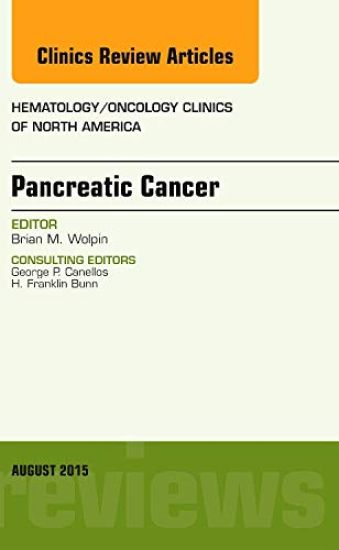
Pancreatic Cancer, An Issue of Hematology/Oncology Clinics of North America

Pancreatic Cancer, An Issue of Hematology/Oncology Clinics of North America

Brian M. Wolpin

Elsevier - Health Sciences Division
2015
sidottu
This issue of Hematology/Oncology Clinics of North America is devoted to Pancreatic Cancer. Guest Editor Brian Wolpin, MD has assembled a group of expert authors to review the following topics: Biology and genetics of pancreatic adenocarcinoma; Mouse models of pancreatic adenocarcinoma; Epidemiology and inherited predisposition for sporadic pancreatic adenocarcinoma; Familial pancreatic adenocarcinoma; Imaging and endoscopic approaches to pancreatic cancer; Diagnosis and management of pancreatic cystic neoplasms; Surgical management of pancreatic cancer; Peri-operative therapy for surgically resectable pancreatic adenocarcinoma; Diagnosis and management of borderline resectable pancreatic adenocarcinoma; Treatment approaches to locally advanced pancreatic adenocarcinoma; Therapeutic approaches for metastatic pancreatic adenocarcinoma; Supportive and end-of-life care for patients with pancreatic adenocarcinoma; and Novel therapeutics for pancreatic adenocarcinoma.
How Judges Judge

How Judges Judge

Brian M. Barry

CRC Press
2020
sidottu
A judge’s role is to make decisions. This book is about how judges undertake this task. It is about forces on the judicial role and their consequences, about empirical research from a variety of academic disciplines that observes and verifies how factors can affect how judges judge.On the one hand, judges decide by interpreting and applying the law, but much more affects judicial decision-making: psychological effects, group dynamics, numerical reasoning, biases, court processes, influences from political and other institutions, and technological advancement. All can have a bearing on judicial outcomes. In How Judges Judge: Empirical Insights into Judicial Decision-Making, Brian M. Barry explores how these factors, beyond the law, affect judges in their role. Case examples, judicial rulings, judges’ own self-reflections on their role and accounts from legal history complement this analysis to contextualise the research, make it more accessible and enrich the reader’s understanding and appreciation of judicial decision-making.Offering research-based insights into how judges make the decisions that can impact daily life and societies around the globe, this book will be of interest to practising and training judges, litigation lawyers and those studying law and related disciplines.
Archaeology

Archaeology

Brian M. Fagan; Nadia Durrani

Routledge
2021
nidottu
Archaeology is a jargon-free and accessible introduction to the field which details how archaeologists study the human past in all its fascinating diversity.Now in its thirteenth edition, this classic textbook has been updated to include the latest research and new findings in the field. Reflecting the global scope of the discipline, the book has a truly international coverage of important discoveries and sites from many corners of the globe. Individual chapters examine archaeology and its history, considering the role of the archaeologist and how they discover, investigate and classify sites and artifacts. This journey through archaeology also includes a discussion of important individuals and groups, and some of the ways in which archaeologists attempt to explain major social and cultural changes in the remote past. Archaeology ends with an outline of the complex world of cultural resource management and gives invaluable advice on how to become an archaeologist.Richly illustrated throughout, this popular and engaging textbook on archaeological methods has introduced generations of students to the captivating world of archaeology.
Archaeology

Archaeology

Brian M. Fagan; Nadia Durrani

Routledge
2021
sidottu
Archaeology is a jargon-free and accessible introduction to the field which details how archaeologists study the human past in all its fascinating diversity.Now in its thirteenth edition, this classic textbook has been updated to include the latest research and new findings in the field. Reflecting the global scope of the discipline, the book has a truly international coverage of important discoveries and sites from many corners of the globe. Individual chapters examine archaeology and its history, considering the role of the archaeologist and how they discover, investigate and classify sites and artifacts. This journey through archaeology also includes a discussion of important individuals and groups, and some of the ways in which archaeologists attempt to explain major social and cultural changes in the remote past. Archaeology ends with an outline of the complex world of cultural resource management and gives invaluable advice on how to become an archaeologist.Richly illustrated throughout, this popular and engaging textbook on archaeological methods has introduced generations of students to the captivating world of archaeology.
How Judges Judge

How Judges Judge

Brian M. Barry

TAYLOR FRANCIS LTD
2023
nidottu
A judge’s role is to make decisions. This book is about how judges undertake this task. It is about forces on the judicial role and their consequences, about empirical research from a variety of academic disciplines that observes and verifies how factors can affect how judges judge.On the one hand, judges decide by interpreting and applying the law, but much more affects judicial decision-making: psychological effects, group dynamics, numerical reasoning, biases, court processes, influences from political and other institutions, and technological advancement. All can have a bearing on judicial outcomes. In How Judges Judge: Empirical Insights into Judicial Decision-Making, Brian M. Barry explores how these factors, beyond the law, affect judges in their role. Case examples, judicial rulings, judges’ own self-reflections on their role and accounts from legal history complement this analysis to contextualise the research, make it more accessible and enrich the reader’s understanding and appreciation of judicial decision-making.Offering research-based insights into how judges make the decisions that can impact daily life and societies around the globe, this book will be of interest to practising and training judges, litigation lawyers and those studying law and related disciplines.
The Music Producer’s Survival Guide

The Music Producer’s Survival Guide

Brian M. Jackson

Routledge
2018
sidottu
A music-career book like no other, The Music Producer’s Survival Guide offers a wide-ranging, exploratory, yet refreshing down-to-earth take on living the life of the independent electronic music producer. If you are an intellectually curious musician/producer eager to make your mark in today’s technologically advanced music business, you’re in for a treat. This new edition includes industry and technological updates, additional interviews, and tips about personal finances, income, and budgets. In this friendly, philosophical take on the art and science of music production, veteran producer, engineer, and teacher Brian Jackson shares clear, practical advice about shaping your own career in today’s computer-centric "home-studio" music world. You’ll cover music technology, philosophy of music production, career planning, networking, craft and creativity, the DIY ethos, lifestyle considerations, and much more. Brian’s thoughtful approach will teach you to integrate your creative passion, your lifestyle, and your technical know-how. The Music Producer’s Survival Guide is the first music-production book to consider the influence of complexity studies and chaos theory on music-making and career development. It focuses on practicality while traversing a wide spectrum of topics, including essential creative process techniques, the TR-808, the proliferation of presets, the butterfly effect, granular synthesis, harmonic ratios, altered states, fractal patterns, the dynamics of genre evolution, and much more. Carving out your niche in music today is an invigorating challenge that will test all your skills and capacities.Learn to survive—and thrive—as a creative-technical professional in today’s music business, with the help of Brian Jackson and The Music Producer’s Survival Guide!