Kirjojen hintavertailu. Mukana 11 244 527 kirjaa ja 12 kauppaa.

Kirjahaku

Etsi kirjoja tekijän nimen, kirjan nimen tai ISBN:n perusteella.

1000 tulosta hakusanalla Brian Steel Wills

Inglorious Passages

Inglorious Passages

Brian Steel Wills

University Press of Kansas
2017
sidottu
Of the hundreds of thousands of soldiers who died in the Civil War, two-thirds, by some estimates, were felled by disease; untold others were lost to accidents, murder, suicide, sunstroke, and drowning. Meanwhile thousands of civilians in both the north and south perished—in factories, while caught up in battles near their homes, and in other circumstances associated with wartime production and supply. These “inglorious passages,” no less than the deaths of soldiers in combat, devastated the armies in the field and families and communities at home. Inglorious Passages for the first time gives these noncombat deaths due consideration.In letters, diaries, obituaries, and other accounts, eminent Civil War historian Brian Steel Wills finds the powerful and poignant stories of fatal accidents and encounters and collateral civilian deaths that occurred in the factories and fields of the Union and the Confederacy from 1861 to 1865. Wills retrieves these stories from obscurity and the cold calculations of statistics to reveal the grave toll these losses exacted on soldiers and civilians, families and society. In its intimate details and its broad scope, his book demonstrates that for those who served and those who supported them, noncombat fatalities were as significant as battle deaths in impressing the full force of the American Civil War on the people called upon to live through it. With the publication of Inglorious Passages, those who paid the supreme sacrifice, regardless of situation or circumstance, will at last be included in the final tabulation of the nation’s bloodiest conflict.
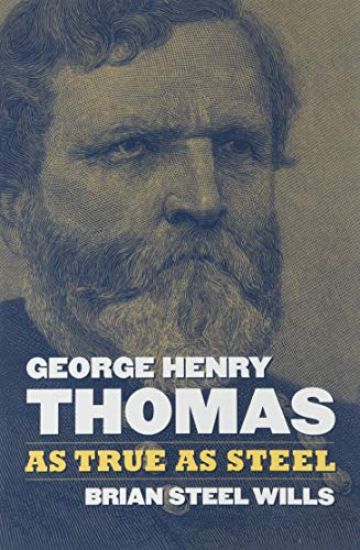
George Henry Thomas

George Henry Thomas

Brian Steel Wills

University Press of Kansas
2019
nidottu
Richard B. Harwell AwardAlthough often counted among the Union's top five generals, George Henry Thomas has still not received his due. A Virginian who sided with the North in the Civil War, he was a more complicated commander than traditional views have allowed. Brian Wills now provides a new and more complete look at the life of a man known to history as "The Rock of Chickamauga," to his troops as "Old Pap," and to General William T. Sherman as a soldier who was "as true as steel."While biographers have long been hampered by Thomas's lack of personal papers, Wills has drawn on previously untapped sources-notably the correspondence of Thomas's contemporaries-to offer new insights into what made him tick. Focusing on Thomas's personality and motivations, Wills contributes revealing discussions of his style and approach to command and successfully captures his troubled interactions with other Union commanders, providing a particularly more evenhanded evaluation of his relationship with Grant. He also gives a more substantial account of battlefield action than can be found in other biographies, capturing the ebb and flow of key encounters—Chickamauga and Missionary Ridge, Chattanooga and Atlanta, Stones River and Mill Springs, Peachtree Creek and Nashville—to help readers better understand Thomas's contributions to their outcomes.Throughout Wills presents a well-rounded individual whose complex views embraced the worlds of professional military service and scientific inquisitiveness, a man known for attention to detail and compassion to subordinates. We also meet a sharp-tempered person whose disdain for politics hurt his prospects for advancement as much as it reflected positively on his character, and Wills offers new insight into why Thomas might not have progressed as quickly up the ladder of command as he might have liked.More deeply researched than other biographies, Wills's work situates Thomas squarely in his own time to provide readers with a more thorough and balanced life story of this enigmatic Union general. It is a definitive military history that gives us a new and needed picture of the Rock of Chickamauga—a man whose devotion to duty and ideals made him as true as steel.
Gone with the Glory

Gone with the Glory

Brian Steel Wills

Rowman Littlefield Publishers
2011
nidottu
From Birth of a Nation to Cold Mountain, hundreds of directors, actors, and screenwriters have used the Civil War to create compelling cinema. However, each generation of moviemakers has resolved the tug of war between entertainment value and historical accuracy differently. Historian Brian Steel Wills takes readers on a journey through the portrayal of the war in film, exploring what Hollywood got right and wrong, how the films influenced each other, and, ultimately, how the movies reflect America's changing understandings of the conflict and of the nation.
The River Was Dyed with Blood

The River Was Dyed with Blood

Brian Steel Wills

University of Oklahoma Press
2014
sidottu
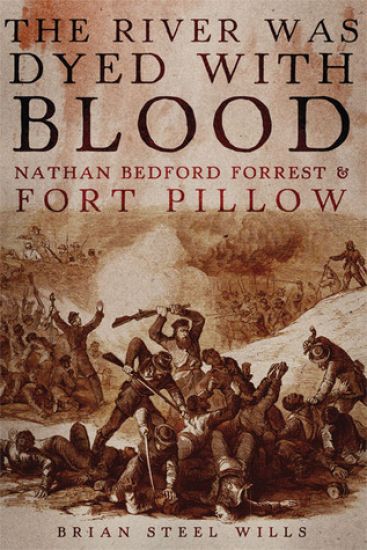
The battlefield reputation of Confederate general Nathan Bedford Forrest, long recognized as a formidable warrior, has been shaped by one infamous wartime incident. At Fort Pillow in 1864, the attack by Confederate forces under Forrest's command left many of the Tennessee Unionists and black soldiers garrisoned there dead in a confrontation widely labeled as a ""massacre."" In The River Was Dyed with Blood, best-selling Forrest biographer Brian Steel Wills argues that although atrocities did occur after the fall of the fort, Forrest did not order or intend a systematic execution of its defenders. Rather, the general's great failing was losing control of his troops. A prewar slave trader and owner, Forrest was a controversial figure throughout his lifetime. Because the attack on Fort Pillow - which, as Forrest wrote, left the nearby waters ""dyed with blood"" - occurred in an election year, Republicans used him as a convenient Confederate scapegoat to marshal support for the war. After the war he also became closely associated with the spread of the Ku Klux Klan. Consequently, the man himself, and the truth about Fort Pillow, has remained buried beneath myths, legends, popular depictions, and disputes about the events themselves. Wills sets what took place at Fort Pillow in the context of other wartime excesses from the American Revolution to World War II and Vietnam, as well as the cultural transformations brought on by the Civil War. Confederates viewed black Union soldiers as the embodiment of slave rebellion and reacted accordingly. Nevertheless, Wills concludes that the engagement was neither a massacre carried out deliberately by Forrest, as charged by a congressional committee, nor solely a northern fabrication meant to discredit him and the Confederate States of America, as pro-Southern apologists have suggested. The battle-scarred fighter with his homespun aphorisms was neither an infallible warrior nor a heartless butcher, but a product of his time and his heritage.
The River Was Dyed with Blood

The River Was Dyed with Blood

Brian Steel Wills

University of Oklahoma Press
2021
nidottu
The battlefield reputation of Confederate general Nathan Bedford Forrest, long recognized as a formidable warrior, has been shaped by one infamous wartime incident. At Fort Pillow in 1864, the attack by Confederate forces under Forrest's command left many of the Tennessee Unionists and black soldiers garrisoned there dead in a confrontation widely labeled as a 'massacre.' In The River Was Dyed with Blood, best-selling Forrest biographer Brian Steel Wills argues that although atrocities did occur after the fall of the fort, Forrest did not order or intend a systematic execution of its defenders. Rather, the general's great failing was losing control of his troops.A prewar slave trader and owner, Forrest was a controversial figure throughout his lifetime. Because the attack on Fort Pillow - which, as Forrest wrote, left the nearby waters 'dyed with blood' - occurred in an election year, Republicans used him as a convenient Confederate scapegoat to marshal support for the war. After the war he also became closely associated with the spread of the Ku Klux Klan. Consequently, the man himself, and the truth about Fort Pillow, has remained buried beneath myths, legends, popular depictions, and disputes about the events themselves.Wills sets what took place at Fort Pillow in the context of other wartime excesses from the American Revolution to World War II and Vietnam, as well as the cultural transformations brought on by the Civil War. Confederates viewed black Union soldiers as the embodiment of slave rebellion and reacted accordingly. Nevertheless, Wills concludes that the engagement was neither a massacre carried out deliberately by Forrest, as charged by a congressional committee, nor solely a northern fabrication meant to discredit him and the Confederate States of America, as pro-Southern apologists have suggested. The battle-scarred fighter with his homespun aphorisms was neither an infallible warrior nor a heartless butcher, but a product of his time and his heritage.
Confederate General William Dorsey Pender

Confederate General William Dorsey Pender

Brian Steel Wills

Louisiana State University Press
2013
sidottu
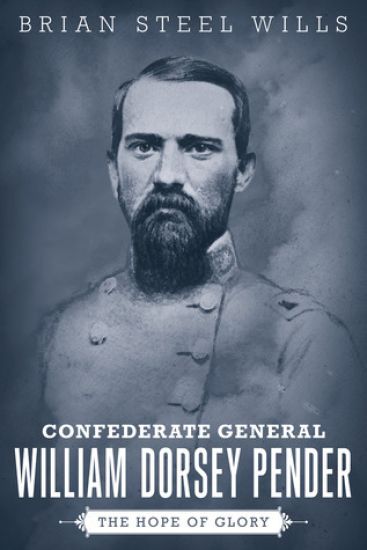
During the Civil War, North Carolinian William Dorsey Pender established himself as one of the Confederate Army of Northern Virginia's best young generals. He served in most of the significant engagements of the war in the eastern theater while under the command of Joseph E. Johnston at Seven Pines and Robert E. Lee from the Seven Days to Gettysburg. His most crucial contributions to Confederate success came at the battles of Second Manassas, Shepherdstown, Fredericksburg, and Chancellorsville. After an effective first day at Gettysburg, Pender was struck by a shell and disabled, necessitating his return to Virginia for what he hoped would be only an extended convalescence. Although Pender initially survived the wound, he died soon thereafter due to complications from his injury.In this thorough biography of Pender, noted Civil War historian Brian Steel Wills examines both the young general's military career and his domestic life. While Pender devoted himself to military service, he also embraced the Episcopal Church and was baptized before his command in the field. According to Wills, Pender had an insatiable quest for ""glory"" in both earthly and heavenly realms, and he delighted in his role as a husband and father. In Pender's voluminous correspondence with his wife, Fanny, he shared his beliefs and offered views and opinions on a vast array of subjects. In the end, Wills suggests that Pender's story captures both the idealistic promise and the despair of a war that cost the lives of many Americans and changed the nation forever.
Confederate General William Dorsey Pender

Confederate General William Dorsey Pender

Brian Steel Wills

LOUISIANA STATE UNIVERSITY PRESS
2025
pokkari
During the Civil War, North Carolinian William Dorsey Pender established himself as one of the Confederate Army of Northern Virginia's best young generals. He served in most of the significant engagements of the war in the eastern theater while under the command of Joseph E. Johnston at Seven Pines and Robert E. Lee from the Seven Days to Gettysburg. His most crucial contributions to Confederate success came at the battles of Second Manassas, Shepherdstown, Fredericksburg, and Chancellorsville. After an effective first day at Gettysburg, Pender was struck by a shell and disabled, necessitating his return to Virginia for what he hoped would be only an extended convalescence. Although Pender initially survived the wound, he died soon thereafter due to complications from his injury.In this thorough biography of Pender, noted Civil War historian Brian Steel Wills examines both the young general's military career and his domestic life. While Pender devoted himself to military service, he also embraced the Episcopal Church and was baptized before his command in the field. According to Wills, Pender had an insatiable quest for "glory" in both earthly and heavenly realms, and he delighted in his role as a husband and father. In Pender's voluminous correspondence with his wife, Fanny, he shared his beliefs and offered views and opinions on a vast array of subjects. In the end, Wills suggests that Pender's story captures both the idealistic promise and the despair of a war that cost the lives of many Americans and changed the nation forever.
No Ordinary College

No Ordinary College

Brian Steel Wills

University of Virginia Press
2004
sidottu
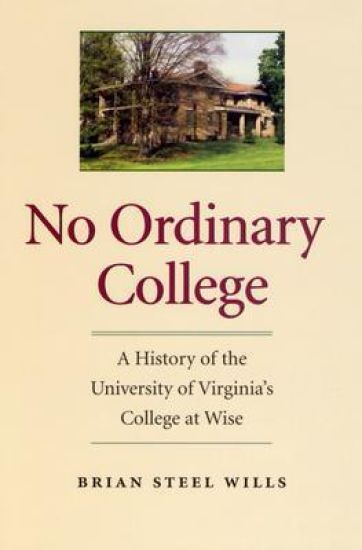
You are making history today, the University of Virginia Extension Division agent Sarnuel Crockett observed to a gathering of students and faculty on September 15, 1954, in Wise, Virginia. The occasion was the opening convocation of what would become Clinch Valley College of the University of Virginia, and the 109 students assembled, many of whom were Korean War veterans or women, were indeed part of something quite special. People in southwest Virginia and friends in Charlottesville - not the least being University of Virginia president Colgate W. Darden Jr. - had worked tirelessly to make this day possible. A snowbound discussion at the Colonial Inn in Wise had resulted in the conversion of the local County Poor Farm into the only branch of the University of Virginia. Since those humble beginnings, the College at Wise has flourished, growing from a two-year certificate-granting institution into a four-year baccalaure-ate-degree-granting college in the late 1960s. In 1999 the college completed a transition from Clinch Valley College to the University of Virginia's College at Wise. Having journeyed over uncertain ground with respect to its student population and its relationship with the University of Virginia, the College at Wise has in recent years boasted its highest historical student enrollments, garnered a national reputation as a public liberal arts college, and still operates as the university's only branch. Published for Wise's fiftieth anniversary, to be celebrated in September 2004, Brian Steel Wills's history is essential reading for the college's alumni, faculty and administrators, and for anyone interested in a heroic chapter in the history of public higher education in Virginia.
The War Hits Home

The War Hits Home

Brian Steel Wills

University of Virginia Press
2017
nidottu
In 1863 Confederate forces under Lieutenant General James Longstreet, while scouring Southside Virginia for badly needed supplies, threatened the Union garrison in Suffolk. For the residents of surrounding Nansemond, Isle of Wight, and Southampton Counties, the Suffolk campaign followed an exhausting and deadly pattern. Already subjected to the demands of waves of soldiers, first Southern recruits and then Union occupation troops, the people of the region faced the severest tests the Civil War could impose upon human beings.In The War Hits Home, Brian Steel Wills tells the story of these real people in the crucible of war. Reconstructing life for soldiers from the region on the battlefield and for civilians in the homes of southeastern Virginia, Wills provides a full depiction of what life was like for the ordinary person-black, white, soldier, citizen, Unionist, or secessionist-contending with domestic, economic, social, and military hardship in the contest of sectionalism and war. Wills employs their individual experiences to illustrate the impact of the war on a human scale, on soldiers and their relatives, North and South. We witness battlefield horror and family despair, African Americans' embrace of freedom, and the persistence of Confederate nationalism among most whites in the region.Taken as a whole, The War Hits Home is a sweeping but extraordinarily detailed canvas of a fractured American South.
Running the Race

Running the Race

Brian Steel Wills

Savas Beatie
2022
sidottu
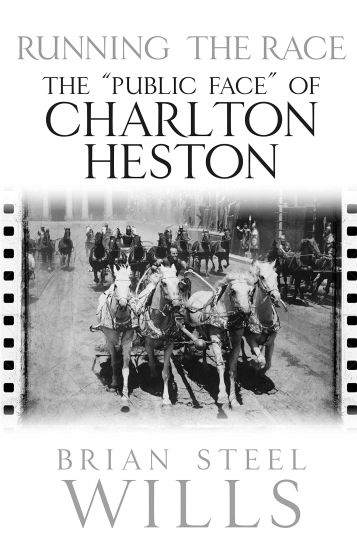
Thundering across the screen, Judah Ben-Hur’s iconic chariot race against his former friend turned bitter foe remains an indelible part of cinematic history and established Charlton Heston as an international superstar. In many ways the race was a metaphor for the actor’s dynamic life, symbolizing his struggle to establish himself in his profession. Brian Steel Wills captures for the first time a comprehensive view of the actor’s climb to fame, his search for the perfect performance, and the meaningful roles he played in support of the causes he embraced. The actor was born and raised in the Michigan woodlands and suburbs of Chicago, where he found his love of acting in the books he read and the movies he saw. 'Chuck' Heston’s introduction to the craft that would become his life’s work began at New Trier High School and spilled over into Northwestern University. The Second World War interrupted his journey when he served his country, after which he and his wife Lydia headed to Asheville, North Carolina, where they both acted and directed in theatre. The lights of New York City and Broadway beckoned, and live television offered an important platform, but Hollywood and feature films were his destiny. His roles were as varied as they were powerful, and included stints as Moses, Ben-Hur, El Cid, Michelangelo, Mike Vargas, and Charles 'Chinese' Gordon under legendary directors like Cecil B. DeMille, William Wyler, Franklin Schaffner, and Orson Welles. He shifted to science fiction in Planet of the Apes and Soylent Green, a wide range of action and disaster films, and more nuanced roles such as Will Penny. Over his decades of performance Heston defined and redefined his 'public face' in a constant quest for an audience for his work. He undertook wide-ranging public service roles for the government, the arts, and other causes. His leadership in the Screen Actors Guild and American Film Institute carried him from Hollywood to the halls of Congress. He became an outspoken advocate of the arts and other public and charitable causes, marched with Dr. Martin Luther King, Jr. in Washington, and supported Second Amendment rights with the National Rifle Association. He did so even when his positions often clashed with other actors on issues ranging from nuclear arms, national security, and gun rights. The proud independent shifted decidedly to the Republican Party and appeared at political rallies and conventions, but rebuffed calls to run for office in favour of assuming similar roles on the big screen. Award-winning historian Brian Steel Wills digs deep to paint a rich portrait of Heston’s extraordinary life – a mix of complications and complexities that touched film, television, theatre, politics, and society. His carefully crafted 'public face' was impactful in more ways than the ordinarily shy and private family man could have ever imagined.
The Confederacy's Greatest Cavalryman

The Confederacy's Greatest Cavalryman

Brian Steel Wills; Emory M. Thomas

University Press of Kansas
1998
nidottu
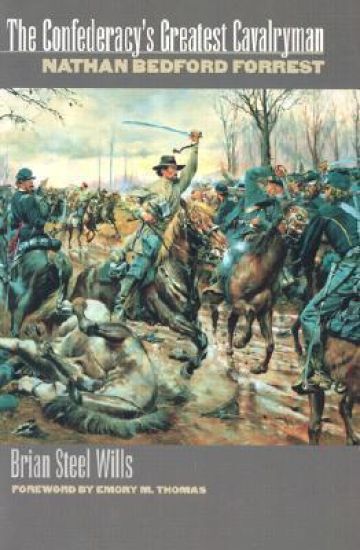
Nathan Bedford Forrest was a renowned cavalryman who fought during the American Civil War. This book presents an analysis of his life, from childhood in Mississippi, to wealth from the slave trade, his role as founder and Grand Wizard of the first Ku Klux Klan, and his death.
Civil War Sites in Virginia

Civil War Sites in Virginia

James I. Robertson Jr.; Brian Steel Wills

University of Virginia Press
2011
nidottu
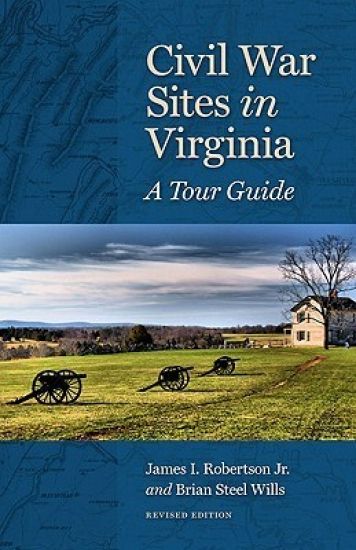
Since 1982, the renowned Civil War historian James I. ""Bud"" Robertson’s Civil War Sites in Virginia: A Tour Guide has enlightened and informed Civil War enthusiasts and scholars alike. The book expertly explores the commonwealth’s Civil War sites for those hoping to gain greater insight and understanding of the conflict. But in the years since the book’s original publication, accessibility to many sites and the interpretive material available have improved dramatically. In addition, new historical markers have been erected, and new historically significant sites have been developed, while other sites have been lost to modern development or other encroachments. The historian Brian Steel Wills offers here a revised and updated edition that retains the core of the original guide, with its rich and insightful prose, but that takes these major changes into account, introducing especially the benefits of expanded interpretation and of improved accessibility. The guide incorporates new information on the lives of a broad spectrum of soldiers and citizens while revisiting scenes associated with the era’s most famous personalities. New maps and a list of specialized tour suggestions assist in planning visits to sites, while three dozen illustrations, from nineteenth-century drawings to modern photographs, bring the war and its impact on the Old Dominion vividly to life. With the sesquicentennial remembrances of the American Civil War heightening interest and spurring improvements, there may be no better time to learn about and visit these important and moving sites than now.
The Aboveground Steel Storage Tank Handbook

The Aboveground Steel Storage Tank Handbook

Brian D. Digrado; Gregory A. Thorp

John Wiley Sons Inc
1995
nidottu
The Aboveground Steel Storage Tank Handbook I like the summary of regulations in conjunction with industry standards and products. Usually a book covers one or the other. --Wayne Geyer, Executive Vice-President, Steel Tank Institute I think this is a valuable text in that it does a very good job presenting the two types of ASTs. --Darryl J. Butkos, Hydrogeologist and Environmental Engineer The U.S. aboveground storage tank (AST) market will approach $2.0 billion in 1995 and has an annual growth rate of approximately 5 percent. Shop-built ASTs have proliferated over the last 10 years and are replacing the underground tanks that have caused a large percentage of groundwater contamination. Larger field-erected tanks are now found at almost every industrial facility because of their greater reliability and the lessened risk of environmental spills. The Aboveground Steel Storage Tank Handbook discusses the myriad of regulations, codes, and manufacturing standards and shows how they are intertwined. It is the first handbook on aboveground storage tanks that explains the unique differences between field-erected ASTs and shop-built ASTs. The authors have divided the Handbook into four easy-to-understand sections: Markets, Regulations, Standards, and Products. Anyone who finds himself or herself working through the maze of the AST compliance paperwork will find this book to be a great benefit as a single-source reference guide.
Figs of Steel: 24 Hours in La Mancha

Figs of Steel: 24 Hours in La Mancha

Brian R. Murdock

Independently Published
2019
nidottu
Is it possible to unearth Spain's recent history in a dusty, recession-ridden town in La Mancha in one day? 24 hours? That's all it took for the author to stumble upon the history of the last twenty years of Spain. The last 2,000 years, for that matter. The author blends personal anecdotes with history, culture, humor and plenty of food. What better way to get to know more about what makes this country so alluring, endearing and mysterious.
Thomas Jefferson and American Nationhood

Thomas Jefferson and American Nationhood

Brian Steele

Cambridge University Press
2012
sidottu
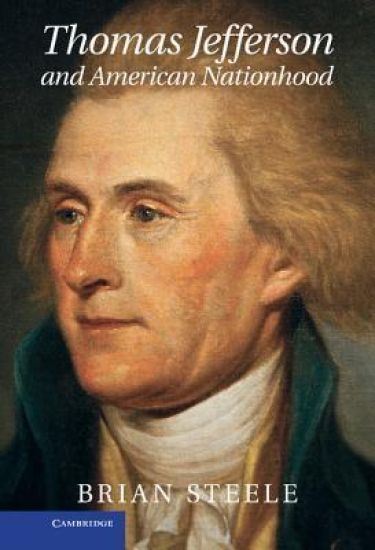
This book emphasises the centrality of nationhood to Thomas Jefferson's thought and politics, envisioning Jefferson as a cultural nationalist whose political project sought the alignment of the American state system with the will and character of the nation. Jefferson believed that America was the one nation on earth able to realise in practice universal ideals to which other peoples could only aspire. He appears in the book as the essential narrator of what he once called the 'American Story': as the historian, the sociologist and the ethnographer; the political theorist of the nation; the most successful practitioner of its politics; and its most enthusiastic champion. The book argues that reorienting Jefferson around the concept of American nationhood recovers an otherwise easily missed coherence to his political career and helps make sense of a number of conundrums in his thought and practice.
Algorithms for Data Science

Algorithms for Data Science

Brian Steele; John Chandler; Swarna Reddy

Springer International Publishing AG
2016
sidottu
This textbook on practical data analytics unites fundamental principles, algorithms, and data. Algorithms are the keystone of data analytics and the focal point of this textbook. Clear and intuitive explanations of the mathematical and statistical foundations make the algorithms transparent. But practical data analytics requires more than just the foundations. Problems and data are enormously variable and only the most elementary of algorithms can be used without modification. Programming fluency and experience with real and challenging data is indispensable and so the reader is immersed in Python and R and real data analysis. By the end of the book, the reader will have gained the ability to adapt algorithms to new problems and carry out innovative analyses.This book has three parts:(a) Data Reduction: Begins with the concepts of data reduction, data maps, and information extraction. The second chapter introduces associative statistics, themathematical foundation of scalable algorithms and distributed computing. Practical aspects of distributed computing is the subject of the Hadoop and MapReduce chapter.(b) Extracting Information from Data: Linear regression and data visualization are the principal topics of Part II. The authors dedicate a chapter to the critical domain of Healthcare Analytics for an extended example of practical data analytics. The algorithms and analytics will be of much interest to practitioners interested in utilizing the large and unwieldly data sets of the Centers for Disease Control and Prevention's Behavioral Risk Factor Surveillance System.(c) Predictive Analytics Two foundational and widely used algorithms, k-nearest neighbors and naive Bayes, are developed in detail. A chapter is dedicated to forecasting. The last chapter focuses on streaming data and uses publicly accessible data streams originating from the Twitter API and the NASDAQ stock market in the tutorials.This book is intended for a one- or two-semester course in data analytics for upper-division undergraduate and graduate students in mathematics, statistics, and computer science. The prerequisites are kept low, and students with one or two courses in probability or statistics, an exposure to vectors and matrices, and a programming course will have no difficulty. The core material of every chapter is accessible to all with these prerequisites. The chapters often expand at the close with innovations of interest to practitioners of data science. Each chapter includes exercises of varying levels of difficulty. The text is eminently suitable for self-study and an exceptional resource for practitioners.
Algorithms for Data Science

Algorithms for Data Science

Brian Steele; John Chandler; Swarna Reddy

Springer International Publishing AG
2018
nidottu
This textbook on practical data analytics unites fundamental principles, algorithms, and data. Algorithms are the keystone of data analytics and the focal point of this textbook. Clear and intuitive explanations of the mathematical and statistical foundations make the algorithms transparent. But practical data analytics requires more than just the foundations. Problems and data are enormously variable and only the most elementary of algorithms can be used without modification. Programming fluency and experience with real and challenging data is indispensable and so the reader is immersed in Python and R and real data analysis. By the end of the book, the reader will have gained the ability to adapt algorithms to new problems and carry out innovative analyses.This book has three parts:(a) Data Reduction: Begins with the concepts of data reduction, data maps, and information extraction. The second chapter introduces associative statistics, themathematical foundation of scalable algorithms and distributed computing. Practical aspects of distributed computing is the subject of the Hadoop and MapReduce chapter.(b) Extracting Information from Data: Linear regression and data visualization are the principal topics of Part II. The authors dedicate a chapter to the critical domain of Healthcare Analytics for an extended example of practical data analytics. The algorithms and analytics will be of much interest to practitioners interested in utilizing the large and unwieldly data sets of the Centers for Disease Control and Prevention's Behavioral Risk Factor Surveillance System.(c) Predictive Analytics Two foundational and widely used algorithms, k-nearest neighbors and naive Bayes, are developed in detail. A chapter is dedicated to forecasting. The last chapter focuses on streaming data and uses publicly accessible data streams originating from the Twitter API and the NASDAQ stock market in the tutorials.This book is intended for a one- or two-semester course in data analytics for upper-division undergraduate and graduate students in mathematics, statistics, and computer science. The prerequisites are kept low, and students with one or two courses in probability or statistics, an exposure to vectors and matrices, and a programming course will have no difficulty. The core material of every chapter is accessible to all with these prerequisites. The chapters often expand at the close with innovations of interest to practitioners of data science. Each chapter includes exercises of varying levels of difficulty. The text is eminently suitable for self-study and an exceptional resource for practitioners.