"Aero, Don't Do That " is about a lovable, loyal dog that sometimes does what he wants. Aero can be found patiently waiting to be fed, napping the day away or waiting for his family to come home. Other times, Aero helps himself to whatever he wants. He is a part of the family and all dog lovers will be able to relate to his silly antics
This highly anticipated update of the acclaimed textbook draws on the latest research to give students the knowledge and tools to explore the mechanisms by which bacterial pathogens cause infections in humans and animals. Written in an approachable and engaging style, the book uses illustrative examples and thought-provoking exercises to inspire students with the potential excitement and fun of scientific discovery. Completely revised and updated, and for the first time in stunning full-color, Bacterial Pathogenesis: A Molecular Approach, Fourth Edition, builds on the core principles and foundations of its predecessors while expanding into new concepts, key findings, and cutting-edge research, including new developments in the areas of the microbiome and CRISPR as well as the growing challenges of antimicrobial resistance.
"What is antibiotic resistance, and why should I care?" Two decades after the first edition of Revenge of the Microbes: How Bacterial Resistance is Undermining the Antibiotic Miracle warned of the looming threat of antibiotic resistance, it is now upon us. Not only has the spread of antibiotic resistance continued unabated, but the emergence of multidrug-resistant "superbugs" is poised to set medical progress back centuries. Several distinct biological, social, economic, and technological factors have resulted in us only barely keeping pace with these new threats. In this edition of Revenge of the Microbes, the authors detail the intricacies of the antibiotic-microbe arms race. Beginning with a historical perspective on antibiotics and their profound impact on both modern medicine and present-day society, they review our current arsenal against infectious diseases and the various ways pathogens evade or overcome them. The authors examine the practices and policies driving the discovery and development of new antibiotics, what happens to antibiotics once they are released into the environment, how antibiotic-resistant bacteria evolve and spread, and the urgency for finding alternative approaches to combating infections. This discussion of the controversies surrounding antibiotics will empower readers--citizen scientists, policy makers, pharmaceutical researchers, and medical professionals alike--to generate informed opinions on antibiotic usage and stewardship as we contend with fewer effective antibiotics. Reader-friendly and comprehensible, this new edition of Revenge of the Microbes engages a diverse audience of scientists, clinicians, educators, students, lawyers, environmentalists, and public health advocates as it explores the ever-changing landscape of the antibiotic resistance crisis.
This autobiography describes Wilson's 20-year nightmare of drug addiction, alcoholism, obesity and mental illness. He lost his family and he nearly lost his life. It is a frank discussion of what destroyed his life and of the controversial forces which helped to save it.
This book is a collection of artwork, poems, thoughts and ideas from 2015, as I was thinking through my relationship as a painter with art and the world. It is full of my artwork, landscapes, sunsets and seascapes capturing San Diego in plein air. It also is full of figure drawing, both posing nude, but also the people in coffee shops and musicians playing Jazz.Much of it has been my reaction to so much violence, in Paris, in Chicago, in Nigeria and so many other places. I've been thinking about words and myths, how we are cursed to speak but not understand just like the Tower of Babel story. We make so many things into towers to celebrate our ego.It was not God who named things in the garden, it was us, these are our very mortal words.This book is in a way a way of remembering the last year, the end of my second year of seriously painting, and leaving both the Figure Drawing Program and the First Church of the Brethren.
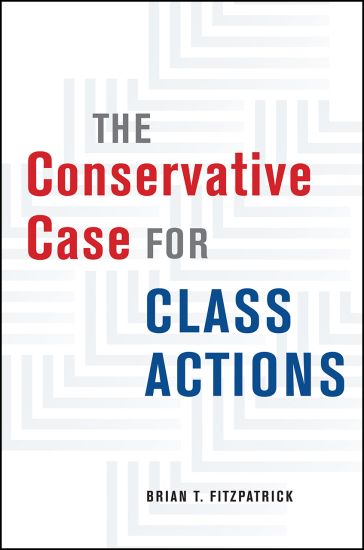
Since the 1960s, the class action lawsuit has been a powerful tool for holding businesses accountable. Yet years of attacks by corporate America and unfavorable rulings by the Supreme Court have left its future uncertain. In this book, Brian T. Fitzpatrick makes the case for the importance of class action litigation from a surprising political perspective: an unabashedly conservative point of view. Conservatives have opposed class actions in recent years, but Fitzpatrick argues that they should see such litigation not as a danger to the economy, but as a form of private enforcement of the law. He starts from the premise that all of us, conservatives and libertarians included, believe that markets need at least some rules to thrive, from laws that enforce contracts to laws that prevent companies from committing fraud. He also reminds us that conservatives consider the private sector to be superior to the government in most areas. And the relatively little-discussed intersection of those two beliefs is where the benefits of class action lawsuits become clear: when corporations commit misdeeds, class action lawsuits enlist the private sector to intervene, resulting in a smaller role for the government, lower taxes, and, ultimately, more effective solutions. Offering a novel argument that will surprise partisans on all sides, The Conservative Case for Class Actions is sure to breathe new life into this long-running debate.
Since the 1960s, the class action lawsuit has been a powerful tool for holding businesses accountable. Yet years of attacks by corporate America and unfavorable rulings by the Supreme Court have left its future uncertain. In this book, Brian T. Fitzpatrick makes the case for the importance of class action litigation from a surprising political perspective: an unabashedly conservative point of view. Conservatives have opposed class actions in recent years, but Fitzpatrick argues that they should see such litigation not as a danger to the economy, but as a form of private enforcement of the law. He starts from the premise that all of us, conservatives and libertarians included, believe that markets need at least some rules to thrive, from laws that enforce contracts to laws that prevent companies from committing fraud. He also reminds us that conservatives consider the private sector to be superior to the government in most areas. And the relatively little-discussed intersection of those two beliefs is where the benefits of class action lawsuits become clear: when corporations commit misdeeds, class action lawsuits enlist the private sector to intervene, resulting in a smaller role for the government, lower taxes, and, ultimately, more effective solutions. Offering a novel argument that will surprise partisans on all sides, The Conservative Case for Class Actions is sure to breathe new life into this long-running debate.
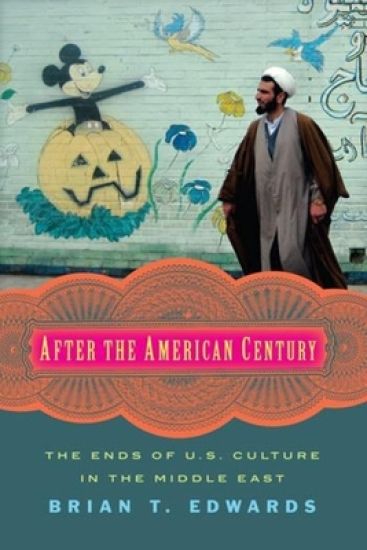
When Henry Luce announced in 1941 that we were living in the "American century," he believed that the international popularity of American culture made the world favorable to U.S. interests. Now, in the digital twenty-first century, the American century has been superseded, as American movies, music, and video games are received, understood, and transformed. How do we make sense of this shift? Building on a decade of fieldwork in Cairo, Casablanca, and Tehran, Brian T. Edwards maps new routes of cultural exchange that are innovative, accelerated, and full of diversions. Shaped by the digital revolution, these paths are entwined with the growing fragility of American "soft" power. They indicate an era after the American century, in which popular American products and phenomena-such as comic books, teen romances, social-networking sites, and ways of expressing sexuality-are stripped of their associations with the United States and recast in very different forms. Arguing against those who talk about a world in which American culture is merely replicated or appropriated, Edwards focuses on creative moments of uptake, in which Arabs and Iranians make something unexpected. He argues that these products do more than extend the reach of the original. They reflect a world in which culture endlessly circulates and gathers new meanings.
When Henry Luce announced in 1941 that we were living in the "American century," he believed that the international popularity of American culture made the world favorable to U.S. interests. Now, in the digital twenty-first century, the American century has been superseded, as American movies, music, and video games are received, understood, and transformed. How do we make sense of this shift? Building on a decade of fieldwork in Cairo, Casablanca, and Tehran, Brian T. Edwards maps new routes of cultural exchange that are innovative, accelerated, and full of diversions. Shaped by the digital revolution, these paths are entwined with the growing fragility of American "soft" power. They indicate an era after the American century, in which popular American products and phenomena-such as comic books, teen romances, social-networking sites, and ways of expressing sexuality-are stripped of their associations with the United States and recast in very different forms. Arguing against those who talk about a world in which American culture is merely replicated or appropriated, Edwards focuses on creative moments of uptake, in which Arabs and Iranians make something unexpected. He argues that these products do more than extend the reach of the original. They reflect a world in which culture endlessly circulates and gathers new meanings.
This book, first published in 1965, was the first by a British soil expert in which he wrote a study of his subject from a geographical, not an agricultural or biological, viewpoint. Chapters 1-8 deal with the factors and processes in soil formation. Chapters 9-17 describe the soil groups of the different regions of the world – for example, desert and tundra, the boreal zone, the Mediterranean, and intertropical areas.
This book, first published in 1965, was the first by a British soil expert in which he wrote a study of his subject from a geographical, not an agricultural or biological, viewpoint. Chapters 1-8 deal with the factors and processes in soil formation. Chapters 9-17 describe the soil groups of the different regions of the world – for example, desert and tundra, the boreal zone, the Mediterranean, and intertropical areas.
Do large cities grow more or less rapidly than small ones? Why should the relationship between city size and population growth vary so much from one period to another? This book studies the process of population growth in a national set of cities, relating its findings to the theoretical concepts of urban geography. To test his ideas, the author studies the growth of cities in England and Wales between 1801 and 1911. His explanations draw strongly on the connection between growth and the adoption of innovations. He develops a model of innovation diffusions in a set of cities and, in support of this model, looks at the way in which three particular innovations - the telephone, building societies and gaslighting - spread amongst English towns in the nineteenth century.This book was first published in 1973.
Do large cities grow more or less rapidly than small ones? Why should the relationship between city size and population growth vary so much from one period to another? This book studies the process of population growth in a national set of cities, relating its findings to the theoretical concepts of urban geography. To test his ideas, the author studies the growth of cities in England and Wales between 1801 and 1911. His explanations draw strongly on the connection between growth and the adoption of innovations. He develops a model of innovation diffusions in a set of cities and, in support of this model, looks at the way in which three particular innovations - the telephone, building societies and gaslighting - spread amongst English towns in the nineteenth century.This book was first published in 1973.
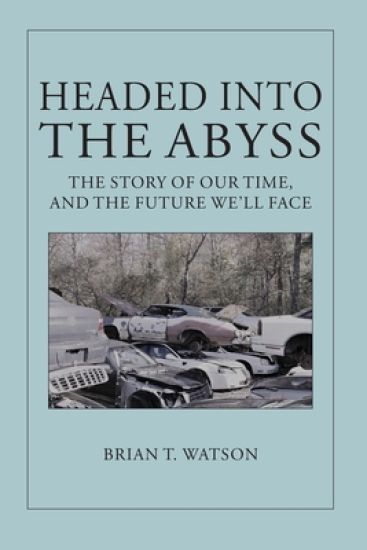
Today we are beset by a range of unprecedented developments that together, in this century, threaten the very existence of civilization. The current states of just ten forces -- capitalism, technology, the internet, politics, media, education, human nature, the environment, population, and transportation -- are driving society in predominantly negative ways. These forces are powerful and interconnected and their combined operation and dynamics will carry us into any number of disasters well before 2100. We have the knowledge and solutions to address our difficulties, but for many reasons we won't be able to meaningfully employ either.There is immediate urgency to this story too. We face many threats, but one of them -- the internet and its algorithms -- is rapidly changing nearly everything about our world, including our very capacity to recognize how profound and dangerous the change is.In clear, direct language intended for every citizen, regardless of his or her politics or age, "Headed Into the Abyss" describes and analyzes how each force is shaping society, and tells the big-picture story of what those effects add up to. Wherever on the globe you live, it really is, and will be, the story of our time.
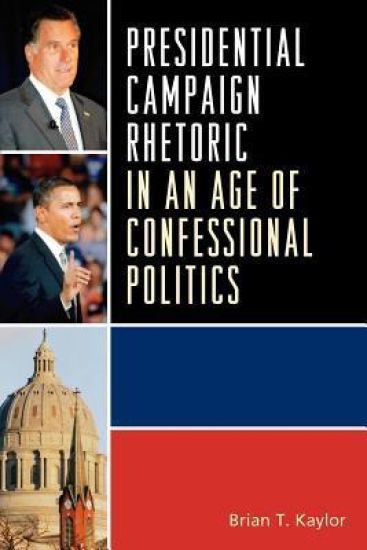
When a Bible-quoting Sunday School teacher, Jimmy Carter, won the 1976 presidential election, it marked the start of a new era of presidential campaign discourse. The successful candidates since then have followed Carter's lead in publicly testifying about their personal religious beliefs and invoking God to justify their public policy positions and their political visions. With this new confessional political style, the candidates have repudiated the former perspective of a civil-religious contract that kept political leaders from being too religious and religious leaders from being too political. Presidential Campaign Rhetoric in the Age of Confessional Politics analyzes the religious-political discourse used by presidential nominees from 1976-2008, and then describes key characteristics of their confessional rhetoric that represent a substantial shift from the tenets of the civil-religious contract. This new confessional political style is characterized by religious-political rhetoric that is testimonial, partisan, sectarian, and liturgical in nature. In order to understand why candidates have radically adjusted their God talk on the campaign trail, important religious-political shifts in American society since the 1950s are examined, which demonstrate the rhetorical demands evangelical religious leaders have placed upon our would-be national leaders. Brian T. Kaylor utilizes Michel Foucault's work on the confession—with theoretical adjustments—to critique the significant problems of the confessional political era. With clear analyses and unsettling relevance, Kaylor's critique of contemporary political discourse will rouse the interest and concern of engaged citizens everywhere.
When a Bible-quoting Sunday School teacher, Jimmy Carter, won the 1976 presidential election, it marked the start of a new era of presidential campaign discourse. The successful candidates since then have followed Carter's lead in publicly testifying about their personal religious beliefs and invoking God to justify their public policy positions and their political visions. With this new confessional political style, the candidates have repudiated the former perspective of a civil-religious contract that kept political leaders from being too religious and religious leaders from being too political. Presidential Campaign Rhetoric in the Age of Confessional Politics analyzes the religious-political discourse used by presidential nominees from 1976-2008, and then describes key characteristics of their confessional rhetoric that represent a substantial shift from the tenets of the civil-religious contract. This new confessional political style is characterized by religious-political rhetoric that is testimonial, partisan, sectarian, and liturgical in nature. In order to understand why candidates have radically adjusted their God talk on the campaign trail, important religious-political shifts in American society since the 1950s are examined, which demonstrate the rhetorical demands evangelical religious leaders have placed upon our would-be national leaders. Brian T. Kaylor utilizes Michel Foucault's work on the confession—with theoretical adjustments—to critique the significant problems of the confessional political era. With clear analyses and unsettling relevance, Kaylor's critique of contemporary political discourse will rouse the interest and concern of engaged citizens everywhere.
In From Left to Right, Brian Thorn explores what motivated Canadian women to become politically engaged in the 1940s and '50s. Although women in these decades are often depicted as being trapped in the suburbs – caring for children, baking pies, and leaving politics to men – they joined diverse political parties, including the Social Credit Party, the Co-operative Commonwealth Federation, and the Communist Party of Canada. Thorn argues, controversially, that while women on the left and right had different goals, their activism continued to be informed by maternalism. They used their roles as wives and mothers to influence their parties' positions on war and unions, to break down barriers between the private and public spheres, and to push for a new world order. Along the way, they laid the foundations for the 1960s feminist movement.
In From Left to Right, Brian Thorn explores what motivated Canadian women to become politically engaged in the 1940s and '50s. Although women in these decades are often depicted as being trapped in the suburbs – caring for children, baking pies, and leaving politics to men – they joined diverse political parties, including the Social Credit Party, the Co-operative Commonwealth Federation, and the Communist Party of Canada. Thorn argues, controversially, that while women on the left and right had different goals, their activism continued to be informed by maternalism. They used their roles as wives and mothers to influence their parties' positions on war and unions, to break down barriers between the private and public spheres, and to push for a new world order. Along the way, they laid the foundations for the 1960s feminist movement.
This is a milestone in machine-assisted microprocessor verification. Gordon [20] and Hunt [32] led the way with their verifications of sim ple designs, Cohn [12, 13] followed this with the verification of parts of the VIPER microprocessor. This work illustrates how much these, and other, pioneers achieved in developing tractable models, scalable tools, and a robust methodology. A condensed review of previous re search, emphasising the behavioural model underlying this style of verification is followed by a careful, and remarkably readable, ac count of the SECD architecture, its formalisation, and a report on the organisation and execution of the automated correctness proof in HOL. This monograph reports on Graham's MSc project, demonstrat ing that - in the right hands - the tools and methodology for formal verification can (and therefore should?) now be applied by someone with little previous expertise in formal methods, to verify a non-trivial microprocessor in a limited timescale. This is not to belittle Graham's achievement; the production of this proof, work ing as Graham did from the previous literature, goes well beyond a typical MSc project. The achievement is that, with this exposition to hand, an engineer tackling the verification of similar microprocessor designs will have a clear view of the milestones that must be passed on the way, and of the methods to be applied to achieve them.