Kirjojen hintavertailu. Mukana 11 244 527 kirjaa ja 12 kauppaa.

Kirjahaku

Etsi kirjoja tekijän nimen, kirjan nimen tai ISBN:n perusteella.

1000 tulosta hakusanalla Brian W. Dippie

Custer's Last Stand

Custer's Last Stand

Brian W. Dippie

Bison Books
1994
pokkari
Defeat and death at the Little Bighorn gave General George Custer and his Seventh Cavalry a kind of immortality. In Custer's Last Stand, Brian W. Dippie investigates the body of legend surrounding that battle on a bloody Sunday in 1876. His survey of the event in poems, novels, paintings, movies, jokes, and other ephemera amounts to a unique reflection on the national character.
Charles M. Russell

Charles M. Russell

Larry Len Peterson; Brian W. Dippie

University of Oklahoma Press
2014
sidottu
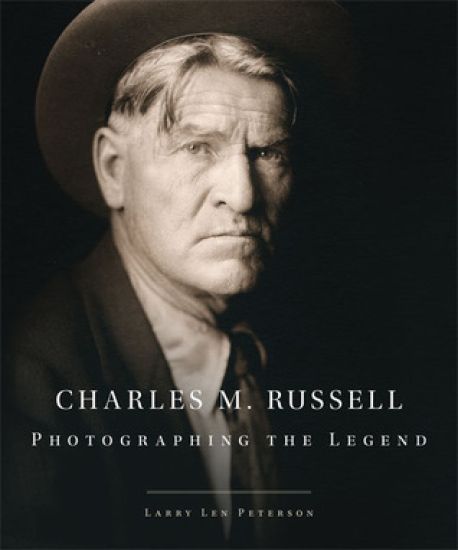
Almost as familiar as the images of the American West he painted and sculpted is the figure of Charles M. Russell himself. Standing or mounted, in boots and wide-brimmed hat, sash knotted at his waist, gaze steady under a hank of unruly hair: he is the one and only ""Cowboy Artist."" What is not so well known is the story that unfolds in the myriad photographs of Russell, pictures that document a remarkable life while also reflecting the evolution of photography and the depiction of the American West at the turn of the twentieth century. This biography makes use of hundreds of images of Russell, many never before published, to explore the role of photography in shaping the artist's public image and the making and selling of his art. More than that, the book shows how the Cowboy Artist personified what he portrayed. Born in 1864 to a well-to-do family in St. Louis, Russell was smitten early on by the burgeoning art of photography and the images of the West that were proliferating as rapidly as the frontier was disappearing. When he moved to Helena at sixteen, his passions came together, as professional and amateur photographers made their way to the Montana Territory to document the cowboy life that Charlie was embracing and beginning to paint. Larry Len Peterson traces Russell's image and his career from these first adventures to his apotheosis as an artist, and then to his California period and his final days as the grand statesman of the American West. Along the way we meet some of the most interesting photographers of the era, as Russell posed for Edward S. Curtis, Roland Reed, Clarence S. Bull, Hildore C. Eklund, and Dorothea Lange, among others. Because Nancy Russell used photographs to promote her artist husband's career and artistic identity, we also see the medium's early application as a marketing tool in the hands of a surprisingly savvy businesswoman. Alongside Peterson's engrossing tale of the life of this American icon, the hundreds of photographs of Russell, his friends, family members, business associates, colleagues, and celebrities of his time offer a unique view of the artist's historic and cultural milieu - a view at once panoramic and intimate.
Art of the West

Art of the West

Amy Scott; Stephen Aron; Brian W. Dippie

University of Oklahoma Press
2018
sidottu
Since its founding in 1988, the Autry Museum of the American West has expanded its vision and its collections in profound ways. From its original focus on the history, art, and popular culture inspired by the West and its attendant myths, the museum - located in the heart of Los Angeles - has evolved to embrace a more inclusive, complex, and contemporary approach to the American West. Featuring more than 150 color images, this volume highlights the museum's Art of the West exhibit. Alongside these celebrated works of art, Art of the West showcases essays by prominent scholars and art historians who address various topics, ranging from motorcycles to beadwork and photography. Essays devoted to women's art, Native American art, and Chicano photography are important correctives to more traditional and linear models of western art history, with its emphasis on rugged masculinity, Anglo-American pioneers, and the myth of an ""untamed"" frontier. As Autry Museum curator Amy Scott explains in her introduction, there is not one West; instead, many Wests, comprising diverse collections of places and peoples, form a ""complex tapestry of ethnic mixing and geopolitical spaces, diaspora, immigration, industry, infrastructure, tourism, and environmental degradation."" By addressing such provocative themes, Art of the West challenges us to look beyond surface appearances, superficial caricatures, and cultural assumptions. The American West emerges as a dynamic place in which memory informs, but does not determine, the present.
Art of the West

Art of the West

Amy Scott; Stephen Aron; Brian W. Dippie

University of Oklahoma Press
2018
nidottu
Since its founding in 1988, the Autry Museum of the American West has expanded its vision and its collections in profound ways. From its original focus on the history, art, and popular culture inspired by the West and its attendant myths, the museum - located in the heart of Los Angeles - has evolved to embrace a more inclusive, complex, and contemporary approach to the American West. Featuring more than 150 color images, this volume highlights the museum's Art of the West exhibit. Alongside these celebrated works of art, Art of the West showcases essays by prominent scholars and art historians who address various topics, ranging from motorcycles to beadwork and photography. Essays devoted to women's art, Native American art, and Chicano photography are important correctives to more traditional and linear models of western art history, with its emphasis on rugged masculinity, Anglo-American pioneers, and the myth of an ""untamed"" frontier. As Autry Museum curator Amy Scott explains in her introduction, there is not one West; instead, many Wests, comprising diverse collections of places and peoples, form a ""complex tapestry of ethnic mixing and geopolitical spaces, diaspora, immigration, industry, infrastructure, tourism, and environmental degradation."" By addressing such provocative themes, Art of the West challenges us to look beyond surface appearances, superficial caricatures, and cultural assumptions. The American West emerges as a dynamic place in which memory informs, but does not determine, the present.
Brian W. Aldiss

Brian W. Aldiss

Paul Kincaid

UNIVERSITY OF ILLINOIS PRESS
2022
sidottu
Brian W. Aldiss wrote classic science fiction novels like Report on Probability A and Hothouse. Billion Year Spree, his groundbreaking study of the field, defined the very meaning of SF and delineated its history. Yet Aldiss's discomfort with being a guiding spirit of the British New Wave and his pursuit of mainstream success characterized a lifelong ambivalence toward the genre. Paul Kincaid explores the many contradictions that underlay the distinctive qualities of Aldiss's writing. Wartime experiences in Asia and the alienation that arose upon his return to the cold austerity of postwar Britain inspired themes and imagery that Aldiss drew upon throughout his career. He wrote of prolific nature overwhelming humanity, believed war was madness even though it provided him with the happiest period of his life, and found parallels in the static lives of Indian peasants and hidebound English society. As Kincaid shows, contradictions created tensions that fueled the metaphorical underpinnings of Aldiss's work and shaped not only his long career but the evolution of postwar British science fiction.
Brian W. Aldiss

Brian W. Aldiss

Paul Kincaid

UNIVERSITY OF ILLINOIS PRESS
2022
nidottu
Brian W. Aldiss wrote classic science fiction novels like Report on Probability A and Hothouse. Billion Year Spree, his groundbreaking study of the field, defined the very meaning of SF and delineated its history. Yet Aldiss's discomfort with being a guiding spirit of the British New Wave and his pursuit of mainstream success characterized a lifelong ambivalence toward the genre. Paul Kincaid explores the many contradictions that underlay the distinctive qualities of Aldiss's writing. Wartime experiences in Asia and the alienation that arose upon his return to the cold austerity of postwar Britain inspired themes and imagery that Aldiss drew upon throughout his career. He wrote of prolific nature overwhelming humanity, believed war was madness even though it provided him with the happiest period of his life, and found parallels in the static lives of Indian peasants and hidebound English society. As Kincaid shows, contradictions created tensions that fueled the metaphorical underpinnings of Aldiss's work and shaped not only his long career but the evolution of postwar British science fiction.
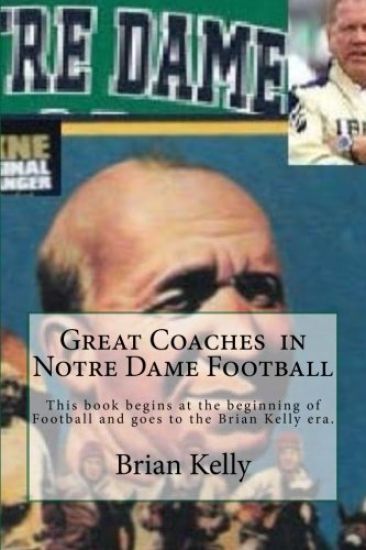
Great Coaches in Notre Dame Football: This Book Begins at the Beginning of Football and Goes to the Brian Kelly Era.
The book is written for those of us who love Notre Dame Football. The greatest coaches of all time trained the greatest coaches of all time and the greatest players of all time for over 126 seasons worth of the greatest football games of all time. All loyal Notre Dame fans are well aware that the words "great" and "greatness" are never misused when describing Notre Dame Football.This book will light up your sports bookshelf and help make you one of the most knowledgeable ND fans regarding ND's 31 great coaches.The book first tells the story about the first football game in 1867. From there, the progression leads, to Notre Dame's first football game in 1887, then on to the first Notre Dame coach in 1894, and of course it moves on with the stories of all of the great coaches in ND Football-Rockne, Leahy, Parseghian, Devine, and Holtz, marching through time to the current coach, Brian Kelly.It takes the reader through stories about Notre Dame's 31 coaches including some stops in the 126 seasons worth of great games (out of 1259 games). Thank you for picking up this book for your own personal reading and/or for that of a great friend or relative. You will not be able to put this book down
Christmas Wings for Brian: A heartwarming story of a little boy from Wilkes-Barre PA, whose shoulders kept growing
This story begins with a nineteen-month-old named Brian, who then grows up to be a special young man with special gifts above all others. His love of Christmas trains was only surpassed by his love of planes and all air vehicles. Superman had become his favorite airplane. Every year after Christmas, he saw the huge tree and everything else disappear. He would go to bed and when he would awaken, everything would be gone-the tree, the train, all the toys, the helicopters, the big and small panes at the tree platform airport. Worse than that, even the platform where everything was displayed was gone. But, the next year, it was back. Christmas was a great day every year and it stayed that way for days after so much so that it seemed like it would never end each and every year. After it was about to all go away at the end of just his second Christmas season, after a few days passed with all platform items gone, he got over it. That year, mom and dad took him for a special visit to a Christmas wizard who was also an angel. The wizard had a huge platform with trains and flying objects even though it was a few weeks after Christmas. It was before Brian had even turned two-years old. In this visit, he picked up more real information that a child his age should have been able to handle... Yet, he was able to manage the truth well, for over five years. Then, in his seventh year, when he reached the age of reason, he finally had figured out the Christmas mystery. No matter what, no longer was there any sadness at the end of the Christmas season. This year, like every other year, he was ready for it all to go away but the Christmas angel had told him "Fear Not " No longer did he care about going to sleep one particular night after Christmas, and poof, the morning would present a big void. It was his yearJust like he knew it would; it happened. This time, there was not an icicle or even a tiny piece of platform snow anywhere to make him think it was not just a silly dream-like how it was explained every other year. This year mom and dad knew that Brian knew the secret and he promised them he would not tell his younger brother and sister. Brian had grown; still loved Christmas; but was changed by the visit with the angel and this was the big year. On his seventh birthday, when he woke up, he got a big surprise. He did not know what it was all about but he had been assured that it would be good. For five years he had felt the muscular nubs in his back. A wizard had made a great prediction that the muscles in his back that seemed to be outgrowths of the scapula, could support huge wings. This discovery over time would become the most significant thing that would happen in Brian's life until the day his gifts were full grown. His story is what this book is all about. This is great family reading. A real family is highlighted in this fine uplifting story. Thank you for reading it. You can read this book to all your children and their friends and they will love it. Enjoy Have a great and magical day. I have a feeling that the tree, the toys, and the toot-toot and perhaps even more, will all be back next year if not sooner.
Mike v Trump: Mike Grant takes on Donald Trump; Brian Kelly takes on Mike Grant; Pick the winner!
The people have had enough The hateful impeachment of Donald Trump began long before he was elected. The hard left wanted him gone from the beginning and were prepared to do so at all costs. Trump hammered back at the political establishment & they hate him for his success. Are we not sick of the hate. Michael Grant, my co-writer on this book is sick of the hate but he can't help adding a little hate to the Trump mix. James D. Veltmeyer, MD from LaJolla nailed it: "The savagery, frenzy, and outright hysteria displayed by the President's enemies within the Democratic Party, the media, and various power centers of the globalist elites, have no prior precedent."This book pits Michael Grant's Trump perspective which is hardly positive or quite negative so to speak, against Brian Kelly, yours truly in a battle royal worth your reading. Some might notice that Lets Go Publish the publisher, is headed by Brian Kelly so only the items that Michael Grant wrote himself take his position. The rest such as this book description are stock publishing items without both sides taken into account. The fact is that Donald Trump got elected because the majority of the voters had begun to no longer trust Democrats or Republicans. Many of the regular people in America decided that they could trust Trump and in fact, they continue to trust him to do what was best for America. Trump so far has not let those people down. The left cannot stand that fact.Americans had gotten sick of the elected officials in all levels of government doing the bidding of slimy politicians or political donors and hacks in the various government swamps. Donald Trump came across as the only candidate for president who offered Americans a breath of fresh air from the stodgy, bossy, establishment elites in both major parties. That's why I voted for Trump. He was brave enough to defy the status quo of rich donors controlling the government for their personal benefit. Trump is rich enough thanks to his father's and his own cunning business sense that he alone of all candidates did not have to suck up to the seedy side of life just to get elected.Everybody has an opinion but too many people have their opinion shaped by crooked politicians and crooked news media. The Crooked News Network, CNN tops the untrustworthy media scoundrel list. So many of my good friends who are otherwise smart people believe CNN like it is Christ's gospel. I mean even good people that cannot see their own faults because CNN tells them how it is. Too many people for example get all their news from crooked CNN. Yet it is now fact that at 9:00AM daily, CNN executives get their marching orders from the president of this network news organization. More or less, they are told to avoid being fired, they must continually strengthen all aspects of the political (no facts needed) effort to disparage to the death, President Trump. That must be their focus above the people's news-or they better read the WANT Ads. .Trump in his winning 2016 election campaign held rallies of from 20,000 to 50,000 people who believed that Donald J. Trump loves America and American traditional values. Look at the goodness that he instilled into his own children. He is not a liberal fool or a progressive socialist tool who hates America. He is simply for America and Americans first. So are many of you and I if we really think about it. The corrupt anti-American mainstream press has recently merged with the corrupt Democrat Party. Together they regurgitate the most obnoxious collection of hate known since the Civil War. So, now together, they hate Trump because he represents normal Americans and not the fringe actors who have together decided to unseat him as president and crown Hillary for the job. This pond scum had no rallies like Trump because there would be few attendees.
Feeling Dizzy

Feeling Dizzy

Brian W. Blakley; Mary-Ellen Siegel

Hungry Minds Inc,U.S.
1997
nidottu
When you turn your head suddenly, do you feel sick to your stomach?Do you often become dizzy when you get up too quickly from a chair?Have you ever felt a sense of motion when you're standing still? You're not alone. Whether it's fainting, imbalance, or spinning sensations, these disorders affect 76 million Americans at some time in their lives. Feeling Dizzy explains what can go wrong, what physicians can do to diagnose and treat problems, what you can do to help yourself, and how you can finally regain your sense of balance. The first complete book on the subject written from the general reader, Feeling Dizzy: Identifies and explains the three types of dizziness: vertigo, imbalance, and fainting.Describes treatment options, from medication or surgery to therapy and rehabilitation.Outlines self-help options, including relaxation techniques, biofeedback, and exercise.
Genetics of Microbes

Genetics of Microbes

Brian W. Bainbridge

Kluwer Academic Publishers
1989
nidottu
Writing a textbook on microbial genetics in about 200 pages was un­ doubtedly a difficult task, but I have been encouraged by the response from both students and lecturers to the first edition. The requirement for a second edition is also a measure of the need for such a book. My experience as a lecturer has shown that what is needed first is an intelligible framework which can be read in a reasonable period of time. Armed with these principles, a student can then go to reviews and the original literature with a reasonable chance of understanding the jargon and the details. Molecular genetics is now so well advanced that it is easy to lose track of the purpose of a set of experiments in the wealth of sequence data and complex interactions. I have therefore kept the same format for this edition with a well-illustrated text giving original papers, popular reviews, monographs and detailed reviews to enable the student to take the subject further as required.
The Science of Describing – Natural History in Renaissance Europe
Out of the diverse traditions of medical humanism, classical philology, and natural philosophy, Renaissance naturalists created a new science devoted to discovering and describing plants and animals. In order to distinguish and catalog new plant and animal species, they developed new techniques of observing and recording, created botanical gardens and herbaria, and exchanged correspondence and specimens within an international community. Drawing on published natural histories, manuscript correspondence, garden plans, travelogues, watercolors, and drawings, "The Science of Describing" reconstructs the evolution of this discipline of description through four generations of naturalists.Illustrated with woodcuts, engravings, and photographs, "The Science of Describing" is the first broad interpretation of Renaissance natural history in more than a generation and will appeal widely to an interdisciplinary audience.
Robert Harley

Robert Harley

Brian W. Hill

Yale University Press
1988
sidottu
Robert Harley (1661-1724) dominated English politics in the late seventeenth century and throughout the reign of Queen Anne, and his long parliamentary career spanned years during which British political institutions underwent crucial changes. As predecessor of Sir Robert Walpole, he was in effect a prime minister before the office was created, and he administered the country at a time of major conflict within Europe. However, Harley's style of politics was characterized by secrecy and mistrust, and this tended to overshadow serious assessment of his influence and achievements. This book by Brian W. Hill is the first biography of this significant figure.A pioneer of parliamentary government after the revolution of 1688, Harley became leader of the opposition and Speaker of the House of Commons, and he went on to hold the most important positions of state. Although he moved from one intrigue to another, he was able to stay in power until he was dismissed from office in 1714 by Queen Anne over the South Seas Company affair. His achievements during this period were significant: he turned the early Tories into an effective opposition to help forge a two-party parliamentary system; he persuaded William III to accept limitation of the Crown's powers by the Act of Settlement; and, through the Treaty of Utrecht, he helped to secure peace in Europe for half a century.Hill sets Harley's career firmly within the political and social context of contemporary religion, regionalism, dynastic conflict, and factionalism. His much-needed study is an important contribution to our understanding of a major figure in a complex and exciting period of British history.