A controversial day-to-day account, by Haig's Chief of Intelligence, at the British Expeditionary Force General Headquarters throughout the war on the Western Front. Charteris had not kept a diary at the time, so 'At GHQ' consists of papers, notes and letters from the time, rewritten into diary form. He confessed to sometimes amplifying from memory but by and large the reconstructed 'diary' is consistent with records which he kept at the time, e.g. his entry for the First Day of the Somme which he states was "not an attempt to win the war at a blow", and that "weeks of hard fighting" lay ahead.This is an important and interesting work containing much interesting material and revealing gossip.
A controversial day-to-day account, by Haig's Chief of Intelligence, at the British Expeditionary Force General Headquarters throughout the war on the Western Front. Charteris had not kept a diary at the time, so 'At GHQ' consists of papers, notes and letters from the time, rewritten into diary form. He confessed to sometimes amplifying from memory but by and large the reconstructed 'diary' is consistent with records which he kept at the time, e.g. his entry for the First Day of the Somme which he states was "not an attempt to win the war at a blow", and that "weeks of hard fighting" lay ahead.This is an important and interesting work containing much interesting material and revealing gossip.
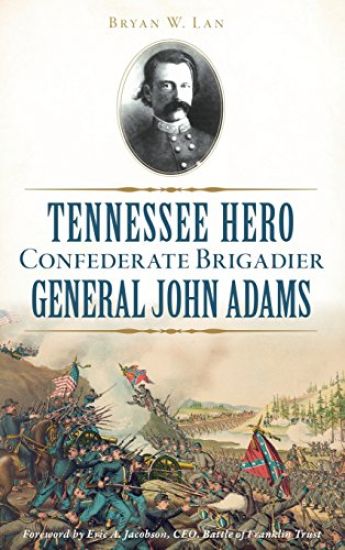
John Adams is best remembered as one of the four Confederate generals who lay on the porch of the Carnton House, dead, when the Battle of Franklin ended on December 1, 1864. Unfortunately he did not leave much in the way of personal papers, and this biography has been pieced together from Army records and other sources, including accounts of his contemporaries. Adams's career in the U.S. Army gives us a good look at the military, the concept of Manifest Destiny, and the relations with those conquered by the Army, the Indians. This book also considers one of the more debated topics in Civil War history: why did a man who served the United States for most of his life resign his commission and side with the Confederacy?
There are several lines of thought about how Brigadier General John Hunt Morgan and six of his officers escaped from the Ohio Penitentiary November28, 1863. Some feel that the accounts of digging a tunnel written by Captain Thomas Hines and Captain Lorenzo Hockersmith are correct. Some feel that a tunnel was completed but bribery was used to get supplies and make certain that prison officials looked the other way while work on the tunnel was in progress and the escape was made. Some feel that there never was a tunnel and bribe money allowed the men to just walk out the door. We are going to examine documents and reports made by the participants, Union and Confederate, involved in the escape and the investigations of the escape. By having the opportunity to read the original reports and documents you will be able to decide for yourself just what happened. You will read about the treatment General Morgan and his officers received when they arrived at the Ohio penitentiary and you will read about prison life before the escape and, for those who remained, after the escape. You will be able to read the Investigation of the escape ordered by Governor Tod, the investigation ordered by the Ohio Legislature and the investigation ordered by U. S. Secretary of War Stanton. You will be able to read the newspaper interview in which General Morgan describes the escape. You will be able to read the descriptions of the escape written by Captain Thomas Henry Hines, Captain Lorenzo Hockersmith and Captain Thomas Bullitt.You will also be able to read some of the numerous conspiracy theories that dispute the escape by tunnel story.
Confederate brigadier general John Adams refused to leave his men despite his own critical injuries and died at the Battle of Franklin. Until recently, his service was rarely acknowledged. During his remarkable military career, he traversed the country from Tennessee to New York, Mexico to Maryland and then to California. Adams trained and rode alongside some of the most celebrated commanders of the Confederate army, but his greatest feat remains his unwavering devotion to his men and the Confederate cause in his home state of Tennessee. Bryan W. Lane follows Adams's rise in the military ranks until his inevitable fall at one of the most important battles of the Civil War.
Early on the morning of September 4, 1864 Union cavalry under the command of Brigadier General Alvan C. Gillem entered Greeneville, Tennessee, occupied at the time by Confederate cavalry under the command of Brigadier General John Hunt Morgan. During the ensuing confrontation Brigadier General Morgan was shot through his heart and killed. Almost immediately conflicting stories were spread about the facts concerning the death of General Morgan. Who alerted General Gillem that General Morgan had occupied Greeneville? Who told General Gillem's men where General Morgan was spending the night? Was General Morgan killed after he surrendered? Who actually killed General Morgan? Was General Morgan's body handled with respect? We are going to look at documents and reports made by people present at the time and you, the reader, can determine what the truth is. This will not be an easy task because the accounts vary considerably as to who was present at General Morgan's death, the circumstances of his death and his treatment after death. I will give the Union versions of the events first then the Confederate versions. If a Confederate version is mentioned in a Union version, I will present it immediately after the Union version.General Morgan's public image was damaged when his men robbed two Kentucky banks in June of 1864. General Morgan was also charged in June of 1864 with stealing two Confederate locomotives and trains. We are going to look at the possibility that General Morgan, after being relieved of his command (because of the bank robberies) on August 30, 1864, went to Greeneville, and met his death, while attempting to defeat Brigadier General Gillem and restore General Morgan's public image.
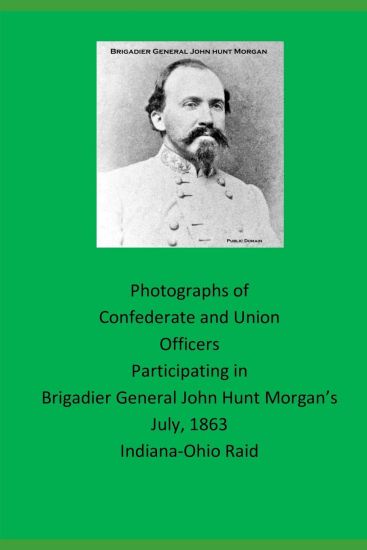
When Reading about Brigadier General John Hunt Morgan's July 1863 Indiana-Ohio Raid we sometimes wonder what the Confederate and Union officers involved in the raid looked like. Now we can see photographs of the Officers from both sides.
The 18th century was a wealth of knowledge, exploration and rapidly growing technology and expanding record-keeping made possible by advances in the printing press. In its determination to preserve the century of revolution, Gale initiated a revolution of its own: digitization of epic proportions to preserve these invaluable works in the largest archive of its kind. Now for the first time these high-quality digital copies of original 18th century manuscripts are available in print, making them highly accessible to libraries, undergraduate students, and independent scholars.This collection reveals the history of English common law and Empire law in a vastly changing world of British expansion. Dominating the legal field is the Commentaries of the Law of England by Sir William Blackstone, which first appeared in 1765. Reference works such as almanacs and catalogues continue to educate us by revealing the day-to-day workings of society.++++The below data was compiled from various identification fields in the bibliographic record of this title. This data is provided as an additional tool in helping to insure edition identification: ++++British LibraryT113151With an appendix and a final advertisement leaf.Dublin: printed for George Faulkner, 1749. xiii, 1],100,78, 2]p.; 8
This book is a historical analysis or Brigadier General St. John R. Liddell and his division during the Battle of Chickamauga. Liddell's Division was an ad hoc unit, formed just prior to the battle. During the battle, the unit was involved in five different engagements over a period of three days. These engagements resulted in varying degrees of success and failure. In today's context the performance of the division can be seen as mostly a failure, but from the American Civil War perspective the division's performance in many ways was a success. The division's experiences over the three-day period included: fighting against the overwhelming firepower of a new weapon and suffering numerous casualties; surprising and routing three enemy brigades before being surprised, flanked, and forced to retreat; lacking the will to attack across an open field littered with dead and wounded comrades; attacking and flanking the enemy then being threatened with cut off from the main army; and finally being attacked unexpectedly from the flank and routed. The book begins with a general summation of the battle and an introductory discussion of the structure, leadership, tactics, weapons, and training of the Confederate -varmies during the American Civil War. The book then continues with an examination of General Liddell's life and background before and during the early part of the war. Next, the thesis discusses, as a prelude to Chickamauga, Liddell and his brigades' experiences at the Battle of Stones River and during the Tullahoma Campaign. The thesis continues with a description of the background and combat experiences of the brigade commanders and the units that comprised Liddell's Division. Thereafter, the book analyzes the performance of General Liddell and his division at the Battle of Chickamauga and draws conclusions as to the proximate causes of the performance: causes that are related to the terrain, the organization of the division, the lack of enemy information, and the tactical focus of Liddell and his commanders.