Kirjojen hintavertailu. Mukana 11 244 527 kirjaa ja 12 kauppaa.

Kirjahaku

Etsi kirjoja tekijän nimen, kirjan nimen tai ISBN:n perusteella.

1000 tulosta hakusanalla Britt Halvorson

Conversionary Sites

Conversionary Sites

Britt Halvorson

University of Chicago Press
2018
sidottu
Drawing on more than two years of participant observation in the American Midwest and in Madagascar among Lutheran clinicians, volunteer laborers, healers, evangelists, and former missionaries, Conversionary Sites investigates the role of religion in the globalization of medicine. Based on immersive research of a transnational Christian medical aid program, Britt Halvorson tells the story of a thirty-year-old initiative that aimed to professionalize and modernize colonial-era evangelism. Creatively blending perspectives on humanitarianism, global medicine, and the anthropology of Christianity, she argues that the cultural spaces created by these programs operate as multistranded “conversionary sites,” where questions of global inequality, transnational religious fellowship, and postcolonial cultural and economic forces are negotiated. A nuanced critique of the ambivalent relationships among religion, capitalism, and humanitarian aid, Conversionary Sites draws important connections between religion and science, capitalism and charity, and the US and the Global South.
Conversionary Sites

Conversionary Sites

Britt Halvorson

University of Chicago Press
2018
nidottu
Drawing on more than two years of participant observation in the American Midwest and in Madagascar among Lutheran clinicians, volunteer laborers, healers, evangelists, and former missionaries, Conversionary Sites investigates the role of religion in the globalization of medicine. Based on immersive research of a transnational Christian medical aid program, Britt Halvorson tells the story of a thirty-year-old initiative that aimed to professionalize and modernize colonial-era evangelism. Creatively blending perspectives on humanitarianism, global medicine, and the anthropology of Christianity, she argues that the cultural spaces created by these programs operate as multistranded “conversionary sites,” where questions of global inequality, transnational religious fellowship, and postcolonial cultural and economic forces are negotiated. A nuanced critique of the ambivalent relationships among religion, capitalism, and humanitarian aid, Conversionary Sites draws important connections between religion and science, capitalism and charity, and the US and the Global South.
Imagining the Heartland

Imagining the Heartland

Britt E. Halvorson; Joshua O. Reno

University of California Press
2022
sidottu
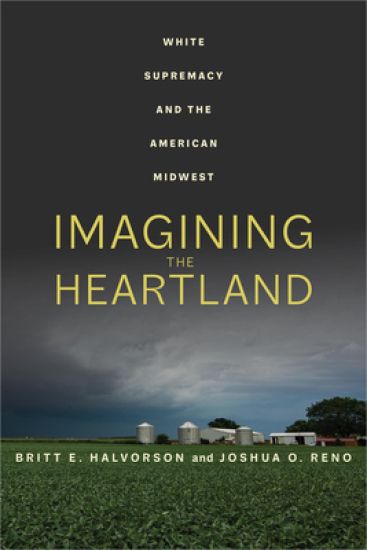
An overdue examination of the Midwest's long influence on nationalism and white supremacy. Though many associate racism with the regional legacy of the South, it is the Midwest that has upheld some of the nation’s most deep-seated convictions about the value of whiteness. From Jefferson’s noble farmer to The Wizard of Oz, imagining the Midwest has quietly gone hand-in-hand with imagining whiteness as desirable and virtuous. Since at least the U.S. Civil War, the imagined Midwest has served as a screen or canvas, projecting and absorbing tropes and values of virtuous whiteness and its opposite, white deplorability, with national and global significance. Imagining the Heartland provides a poignant and timely answer to how and why the Midwest has played this role in the American imagination. In Imagining the Heartland, anthropologists Britt Halvorson and Josh Reno argue that there is an unexamined affinity between whiteness, Midwestness, and Americanness, anchored in their shared ordinary and homogenized qualities. These seemingly unremarkable qualities of the Midwest take work; they do not happen by default. Instead, creating successful representations of ordinary Midwestness, in both positive and negative senses, has required cultural expression through media ranging from Henry Ford’s assembly line to Grant Wood’s famous “American Gothic.” Far from being just another region among others, the Midwest is a political and affective logic in racial projects of global white supremacy. Neglecting the Midwest means neglecting the production of white supremacist imaginings at their most banal and at their most influential, their most locally situated and their most globally dispersed.
Imagining the Heartland

Imagining the Heartland

Britt E. Halvorson; Joshua O. Reno

University of California Press
2022
pokkari
An overdue examination of the Midwest's long influence on nationalism and white supremacy. Though many associate racism with the regional legacy of the South, it is the Midwest that has upheld some of the nation’s most deep-seated convictions about the value of whiteness. From Jefferson’s noble farmer to The Wizard of Oz, imagining the Midwest has quietly gone hand-in-hand with imagining whiteness as desirable and virtuous. Since at least the U.S. Civil War, the imagined Midwest has served as a screen or canvas, projecting and absorbing tropes and values of virtuous whiteness and its opposite, white deplorability, with national and global significance. Imagining the Heartland provides a poignant and timely answer to how and why the Midwest has played this role in the American imagination. In Imagining the Heartland, anthropologists Britt Halvorson and Josh Reno argue that there is an unexamined affinity between whiteness, Midwestness, and Americanness, anchored in their shared ordinary and homogenized qualities. These seemingly unremarkable qualities of the Midwest take work; they do not happen by default. Instead, creating successful representations of ordinary Midwestness, in both positive and negative senses, has required cultural expression through media ranging from Henry Ford’s assembly line to Grant Wood’s famous “American Gothic.” Far from being just another region among others, the Midwest is a political and affective logic in racial projects of global white supremacy. Neglecting the Midwest means neglecting the production of white supremacist imaginings at their most banal and at their most influential, their most locally situated and their most globally dispersed.
Människan i en existentiell kultur : en antologi om Människa-kulturreligionsprogrammet vid Högskolan i Gävle

Människan i en existentiell kultur : en antologi om Människa-kulturreligionsprogrammet vid Högskolan i Gävle

Sara Duppils; Jari Ristiniemi; Timo Järpeskog; Sofie Halvarsson; Birgit Lindgren-Ödén; Britt Johanne Farstad; Per-Erik Söderberg; Stefan Larsson; Per Vesterlund; Olof Dahlin; Ann-Kristin Mimmi Eriksson; Marie Hafstad; Peder Thalén; Lina Schiller

Gävle University Press
2021
nidottu
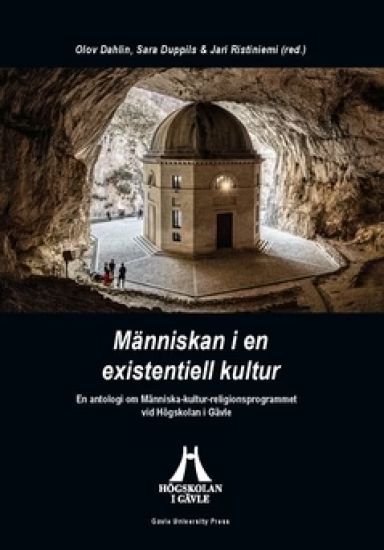
Denna antologi har kandidatprogrammet Människa-kulturreligionsprogrammet (MKR) vid den religionsvetenskapliga ämnesavdelningen vid Högskolan i Gävle som gemensam nämnare och övergripande tema. Programmet har en unik sammansättning kurser som bara finns i Gävle och har i en undersökning pekats ut som det mest populära kandidatprogrammet i religionsvetenskap i landet. Programmet ger en förståelse för olika religioner, livssyner och kulturella bakgrunder, och ger därmed studenten en särskild kompetens att arbeta med komplexa kulturmötesfrågor. Det ger därutöver studenten en speciell förståelse för de existentiella frågor som individen ställs inför i livets olika skeden. Programmet svarar mot regionala såväl som nationella utbildningsbehov och tar sig an många och viktiga samtida och framtida samhällsutmaningar. Social, kulturell och existentiell hållbarhet är fenomen som kommer att framstå som allt viktigare ju mer mångfaldigt och komplext samhället blir och utgör centrala teman inom MKR-programmet. Antologin är tänkt att användas som undervisningsmaterial för studenter som går programmet. Förhoppningen är emellertid att boken även ska intressera en större läsekrets, däribland representanter för möjliga framtida arbetsplatser för våra studenter, men även andra. Bokens kapitel är skrivna av lärare och tidigare studenter knutna till Ämnesavdelningen för religionsvetenskap. Templet på bokens omslag ligger i anslutning till Frasassigrottorna nära staden Genga i regionen Marche i östra Italien. Det uppfördes 1828 på initiativ av påve Leo XII och kallas Valadiertemplet efter arkitekten Giuseppe Valadier, känd för sina byggnader i neoklassisk stil. Templet rymmer en staty av madonnan och barnet. En av benämningarna för Jungfru Maria är refugium peccatorum och därför är templet även känt som ”syndarnas tillflykt” och har varit en plats dit pilgrimer sökt sig för fo¨rlåtelse. Boken ingår som nr.11 i skriftserien Religionsvetenskapliga studier från Gävle som ges ut av Gävle University Press.
Britt-Marie Was Here \ Britt-Marie Estuvo Aquí (Spanish Edition)
Fredrik Backman, el autor bestseller de Gente ansiosa, nos trae una novela emocionante, tierna y graciosa que celebra la importancia de la comunidad y de las conexiones entre las personas en un mundo que a veces intenta alejarnos los unos de los otros.Tras dejar a su esposo infiel, Britt-Marie encuentra trabajo como encargada en el casi clausurado centro c vico de Borg, un abandonado y ruinoso pueblo del que lo nico bueno que puede decirse es que tiene una carretera. Esta quisquillosa mujer se ver envuelta en la vida de sus nuevos vecinos, un grupo de malhechores, borrachos y holgazanes que le demostrar n que la vida va m s all de tener un caj n de los cubiertos ordenado.Pero su reto m s grande a n est por venir: se enfrentar a la imposible tarea de entrenar al equipo de f tbol juvenil del pueblo para alzarse con la copa que se jugar en pocos d as. Podr Britt-Marie encontrar por fin su lugar en el mundo en este pueblo de inadaptados?FREDRIK BACKMAN es autor de nueve libros, entre ellos el bestseller internacional Un hombre llamado Ove, cuya versi n cinematogr fica fue candidata a dos scar. Sus obras se han traducido a cuarenta y seis idiomas. Backman vive en Estocolmo con su esposa y sus dos hijos.
Britt-Marie Was Here

Britt-Marie Was Here

Fredrik Backman

Hodder Stoughton
2016
pokkari
The number 1 European bestseller by the author of New York Times bestseller and international phenomenon A Man Called Ove, Britt-Marie was Here is a funny, poignant and uplifting tale of love, community, and second chances. For as long as anyone can remember, Britt-Marie has been an acquired taste. It's not that she's judgemental, or fussy, or difficult - she just expects things to be done in a certain way. A cutlery drawer should be arranged in the right order, for example (forks, knives, then spoons). We're not animals, are we? But behind the passive-aggressive, socially awkward, absurdly pedantic busybody is a woman who has more imagination, bigger dreams and a warmer heart than anyone around her realizes. So when Britt-Marie finds herself unemployed, separated from her husband of 20 years, left to fend for herself in the miserable provincial backwater that is Borg - of which the kindest thing one can say is that it has a road going through it - and somehow tasked with running the local football team, she is a little unprepared. But she will learn that life may have more to offer her that she's ever realised, and love might be found in the most unexpected of places.
Britt-Marie Was Here

Britt-Marie Was Here

Fredrik Backman

Atria Books
2017
nidottu
The New York Times bestselling author of A Man Called Ove, My Grandmother Asked Me to Tell You She's Sorry, and Anxious People captivates readers with this "warm and satisfying" (People) story "about a woman rediscovering herself after a personal crisis...fans of Backman will find another winner in these pages" (Publishers Weekly). Britt-Marie can't stand mess. A disorganized cutlery drawer ranks high on her list of unforgivable sins. She is not one to judge others--no matter how ill-mannered, unkempt, or morally suspect they might be. It's just that sometimes people interpret her helpful suggestions as criticisms, which is certainly not her intention. But hidden inside the socially awkward, fussy busybody is a woman who has more imagination, bigger dreams, and a warmer heart that anyone around her realizes. When Britt-Marie walks out on her cheating husband and has to fend for herself in the miserable backwater town of Borg--of which the kindest thing one can say is that it has a road going through it--she finds work as the caretaker of a soon-to-be demolished recreation center. The fastidious Britt-Marie soon finds herself being drawn into the daily doings of her fellow citizens, an odd assortment of miscreants, drunkards, layabouts. Most alarming of all, she's given the impossible task of leading the supremely untalented children's soccer team to victory. In this small town of misfits, can Britt-Marie find a place where she truly belongs? Funny and moving, sweet and inspiring, Britt-Marie Was Here celebrates the importance of community and connection in a world that can feel isolating.
Britt and the Butler

Britt and the Butler

Tara Mills

Createspace Independent Publishing Platform
2018
nidottu
Britt doesn't care for her friends' plan to fix her up with a total stranger that weekend. However, when sinfully sexy Harrington appears, she reconsiders her objections. The script is fine. It's the cast that needs to change. When she meets the man intended for her, she knows she's right. Only the butler has bothered to ask what she wants. Her answer is simple -- him.
Britt-Marie lättar sitt hjärta (Japanska)

Britt-Marie lättar sitt hjärta (Japanska)

Astrid Lindgren

Tokuma Shoten Publishing Co., Ltd.
2003
sidottu
Det är Astrid Lindgrens debutbok. I boken får Britt-Mari en brevvän att få lite vettig användning av sin egen skrivmaskin. Och hon berättar för sin brevvän Kajsa allt om sin stora, stora, stökiga, lyckliga familj, kärlekens smärtor och det händelserika liv hon lever i Ekeliden Stuga i Småstad.
Britt-Marie var her

Britt-Marie var her

Fredrik Backman

Cappelen Damm
2015
sidottu
Britt-Marie var her av Fredrik Backman, forfatteren av suksessboka En mann ved navn OveBritt-Marie (63) har forlatt sin utro ektemann og er klar for et nytt liv. Det første hun må gjøre er å skaffe seg en jobb, og dermed åpner det seg nye og helt uventede muligheter. Det handler om fordommer, om hvordan man organiserer bestikket og om et gudsforlatt sted langs veien. Det er en fortelling om å få en ny sjanse, om det første avsparket og om at nesten alt kan rengjøres med natron. "På samme måte som Arto Paasilinna graver han i sitt lands nasjonalkarakter og forstørrer det han finner til noe grotesk som har kraft til å utløse latter og en og annen tåre." Gøteborg-PostenLes utdrag fra boka