Kirjojen hintavertailu. Mukana 11 244 527 kirjaa ja 12 kauppaa.

Kirjahaku

Etsi kirjoja tekijän nimen, kirjan nimen tai ISBN:n perusteella.

1000 tulosta hakusanalla Britton Celia

Claude Simon

Claude Simon

Britton Celia

Longman
1993
nidottu
This is a major study of the Nobel prize-winning French novelist Claude Simon. Simon is a complex figure: for all that he writes in a distinctively modern fictional tradition (exemplified by Proust, Joyce, Beckett and Robbe-Grillet), his novels contain strong elements of visual representation alongside a very different king of free-floating, anti-realist writing.
The Nouveau Roman

The Nouveau Roman

Celia Britton

Palgrave Macmillan
1992
sidottu
The Nouveau Roman writers have been actively involved in the theory as well as the practice of fiction, participating in a series of vigorous debates on issues such as the political significance of literature, formalism and structuralism, the status of the author, etc. This study discusses Robbe-Grillet, Sarraute, Simon, Butor and Ricardou, analysing both the interaction of their own theory and fiction and their reactions to the work of figures such as Sartre, Barthes, Lvi-Strauss, Sollers and Kristeva.
Claude Simon

Claude Simon

Celia Britton

Cambridge University Press
2009
pokkari
This is a major study of the Nobel prize-winning French novelist Claude Simon. Simon is a complex figure: for all that he writes in a distinctively modern fictional tradition (exemplified by Proust, Joyce, Beckett and Robbe-Grillet), his novels contain strong elements of visual representation alongside a very different king of free-floating, anti-realist writing. This combination and tension between vivd representation of experience and the free play of language is a focus of Dr Britton's book. She exposes the limitations of literary theory in dealing with Simon's novels and reveals how concepts from psychoanalysis can illuminate this problematic juxtaposition of vision and text.
Claude Simon

Claude Simon

Celia Britton

Routledge
2017
sidottu
This is a major study of the Nobel prize-winning French novelist Claude Simon. Simon is a complex figure: for all that he writes in a distinctively modern fictional tradition (exemplified by Proust, Joyce, Beckett and Robbe-Grillet), his novels contain strong elements of visual representation alongside a very different king of free-floating, anti-realist writing.
The Nouveau Roman

The Nouveau Roman

Celia Britton

Palgrave Macmillan
1992
nidottu
The Nouveau Roman writers have been actively involved in the theory as well as the practice of fiction, participating in a series of vigorous debates on issues such as the political significance of literature, formalism and structuralism, the status of the author, etc. This study discusses Robbe-Grillet, Sarraute, Simon, Butor and Ricardou, analysing both the interaction of their own theory and fiction and their reactions to the work of figures such as Sartre, Barthes, Lvi-Strauss, Sollers and Kristeva.
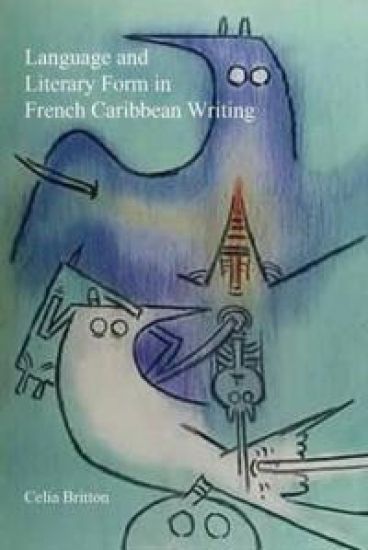
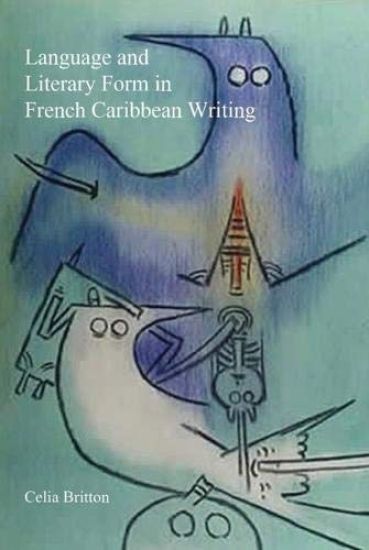
Language and Literary Form in French Caribbean Writing

Language and Literary Form in French Caribbean Writing

Celia Britton

Liverpool University Press
2014
sidottu
This book analyses French Caribbean writing from the point of view of its language and literary form - questions which until recently were somewhat neglected in postcolonial studies but are now becoming an important area of research. Britton supplements postcolonial theory with structuralism and poststructuralism to show how analysis of the textual illuminates the political and ideological positions of the writers. Topics including genre, intertextuality, narrative voice, discursive agency, orality, the ‘creolization’ of languages and the renewal of realism are discussed in relation to Glissant, Césaire, Ménil, Chamoiseau, Confiant, Depestre, Condé, Schwarz-Bart, Pineau and Maximin.
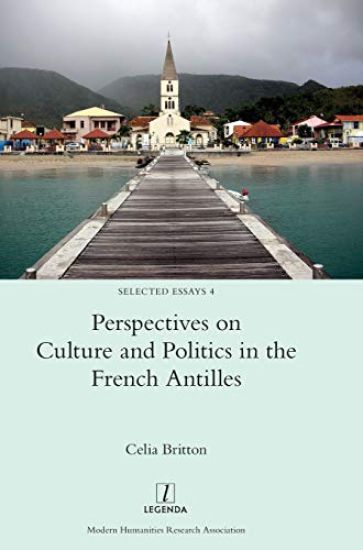
Perspectives on Culture and Politics in the French Antilles
In these essays, three of which have not previously been published, Celia Britton discusses a variety of texts from the point of view of their engagement with the cultural and political issues that have been prominent in Martinique and Guadeloupe from the mid-twentieth century to the present day. These texts range from the ethnographic writings of Michel Leiris to the novels of Maryse Cond , Joseph Zobel, Ernest P pin and Edouard Glissant; Glissant's essays are also considered, as are those of Ren M nil. Thus the question of cultural identity, for example, is central to Glissant's work but also, from a rather different point of view, to that of Leiris and M nil. Other topics covered include racial difference and the politics of race, in the novels of Cond and P pin; gender (Cond and P pin); the impact of globalization and, conversely, the specificity of place (Glissant and P pin); the legacy of slavery (Cond ); and political action (M nil, Glissant, Cond ).Celia Britton is Emeritus Professor of French and Francophone Literature at University College and a Fellow of the British Academy. Earlier in her career she worked on the Nouveau Roman and French cinema. For the past thirty years she has published widely on French Caribbean literature, thought and culture.
Perspectives on Culture and Politics in the French Antilles
In these essays, three of which have not previously been published, Celia Britton discusses a variety of texts from the point of view of their engagement with the cultural and political issues that have been prominent in Martinique and Guadeloupe from the mid-twentieth century to the present day. These texts range from the ethnographic writings of Michel Leiris to the novels of Maryse Cond , Joseph Zobel, Ernest P pin and Edouard Glissant; Glissant's essays are also considered, as are those of Ren M nil. Thus the question of cultural identity, for example, is central to Glissant's work but also, from a rather different point of view, to that of Leiris and M nil. Other topics covered include racial difference and the politics of race, in the novels of Cond and P pin; gender (Cond and P pin); the impact of globalization and, conversely, the specificity of place (Glissant and P pin); the legacy of slavery (Cond ); and political action (M nil, Glissant, Cond ).Celia Britton is Emeritus Professor of French and Francophone Literature at University College and a Fellow of the British Academy. Earlier in her career she worked on the Nouveau Roman and French cinema. For the past thirty years she has published widely on French Caribbean literature, thought and culture.
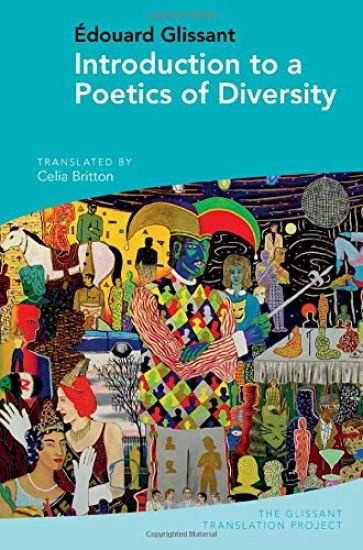
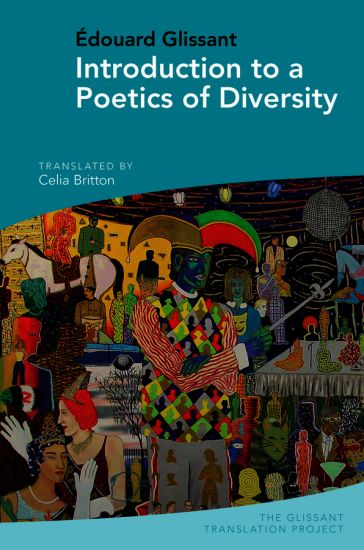
Introduction to a Poetics of Diversity

Introduction to a Poetics of Diversity

Celia Britton

Liverpool University Press
2020
sidottu
This book reproduces the texts of four lectures, followed by discussions, and two interviews with Lise Gauvin published in Introduction à une poétique du divers (1996); and also four further interviews from L’Imaginaire des langues (Lise Gauvin, 2010). It covers a wide range of topics but key recurring themes are creolization, language and langage, culture and identity, ‘monolingualism’, the ‘Chaos-world’ and the role of the writer. Migration and the various different kinds of migrants are also discussed, as is the difference between ‘atavistic’ and ‘composite’ communities, the art of translation, identity as a ‘rhizome’ rather than a single root, the Chaos-World and chaos theory, ‘trace thought’ as opposed to ‘systematic thought’, the relation between ‘place’ and the Whole-World, exoticism, utopias, a new definition of beauty as the realized quantity of differences, the status of literary genres and the possibility that literature as a whole will disappear. Four of the interviews (Chapters 6, 7, 8 and 9) relate to particular works that Glissant has published: Tout-monde, Le monde incrée, La Cohée du Lamentin, Une nouvelle région du monde. Many of these themes have been explored in his previous works, but here, because in all the chapters we see Glissant interacting with the questions and views of other people, they are presented in a particularly accessible form.
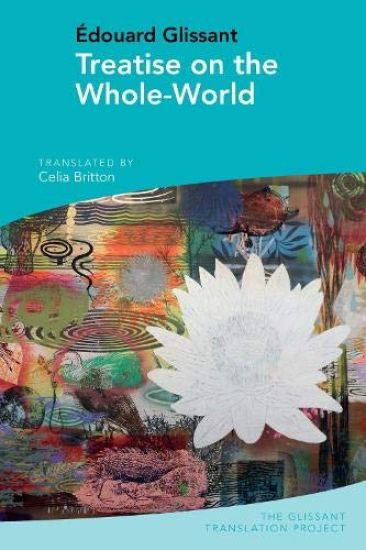
Treatise on the Whole-World

Treatise on the Whole-World

Celia Britton

Liverpool University Press
2020
sidottu
This exciting, challenging book covers a wide range of subject matter, but all linked together through the key ideas of diversity and ‘Relation’. It sees our modern world, shaped by immigration and the aftermath of colonization, as a multiplicity of different communities interacting and evolving together, and argues passionately against all political and philosophical attempts to impose uniformity, universal or absolute values. This is the ‘Whole-World’, which includes not only these objective phenomena but also our consciousness of them. Our personal identities are not fixed and self-sufficient but formed in ‘Relation’ through our contacts with others. Glissant constantly stresses the unpredictable, ‘chaotic’ nature of the world, which, he claims, we must adapt to and not attempt to limit or control. ‘Creolization’ is not restricted to the Creole societies of the Caribbean but describes all societies in which different cultures with equal status interact to produce new configurations. This perspective produces brilliant new insights into the politicization of culture, but also language, poetry, our relationship to place and to landscapes, globalization, history, and other topics. The book is not written in the style conventionally associated with essays, but is a mixture of argument, proclamation, and poetic evocations of landscapes, lifestyles and people.
Introduction to a Poetics of Diversity

Introduction to a Poetics of Diversity

Celia Britton

Liverpool University Press
2020
nidottu
This book reproduces the texts of four lectures, followed by discussions, and two interviews with Lise Gauvin published in Introduction à une poétique du divers (1996); and also four further interviews from L’Imaginaire des langues (Lise Gauvin, 2010). It covers a wide range of topics but key recurring themes are creolization, language and langage, culture and identity, ‘monolingualism’, the ‘Chaos-world’ and the role of the writer. Migration and the various different kinds of migrants are also discussed, as is the difference between ‘atavistic’ and ‘composite’ communities, the art of translation, identity as a ‘rhizome’ rather than a single root, the Chaos-World and chaos theory, ‘trace thought’ as opposed to ‘systematic thought’, the relation between ‘place’ and the Whole-World, exoticism, utopias, a new definition of beauty as the realized quantity of differences, the status of literary genres and the possibility that literature as a whole will disappear. Four of the interviews (Chapters 6, 7, 8 and 9) relate to particular works that Glissant has published: Tout-monde, Le monde incrée, La Cohée du Lamentin, Une nouvelle région du monde. Many of these themes have been explored in his previous works, but here, because in all the chapters we see Glissant interacting with the questions and views of other people, they are presented in a particularly accessible form.
Treatise on the Whole-World

Treatise on the Whole-World

Celia Britton

Liverpool University Press
2020
nidottu
This exciting, challenging book covers a wide range of subject matter, but all linked together through the key ideas of diversity and ‘Relation’. It sees our modern world, shaped by immigration and the aftermath of colonization, as a multiplicity of different communities interacting and evolving together, and argues passionately against all political and philosophical attempts to impose uniformity, universal or absolute values. This is the ‘Whole-World’, which includes not only these objective phenomena but also our consciousness of them. Our personal identities are not fixed and self-sufficient but formed in ‘Relation’ through our contacts with others. Glissant constantly stresses the unpredictable, ‘chaotic’ nature of the world, which, he claims, we must adapt to and not attempt to limit or control. ‘Creolization’ is not restricted to the Creole societies of the Caribbean but describes all societies in which different cultures with equal status interact to produce new configurations. This perspective produces brilliant new insights into the politicization of culture, but also language, poetry, our relationship to place and to landscapes, globalization, history, and other topics. The book is not written in the style conventionally associated with essays, but is a mixture of argument, proclamation, and poetic evocations of landscapes, lifestyles and people.
Language and Literary Form in French Caribbean Writing

Language and Literary Form in French Caribbean Writing

Celia Britton

Liverpool University Press
2021
nidottu
This book analyses French Caribbean writing from the point of view of its language and literary form - questions which until recently were somewhat neglected in postcolonial studies but are now becoming an important area of research. Britton supplements postcolonial theory with structuralism and poststructuralism to show how analysis of the textual illuminates the political and ideological positions of the writers. Topics including genre, intertextuality, narrative voice, discursive agency, orality, the ‘creolization’ of languages and the renewal of realism are discussed in relation to Glissant, Césaire, Ménil, Chamoiseau, Confiant, Depestre, Condé, Schwarz-Bart, Pineau and Maximin.
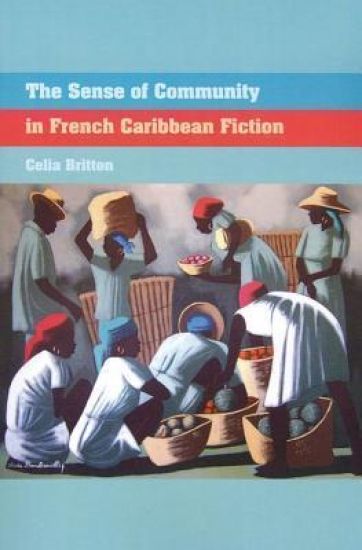
The Sense of Community in French Caribbean Fiction

The Sense of Community in French Caribbean Fiction

Celia Britton

Liverpool University Press
2010
nidottu
This book analyses the theme of community in seven French Caribbean novels in relation to the work of the French philosopher Jean-Luc Nancy. The islands’ complex history means that community is a central and problematic issue in their literature, and underlies a range of other questions such as political agency, individual and collective subjectivity, attitudes towards the past and the future, and even literary form itself. Britton examines Jacques Roumain’s Gouverneurs de la rosée, Edouard Glissant’s Le Quatrième Siècle, Simone Schwarz-Bart’s Pluie et vent sur Télumée Miracle, Vincent Placoly’s L’eau-de-mort guildive, Patrick Chamoiseau’s Texaco, Daniel Maximin’s L’Ile et une nuit and Maryse Condé’s Desirada.
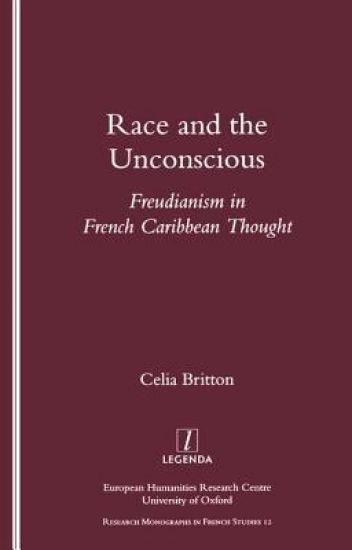
Race and the Unconscious

Race and the Unconscious

Celia Britton

Legenda
2002
nidottu
Freud is often accused of eurocentrism - of making unjustifiable generalizations on the basis of European family structures. Although French Caribbean intellectuals such as Fanon, Cesaire and Glissant have joined in these criticisms, they have also made strikingly positive use of psychoanalysis. Much intellectual energy has been invested in notions of repression, the Oedipus complex and the psychoanalytic cure, while at the same time Freudianism has been no less vigorously criticized for its political quietism and its potential as a means of social control. Thus Freudian theory, and the controversies it arouses, remains a surprisingly persistent cultural element. The crucial issue is the link between the unconscious and race. In this groundbreaking study, Britton looks at the different ways in which Freudian psychoanalysis has been incorporated into arguments about racial identity and difference in the French Caribbean.
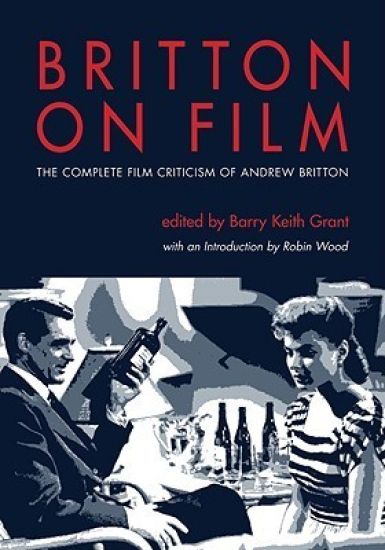
Britton on Film

Britton on Film

Wayne State University Press
2008
nidottu
For fifteen years before his untimely death, Andrew Britton produced a body of undeniably brilliant film criticism that has been largely ignored within academic circles. Though Britton’s writings are extraordinary in their depth and range and are closely attuned to the nuances of the texts they examine, his humanistic approach was at odds with typical theory-based film scholarship. Britton on Film demonstrates that Britton’s humanism is also his strength, as it presents all of his published writings together for the first time, including Britton’s persuasive readings of such important Hollywood films as Meet Me in St. Louis, Spellbound, and Now, Voyager and of key European filmmakers such as Sergei Eisenstein, Jean-Luc Godard, and Bernardo Bertolucci.Renowned film scholar and editor Barry Keith Grant has assembled all of Britton’s published essays of film criticism and theory for this volume, spanning the late 1970s to the early 1990s. The essays are arranged by theme: Hollywood cinema, Hollywood movies, European cinema, and film and cultural theory. In all, twenty-eight essays consider such varied films as Hitchcock’s Spellbound, Jaws, The Exorcist, and Mandingo and topics as diverse as formalism, camp, psychoanalysis, imperialism, and feminism. Included are such well-known and important pieces as "Blissing Out: The Politics of Reaganite Entertainment" and "Sideshows: Hollywood in Vietnam," among the most perceptive discussions of these two periods of Hollywood history yet published. In addition, Britton’s critiques of the ideology of Screen and Wisconsin formalism display his uncommon grasp of theory even when arguing against prevailing critical trends.An introduction by influential film critic Robin Wood, who was also Britton’s teacher and friend, begins this landmark collection. Students and teachers of film studies as well as general readers interested in film and American popular culture will enjoy Britton on Film.