Kirjojen hintavertailu. Mukana 12 363 183 kirjaa ja 12 kauppaa.

Kirjahaku

Etsi kirjoja tekijän nimen, kirjan nimen tai ISBN:n perusteella.

1000 tulosta hakusanalla Brown Charles R.

A Working Faith

A Working Faith

Brown Charles R.

The University of North Carolina Press
2013
nidottu
The author here attempts to dispel the intellectual fog that often dims the Christian's view of Christ. He recognizes that it is good for an individual to move now and then intellectually and spiritually, but he cautions against discarding such things as religious faith, human service, political stability, and economic security. He offers a satisfying philosophy of life for individuals and groups.Originally published in 1926.A UNC Press Enduring Edition -- UNC Press Enduring Editions use the latest in digital technology to make available again books from our distinguished backlist that were previously out of print. These editions are published unaltered from the original, and are presented in affordable paperback formats, bringing readers both historical and cultural value.
The Government of Michigan

The Government of Michigan

Charles R Brown

Hansebooks
2017
pokkari
The Government of Michigan - Its history and jurisprudence is an unchanged, high-quality reprint of the original edition of 1874. Hansebooks is editor of the literature on different topic areas such as research and science, travel and expeditions, cooking and nutrition, medicine, and other genres. As a publisher we focus on the preservation of historical literature. Many works of historical writers and scientists are available today as antiques only. Hansebooks newly publishes these books and contributes to the preservation of literature which has become rare and historical knowledge for the future.
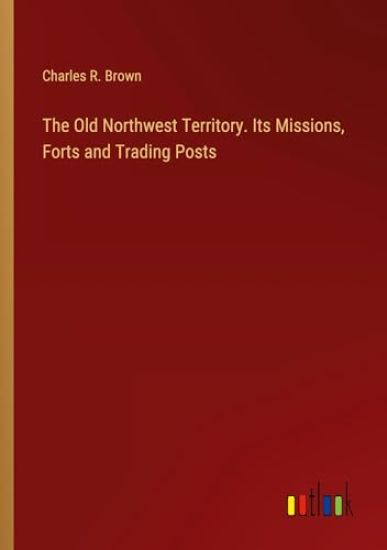
Ancient and Modern Michilimackinac, by J. J. Strange, the Mormon King with Supplement by Judge Charles R. Brown
"The name of the Island of Michilimackinac and the Promontory of the Old Michilimackinac is derived from the Indian words Michi Maikinac - Great Turtle; both places, as seen from a distance on the water, resembling the turtle. The Ojibewas, (Chippewas, ) Ottowas and Pottawatomies, who settled the country after the name was in use, hold it synonymous with Michimauhinonk, the place of mighty spirits. The Island, according to Indian tradition, is the birth place of Michabow, the Indian God of Waters.
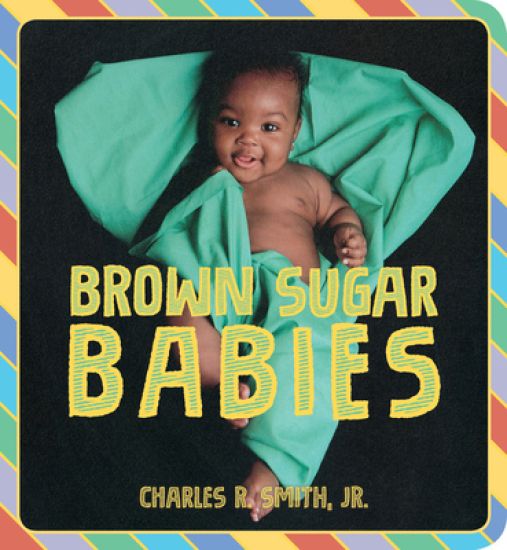
Brown Sugar Babies

Brown Sugar Babies

Charles R. Smith Jr.

Disney Press
2020
pahvisivuinen
Bubbling brown sugarbubbles Baby's belly.Syrupy sweet sticky centershakes like a bowl of jelly.Oooh, baby This board book is sweet enough to eat. Infants, toddlers, and their older siblings will drool as they rejoice in the beauty of brown babies. Here, carob cherubs show all their true colors--everything from peanut butter to honey to cinnamon spice. Expressive photos and a mouthwatering rhyme encourage babies to find splendor in the many hues of their own skin.
Coloniality in the Cliff Swallow

Coloniality in the Cliff Swallow

Charles R. Brown; Mary Bomberger Brown

University of Chicago Press
1996
sidottu
Many animal species live and breed in colonies. Although biologists have documented numerous costs (increased competition for limited resources) and benefits (more pairs of eyes to watch for predators) of group living, they often still do not agree on why coloniality evolved in the first place. Drawing on their 12-year study of a population of cliff swallows in Nebraska, USA, the authors investigate 26 social and ecological costs and benefits of coloniality. They explore how these costs and benefits are reflected in reproductive success and survivorship, and speculate on the evolution of cliff swallow coloniality. This study of vertebrate coloniality should be of interest to all who study social animals, including behavioural ecologists, population biologists, ornithologists and parasitologists. Its focus on the evolution of coloniality should also appeal to evolutionary biologists and to psychologists studying decision making in animals. The authors' research on swallows was the subject of an award-winning exhibition at the Peabody Museum of Natural History in New Haven, Connecticut, and was included in the BBC television production, "The Trials of Life".
Coloniality in the Cliff Swallow

Coloniality in the Cliff Swallow

Charles R. Brown; Mary Bomberger Brown

University of Chicago Press
1996
nidottu
Many animal species live and breed in colonies. Although biologists have documented numerous costs (increased competition for limited resources) and benefits (more pairs of eyes to watch for predators) of group living, they often still do not agree on why coloniality evolved in the first place. Drawing on their 12-year study of a population of cliff swallows in Nebraska, USA, the authors investigate 26 social and ecological costs and benefits of coloniality. They explore how these costs and benefits are reflected in reproductive success and survivorship, and speculate on the evolution of cliff swallow coloniality. This study of vertebrate coloniality should be of interest to all who study social animals, including behavioural ecologists, population biologists, ornithologists and parasitologists. Its focus on the evolution of coloniality should also appeal to evolutionary biologists and to psychologists studying decision making in animals. The authors' research on swallows was the subject of an award-winning exhibition at the Peabody Museum of Natural History in New Haven, Connecticut, and was included in the BBC television production, "The Trials of Life".
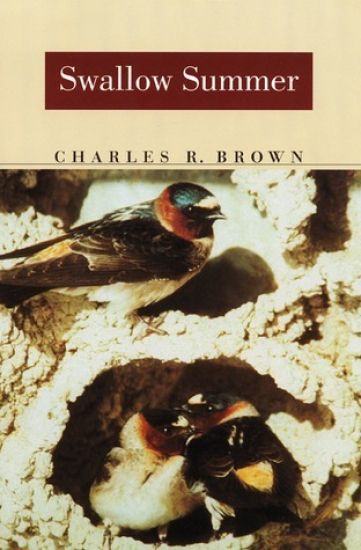
Swallow Summer

Swallow Summer

Charles R. Brown

University of Nebraska Press
1998
pokkari
Each May for fifteen consecutive years, Charles R. Brown has trekked to the Cedar Point Biological Station in western Nebraska to learn more about the behavior of colonial cliff swallows. He, his wife, and several student assistants spend the summers observing, catching, and banding swallows to determine life span, migration patterns, and nesting habits. Why study one species of swallow for fifteen years? With Swallow Summer Brown answers all the tourists, highway patrolmen, and local residents who have asked why he was leaning over bridges with nets, wading in mud up to his knees, or staring fixedly into culverts, where swallows often build their mud nests. He finds these birds fascinating.This book is about a passion for birds, but it is also about the personal challenges of scientific research. Brown provides a daily chronicle of field work at Cedar Point—including the joy of holding a swallow that has returned to the same site for eleven years and the inevitable frictions between researchers and local residents. Blending humorous anecdotes and insightful scientific observations, Brown writes an engaging tale. Moreover, he makes sophisticated biology accessible to anyone who cares about nature.