Kirjojen hintavertailu. Mukana 11 244 527 kirjaa ja 12 kauppaa.

Kirjahaku

Etsi kirjoja tekijän nimen, kirjan nimen tai ISBN:n perusteella.

1000 tulosta hakusanalla Bruce E. Johansen

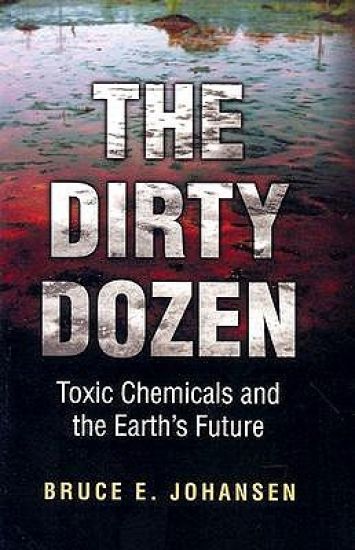
The Dirty Dozen

The Dirty Dozen

Bruce E. Johansen

Praeger Publishers Inc
2003
sidottu
Forty years after the publication of Rachel Carson's Silent Spring, this important study examines the history, industrial uses, and harmful effects of the twelve most commonly used organochloride chemicals. All have been fully or partially banned by the Stockholm Protocol, an international treaty signed by about 120 countries in December 2000. Among the twelve are the dioxins (the active ingredient in Agent Orange) and polychlorinated byphenyls (PCBs), which are toxic in minute quantities. Johansen pays special attention to the Inuit of the Arctic, where these chemicals have been bio-accumulating to dangerous levels, moving up the food chain to a degree of toxicity that some Inuit mothers are no longer able to safely breast-feed their infants.The polar stratospheric ozone has been devastated by emissions of chlorofluorocarbons (CFCs), and new scientific findings connect global warming near the Earth's surface to significant cooling in the stratosphere. This synergy aggravates ozone depletion because the chemical reactions that destroy the ozone become more energetic as temperatures drop. Synthetic toxins have taken their toll on minority ethnic groups in the United States, and persistent organic pollutants have inflicted physiological damage on humans and other animals. Finally, Johansen explores the estrogenic effects of such chemicals. Sperm counts have declined as much as 50% in 50 years.
Silenced!

Silenced!

Bruce E. Johansen

Praeger Publishers Inc
2007
sidottu
This book is about people whose beliefs and affiliations have opposed powerful interests in the present-day United States. This eclectic group of people and controversial issues, from climate-change scientists who have been censored by the Bush administration to Muslims accused of terrorism, have one thing in common. All of them straddle the limits of what Noam Chomsky has called permissible debate as defined by dominant political and economic institutions and individuals. The central thesis is that restriction of free inquiry is harmful to our culture because it inhibits the search for knowledge. Johansen presents case studies in the borderlands of free speech in a Jeffersonian cast—an intellectual framework assuming that open debate—even of unpopular ideas—is essential to accurate perception of reality.This book is about people whose ideological circumstances have found them opposing established beliefs in our times—scholars advocating the Palestinian cause in a very hostile intellectual environment, for example, as well as climate scientists defending themselves against the de-funding of their laboratories by defenders of fossil-fuel interests; opponents of creation science under assault for teaching what once was regarded as household-variety biology (a.k.a. Darwinism); Marxists in a political system dominated by neoconservatives. The central thesis that unites this diverse array of controversies is that shutting down free inquiry—most notably for points of view deemed unpopular—dumbs us all down by restraining the search for knowledge, which demands open inquiry.We have been told when going to war, as in Iraq, that freedom isn't free, the unstated assumption being that our armed forces are fighting and dying to safeguard our civil rights at home and abroad. During recent years, however, freedom to inquire and debate without retribution has been under assault in the United States. This assault has been carried out under a distinctly Orwellian cast, under Newspeak titles such as the Patriot Act, parts of which might as well be described more honestly as the Restriction of Freedom of Inquiry Act. The information gathered here will interest (and probably anger) anyone who is concerned with protecting robust, free inquiry in a nation that takes seriously its freedom to speak out, and to define truth through open debate.
Native American Political Systems and the Evolution of Democracy
For more than a decade scholars have debated the question of whether American Indian confederacies, primarily the Iroquois, helped influence the formation of U.S. basic law. The idea has sparked lively debate in the public arena as well, with Canadian diplomat Durling Voyce-Jones contending it shows a paradigm shift in our thinking, Patrick Buchanan calling it idiocy, and George Will saying it's fiction. For the first time, this bibliography brings together some 450 citations on the debate. The work describes the debate in the words of one of its major participants, Bruce E. Johansen, author of three other books on the subject.The bibliography also takes the reader back to suggestions of the idea long before the contemporary debate. Lakota author Charles Eastman brought up the subject in 1919, Mohawk teacher Ray Fadden developed it in the 1940s, and John F. Kennedy touched on it in 1960. Bringing the debate to its full flower in the present day, the bibliography illustrates both fervent support and equally emphatic denial in the academy and the public press. The book is both a scholarly tool and a lively exploration of issues bearing on the study of history and multiculturalism.
The Encyclopedia of Native American Legal Tradition
Integrating American Indian law and Native American political and legal traditions, this encyclopedia includes detailed descriptions of nearly two dozen Native American Nations' legal and political systems such as the Iroquois, Cherokee, Choctaw, Navajo, Cheyenne, Creek, Chickasaw, Comanche, Sioux, Pueblo, Mandan, Wyandot, Powhatan, Mikmaq, and Yakima. Although not an Indian law casebook, this work does contain outlines of many major Indian law cases, congressional acts, and treaties. It also contains profiles of individuals important to the evolution of Indian law. This work will be of interest to scholars in several fields, including law, Native American studies, American history, political science, anthropology, and sociology.
The Encyclopedia of Native-American Economic History
Economic themes underlie many aspects of Native American history from the fur trade, the devastating impact of European diseases, and the taking of Native American land to the current issues of uranium mining on Navajo land and casino gambling. Yet this is the first encyclopedia to analyze Native American history against an economic background. Describing the impact of Euro-American settlement from a Native American perspective, the book profiles the economies of roughly forty Native American tribes and nations from pre-Columbian times to the present. Other entries focus on demographics, such historical issues as the Allotment Act of 1887, and modern efforts at economic development. The book provides a valuable guide to an important area in Native American Studies and American economic history.Basing entries on Native nations, the work includes peoples living in present-day Canada, Mexico, Guatemala, and the United States. Along with nation profiles, the book includes historical information on demographics, economic conditions on reservations, and the economic basis for present-day attempts to increase Native American sovereignty. It is a concise, readable account of Native American history in a format suitable for undergraduates.
Native America and the Evolution of Democracy

Native America and the Evolution of Democracy

Bruce E. Johansen

Greenwood Press
1999
sidottu
During the late years of the 20th century, the issue of Native American influence on the formation of the U.S. government has become a hotly debated topic as well as a central point of difference in trenchant arguments over multiculturalism and political correctness. While conservative political commentators dismiss the idea out of hand, debate over the subject is prominent in many academic fields, including law, American history, women's studies, political science, and anthropology as well as Native American studies. Johansen's earlier bibliography cited roughly 500 titles on this debate. This volume adds another 500 titles with annotations, including books, articles from scholarly journals, newspapers, trade magazines, and World Wide Web sites.In addition to new titles published since the first bibliography, this volume also includes older works omitted from the first book, some of them dating back to the 1850s. An increasing number of the citations stem from the work of Sally Roesch Wagner, whose research connects Iroquois political structures to the development of 19th century feminist thought by such women as Elizabeth Cady Stanton. Prepared by a scholar who has written five books on the issue, this bibliography, together with the earlier volume, provides a useful guide to sources on the debate.
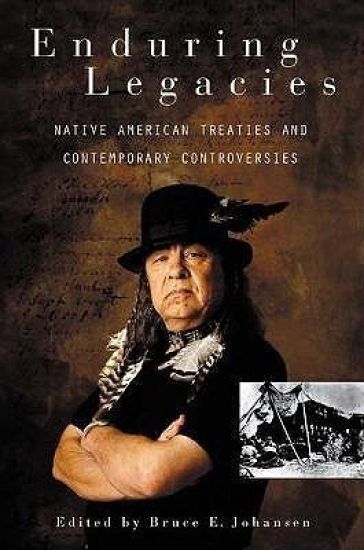
Enduring Legacies

Enduring Legacies

Bruce E. Johansen

Praeger Publishers Inc
2004
sidottu
Treaties are so fundamental to the lives of Native Americans and their nations in the United States and Canada that life without them would be difficult to imagine. Most contemporary issues, from land claims to resource ownership to gambling permits, are rooted in laws that derive much of their sustenance from such documents. Treaties are, therefore, vibrant documents that define important issues in our time. This book is an attempt to maintain a national conversation on the treaty basis of important contemporary laws and issues. While the texts of such treaties have long been available, discussion and other annotation in a context that gives them contemporary meaning has been scarce.This collection of essays by experts in Native American history examines these historic agreements in light of recent and ongoing controversies. Claims to ancestral land bases are one prime example: the Canandaigua Treaty of 1794 provides a context in which to address the Onondaga's claim to most of the Syracuse urban area. Treaties provide the bases for events such as the modern-day rebirth of the Ponca Nation in Nebraska more than a century after a bureaucratic error resulted in banishment from ancestral land. One chapter explores why the U.S. Army still officially regards tragic events at Wounded Knee in December 1890 as a battle, rather than a massacre. Another reveals how treaties and laws have been used to retain and regain gas and oil resource ownership. Still another expert examines why so much energy has been expended over the fate of 9,300- year-old bones that have come to be called Kennewick Man.
Indigenous Peoples and Environmental Issues

Indigenous Peoples and Environmental Issues

Bruce E. Johansen

Greenwood Press
2003
sidottu
From Argentina to Zimbabwe, the industrialized world's encroachment on native lands has brought disastrous environmental harm to indigenous peoples. More than 170 native peoples around the world are facing life-and-death struggles to maintain environments threatened by oil spills, explosions, toxic chemicals, global warming, and other pollutants. This unique resource surveys those indigenous peoples and the environmental hazards that threaten their existence, providing a wealth of information not readily available elsewhere.Arranged geographically, each entry focuses on the peoples of a particular country and the environmental issues they face, from the global warming and toxic chemicals threatening the Arctic Inuits, to the logging that is devastating indigenous habitats in Borneo. General entries overview such topics as climate change, dam sites, and Native American Concepts of Ecology. The 'Guide to Related Topics' and index provide access to recurring themes such as deforestation, hydroelectric power, mining, and land tenure.
Global Warming 101

Global Warming 101

Bruce E. Johansen

Greenwood Press
2008
sidottu
The accelerating pace of global warming is provoking anxiety that the Earth is reaching an ominous threshold, a point of no return. Within a decade or two, various feedbacks may take greenhouse warming past any human ability to contain or reverse it. Carbon-dioxide levels in the atmosphere are rising rapidly, fed by increasing fossil-fuel use world-wide, melting permafrost, slash-and-burn agriculture in Indonesia and Brazil, increasing wildfires, as well as rapid industrialization using dirty coal in China and India. Global warming may well become the most urgent problem the world faces during the 21st Century . Natural variations are no longer the major contribution (or forcing) in Earth's climate. Human contributions became the major factor about 1950. This book has been prepared as a reference for high-school students, but it also will be useful for anyone who wants a compact, plain-spoken basic guide to the science of global warming. Global Warming 101 begins with an examination of basic issues, followed by important controversies in the field. The book then describes scientific issues related to melting ice, rising seas, and effects on plants and animals, as well as human health. Global Warming 101 concludes with consideration of possible solutions. Global Warming 101 combines a survey of the science of global warming with reporting from around the world, from sinking Pacific islands and thawing Arctic permafrost, which indicate that significant global warming already has begun.
The Global Warming Combat Manual

The Global Warming Combat Manual

Bruce E. Johansen

Praeger Publishers Inc
2008
sidottu
The Global Warming Combat Manual describes the practical measures that readers can take in their daily lives to reduce their carbon footprints, while showing how to link one's personal choices with the big-picture science and the big-scale campaigns to combat global warming on the political, legal, economic, and technological fronts. The emphasis throughout is on practical tips for ways in which people can help combat global warming in their everyday roles as citizens, consumers, homeowners, employees, commuters, tourists, sportsmen, business owners, or farmers. Johansen—assisted by climatologist James Hansen's foreword and appendix—gives general readers the tools they need to calculate and put into action the most rational and ethical green choices. Dovetailing the personal with the technological and public-policy dimensions, this book lays out the whole battery of existing, emerging, and speculative solutions for global warming. These range from the humdrum and easy (keeping your tires properly inflated), through the necessary and hard (retooling the ways you transport, house, and feed yourself for maximum energy efficiency and minimum carbon footprint). They also encompass the possible (switching over a large fraction of our carbon-based energy sector to alternative sectors based on biofuel, wind, solar, and geothermal power), the visionary (creating a bacterium that will consume CO2), and the improbable (deploying giant reflecting mirrors in space), as well as the weird and dangerous (pumping sulfur aerosols into the stratosphere).
The Dirty Dozen

The Dirty Dozen

Bruce E. Johansen

Praeger Publishers Inc
2003
nidottu
Forty years after the publication of Rachel Carson's Silent Spring, this important study examines the history, industrial uses, and harmful effects of the twelve most commonly used organochloride chemicals. All have been fully or partially banned by the Stockholm Protocol, an international treaty signed by about 120 countries in December 2000. Among the twelve are the dioxins (the active ingredient in Agent Orange) and polychlorinated byphenyls (PCBs), which are toxic in minute quantities. Johansen pays special attention to the Inuit of the Arctic, where these chemicals have been bio-accumulating to dangerous levels, moving up the food chain to a degree of toxicity that some Inuit mothers are no longer able to safely breast-feed their infants. The polar stratospheric ozone has been devastated by emissions of chlorofluorocarbons (CFCs), and new scientific findings connect global warming near the Earth's surface to significant cooling in the stratosphere. This synergy aggravates ozone depletion because the chemical reactions that destroy the ozone become more energetic as temperatures drop. Synthetic toxins have taken their toll on minority ethnic groups in the United States, and persistent organic pollutants have inflicted physiological damage on humans and other animals. Finally, Johansen explores the estrogenic effects of such chemicals. Sperm counts have declined as much as 50% in 50 years.
The Encyclopedia of Global Warming Science and Technology
In this two-volume encyclopedia for general readers and students of all levels, Bruce E. Johansen marshals scientific work on global warming into 300 articles presented in clear and understandable language. Comprehensive in scope and accessible to all reader levels, The Encyclopedia of Global Warming Science and Technology covers a vast range of topics, concepts, issues, processes, and scientists sifted and melded from the many scientific and technological fields. These include atmospheric chemistry, paleoclimatology, biogeography, oceanography, geophysics, glaciology, soil science, and more. Bruce E. Johansen digests the explosion of scientific work on global warming that has been published since 1980 and presents it in a set that is sure to be the indispensable standard reference work on the topic. The information here is of importance to just about everyone on the planet—for the findings of global warming science and technology should dictate the choices we make today to secure our common future. This encyclopedia will prove useful for many different types of professionals, inasmuch as global warming science informs public policy debates, applied science, and technology in such fields as energy generation, architecture, engineering, and agriculture.
Encyclopedia of the American Indian Movement

Encyclopedia of the American Indian Movement

Bruce E. Johansen

Greenwood Publishing Group Inc
2013
sidottu
A vivid description of the people, events, and issues that forever changed the lives of Native Americans during the 1960s and 1970s—such as the occupation of Alcatraz, fishing-rights conflicts, and individuals such as Clyde Warrior.Rising out of more than a century of poverty and pervasive repression, stoked by the example of the movement against the Vietnam War and the upheaval among black and Chicano civil-rights activists, the American Indian Movement shifted the debate over "the Indian problem" to a new level. Many Native peoples also took a stand for fishing rights, land rights, and formed resistance to coal and uranium mining on tribal land. This work tells the story of that movement, and provides the first encyclopedic treatment of this subject.Providing a vital documentation of a controversial and often surprising period in American Indian history, Bruce E. Johansen, an accomplished scholar and authority on Native American history, provides more than descriptions of historic events and careful analysis; he also frames what occurred in the American Indian Movement personally and anecdotally, drawing from individual stories to illustrate larger trends—and to ensure that the material is appealing to high school students, university-level readers, and general readers alike.
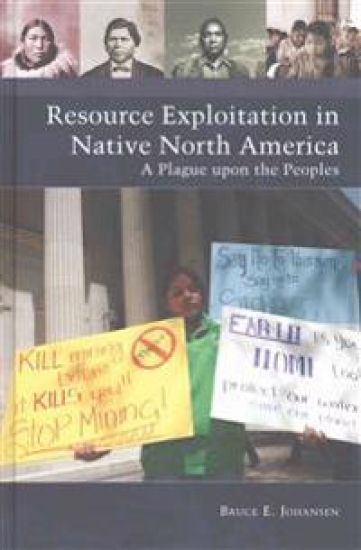
Resource Exploitation in Native North America

Resource Exploitation in Native North America

Bruce E. Johansen

Praeger Publishers Inc
2016
sidottu
This wide-ranging survey of the environmental damage to Native American lands and peoples in North America—in recent times as well as previous decades—documents the continuing impact on the health, wellness, land, and communities of indigenous peoples.Beginning in the early 1950s, Native peoples were recruited to mine "yellow dust"—uranium—and then, over decades, died in large numbers of torturous cancers. Uranium-induced cancers have become the deadliest plague unleashed upon Native peoples of North America—one with grave consequences impacting generations of American Indian families. Today, resource-driven projects such as the Keystone XL pipeline continue to put the health and safety of American Indians at risk. Authored by an expert with 40 years of experience in the subject, this book documents the environmental provocations afflicting Native American peoples in the United States: from the toll of uranium mining on the Navajos to the devastation wrought by dioxin, PCBs, and other pollutants on the agricultural economy of the Akwesasne Mohawk reservation in northernmost New York. The detailed personal stories of human suffering will enable readers to grasp the seriousness of the injustices levied against Native peoples as a result of corporations' and governments' greed for natural resources.
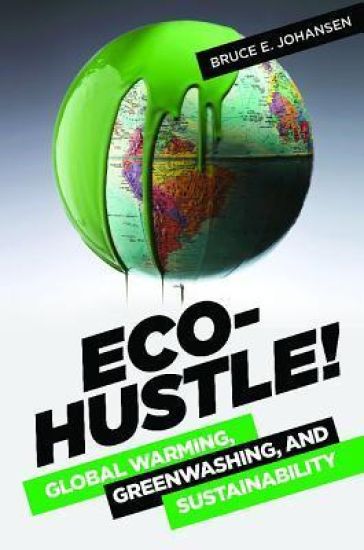
Eco-Hustle!

Eco-Hustle!

Bruce E. Johansen

Praeger Publishers Inc
2015
sidottu
How many of our efforts to save the environment are effective? Learn how our system is simply masking the symptoms of global warming.Climate change is more than just a buzzword. It is a reality that society and industry have failed to deal with effectively. "Greenwashing," a term that author Bruce E. Johansen defines as the "environmental sleight of hand" performed by technology and advertising, has us convinced that certain "green" practices are sustainable. In his book, Johansen examines the sanctioned activities and practices commonly touted as environmentally responsible and points out their failings. He explains why the global climate change problem is more urgent than many people think, and provides real-world examples of companies that are taking measures with genuine benefits to the environment.Presenting information relevant to every inhabitant of earth and that environmentalists, climate scientists, and students and educators in environmental studies will find essential reading, this book brings questions about legislation and economics to the forefront and asks whether today's system can support a true effort at sustainable living. It presents honest—and what some readers may find surprising—answers to inquiries into what is really "good for the environment," such as why corn ethanol may be worse for the atmosphere than oil and why coal capture and sequestration may be the worst "green" idea yet.
Examining Energy and the Environment around the World
This volume addresses ten issues pertaining to energy and the environment, such as climate change, fossil fuels, endangered species, and renewable energy, and examines how these issues are affecting countries around the world.In the industrial age, first powered by coal and then more often by oil, environmental degradation nearly inevitably followed resource exploitation and energy production. This book examines environmental issues in specific countries around the world as well as solutions some of these countries have discovered in order to help save the environment.This volume includes 10 chapters, each addressing a specific issue relating to energy and the environment as it pertains to a variety of countries, including toxic chemicals, pollution, deforestation, and climate change. Each chapter begins with an introduction to the issue. Following the chapter introduction, each chapter highlights that issue in eight countries and provides historic perspective. This work provides an overview for high school students and college students at the undergraduate level on 10 important topics that address matters relating to energy and the environment in the 21st century.
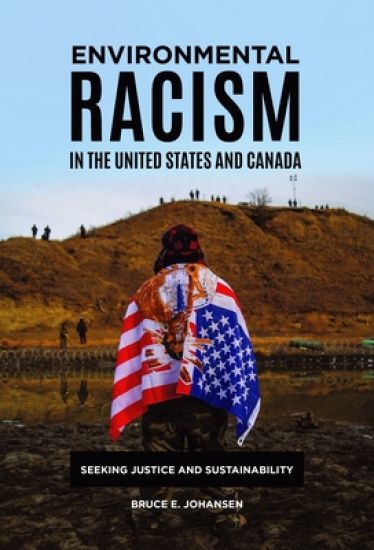
Environmental Racism in the United States and Canada

Environmental Racism in the United States and Canada

Bruce E. Johansen

Praeger Publishers Inc
2020
sidottu
From Flint, Michigan, to Standing Rock, North Dakota, minorities have found themselves losing the battle for clean resources and a healthy environment. This book provides a modern history of such environmental injustices in the United States and Canada.From the 19th-century extermination of the buffalo in the American West to Alaska's Project Chariot (a Cold War initiative that planned to use atomic bombs to blast out a harbor on Eskimo land) to the struggle for recovery and justice in Puerto Rico following Hurricane Maria in 2017, this book provides readers with an enhanced understanding of how poor and minority people are affected by natural and manmade environmental crises.Written for students as well as the general reader with an interest in social justice and environmental issues, this book traces the relationship between environmental discrimination, race, and class through a comprehensive case history of environmental injustices. Environmental Racism in the United States and Canada: Seeking Justice and Sustainability includes 50 such case studies that range from local to national to international crises.