Kirjahaku
Etsi kirjoja tekijän nimen, kirjan nimen tai ISBN:n perusteella.
1000 tulosta hakusanalla Bruce W Durbin
A book of articles that goes straight to the heart in providing encouragement for the trials of life.Almost Heaven is a compilation of articles aimed at providing encouragement for Christians facing the trials and struggles of life. The articles go straight to the heart in presenting vivid examples and personal experiences. Almost Heaven seeks to aid, through articles grounded in Biblical truths, in strengthening and deepening one's spiritual life.
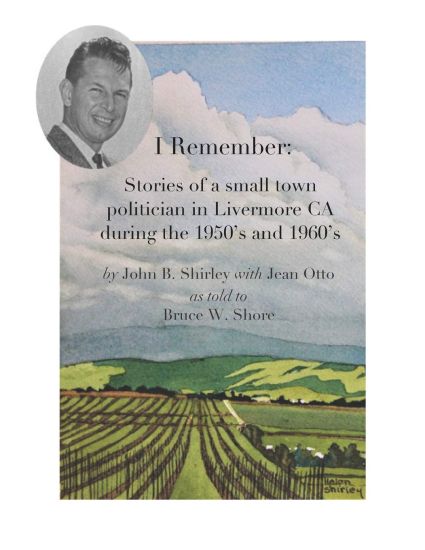
I Remember: Stories of a Small Town Politician in Livermore, CA During the 1950's and 1960's
Bruce W. Shore; Jean Otto; John B. Shirley
Independently Published
2019
nidottu
Like many small towns in California, Livermore underwent a rapid change during the last half of the 20th century. The establishment of a National Laboratory there in 1952 was but one part of the shift from a small community centered on ranches and vineyards. John Shirley played an important role in guiding those changes, serving in appointed and then elected offices of the city. Here he tells the story of his involvement with the planning of the community that is today Livermore: the sewers and streets, the Rodeo, the Civic Center, the start of redevelopment that made possible the present downtown.
From Edinburgh to the Antarctic. an Artist's Notes ... During the Dundee Antarctic Expedition of 1892-3. ... with a Chapter by W. S. Bruce, Etc.
William G Burn Murdoch; William Speirs Bruce
British Library, Historical Print Editions
2011
pokkari
Title: From Edinburgh to the Antarctic. An Artist's notes ... during the Dundee Antarctic Expedition of 1892-3. ... With a Chapter by W. S. Bruce, etc.Publisher: British Library, Historical Print EditionsThe British Library is the national library of the United Kingdom. It is one of the world's largest research libraries holding over 150 million items in all known languages and formats: books, journals, newspapers, sound recordings, patents, maps, stamps, prints and much more. Its collections include around 14 million books, along with substantial additional collections of manuscripts and historical items dating back as far as 300 BC.The GENERAL HISTORICAL collection includes books from the British Library digitised by Microsoft. This varied collection includes material that gives readers a 19th century view of the world. Topics include health, education, economics, agriculture, environment, technology, culture, politics, labour and industry, mining, penal policy, and social order. ++++The below data was compiled from various identification fields in the bibliographic record of this title. This data is provided as an additional tool in helping to insure edition identification: ++++ British Library Murdoch, William G. Burn; Bruce, William Speirs; 1894. ix. 364 p.; 8 . 10460.f.29.
Aid During Conflict
Olga Oliker; Richard Kauzlarich; James Dobbins; Kurt W. Basseuner; Donald L. Sampler; John G. McGinn; Michael J. Dziedzic; Adam Grissom; Bruce R. Pirnie; Nora Bensahel; A.Istar Guven
RAND
2004
pokkari
An assessment of humanitarian-assistance efforts by and interaction between civilian and military providers in the early phases of Operation Enduring Freedom in Afghanistan Description and evaluation of relief, reconstruction, humanitarian, and humanitarian-type aid efforts in Afghanistan during the most intense phase of military operations, from September 2001 to June 2002. The efforts were generally successful, but there were serious coordination problems among the various civilian and military aid providers. Critical issues, both positive and negative, are identified, and a list of recommendations is provided for policymakers, implementers, and aid providers, based on lessons learned.
Talamon saw it all during the golden age of soul, R&B, and funk. Throughout the 1970s and early 1980s, this young African American photographer from Los Angeles found himself backstage with an all-access pass to the heart of the music scene. He caught his first big break landing a position as a staff photographer at SOUL Newspaper in LA in the early 1970s, just as soul, R&B, and funk were becoming part of the mainstream. He captured the rehearsals and sound checks, recording sessions and costume fittings, the quiet reflective moments and life on the road, and, of course, the wild photo shoots and memorable performances. These photographs define an era famed for its glamour, fabulous fashions, and utter devotion to the groove. Including close to 300 photographs from 1972 to 1982, the extensive Talamon archives are presented in full detail for the first time. Whether you’re a diehard soul fan or a thrilled newcomer to the aesthetic magic of the 1970s, the collection exudes the infectious spirit of an exuberant age. Featuring icons such as Earth, Wind & Fire; Marvin Gaye; Diana Ross; Parliament-Funkadelic; Al Green; Gil Scott-Heron; James Brown; Barry White; Rick James; Aretha Franklin; the Jackson Five; Donna Summer; and Chaka Khan and many others; there are also several stops at the legendary Soul Train studios. Talamon documented a visual period in black music that lasted way past the midnight hour and will never come again.This release is an affordable, compact version of our Art Edition, limited to 500 copies and featuring a portfolio of four prints signed by Bruce W. Talamon.
Bruce W. Talamon. Soul. R&B. Funk. Photographs 1972–1982
TASCHEN GMBH
2026
sidottu
Talamon saw it all during the golden age of soul, R&B, and funk. Throughout the 1970s and early 1980s, this young African American photographer from Los Angeles found himself backstage with an all-access pass to the heart of the music scene. He caught his first big break landing a position as a staff photographer at SOUL Newspaper in LA in the early 1970s, just as soul, R&B, and funk were becoming part of the mainstream. He captured the rehearsals and sound checks, recording sessions and costume fittings, the quiet reflective moments and life on the road, and, of course, the wild photoshoots and memorable performances. These photographs define an era famed for its glamour, fabulous fashions, and utter devotion to the groove.
Disasters and Public Health: Planning and Response, Second Edition, examines the critical intersection between emergency management and public health. It provides a succinct overview of the actions that may be taken before, during, and after a major public health emergency or disaster to reduce morbidity and mortality. Five all-new chapters at the beginning of the book describe how policy and law drive program structures and strategies leading to the establishment and maintenance of preparedness capabilities. New topics covered in this edition include disaster behavioral health, which is often the most expensive and longest-term recovery challenge in a public health emergency, and community resilience, a valuable resource upon which most emergency programs and responses depend. The balance of the book provides an in-depth review of preparedness, response, and recovery challenges for 15 public health threats. These chapters also provide lessons learned from responses to each threat, giving users a well-rounded introduction to public health preparedness and response that is rooted in experience and practice.
A Casebook on Roman Family Law
Bruce W. Frier; Thomas A. J. McGinn
Oxford University Press Inc
2003
sidottu
The Roman household (familia) was in many respects dramatically different from the modern family. From the early Roman Empire (30 BC to about AD 250) there survive many legal sources that describe Roman households, often in the most intimate detail. The subject matter of these ancient sources includes marriage and divorce, the property aspects of marriage, the pattern of authority within households, the transmission of property between generations, and the supervision of Roman orphans. This casebook presents 235 representative texts drawn largely from Roman legal sources, especially "Justinian's Digest". These cases and the discussion questions that follow provide a good introduction to the basic legal problems associated with the ordinary families of Roman citizens. The arrangement of materials conveys to students an understanding of the basic rules of Roman family law while also providing them with the means to question these rules and explore the broader legal principles that underlie them. Included cases invite the reader to wrestle with actual Roman legal problems, as well as to think about Roman solutions in relation to modern law. In the process, the reader should gain confidence in handling fundamental forms of legal thinking, which have persisted virtually unchanged from Roman times until the present. This volume also contains a glossary of technical terms, biographies of the jurists, basic bibliographies of useful secondary literature, and a detailed introduction to the scholarly topics associated with Roman family law.
A Casebook on Roman Family Law
Bruce W. Frier; Thomas A. J. McGinn
Oxford University Press Inc
2003
nidottu
The Roman household (familia) was in many respects dramatically different from the modern family. From the early Roman Empire (30 B.C. to about A.D. 250) there survive many legal sources that describe Roman households, often in the most intimate detail. The subject matter of these ancient sources includes marriage and divorce, the property aspects of marriage, the pattern of authority within households, the transmission of property between generations, and the supervision of Roman orphans. This casebook presents 235 representative texts drawn largely from Roman legal sources, especially Justinian's Digest. These cases and the discussion questions that follow provide a good introduction to the basic legal problems associated with the ordinary families of Roman citizens. The arrangement of materials conveys to students an understanding of the basic rules of Roman family law while also providing them with the means to question these rules and explore the broader legal principles that underlie them. Included cases invite the reader to wrestle with actual Roman legal problems, as well as to think about Roman solutions in relation to modern law. In the process, the reader should gain confidence in handling fundamental forms of legal thinking, which have persisted virtually unchanged from Roman times until the present. This volume also contains a glossary of technical terms, biographies of the jurists, basic bibliographies of useful secondary literature, and a detailed introduction to the scholarly topics associated with Roman family law. A course based on this casebook should be of interest to anyone who wishes to understand better Roman social history, either as part of a larger Classical Civilization curriculum or as a preparation for law school.
A concise, authoritative overview of a little-understood yet extremely important phenomenon in world politics: the use of economic sanctions by one country to punish another. It's hard to browse the news without seeing reports of yet another imposition of sanctions by one country on another. The United States has sanctions against more than 30 countries. Russia has repeatedly imposed sanctions against former Soviet republics. China has developed its own approach, including targeting private entities such as the NBA. And it's not just major powers: Japan and South Korea have sanctioned each other over WWII and colonial legacies; Saudi Arabia against Qatar because of differences over Iran; and France, Germany, and Norway against Brazil over the Amazon forest and climate change. In Sanctions: What Everyone Needs to Know®, Bruce Jentleson--one of America's leading scholars on the subject--answers the fundamental questions about sanctions today: Why are they used so much? What are their varieties? What are the key factors affecting their success? Why have they become the tool of first resort for states engaged in international conflict? Jentleson demonstrates that examining sanctions is key to understanding international relations and explains how and why they will likely continue to bear on global politics.
Roman contract law has profoundly influenced subsequent legal systems throughout the world, but is inarguably an important subject in its own right. This casebook introduces students to the rich body of Roman law concerning contracts between private individuals. In order to bring out the intricacy of Roman contract law, the casebook employs the case-law method--actual Roman texts, drawn from Justinian's Digest and other sources, are presented both in Latin and English, along with introductions and discussions that fill out the background of the cases and explore related legal issues. This method reflects the casuistic practices of the jurists themselves: concentrating on the fact-rich environment in which contracts are made and enforced, while never losing sight of the broader principles upon which the jurists constructed the law. The casebook concentrates especially on stipulation and sale, which are particularly well represented in surviving sources. Beyond these and other standard contracts, the book also has chapters on the capacity to contract, the creation of third-party rights and duties, and the main forms of unjustified enrichment. What students can hope to learn from this casebook is not only the general outlines and details of Roman contract law, but also how the jurists developed such law out of rudimentary civil procedures. An online teacher's manual is available for instructors; to access it, see page xxi of the Casebook.
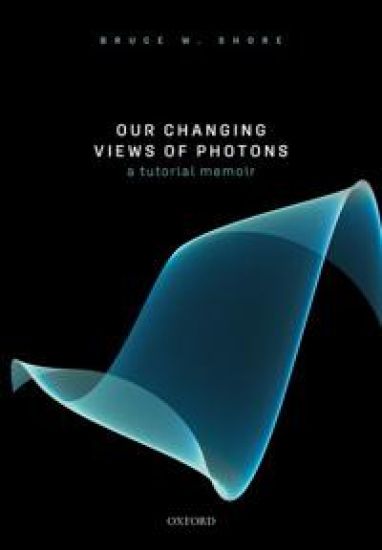
Advances in technology often rely on a world of photons as the basic units of light. Increasingly one reads of photons as essential to enterprises in Photonics and Quantum Technology, with career and investment opportunities. Notions of photons have evolved from the energy-packet crowds of Planck and Einstein, the later field modes of Dirac, the seeming conflict of wave and particle photons, to the ubiquitous laser photons of today. Readers who take interest in contemporary technology will benefit from learning what photons are now considered to be, and how our views of photons have changed -- in learning about the various operational definitions that have been used for photons and their association with a variety of quantum-state manipulations that include Quantum Information, astronomical sources and crowds of photons, the boxed fields of Cavity Quantum Electrodynamics and single photons on demand, the photons of Feynman and Glauber, and the photon constituents of the Standard Model of Particle Physics. The narrative points to contemporary photons as causers of change to atoms, as carriers of messages, and as subject to controllable creation and alteration -- a considerable diversity of photons, not just one kind. Our Changing Views of Photons: A Tutorial Memoir presents those general topics as a memoir of the author's involvement with physics and the photons of theoretical Quantum Optics, written conversationally for readers with no assumed prior exposure to science. It offers lay readers a glimpse of scientific discovery -- of how ideas become practical, as a small scientific community reconsiders its assumptions and offers the theoretical ideas that are then developed, revised, and adopted into technology for daily use. For readers who want a more detailed understanding of the theory, three substantial appendices provide tutorials that, assuming no prior familiarity, proceed from a very elementary start to basics of discrete states and abstract vector spaces; Lie groups; notions of quantum theory and the Schrödinger equation for quantum-state manipulation; Maxwell's equations for electromagnetism, with wave modes that become photons, possibly exhibiting quantum entanglement; and the coupling of atoms and fields to create quasiparticles. The appendices can be seen as a companion to traditional textbooks on Quantum Optics.

Join the zookeeper in this heart-warming tale of self-discovery.Two Little Monkeys explore the power of companionship and love.The true happiness they all seek cannot be bought with material possessions but in the simple joys of togetherness.
For more than twenty years, John Milton Bernhisel negotiated with the federal government on behalf of the Church of Jesus Christ of Latter-day Saints. Bruce W. Worthen illuminates the life and work of the man whose diplomacy steered the Church’s relationship with Washington, D.C. from its early period of dangerous conflict to a peaceful and pragmatic coexistence. Having risen from a Pennsylvania backcountry upbringing to become a respected member of the upper class, Bernhisel possessed a personal history that allowed him to reach common ground with politicians and other outsiders. He negotiated for Joseph Smith’s life and, after the Church’s relocation to the Utah Territory, took on the task of rehabilitating the public image of the Latter-day Saints. Brigham Young’s defiance of the government undermined Bernhisel’s work, but their close if sometimes turbulent relationship ultimately allowed Bernhisel to make peace with Washington, secure a presidential pardon for Young, and put Utah and the Latter-day Saints on the road to formally joining the United States.
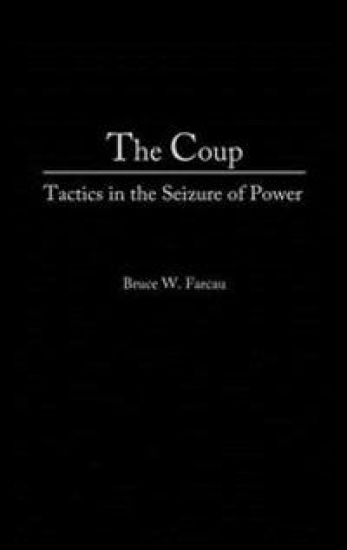
This book provides a paradigm of the coup and provides a historical basis for that paradigm that is unsurpassed in its objectivity and research. The author of this book has spent over a decade living and working with military and political figures throughout Latin America. His book is both an educational and an exciting peek into the dark world of military subversion by an observer who has seen it first hand.The coup d'etat has defied all attempts at rational analysis. This is hardly surprising, in that it is born in darkness and very frequently dies there, only coming to light in the last moments before either a bloody defeat or a stunning success. The participants on the military side are frequently reluctant to discuss their activities, even long after the fact, and their civilian victims can usually only guess at what happened to them. Previous studies have often been heavily tainted by the politics of the writer, categorizing the coup as a product of class struggle, the cold war, or outright foreign intervention by the superpowers.The author of this book has spent over a decade living and working closely with military and political figures throughout Latin America and has used the fruits of literally hundreds of encounters (ranging from simple interviews to longtime friendships) to piece together an insightful picture of this nebulous but very real phenomenon. He has identified the motives of coup plotters and the means by which they go about building the coalition necessary to overthrow a government. Rather than use hypothetical cases to illustrate his points, he has drawn on history to demonstrate how coups succeed and why they fail. This book is both an educational and an exciting peek into the dark world of military subversion by an observer who has seen it first hand.
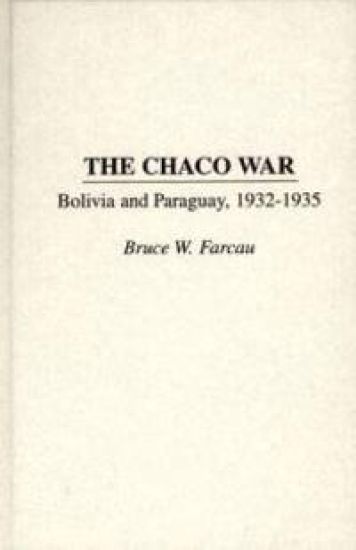
Nearly 100,000 men died during the course of the tragic three-year war between two of the world's poorest nations, Bolivia and Paraguay, in the 1930s. The Chaco War was fought over a worthless stretch of desert scrubland for the pride of political leaders and the ambition of a few military officers. While thousands of illiterate, barefoot, undernourished peasant soldiers fought and died with incredible bravery, their commanders and national leaders fussed and fumed over imagined slights and avoided the peace which was so easily within their reach. The Bolivian military, in particular, performed abysmally. Few wars have been as unnecessary or as costly as the Chaco War.
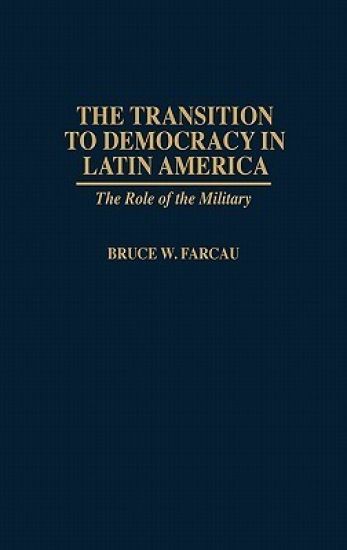
This book examines the role of the military in the wave of democratization that has swept through Latin America in the past decade. Although much of the leading literature on the transition to democracy recognizes the importance of hardline and softline factions within the military in this process, the author takes this study one step further to investigate the motivations of the military officers themselves. Using the cases of Brazil and Bolivia, and relying on dozens of interviews with military officers, politicians, jurists, and other observers throughout Latin America, he determines that the factions' attitudes do not depend primarily on ideological commitment but on the leaders' calculation, as to the career benefits to their followers of either supporting or opposing democratization. In terms of policy making, it is important to recognize this distinction in order to help preserve the fragile democracies which are already under threat from the military once again.