Kirjojen hintavertailu. Mukana 11 699 587 kirjaa ja 12 kauppaa.

Kirjahaku

Etsi kirjoja tekijän nimen, kirjan nimen tai ISBN:n perusteella.

1000 tulosta hakusanalla Bryan G Johnson; Louis C Lujan

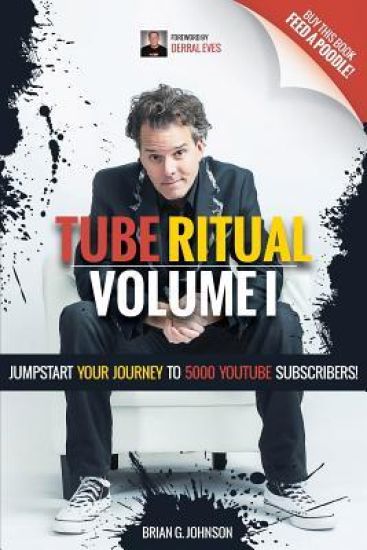
Tube Ritual Volume I: Jumpstart Your Journey To 5000 YouTube Subscribers!

Tube Ritual Volume I: Jumpstart Your Journey To 5000 YouTube Subscribers!

Brian G. Johnson

Createspace Independent Publishing Platform
2017
nidottu
Everybody begins their YouTube journey from zero. You have to start with no videos, views or subscribers. Furthermore, more than 400 minutes of content is uploaded to YouTube each minute. To say that it's challenging to grow a channel is an understatement In fact, less than 3% of YouTube channels ever gain more than 10,000 subscribers. Yet, in a one year period, Brian G Johnson gained 10,623 subscribers and drove over half a million video views. Truly beginning from zero. Brian had no previous YouTube success to draw from and had to learn the myriad of camera settings, editing options and technical details that often become a roadblock. Furthermore, he did it in a small and competitive niche, the YouTube video marketing niche. How, you ask? By researching, testing and tweaking various video growth methods over a one year period in order to identify why the YouTube algorithm promotes one video over another. Ultimately, this led to the creation of a video ritual based on his findings. The word ritual means to perform a series of actions according to a prescribed order. More than a book, Tube Ritual Volume I: Jumpstart Your Journey to 5000 YouTube Subscribers was a one year case study in which Brian G focused on how to successfully grow a YouTube channel. With the goal being to be able to drive more views and covert more viewers into subscribers. The Tube Ritual Case Study -365 Days -162 Videos Uploaded -567,823 Views -1,902,099 Minutes Watched If you're creating videos or will be in the future, then grab your copy of Tube Ritual today in order to drive more views and convert more viewers into subscribers. Tube Ritual is 256 pages of detailed, step-by-step information that plain works. It worked for Brian and countless YouTubers who have implemented these ritual strategies and tactics. From Branding to thumbnails, video structure, YouTube SEO, video calls to action, playlist strategies, channel strategies and more, Tube Ritual leaves no stone unturned. Tube Ritual is a YouTube success manual based on results. Now it's your turn to stake your claim, amplify your message and inspire action.
Trust Funnel

Trust Funnel

Brian G. Johnson; Joel Comm

Morgan James Publishing llc
2015
pokkari
How does a dyslexic college dropout become an Internet marketing guru, living a life of wealth and freedom many people only dream of? Answer: by seeing a need and filling it. When his dad purchased a shiny new Apple 2E in 1983, it didn't take long for Brian G. Johnson to discover video games. He was hooked. However, what really blew him away was what he discovered several years later-the Internet. Brian knew it would completely change how and where people spent their money. Most of all, it would level the playing field for average folks, allowing them to cash in as it reached the masses. Trust Funnel is one part memoir, three parts "how-to" manual for anyone seeking the freedom to work when and where they want as they build an Internet marketing business on a shoestring budget. Inspired by Zig Ziglar, it examines how the Web and online success revolve around trust and the acts of: listening liking trusting buying Trust can be found in many places online. It can be found among site visitors who decide to "like" a page or post. It can be found in another selfie that appears on someone's Facebook newsfeed. And it can be found in the complex algorithms that power Google rankings, Facebook, and the various other social sites. Gone are the days of links, Google page rankings, and Facebook's EdgeRank. Today's online currency that powers the Web and online success is trust. With Trust Funnel, Brian provides detailed formulas and rituals that enable anyone to leverage the exact same strategies, tactics, and philosophies that have allowed him to drive traffic, build trust, and earn a very comfortable living. Trust Funnel tells the story of his mind-boggling success and can be the springboard to yours.
Trust Funnel

Trust Funnel

Brian G. Johnson; Joel Comm

Morgan James Publishing llc
2015
sidottu
How does a dyslexic college dropout become an Internet marketing guru, living a life of wealth and freedom many people only dream of? Answer: by seeing a need and filling it. When his dad purchased a shiny new Apple 2E in 1983, it didn't take long for Brian G. Johnson to discover video games. He was hooked. However, what really blew him away was what he discovered several years later-the Internet. Brian knew it would completely change how and where people spent their money. Most of all, it would level the playing field for average folks, allowing them to cash in as it reached the masses. Trust Funnel is one part memoir, three parts "how-to" manual for anyone seeking the freedom to work when and where they want as they build an Internet marketing business on a shoestring budget. Inspired by Zig Ziglar, it examines how the Web and online success revolve around trust and the acts of: listening liking trusting buying Trust can be found in many places online. It can be found among site visitors who decide to "like" a page or post. It can be found in another selfie that appears on someone's Facebook newsfeed. And it can be found in the complex algorithms that power Google rankings, Facebook, and the various other social sites. Gone are the days of links, Google page rankings, and Facebook's EdgeRank. Today's online currency that powers the Web and online success is trust. With Trust Funnel, Brian provides detailed formulas and rituals that enable anyone to leverage the exact same strategies, tactics, and philosophies that have allowed him to drive traffic, build trust, and earn a very comfortable living. Trust Funnel tells the story of his mind-boggling success and can be the springboard to yours.
Tube Ritual

Tube Ritual

Brian G. Johnson

Morgan James Publishing llc
2019
pokkari
Everybody begins their YouTube journey from zero. You have to start with no videos, views, or subscribers. Furthermore, more than 400 minutes of content is uploaded to YouTube each minute. To say that it’s challenging to grow a channel is an understatement! In fact, less than 3% of YouTube channels ever gain more than 10,000 subscribers. Yet, in a one-year period, Brian G Johnson gained 10,623 subscribers and drove over half a million video views. Truly beginning from zero. Brian had no previous YouTube success to draw from and had to learn the myriad of camera settings, editing options, and technical details that often become a roadblock. Furthermore, he did it in a small and competitive niche, the YouTube video marketing niche. How, you ask? By researching, testing, and tweaking various video growth methods over a one-year period in order to identify why the YouTube algorithm promotes one video over another. Ultimately, this led to the creation of a video ritual based on his findings—a series of actions according to a prescribed order. More than a mere guide, Tube Ritual is a one-year case study with the goal being to drive more views and convert more viewers into subscribers. For those already creating videos or who want to in the future, Tube Ritual contains detailed, step-by-step information that plain works. From Branding to thumbnails, video structure, YouTube SEO, video calls to action, playlist strategies, channel strategies and more, Tube Ritual leaves no stone unturned.
The Decline of Substance Use in Young Adulthood

The Decline of Substance Use in Young Adulthood

Jerald G. Bachman; Patrick M. O'Malley; John E. Schulenberg; Lloyd D. Johnston; Alison L. Bryant; Alicia C. Merline

Psychology Press Ltd
2013
nidottu
This book is intended as a thoughtful extension to Bachman et al.'s well-received monograph Smoking, Drinking, and Drug Use in Young Adulthood. That volume showed that the new freedoms of young adulthood lead to increases in substance use, while the responsibilities of adulthood--marriage, pregnancy, parenthood--contribute to declines in substance use. The Decline of Substance Use in Young Adulthood examines how the changes in social and religious experiences and in attitudes toward substance use observed among young adults are related to changes in substance use, family transitions, living arrangements, college experience, and employment. The research uses a variety of analysis techniques and is based on the nationwide Monitoring the Future surveys of more than 38,000 young people followed from high school into adulthood. The research covers the last quarter of the 20th century, a period when drug use and views about drugs underwent many important changes. In spite of these shifts, the overall patterns of relationships reported in this book are impressive in their consistency across time and in their general similarity for men and women.Specific questions addressed include the following: *As young adults experience new freedoms and responsibilities, do their attitudes about drugs change? *Do their religious views and behaviors shift? *Do their new freedoms and responsibilities affect the amount of time they spend in social activities, including going to parties and bars? *And how are any of these changes linked to changes in cigarette use, alcohol use, marijuana use, and cocaine use?
The Decline of Substance Use in Young Adulthood

The Decline of Substance Use in Young Adulthood

Jerald G. Bachman; Patrick M. O'Malley; John E. Schulenberg; Lloyd D. Johnston; Alison L. Bryant; Alicia C. Merline

Psychology Press
2001
sidottu
This book is intended as a thoughtful extension to Bachman et al.'s well-received monograph Smoking, Drinking, and Drug Use in Young Adulthood. That volume showed that the new freedoms of young adulthood lead to increases in substance use, while the responsibilities of adulthood--marriage, pregnancy, parenthood--contribute to declines in substance use. The Decline of Substance Use in Young Adulthood examines how the changes in social and religious experiences and in attitudes toward substance use observed among young adults are related to changes in substance use, family transitions, living arrangements, college experience, and employment. The research uses a variety of analysis techniques and is based on the nationwide Monitoring the Future surveys of more than 38,000 young people followed from high school into adulthood. The research covers the last quarter of the 20th century, a period when drug use and views about drugs underwent many important changes. In spite of these shifts, the overall patterns of relationships reported in this book are impressive in their consistency across time and in their general similarity for men and women.Specific questions addressed include the following: *As young adults experience new freedoms and responsibilities, do their attitudes about drugs change? *Do their religious views and behaviors shift? *Do their new freedoms and responsibilities affect the amount of time they spend in social activities, including going to parties and bars? *And how are any of these changes linked to changes in cigarette use, alcohol use, marijuana use, and cocaine use?
Toward Unity among Environmentalists

Toward Unity among Environmentalists

Bryan G. Norton

Oxford University Press Inc
1995
nidottu
This book presents an argument that the environmental movement is a coalition of many groups working toward common objectives without common values. Norton believes this lack of unity causes unnecessary and divisive controversy and debate within the environmentalist community which impedes the development of effective and timely environmental management policies. The various participants in environmental debates see events so differently, and describe them in such diverse vocabularies, that the environmental movement, unlike other social action movements, lacks common theoretical principles. Norton's goal is to create a common language for discussing environmental issues as a first step towards a unified theory of environmental management. This book will be of a value to general readers with an interest in environmental and ecological issues; environmental planners and policy makers; conservation biologists, wildlife biologists; and ecologists.
Sustainable Values, Sustainable Change

Sustainable Values, Sustainable Change

Bryan G. Norton

University of Chicago Press
2015
sidottu
Sustainability is a nearly ubiquitous concept today, but can we ever imagine what it would be like for humans to live sustainably on the earth? No, says Bryan G. Norton in Sustainable Values, Sustainable Change. One of the most trafficked terms in the press, on university campuses, and in the corridors of government, sustainability has risen to prominence as a buzzword before the many parties laying claim to it have come close to agreeing how to define it. But the term's political currency urgently demands that we develop an understanding of this elusive concept. While economists, philosophers, and ecologists argue about what in nature is valuable, and why, Norton here offers an action-oriented, pragmatic response to the disconnect between public and academic discourse around sustainability. Looking to the arenas in which decisions are made-and the problems that are driving these decisions-Norton reveals that the path to sustainability cannot be guided by fixed, utopian objectives projected into the future; sustainability will instead be achieved through experimentation, incremental learning, and adaptive management. Drawing inspiration from Aldo Leopold's famed metaphor of "thinking like a mountain" for a spatially explicit, pluralistic approach to evaluating environmental change, Norton replaces theory-dependent definitions with a new decision-making process guided by deliberation and negotiation across science and philosophy, encompassing all stakeholders and activists and seeking to protect as many values as possible. Looking across scales to today's global problems, Norton urges us to learn to think like a planet.
Sustainable Values, Sustainable Change

Sustainable Values, Sustainable Change

Bryan G. Norton

University of Chicago Press
2015
nidottu
Sustainability is a nearly ubiquitous concept today, but can we ever imagine what it would be like for humans to live sustainably on the earth? No, says Bryan G. Norton in Sustainable Values, Sustainable Change. One of the most trafficked terms in the press, on university campuses, and in the corridors of government, sustainability has risen to prominence as a buzzword before the many parties laying claim to it have come close to agreeing how to define it. But the term's political currency urgently demands that we develop an understanding of this elusive concept. While economists, philosophers, and ecologists argue about what in nature is valuable, and why, Norton here offers an action-oriented, pragmatic response to the disconnect between public and academic discourse around sustainability. Looking to the arenas in which decisions are made-and the problems that are driving these decisions-Norton reveals that the path to sustainability cannot be guided by fixed, utopian objectives projected into the future; sustainability will instead be achieved through experimentation, incremental learning, and adaptive management. Drawing inspiration from Aldo Leopold's famed metaphor of "thinking like a mountain" for a spatially explicit, pluralistic approach to evaluating environmental change, Norton replaces theory-dependent definitions with a new decision-making process guided by deliberation and negotiation across science and philosophy, encompassing all stakeholders and activists and seeking to protect as many values as possible. Looking across scales to today's global problems, Norton urges us to learn to think like a planet.
Sustainability

Sustainability

Bryan G. Norton

University of Chicago Press
2005
sidottu
While many disciplines contribute to environmental conservation, there is little successful integration of science and social values. Arguing that the central problem in conservation is a lack of effective communication, Bryan Norton shows in "Sustainability" how current linguistic resources discourage any shared, multidisciplinary public deliberation over environmental goals and policy. In response, Norton develops a new, interdisciplinary approach to defining sustainability - the corner-stone of environmental policy - using philosophical and linguistic analyses to create a nonideological vocabulary that can accommodate scientific and evaluative environmental discourse. Emphasizing cooperation and adaptation through social learning, Norton provides a practical framework that encourages an experimental approach to language clarification and problem formulation, as well as an interdisciplinary approach to creating solutions. By moving beyond the scientific arena to acknowledge the importance of public discourse, "Sustainability" offers an entirely novel approach to environmentalism.
Sustainability

Sustainability

Bryan G. Norton

University of Chicago Press
2005
nidottu
While many disciplines contribute to environmental conservation, there is little successful integration of science and social values. Arguing that the central problem in conservation is a lack of effective communication, Bryan Norton shows in "Sustainability" how current linguistic resources discourage any shared, multidisciplinary public deliberation over environmental goals and policy. In response, Norton develops a new, interdisciplinary approach to defining sustainability - the corner-stone of environmental policy - using philosophical and linguistic analyses to create a nonideological vocabulary that can accommodate scientific and evaluative environmental discourse. Emphasizing cooperation and adaptation through social learning, Norton provides a practical framework that encourages an experimental approach to language clarification and problem formulation, as well as an interdisciplinary approach to creating solutions. By moving beyond the scientific arena to acknowledge the importance of public discourse, "Sustainability" offers an entirely novel approach to environmentalism.
Searching for Sustainability

Searching for Sustainability

Bryan G. Norton

Cambridge University Press
2002
pokkari
This book examines from a multidisciplinary viewpoint the question of what we mean - what we should mean - by setting sustainability as a goal for environmental management. The author, trained as a philosopher of science and language, explores ways to break down the disciplinary barriers to communication and deliberation about environment policy, and to integrate science and evaluations into a more comprehensive environmental policy. Choosing sustainability as the keystone concept of environmental policy, the author explores what we can learn about sustainable living from the philosophy of pragmatism, from ecology, from economics, from planning, from conservation biology and from related disciplines. The idea of adaptive, or experimental, management provides the context, while insights from various disciplines are integrated into a comprehensive philosophy of environmental management. The book will appeal to students and professionals in the fields of environmental policy and ethics, conservation biology, and philosophy of science.
Searching for Sustainability

Searching for Sustainability

Bryan G. Norton

Cambridge University Press
2002
sidottu
This book examines from a multidisciplinary viewpoint the question of what we mean - what we should mean - by setting sustainability as a goal for environmental management. The author, trained as a philosopher of science and language, explores ways to break down the disciplinary barriers to communication and deliberation about environment policy, and to integrate science and evaluations into a more comprehensive environmental policy. Choosing sustainability as the keystone concept of environmental policy, the author explores what we can learn about sustainable living from the philosophy of pragmatism, from ecology, from economics, from planning, from conservation biology and from related disciplines. The idea of adaptive, or experimental, management provides the context, while insights from various disciplines are integrated into a comprehensive philosophy of environmental management. The book will appeal to students and professionals in the fields of environmental policy and ethics, conservation biology, and philosophy of science.
Why Preserve Natural Variety?

Why Preserve Natural Variety?

Bryan G. Norton

Princeton University Press
2014
pokkari
A valuable and unique contribution both to environmental ethics and public policy analysis of the preservation of species question. Norton provides a critical overview of the range of thought on the issue, presents a new and comprehensive rationale for preservation of both species and ecosystems, and addresses policy issues. Originally published in 1988. The Princeton Legacy Library uses the latest print-on-demand technology to again make available previously out-of-print books from the distinguished backlist of Princeton University Press. These editions preserve the original texts of these important books while presenting them in durable paperback and hardcover editions. The goal of the Princeton Legacy Library is to vastly increase access to the rich scholarly heritage found in the thousands of books published by Princeton University Press since its founding in 1905.
The Preservation of Species

The Preservation of Species

Bryan G. Norton

Princeton University Press
2014
pokkari
For all persons seriously concerned about the destruction of natural environments in the contemporary world, this book presents a comprehensive rationale for preserving wild species and ecosystems. Bryan G. Norton appeals most centrally to "transformative value," the power of human contacts with wild species to transform and uplift the human spirit. Until now species preservationists have found a theoretical basis for their policies in the "demand" value of wild species for fulfilling certain narrowly defined human needs or in controversial and badly understood proposals about the "intrinsic" values of species. This work examines such rationales and diverges from them by pointing to new sources of value for wild species: they have worth because they can transform human values. Because of the central role of biological diversity in environmental concerns, the book also provides a fresh perspective on environmental ethics more generally. Why Preserve Natural Variety? is sponsored by the Center for Philosophy and Public Policy at the University of Maryland, as was The Preservation of Species: The Value of Biological Diversity, which was edited by Professor Norton. Originally published in 1986. The Princeton Legacy Library uses the latest print-on-demand technology to again make available previously out-of-print books from the distinguished backlist of Princeton University Press. These editions preserve the original texts of these important books while presenting them in durable paperback and hardcover editions. The goal of the Princeton Legacy Library is to vastly increase access to the rich scholarly heritage found in the thousands of books published by Princeton University Press since its founding in 1905.
Why Preserve Natural Variety?

Why Preserve Natural Variety?

Bryan G. Norton

Princeton University Press
2016
sidottu
A valuable and unique contribution both to environmental ethics and public policy analysis of the preservation of species question. Norton provides a critical overview of the range of thought on the issue, presents a new and comprehensive rationale for preservation of both species and ecosystems, and addresses policy issues. Originally published in 1988. The Princeton Legacy Library uses the latest print-on-demand technology to again make available previously out-of-print books from the distinguished backlist of Princeton University Press. These editions preserve the original texts of these important books while presenting them in durable paperback and hardcover editions. The goal of the Princeton Legacy Library is to vastly increase access to the rich scholarly heritage found in the thousands of books published by Princeton University Press since its founding in 1905.
The Preservation of Species

The Preservation of Species

Bryan G. Norton

Princeton University Press
2016
sidottu
For all persons seriously concerned about the destruction of natural environments in the contemporary world, this book presents a comprehensive rationale for preserving wild species and ecosystems. Bryan G. Norton appeals most centrally to "transformative value," the power of human contacts with wild species to transform and uplift the human spirit. Until now species preservationists have found a theoretical basis for their policies in the "demand" value of wild species for fulfilling certain narrowly defined human needs or in controversial and badly understood proposals about the "intrinsic" values of species. This work examines such rationales and diverges from them by pointing to new sources of value for wild species: they have worth because they can transform human values. Because of the central role of biological diversity in environmental concerns, the book also provides a fresh perspective on environmental ethics more generally. Why Preserve Natural Variety? is sponsored by the Center for Philosophy and Public Policy at the University of Maryland, as was The Preservation of Species: The Value of Biological Diversity, which was edited by Professor Norton. Originally published in 1986. The Princeton Legacy Library uses the latest print-on-demand technology to again make available previously out-of-print books from the distinguished backlist of Princeton University Press. These editions preserve the original texts of these important books while presenting them in durable paperback and hardcover editions. The goal of the Princeton Legacy Library is to vastly increase access to the rich scholarly heritage found in the thousands of books published by Princeton University Press since its founding in 1905.
Providence Ends

Providence Ends

Bryan G Shewmaker

Fatnerd Productions
2019
pokkari
The Solar Empire spans more than fifty galaxies and a hundred thousand years of history. Its military, economic, and industrial power can shape or destroy entire civilizations even beyond its own borders. Those who have seen its influence firsthand call these political tides the Solar Winds.But in the Hourglass Galaxy resides a nation that stands against the wind, the Interstellar Combine. Now these two intergalactic superpowers are embroiled in a cold war for dominance of the region.Simmonne, the carefree daughter of the Solar Emperor, is tasked with a public relations mission to welcome refugees fleeing Combine occupation. The enigmatic Robert Panzer, a metapsion of enormous telepathic and telekinetic abilities, is assigned as her protector. Frustrated by her inability to perceive his emotions, Simmonne is unaware that she might require protection from him most of all. Within the Hourglass, newly minted Lieutenant Jonathan Clearwater balances his role as an officer of the Solar Legionnaires and his fraying family life. Meanwhile Oul'sor, a Warlord of the Combine, is resurrected to seek vengeance for the death of his son at Panzer's hands. And near the center of power, Simmonne's weak-willed and jaded brother Steven is tempted to corruption by the power of the Encephalon.The characters must work together - or against one another - as the cold war between intergalactic superpowers threatens to turn hot, all under the eye of an entity older than the universe itself. If they fail, the Encephalon's power will consume far more than the trillions of lives in the Hourglass Galaxy.