Kirjahaku
Etsi kirjoja tekijän nimen, kirjan nimen tai ISBN:n perusteella.
1000 tulosta hakusanalla Bryan Hopkins; James Markham
Title first published in 2003. Despite all the hype about e-learning, the real breakthrough in technology, at least as far as HR goes, is in the development of the corporate intranet for people management purposes. Bryan Hopkins and James Markham's book explains the potential for intranets in every aspect of HR: personnel administration, performance management, employee development, communication and knowledge management, as well as training and e-learning. It asks and answers the key questions you need to ask yourself and provides case studies illustrating how organizations have successfully exploited their intranet to help their people work more effectively and efficiently. HR managers are under pressure to cut costs, increase the effectiveness and range of the services they deliver. In many organizations there is also considerable pressure to maximise the returns on investment in technology. This book provides you with the means to achieve all of these goals.

Instant Insights: Fertiliser Use in Agriculture
Lidia Sas Paszt; Slawomir Gluszek; Bijay Singh; Bryan G. Hopkins; Dhahi Al-Shammari; Patrick Filippi; James P. Moloney; Niranjan S. Wimalathunge; Brett M. Whelan; Tom Bishop; Victoria Fernández; Héctor A. Bahamonde
Burleigh Dodds Science Publishing Limited
2021
pokkari
This collection features five peer-reviewed literature reviews on fertiliser use in agriculture.The first chapter examines the role of biofertilizers and consortia of microorganisms to improve the effectiveness of organic fertilization, before moving on to consider the use of animal excrement, including manures, slurry and guano.The second chapter assesses the management of mineral fertilisers and organic manures in relation to its effects on soil health in terms of soil organic carbon and nitrogen, soil acidification and soil microbiology.The third chapter discusses the history, current status, and future needs of fertilizer developments in light of the goal of achieving global sustainability. It reviews developments in using efficient fertilizer sources to meet the needs of advancing yields of modern crop cultivars/hybrids.The fourth chapter reviews some of the approaches used by decision support systems to determine fertiliser application decisions. The chapter highlights direct methods and indirect techniques: simulation models, yield forecasts using data-driven approaches and yield forecasts based on water supply.The final chapter explores the implementation of foliar fertilizer sprays in agriculture for improving crop yield and quality, as well as improving plant performance under abiotic and/or biotic stress threats.
Study of Movement Speeds Down Stairs
Bryan L. Hoskins; James A. Milke
Springer-Verlag New York Inc.
2012
nidottu
The Study of Movement Speeds Down Stairs closely examines forty-three unique case studies on movement patterns down stairwells. These studies include observations made during evacuation drills, others made during normal usage, interviews with people after fire evacuations, recommendations made from compiled studies, and detailed results from laboratory studies. The methodology used in each study for calculating density and movement speed, when known, are also presented, and this book identifies an additional seventeen variables linked to altering movement speeds. The Study of Movement Speeds Down Stairs is intended for researchers as a reference guide for evaluating pedestrian evacuation dynamics down stairwells. Practitioners working in a related field may also find this book invaluable.
Fluid Dynamics of the Mid-Latitude Atmosphere
Brian J. Hoskins; Ian N. James
John Wiley Sons Inc
2014
nidottu
This book gives a coherent development of the current understanding of the fluid dynamics of the middle latitude atmosphere. It is primarily aimed at post-graduate and advanced undergraduate level students and does not assume any previous knowledge of fluid mechanics, meteorology or atmospheric science. The book will be an invaluable resource for any quantitative atmospheric scientist who wishes to increase their understanding of the subject. The importance of the rotation of the Earth and the stable stratification of its atmosphere, with their implications for the balance of larger-scale flows, is highlighted throughout.Clearly structured throughout, the first of three themes deals with the development of the basic equations for an atmosphere on a rotating, spherical planet and discusses scale analyses of these equations. The second theme explores the importance of rotation and introduces vorticity and potential vorticity, as well as turbulence. In the third theme, the concepts developed in the first two themes are used to give an understanding of balanced motion in real atmospheric phenomena. It starts with quasi-geostrophic theory and moves on to linear and nonlinear theories for mid-latitude weather systems and their fronts. The potential vorticity perspective on weather systems is highlighted with a discussion of the Rossby wave propagation and potential vorticity mixing covered in the final chapter.
Fluid Dynamics of the Mid-Latitude Atmosphere
Brian J. Hoskins; Ian N. James
John Wiley Sons Inc
2014
sidottu
This book gives a coherent development of the current understanding of the fluid dynamics of the middle latitude atmosphere. It is primarily aimed at post-graduate and advanced undergraduate level students and does not assume any previous knowledge of fluid mechanics, meteorology or atmospheric science. The book will be an invaluable resource for any quantitative atmospheric scientist who wishes to increase their understanding of the subject. The importance of the rotation of the Earth and the stable stratification of its atmosphere, with their implications for the balance of larger-scale flows, is highlighted throughout.Clearly structured throughout, the first of three themes deals with the development of the basic equations for an atmosphere on a rotating, spherical planet and discusses scale analyses of these equations. The second theme explores the importance of rotation and introduces vorticity and potential vorticity, as well as turbulence. In the third theme, the concepts developed in the first two themes are used to give an understanding of balanced motion in real atmospheric phenomena. It starts with quasi-geostrophic theory and moves on to linear and nonlinear theories for mid-latitude weather systems and their fronts. The potential vorticity perspective on weather systems is highlighted with a discussion of the Rossby wave propagation and potential vorticity mixing covered in the final chapter.
One of the most significant and yet largely overlooked factors influencing performance and workplace problem solving in many large organizations is that of national culture. Managers, and the organizations for which they work, need to be able to understand the influence of cultural values and beliefs on performance in order to identify appropriate solutions; strategies appropriate in one part of the world may be ineffective or even counter-productive in another. Bryan Hopkins' ground breaking book relates the concept of cultural dimensions, as developed by writers such as Hofstede and Trompenaars, to the performance engineering approaches of Gilbert and Mager and Pipe, to show how strategies for solving workplace performance problems need to consider the cultural composition of the workforce. It then provides a practical structure for problem solving within the context of an international, multi-cultural environment. This is a book for both managers working in an international setting or for those in national organizations who are dealing with the challenge of culturally diverse workforces. It's also a book for governments seeking to understand the potential implications of national culture on civilian or even military interventions.
Learning Strategies for Sustainable Organisations explores sustainability in the context of organisational practice and its implications for learning.Based on a systems thinking approach, it provides a thorough grounding in the principles of systems thinking and tools that can be used to help implement sustainability-focused learning strategies. Increasingly, organisations are recognising the importance of adapting their practices to become more sustainable. Drawing on the Agenda 2030 Sustainable Development Goals as a framework, new knowledge, skills and attitudes are required to help provide products and services that align with changing social and ecological environments and better serve the communities of which they are a part. This book is a practical guide showing how to facilitate sustainability learning and development within organisations, explaining how to identify gaps in current practice, take into account different contexts and perspectives about what sustainability means, and evaluate results following implementation. Learning resources include chapter summaries, illustrations, reflection points, mind maps and further reading.Written by an independent performance and learning consultant with extensive experience working with international organisations, this book provides a necessary toolkit for human resource development directors, training managers, chief sustainability officers and management consultants specialising in sustainable development.
One of the most significant and yet largely overlooked factors influencing performance and workplace problem solving in many large organizations is that of national culture. Managers, and the organizations for which they work, need to be able to understand the influence of cultural values and beliefs on performance in order to identify appropriate solutions; strategies appropriate in one part of the world may be ineffective or even counter-productive in another. Bryan Hopkins' ground breaking book relates the concept of cultural dimensions, as developed by writers such as Hofstede and Trompenaars, to the performance engineering approaches of Gilbert and Mager and Pipe, to show how strategies for solving workplace performance problems need to consider the cultural composition of the workforce. It then provides a practical structure for problem solving within the context of an international, multi-cultural environment. This is a book for both managers working in an international setting or for those in national organizations who are dealing with the challenge of culturally diverse workforces. It's also a book for governments seeking to understand the potential implications of national culture on civilian or even military interventions.
Changing work roles, greater emphasis on individual autonomy, the growing importance of relationships, the complexity of many businesses; all these things call into question the prevailing approach to training needs analysis and evaluation, which still tends to be based on a simple gap analysis between job requirements and an employee's knowledge and skills. Bryan Hopkins's Learning and Performance takes a systemic approach to workplace performance, training needs and the basis on which we can analyse them and evaluate the subsequent training. The author's approach offers a model for HR and training departments that is relevant and sufficiently sophisticated for today's workplaces. As with all his books, Bryan Hopkins combines a complete understanding of learning and organisational theory with pragmatic examples, ensuring a book that will be read and applied in equal measure.
Companies must either properly manage the complex world of legal and corporate risk or suffer the consequences. Author Bryan E. Hopkins, the former general counsel of Samsung Electronics America, identifies the numerous areas of legal and corporate risk that managers and their company counsel face daily. More importantly, he provides concrete examples that demonstrate how to minimize or mitigate legal and corporate risk. He provides case studies, practical information, and insights to help you - conduct an initial legal risk assessment; - establish a compliance program; - retain records that minimize risk; - transfer risk;and - navigate the discovery process. Legal counsel must take an active effort in developing strategies, systems, and processes that minimize the legal risks faced by the company on a daily basis. Managers must also be involved to ensure the company develops a successful legal risk management program. Many companies don't think about risk management until they're confronted with class-action lawsuits, product liability claims, government investigations, shareholder actions, and fines. Take a proactive approach to protecting your company with Legal Risk Management for In-House Counsel and Managers.
As a result of corporate scandals, government investigations, disasters, and fines, legal risk management has become more critical than ever. The term covers legal issues such as class action lawsuits, product liability claims, government investigations and fines, shareholder actions, and other legal-related matters. To navigate this complex world, companies need to be proactive about instituting a legal risk management program. Bryan E. Hopkins, an international lawyer, combines legal risk concepts with enterprise risk management and other risk management ideas to help companies get smart about managing risk in this guide. Find out how to: -apply legal risk management concepts in a corporate setting; -understand how to manage regulatory and compliance issues -avoid accusations of discrimination; and -steer clear of product liability claims. This guide includes a fictional case study with two characters, Eunice Kim and Mr. Lee, who bring the issues revolving around risk management to life. Minimize, mitigate, and transfer legal risk with the lessons, strategies, and action steps in The Art of Legal Risk Management.
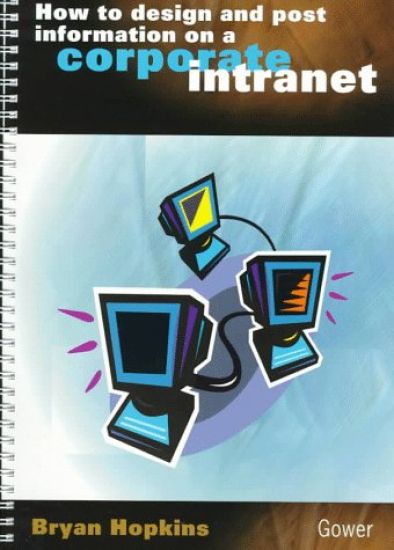
How to Design and Post Information on a Corporate Intranet
Hopkins Bryan
TAYLOR FRANCIS LTD
1997
kierre
Whatever the potential of an Intranet for your organization, it's only going to be as effective as the information that you post onto it. Whether you are trying to give staff access to information, communicate with them more proactively, or provide them with training and development, you need to be rigorous in deciding what should and shouldn't be posted; how to present it and how it will work. This book presents you with a step-by-step process that you can follow and adapt to suit any of your projects. It assumes that you have limited computer skills and explains; what an intranet is; how to define your need; how to gather and structure the information; how to design and programme your pages using Microsoft FrontPage; how to monitor the quality of your work and evaluate its effectiveness.
Legal Risk Management for In-House Counsel and Managers
Bryan E. Hopkins
Trafford Publishing
2013
pokkari
Legal Risk Management for In-House Counsel and Managers
Bryan E. Hopkins
TRAFFORD PUBLISHING
2013
sidottu