Kirjojen hintavertailu. Mukana 11 244 527 kirjaa ja 12 kauppaa.

Kirjahaku

Etsi kirjoja tekijän nimen, kirjan nimen tai ISBN:n perusteella.

1000 tulosta hakusanalla Bryon K Fryer

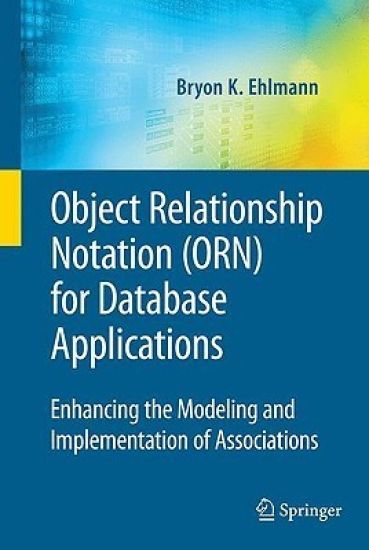
Object Relationship Notation (ORN) for Database Applications

Object Relationship Notation (ORN) for Database Applications

Bryon K. Ehlmann

Springer-Verlag New York Inc.
2009
sidottu
Conceptually, a database consists of objects and relationships. Object Relationship Notation (ORN) is a simple notation that more precisely defines relationships by combining UML multiplicities with uniquely defined referential actions. This book shows how ORN can be used in UML class diagrams and database definition languages (DDLs) to better model and implement relationships and thus more productively develop database applications. For the database developer, it presents many examples of relationships modeled using ORN-extended class diagrams and shows how these relationships are easily mapped to an ORN-extended SQL or Object DDL. For the DBMS developer, it presents the specifications and algorithms needed to implement ORN in a relational and object DBMS. This book also describes tools that can be downloaded or accessed via the Web. These tools allow databases to be modeled using ORN and implemented using automatic code generation that adds ORN support to Microsoft SQL Server and Progress Object Store. Object Relationship Notation (ORN) for Database Applications: Enhancing the Modeling and Implementation of Associations is written for research scientists, research libraries, professionals, and advanced-level students in computer science.
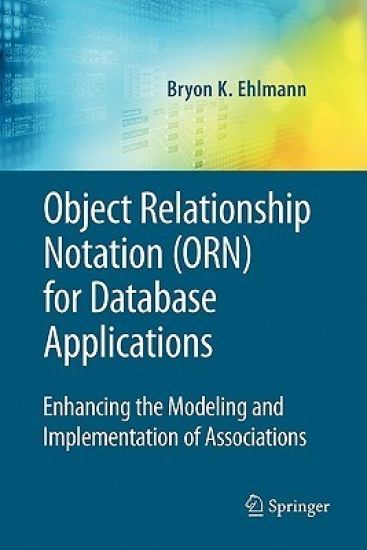
Object Relationship Notation (ORN) for Database Applications

Object Relationship Notation (ORN) for Database Applications

Bryon K. Ehlmann

Springer-Verlag New York Inc.
2010
nidottu
Conceptually, a database consists of objects and relationships. Object Relationship Notation (ORN) is a simple notation that more precisely defines relationships by combining UML multiplicities with uniquely defined referential actions. This book shows how ORN can be used in UML class diagrams and database definition languages (DDLs) to better model and implement relationships and thus more productively develop database applications. For the database developer, it presents many examples of relationships modeled using ORN-extended class diagrams and shows how these relationships are easily mapped to an ORN-extended SQL or Object DDL. For the DBMS developer, it presents the specifications and algorithms needed to implement ORN in a relational and object DBMS. This book also describes tools that can be downloaded or accessed via the Web. These tools allow databases to be modeled using ORN and implemented using automatic code generation that adds ORN support to Microsoft SQL Server and Progress Object Store. Object Relationship Notation (ORN) for Database Applications: Enhancing the Modeling and Implementation of Associations is written for research scientists, research libraries, professionals, and advanced-level students in computer science.
Don't Get Sacked In Retirement

Don't Get Sacked In Retirement

Bryon K Spicer

Advantage Media Group
2012
sidottu
Do you have the quality of life that you deserve? Are you concerned that you may run out of money during your retirement years? Will you have the lifestyle in retirement that you have dreamed of? Are you paying more in taxes than “Your Fair Share”? Are you concerned with the effects a market downturn may have on your investments? How will a serious illness affect your lifestyle? What effect would it have on your spouse? Is your spouse able to maintain the same lifestyle if you are not here? Will your loved ones pay unnecessary fees and taxes before they receive their inheritance? If you are getting ready for retirement or you are already retired, how have you addressed these concerns? Could you benefit from a Retirement Quarterback?
Analysis and Management of Animal Populations

Analysis and Management of Animal Populations

Byron K. Williams; James D. Nichols; Michael J. Conroy

Academic Press Inc
2002
sidottu
Analysis and Management of Animal Populations deals with the processes involved in making informed decisions about the management of animal populations. It covers the modeling of population responses to management actions, the estimation of quantities needed in the modeling effort, and the application of these estimates and models to the development of sound management decisions. The book synthesizes and integrates in a single volume the methods associated with these themes, as they apply to ecological assessment and conservation of animal populations.
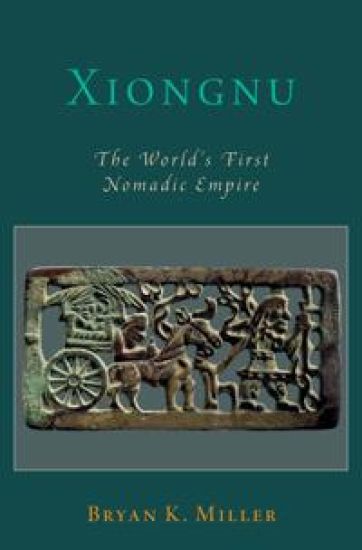
Xiongnu

Xiongnu

Bryan K. Miller

OXFORD UNIVERSITY PRESS INC
2024
sidottu
This book raises the case of the world's first nomadic empire, the Xiongnu, as a prime example of the sophisticated developments and powerful influence of nomadic regimes. Launching from a reconceptualization of the social and economic institutions of mobile pastoralists, the collective chapters trace the course of the Xiongnu Empire from before its initial rise, traversing the wars that challenged it and the reformations that made it stronger, to the legacy left after its eventual fall. Xiongnu expounds the economic practices and social conventions of steppe herders as fertile foundations for institutions and infrastructure of empire, and renders a model of “empires of mobilities,” which engaged the control less of towns and territories and more of the movements of communities and capital to fuel their regimes. By weaving together archaeological examinations with historical investigations, Bryan K. Miller presents a more complex and nuanced narrative of how an empire based firmly in the steppe over two thousand years ago managed to formulate a robust political economy and a complex political matrix that capitalized on mobilities and alternative forms of political participation, and allowed the Xiongnu to dominate vast realms of central Eurasia and leave lasting geopolitical effects on the many worlds around them.
Academic Freedom and the Japanese Imperial University, 1868-1939

Academic Freedom and the Japanese Imperial University, 1868-1939

Byron K. Marshall

University of California Press
1992
sidottu
Byron K. Marshall offers here a dramatic study of the changing nature and limits of academic freedom in prewar Japan, from the Meiji Restoration to the eve of World War II. Meiji leaders founded Tokyo Imperial University in the late nineteenth century to provide their new government with necessary technical and theoretical knowledge. An academic elite, armed with Western learning, gradually emerged and wielded significant influence throughout the state. When some faculty members criticized the conduct of the Russo-Japanese War the government threatened dismissals. The faculty and administration banded together, forcing the government to back down. By 1939, however, this solidarity had eroded. The conventional explanation for this erosion has been the lack of a tradition of autonomy among prewar Japanese universities. Marshall argues instead that these later purges resulted from the university's 40-year fixation on institutional autonomy at the expense of academic freedom. Marshall's finely nuanced analysis is complemented by extensive use of quantitative, biographical, and archival sources.
Geographical Genetics

Geographical Genetics

Bryan K. Epperson

Princeton University Press
2003
pokkari
Population genetics has made great strides in applying statistical analysis and mathematical modeling to understand how genes mutate and spread through populations over time. But real populations also live in space. Streams, mountains, and other geographic features often divide populations, limit migration, or otherwise influence gene flow. This book rigorously examines the processes that determine geographic patterns of genetic variation, providing a comprehensive guide to their study and interpretation. Geographical Genetics has a unique focus on the mathematical relationships of spatial statistical measures of patterns to stochastic processes. It also develops the probability and distribution theory of various spatial statistics for analysis of population genetic data, detailing exact methods for using various spatial features to make precise inferences about migration, natural selection, and other dynamic forces. The book also reviews the experimental literature on the types of spatial patterns of genetic variation found within and among populations. And it makes an unprecedented strong connection between observed measures of spatial patterns and those predicted theoretically. Along the way, it introduces readers to the mathematics of spatial statistics, applications to specific population genetic systems, and the relationship between the mathematics of space-time processes and the formal theory of geographical genetics. Written by a leading authority, this is the first comprehensive treatment of geographical genetics. It is a much-needed guide to the theory, techniques, and applications of a field that will play an increasingly important role in population biology and ecology.
Gutta Boyz

Gutta Boyz

Bryan K. Johnson

Boot Publishing
2015
nidottu
The gunshots don't worry thirteen-year-old Power-Up much-after all, gunfire isn't unusual in his Baton Rouge neighborhood. Besides, he has bigger concerns. With the loss of his mother's job, he has to do something to help-even if it means hustling. When a dying drug dealer stumbles into view, Power-Up gets the chance he needs: a ziplock bag full of crack. Teaming up with Boo, an older friend from a hustling family, Power-Up discovers the seductive nature of the game and becomes as hooked on cash as any drug addict. He and Boo quickly make names for themselves on the streets. When an armed robbery goes south, Power-Up lands in jail, a sixteen-year-old boy charged as an adult. Ten years later he's back on the street, hustling even harder, only with new friends. His return doesn't sit well with old allies, however. A confrontation is looming in Power-Up's future-one that could quickly turn deadly. A taut, fast-paced thriller, Gutta Boyz explores the destiny of a young man who believes he has only one option to survive and a world that offers him few, if any, alternatives.
A Race of Singers

A Race of Singers

Bryan K. Garman

The University of North Carolina Press
2000
nidottu
Walt Whitman dreamed of inspiring "a race of singers" who would celebrate the working class and realize the promise of American democracy. By examining how singers such as Woody Guthrie and Bruce Springstein embraced and reconfigured Whitman's vision, Bryan Garman shows that Whitman succeeded.
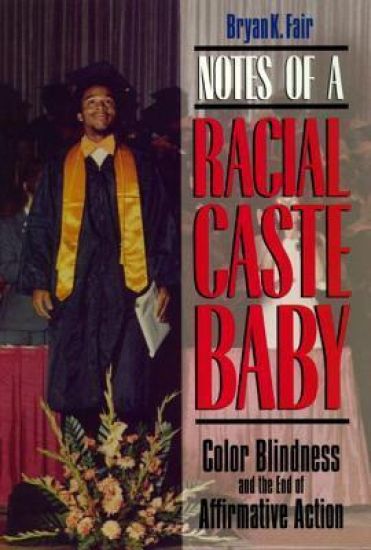
Notes of a Racial Caste Baby

Notes of a Racial Caste Baby

Bryan K. Fair

New York University Press
1997
sidottu
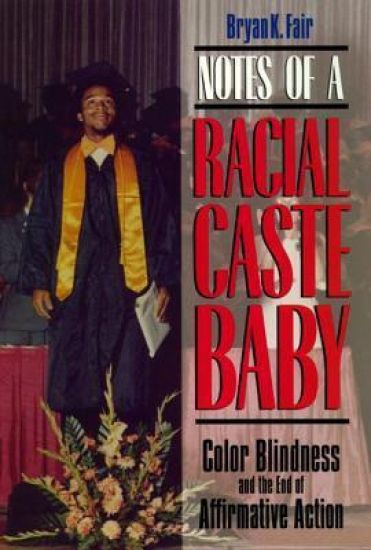
The Constitution of the United States, writes Bryan Fair, was a series of compromises between white male propertyholders: Southern planters and Northern merchants. At the heart of their deals was a clear race-conscious intent to place the interests of whites above those of blacks. In this provocative and important book, Fair, the eighth of ten children born to a single mother on public assistance in an Ohio ghetto, combines two histories--America's and his own- -to offer a compelling defense of affirmative action. How can it be, Fair asks, that, after hundreds of years of racial apartheid during which whites were granted 100% quotas to almost all professions, we have now convinced ourselves that, after a few decades of remedial affirmative action, the playing field is now level? Centuries of racial caste, he argues, cannot be swept aside in a few short years. Fair ambitiously surveys the most common arguments for and against affirmative action. He argues that we must distinguish between America in the pre-Civil Rights Movement era--when the law of the land was explicitly anti-black--and today's affirmative action policies--which are decidedly not anti- white. He concludes that the only just and effective way in which to account for America's racial past and to negotiate current racial quagmires is to embrace a remedial affirmative action that relies neither on quotas nor fiery rhetoric, but one which takes race into account alongside other pertinent factors. Championing the model of diversity on which the United States was purportedly founded, Fair serves up a personal and persuasive account of why race-conscious policies are the most effective way to end de facto segregation and eliminate racial caste. Table of Contents A Note to the Reader Acknowledgments Preface: Telling Stories Recasting Remedies as Diseases Color-Blind Justice The Design of This Book Pt. 1. A Personal Narrative Not White Enough Dee Black Columbus Racial Poverty Man-Child Colored Matters Coded Schools Busing Going Home Equal Opportunity The Character of Color Diversity as One Factor The Deception of Color Blindness Pt. 2. White Privilege and Black Despair: The Origins of Racial Caste in America The Declaration of Inferiority Marginal Americans Inventing American Slavery The Road to Constitutional Caste Losing Second-Class Citizenship Reconstruction and Sacrifice Separate and Unequal The Color Line Critiquing Color Blindness Pt. 3. The Constitutionality of Remedial Affirmative Action The Origins of Remedial Affirmative Action The Court of Last Resort The Invention of Reverse Discrimination The Politics of Affirmative Action: Myth or Reality? Racial Realism Eliminating Caste Afterword Notes Index
Notes of a Racial Caste Baby

Notes of a Racial Caste Baby

Bryan K. Fair

New York University Press
1999
pokkari
The Constitution of the United States, writes Bryan Fair, was a series of compromises between white male propertyholders: Southern planters and Northern merchants. At the heart of their deals was a clear race-conscious intent to place the interests of whites above those of blacks. In this provocative and important book, Fair, the eighth of ten children born to a single mother on public assistance in an Ohio ghetto, combines two histories--America's and his own- -to offer a compelling defense of affirmative action. How can it be, Fair asks, that, after hundreds of years of racial apartheid during which whites were granted 100% quotas to almost all professions, we have now convinced ourselves that, after a few decades of remedial affirmative action, the playing field is now level? Centuries of racial caste, he argues, cannot be swept aside in a few short years. Fair ambitiously surveys the most common arguments for and against affirmative action. He argues that we must distinguish between America in the pre-Civil Rights Movement era--when the law of the land was explicitly anti-black--and today's affirmative action policies--which are decidedly not anti- white. He concludes that the only just and effective way in which to account for America's racial past and to negotiate current racial quagmires is to embrace a remedial affirmative action that relies neither on quotas nor fiery rhetoric, but one which takes race into account alongside other pertinent factors. Championing the model of diversity on which the United States was purportedly founded, Fair serves up a personal and persuasive account of why race-conscious policies are the most effective way to end de facto segregation and eliminate racial caste. Table of Contents A Note to the Reader Acknowledgments Preface: Telling Stories Recasting Remedies as Diseases Color-Blind Justice The Design of This Book Pt. 1. A Personal Narrative Not White Enough Dee Black Columbus Racial Poverty Man-Child Colored Matters Coded Schools Busing Going Home Equal Opportunity The Character of Color Diversity as One Factor The Deception of Color Blindness Pt. 2. White Privilege and Black Despair: The Origins of Racial Caste in America The Declaration of Inferiority Marginal Americans Inventing American Slavery The Road to Constitutional Caste Losing Second-Class Citizenship Reconstruction and Sacrifice Separate and Unequal The Color Line Critiquing Color Blindness Pt. 3. The Constitutionality of Remedial Affirmative Action The Origins of Remedial Affirmative Action The Court of Last Resort The Invention of Reverse Discrimination The Politics of Affirmative Action: Myth or Reality? Racial Realism Eliminating Caste Afterword Notes Index
The Mizrahi Era of Rebellion

The Mizrahi Era of Rebellion

Bryan K. Roby

SYRACUSE UNIVERSITY PRESS
2026
pokkari
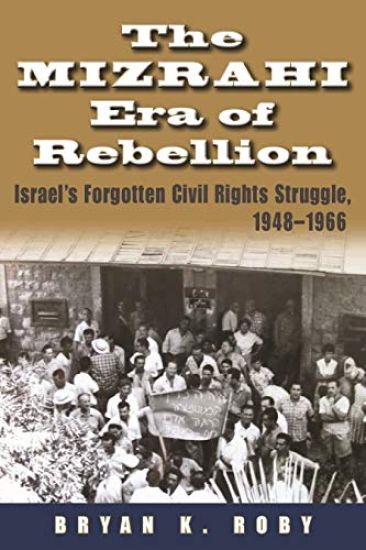
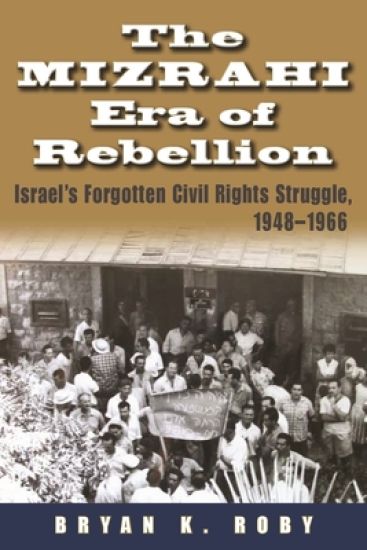
During the postwar period of 1948–56, over 400,000 Jews from the Middle East and Asia immigrated to the newly established state of Israel. By the end of the 1950s, Mizrahim, also known as "Oriental Jewry," represented the ethnic majority of the Israeli Jewish population. Despite their large numbers, Mizrahim were considered outsiders because of their non-European origins. Viewed as foreigners who came from culturally backward and distant lands, they suffered decades of socioeconomic, political, and educational injustices. In this pioneering work, Roby traces the Mizrahi population’s struggle for equality and civil rights in Israel. Although the daily "bread and work" demonstrations are considered the first political expression of the Mizrahim, Roby explores the myriad ways in which they agitated for change. Drawing upon a wealth of archival sources, many then recently declassified, Roby details the activities of the highly ideological and politicized young Israel. Police reports, court transcripts, and protester accounts document a diverse range of resistance tactics, including sit-ins, tent protests, and hunger strikes. Roby shows how the Mizrahi intellectuals and activists in the 1960s began to take note of the American civil rights movement, gaining inspiration from its development and drawing parallels between their experience and that of other marginalized ethnic groups. The Mizrahi Era of Rebellion shines a light on a largely forgotten part of Israeli social history, one that profoundly shaped the way Jews from African and Asian countries engaged with the newly founded state of Israel.
The Mizrahi Era of Rebellion

The Mizrahi Era of Rebellion

Bryan K. Roby

Syracuse University Press
2015
sidottu
During the postwar period of 1948–56, over 400,000 Jews from the Middle East and Asia immigrated to the newly established state of Israel. By the end of the 1950s, Mizrahim, also known as Oriental Jewry, represented the ethnic majority of the Israeli Jewish population. Despite their large numbers, Mizrahim were considered outsiders because of their non-European origins. Viewed as foreigners who came from culturally backward and distant lands, they suffered decades of socioeconomic, political, and educational injustices.In this pioneering work, Roby traces the Mizrahi population’s struggle for equality and civil rights in Israel. Although the daily ""bread and work"" demonstrations are considered the first political expression of the Mizrahim, Roby demonstrates the myriad ways in which they agitated for change. Drawing upon a wealth of archival sources, many only recently declassified, Roby details the activities of the highly ideological and politicized young Israel. Police reports, court transcripts, and protester accounts document a diverse range of resistance tactics, including sit-ins, tent protests, and hunger strikes. Roby shows how the Mizrahi intellectuals and activists in the 1960s began to take note of the American civil rights movement, gaining inspiration from its development and drawing parallels between their experience and that of other marginalized ethnic groups. The Mizrahi Era of Rebellion shines a light on a largely forgotten part of Israeli social history, one that profoundly shaped the way Jews from African and Asian countries engaged with the newly founded state of Israel.