Kirjojen hintavertailu. Mukana 11 244 527 kirjaa ja 12 kauppaa.

Kirjahaku

Etsi kirjoja tekijän nimen, kirjan nimen tai ISBN:n perusteella.

407 tulosta hakusanalla Byung-Mu Lee

Lu's Basic Toxicology

Lu's Basic Toxicology

Byung-Mu Lee

CRC Press
2018
sidottu
This new edition of our bestselling book, Lu?s Basic Toxicology, provides a number of key benefits that make it a must-read for toxicology specialists worldwide, including: Revision of a Bestseller - the new Sixth Edition provides the critical updates toxicologists need to keep up with the changing times New Information - on over-the-counter preparations, lactation, and occupational toxicology, providing clarity and insight into a rapidly evolving subject Comprehensive - Updated, topical additions - new chapters on Nanotoxicology and Toxicity of Endocrine System provide you with information not currently available elsewhere Expert Editors - Kacew and Lee offers a distillation of decades and research and teaching experience in toxicology, providing authoritative guidance for both students and practicing professionals Practical- Easy to read information at your fingertips - In-depth, yet concise presentation of material ? split into four key sections that include separate subject and chemical indexes all while in the 6 x 9 format makes this a useful, quick pocket-guide for the more experienced researcher.
Lu's Basic Toxicology

Lu's Basic Toxicology

Byung-Mu Lee; Sam Kacew; Hyung Sik Kim

CRC Press
2017
nidottu
Continuing a long tradition, Lu’s Basic Toxicology, Seventh Edition, combines relatively comprehensive coverage of toxic substances in food, air, and water with brevity, thereby continuing to serve as an updated introductory text for toxicology students and for those involved in allied sciences that require a background in toxicology. The new edition, which now becomes an edited work with contributions from experts around the globe, features four new chapters and a number of existing chapters that have been updated and expanded, notably those on mechanisms of toxic effects, conventional toxicity studies, the cardiovascular system, and risk assessment and regulatory toxicology. The book consists of four parts (Part I–Part IV) that provide guidance on principles of toxicology and testing procedures for toxicities as well as a concise, yet detailed, mechanism of both target organ and nontarget organ toxicities. The book is rounded off with a final section (Part IV) on the toxic effects of chemicals and risk assessment, giving toxicologists, both students and practicing professionals, the necessary tools to enhance their practice. This edition includes new chapters on Clinical Toxicology, Systems Toxicology, Chemicals and Children, and Toxicology of Reproductive Systems, providing the essentials of these topics in the same style as the other chapters in the book. With separate subject and chemical indexes, this is a useful, quick shelf reference for everyone working in toxicology today.
Lu's Basic Toxicology

Lu's Basic Toxicology

Byung-Mu Lee; Sam Kacew; Hyung Sik Kim

CRC Press
2017
sidottu
Continuing a long tradition, Lu’s Basic Toxicology, Seventh Edition, combines relatively comprehensive coverage of toxic substances in food, air, and water with brevity, thereby continuing to serve as an updated introductory text for toxicology students and for those involved in allied sciences that require a background in toxicology. The new edition, which now becomes an edited work with contributions from experts around the globe, features four new chapters and a number of existing chapters that have been updated and expanded, notably those on mechanisms of toxic effects, conventional toxicity studies, the cardiovascular system, and risk assessment and regulatory toxicology. The book consists of four parts (Part I–Part IV) that provide guidance on principles of toxicology and testing procedures for toxicities as well as a concise, yet detailed, mechanism of both target organ and nontarget organ toxicities. The book is rounded off with a final section (Part IV) on the toxic effects of chemicals and risk assessment, giving toxicologists, both students and practicing professionals, the necessary tools to enhance their practice. This edition includes new chapters on Clinical Toxicology, Systems Toxicology, Chemicals and Children, and Toxicology of Reproductive Systems, providing the essentials of these topics in the same style as the other chapters in the book. With separate subject and chemical indexes, this is a useful, quick shelf reference for everyone working in toxicology today.
Byung-Chul Han

Byung-Chul Han

Steven Knepper; Ethan Stoneman; Robert Wyllie

JOHN WILEY AND SONS LTD
2024
sidottu
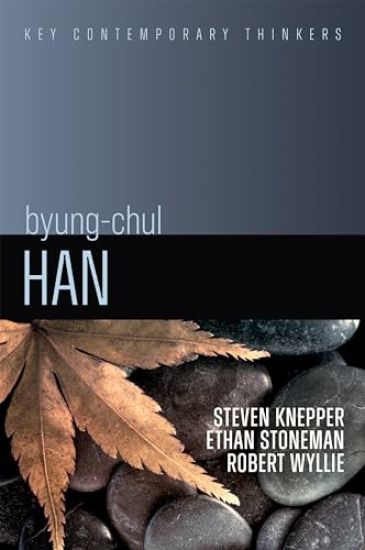
Byung-Chul Han is one of the most important living philosophers, renowned for his critiques of the digital age. In response to the idea that new technological devices expand our freedom, he argues that they lead to burnout and self-absorption and that we must redevelop contemplative practices which slow us down and open us up. He has brought to his thought forms of deep cosmopolitanism developed from both Zen Buddhism and a renewed Romanticism. This book is the first critical introduction to Han’s body of work. Knepper, Stoneman, and Wyllie explore Han’s rich oeuvre to date and his incisive contributions to a range of disciplines, including critical theory, media studies, political philosophy, and aesthetics. They unpack his key terms and illustrate his concepts with a range of examples, revealing how the critiques of the “achievement society” and burnout, which have earned Han a global audience, build on his earlier accounts of power, violence, and mood. This broader view addresses the most frequent criticisms of Han and makes a compelling case that he is not only an insightful diagnostician of the present moment but one whose interpretation of both Western and Eastern traditions offers wisdom for navigating the now acute problems of modernity. This lively book is essential reading for anyone getting to grips with Han’s extraordinary work.
Byung-Chul Han

Byung-Chul Han

Steven Knepper; Ethan Stoneman; Robert Wyllie

JOHN WILEY AND SONS LTD
2024
nidottu
Byung-Chul Han is one of the most important living philosophers, renowned for his critiques of the digital age. In response to the idea that new technological devices expand our freedom, he argues that they lead to burnout and self-absorption and that we must redevelop contemplative practices which slow us down and open us up. He has brought to his thought forms of deep cosmopolitanism developed from both Zen Buddhism and a renewed Romanticism. This book is the first critical introduction to Han’s body of work. Knepper, Stoneman, and Wyllie explore Han’s rich oeuvre to date and his incisive contributions to a range of disciplines, including critical theory, media studies, political philosophy, and aesthetics. They unpack his key terms and illustrate his concepts with a range of examples, revealing how the critiques of the “achievement society” and burnout, which have earned Han a global audience, build on his earlier accounts of power, violence, and mood. This broader view addresses the most frequent criticisms of Han and makes a compelling case that he is not only an insightful diagnostician of the present moment but one whose interpretation of both Western and Eastern traditions offers wisdom for navigating the now acute problems of modernity. This lively book is essential reading for anyone getting to grips with Han’s extraordinary work.
Estuche Byung Chul Han / Byung Chul Han Boxed Set
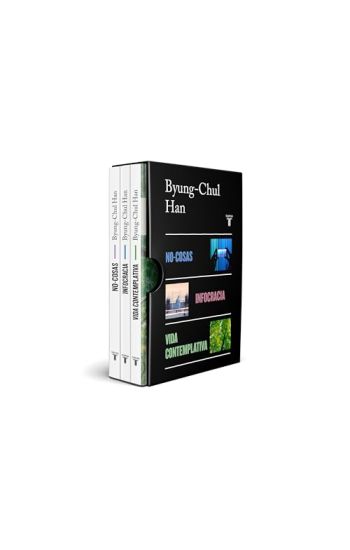
Tres obras fundamentales de Byng-Chul Han, el fil sofo m s le do de la Historia. No cosas es un ensayo que gira en torno a la transici n de la era de las cosas a la era de las no-cosas. Infocracia, un an lisis sagaz del r gimen de la informaci n, el nuevo gobierno al que estamos sometidos. Vida contemplativa es un poderoso llamamiento a abandonar la vida hiperactiva para recuperar el sentido de nuestras vidas, el equilibrio y la riqueza interior. Este estuche condensa tres de sus grandes reflexiones sobre lo s lido y lo tangible, la informaci n y la digitalizaci n, el silencio y la magia de la ociosidad. ENGLISH DESCRIPTION Three fundamental works by Byng-Chul Han, the most-read philosopher in history. Non-things is an essay that revolves around the transition from the age of things to the age of non-things. Infocracy is a cunning analysis of the information regime, the new government we are all subjected to. Vita Contemplativa is a powerful calling to abandon a hyperactive life in order to find meaning in our lives, balance, and inner wealth. This boxed set condenses three of his greatest reflections on the solid and the tangible, information and digitalization, silence and the magic of idleness.
In the Swarm

In the Swarm

Byung-Chul Han

MIT Press
2017
pokkari
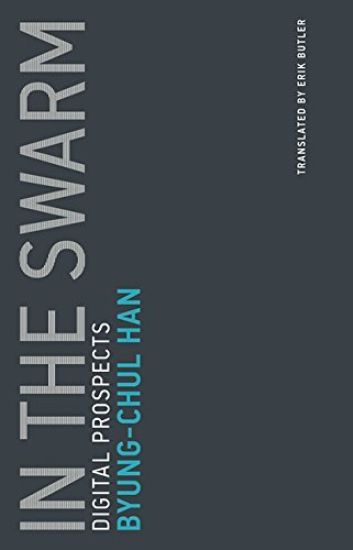
A prominent German thinker argues that—contrary to “Twitter Revolution” cheerleading—digital communication is destroying political discourse and political action.The shitstorm represents an authentic phenomenon of digital communication.—from In the SwarmDigital communication and social media have taken over our lives. In this contrarian reflection on digitized life, Byung-Chul Han counters the cheerleaders for Twitter revolutions and Facebook activism by arguing that digital communication is in fact responsible for the disintegration of community and public space and is slowly eroding any possibility for real political action and meaningful political discourse. In the predigital, analog era, by the time an angry letter to the editor had been composed, mailed, and received, the immediate agitation had passed. Today, digital communication enables instantaneous, impulsive reaction, meant to express and stir up outrage on the spot. “The shitstorm,” writes Han, ”represents an authentic phenomenon of digital communication.”Meanwhile, the public, the senders and receivers of these communications have become a digital swarm—not a mass, or a crowd, or Negri and Hardt's antiquated notion of a “multitude,” but a set of isolated individuals incapable of forming a “we,” incapable of calling dominant power relations into question, incapable of formulating a future because of an obsession with the present. The digital swarm is a fragmented entity that can focus on individual persons only in order to make them an object of scandal. Han, one of the most widely read philosophers in Europe today, describes a society in which information has overrun thought, in which the same algorithms are employed by Facebook, the stock market, and the intelligence services. Democracy is under threat because digital communication has made freedom and control indistinguishable. Big Brother has been succeeded by Big Data.
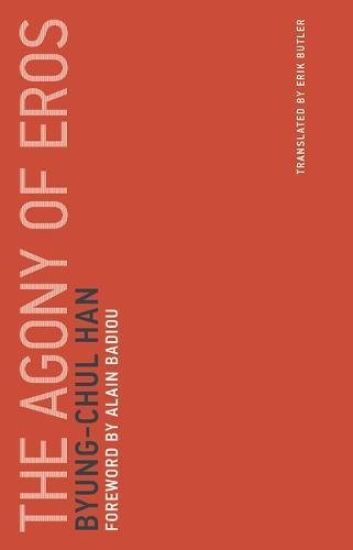
The Agony of Eros

The Agony of Eros

Byung-Chul Han; Alain Badiou

MIT Press
2017
pokkari
An argument that love requires the courage to accept self-negation for the sake of discovering the Other.Byung-Chul Han is one of the most widely read philosophers in Europe today, a member of the new generation of German thinkers that includes Markus Gabriel and Armen Avanessian. In The Agony of Eros, a bestseller in Germany, Han considers the threat to love and desire in today's society. For Han, love requires the courage to accept self-negation for the sake of discovering the Other. In a world of fetishized individualism and technologically mediated social interaction, it is the Other that is eradicated, not the self. In today's increasingly narcissistic society, we have come to look for love and desire within the “inferno of the same.” Han offers a survey of the threats to Eros, drawing on a wide range of sources—Lars von Trier's film Melancholia, Wagner's Tristan und Isolde,Fifty Shades of Grey, Michel Foucault (providing a scathing critique of Foucault's valorization of power), Martin Buber, Hegel, Baudrillard, Flaubert, Barthes, Plato, and others. Han considers the “pornographication” of society, and shows how pornography profanes eros; addresses capitalism's leveling of essential differences; and discusses the politics of eros in today's “burnout society.” To be dead to love, Han argues, is to be dead to thought itself. Concise in its expression but unsparing in its insight, The Agony of Eros is an important and provocative entry in Han's ongoing analysis of contemporary society.This remarkable essay, an intellectual experience of the first order, affords one of the best ways to gain full awareness of and join in one of the most pressing struggles of the day: the defense, that is to say—as Rimbaud desired it—the “reinvention” of love.—from the foreword by Alain Badiou
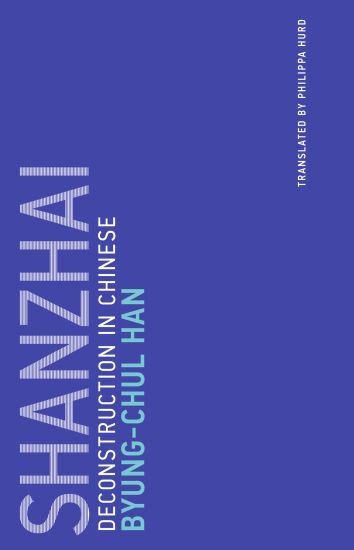
Shanzhai

Shanzhai

Byung-Chul Han

MIT Press
2017
pokkari
Tracing the thread of “decreation” in Chinese thought, from constantly changing classical masterpieces to fake cell phones that are better than the original.Shanzhai is a Chinese neologism that means “fake,” originally coined to describe knock-off cell phones marketed under such names as Nokir and Samsing. These cell phones were not crude forgeries but multifunctional, stylish, and as good as or better than the originals. Shanzhai has since spread into other parts of Chinese life, with shanzhai books, shanzhai politicians, shanzhai stars. There is a shanzhai Harry Potter: Harry Potter and the Porcelain Doll, in which Harry takes on his nemesis Yandomort. In the West, this would be seen as piracy, or even desecration, but in Chinese culture, originals are continually transformed—deconstructed. In this volume in the Untimely Meditations series, Byung-Chul Han traces the thread of deconstruction, or “decreation,” in Chinese thought, from ancient masterpieces that invite inscription and transcription to Maoism—“a kind a shanzhai Marxism,” Han writes.Han discusses the Chinese concepts of quan, or law, which literally means the weight that slides back and forth on a scale, radically different from Western notions of absoluteness; zhen ji, or original, determined not by an act of creation but by unending process; xian zhan, or seals of leisure, affixed by collectors and part of the picture's composition; fuzhi, or copy, a replica of equal value to the original; and shanzhai. The Far East, Han writes, is not familiar with such “pre-deconstructive” factors as original or identity. Far Eastern thought begins with deconstruction.
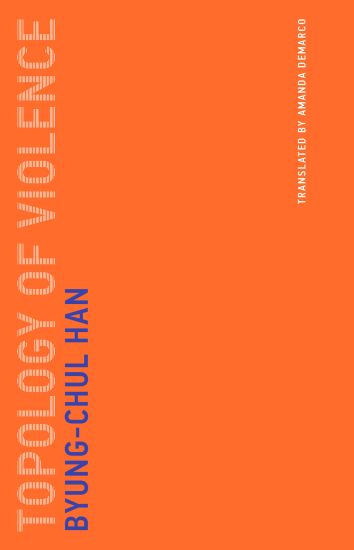
Topology of Violence

Topology of Violence

Byung-Chul Han

MIT Press
2018
pokkari
One of today's most widely read philosophers considers the shift in violence from visible to invisible, from negativity to excess of positivity.Some things never disappear—violence, for example. Violence is ubiquitous and incessant but protean, varying its outward form according to the social constellation at hand. In Topology of Violence, the philosopher Byung-Chul Han considers the shift in violence from the visible to the invisible, from the frontal to the viral to the self-inflicted, from brute force to mediated force, from the real to the virtual. Violence, Han tells us, has gone from the negative—explosive, massive, and martial—to the positive, wielded without enmity or domination. This, he says, creates the false impression that violence has disappeared. Anonymized, desubjectified, systemic, violence conceals itself because it has become one with society. Han first investigates the macro-physical manifestations of violence, which take the form of negativity—developing from the tension between self and other, interior and exterior, friend and enemy. These manifestations include the archaic violence of sacrifice and blood, the mythical violence of jealous and vengeful gods, the deadly violence of the sovereign, the merciless violence of torture, the bloodless violence of the gas chamber, the viral violence of terrorism, and the verbal violence of hurtful language. He then examines the violence of positivity—the expression of an excess of positivity—which manifests itself as over-achievement, over-production, over-communication, hyper-attention, and hyperactivity. The violence of positivity, Han warns, could be even more disastrous than that of negativity. Infection, invasion, and infiltration have given way to infarction.
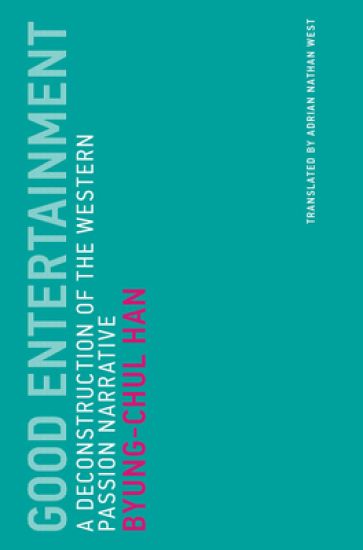
Good Entertainment

Good Entertainment

Byung-Chul Han

MIT Press
2019
pokkari
A philosopher considers entertainment, in all its totalizing variety—infotainment, edutainment, servotainment—and traces the notion through Kant, Zen Buddhism, Heidegger, Kafka, and Rauschenberg.In Good Entertainment, Byung-Chul Han examines the notion of entertainment—its contemporary ubiquity, and its philosophical genealogy. Entertainment today, in all its totalizing variety, has an apparently infinite capacity for incorporation: infotainment, edutainment, servotainment, confrontainment. Entertainment is held up as a new paradigm, even a new credo for being—and yet, in the West, it has had inescapably negative connotations. Han traces Western ideas of entertainment, considering, among other things, the scandal that arose from the first performance of Bach's Saint Matthew's Passion (deemed too beautiful, not serious enough); Kant's idea of morality as duty and the entertainment value of moralistic literature; Heidegger's idea of the thinker as a man of pain; Kafka's hunger artist and the art of negativity, which takes pleasure in annihilation; and Robert Rauschenberg's refusal of the transcendent. The history of the West, Han tells us, is a passion narrative, and passion appears as a killjoy. Achievement is the new formula for passion, and play is subordinated to production, gamified. And yet, he argues, at their core, passion and entertainment are not entirely different. The pure meaninglessness of entertainment is adjacent to the pure meaning of passion. The fool's smile resembles the pain-racked visage of Homo doloris. In Good Entertainment, Han explores this paradox.
Politics of East Asian Free Trade Agreements

Politics of East Asian Free Trade Agreements

Byung-il Choi; Jennifer S. Oh

Routledge
2021
sidottu
This textbook explains the politics of free trade agreements in Japan and South Korea.Examining free trade agreements in Japan and South Korea since the late 1990s, Choi and Oh analyze the role of institutions, political leaders, sectoral interests, and civil society in placing the two countries on alternate paths of free trade agreements at different points in time. Systematically approaching the politics of free trade agreements from each perspective, they expose the domestic political underpinnings of free trade agreements in a global trade order that is increasingly fraught with conflict.A valuable textbook for students of international political economy and international trade in East Asia, particularly those focusing on Japan and South Korea. It’s also a useful resource for scholars and policymakers looking to better understand trade politics in East Asia.
Politics of East Asian Free Trade Agreements

Politics of East Asian Free Trade Agreements

Byung-il Choi; Jennifer S. Oh

Routledge
2021
nidottu
This textbook explains the politics of free trade agreements in Japan and South Korea.Examining free trade agreements in Japan and South Korea since the late 1990s, Choi and Oh analyze the role of institutions, political leaders, sectoral interests, and civil society in placing the two countries on alternate paths of free trade agreements at different points in time. Systematically approaching the politics of free trade agreements from each perspective, they expose the domestic political underpinnings of free trade agreements in a global trade order that is increasingly fraught with conflict.A valuable textbook for students of international political economy and international trade in East Asia, particularly those focusing on Japan and South Korea. It’s also a useful resource for scholars and policymakers looking to better understand trade politics in East Asia.
Security Policy Dynamics

Security Policy Dynamics

Byung-ok Kil

Routledge
2019
nidottu
This title was first published in 2001: Byung-ok Kil's thorough analysis deals with both the broad area of public policy and the specific topic of national security policy change in Korea. Using an historical comparative approach, he tests the relative importance of international and domestic developments as determinants of security policy change. Drawing extensively on carefully selected sources of quantitative and qualitative data including original documents and interviews, this engaging text is of theoretical, methodological and applied policy relevance to the academic community and of substantive interest to a broader audience of governmental officials in national security and related policy areas.
Kinetic Theory and Irreversible Thermodynamics

Kinetic Theory and Irreversible Thermodynamics

Byung Chan Eu

John Wiley Sons Inc
1992
sidottu
For almost 20 years the author has conducted research on both macroscopic and molecular theories. The results of his investigation, which can be found in this work, are that irreversible thermodynamics and kinetic theory of matter are not separable especially for nonlinear irreversible processes occurring in systems removed far from equilibrium and thus must be examined together in a mutually consistent manner. Includes coverage of such topics as mass and momentum conservation law, bilinear and quadratic forms for entropy production, viscous phenomena, boundary conditions for velocities and much more.