Kirjojen hintavertailu. Mukana 11 244 527 kirjaa ja 12 kauppaa.

Kirjahaku

Etsi kirjoja tekijän nimen, kirjan nimen tai ISBN:n perusteella.

1000 tulosta hakusanalla C. C. Lockwood

C. C. Lockwood's Atchafalaya

C. C. Lockwood's Atchafalaya

C. C. Lockwood

Louisiana State University Press
2007
sidottu
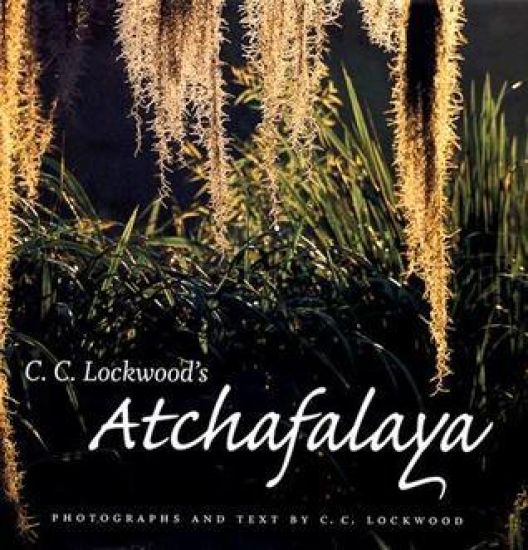
At nearly 1.4 million acres, the Atchafalaya Basin in south central Louisiana comprises America's largest swamp wilderness. Award-winning nature photographer C. C. Lockwood is the foremost chronicler of this natural treasure. What began as a curious side-trip in 1973 became a decades-long love affair, and for more than thirty years, Lockwood has explored the Atchafalaya's waters and captured its haunting beauty on film. Now, twenty-five years after the publication of his first book, he returns to his favorite subject in C. C. Lockwood's Atchafalaya. His passion for the Atchafalaya as expressed in his photographs can be compared to John James Audubon's exuberant appreciation for the state's abundant bird life as depicted in his prints more than 150 years ago. The art of both exalts Louisiana's wildlife -- and cautions against taking it for granted. Lockwood revisits and reflects on the places he has frequented most in the swamp, recalling his escapades both long past and recent among gators and skeeters. He shares the thoughts of basin residents about how the Atchafalaya has changed over time, for better and for worse. Increases and decreases in various bird and other animal populations, changes in water levels and consistency, flora mainstays and trees gone missing, burgeoning aquatic vegetation -- all are keenly observed by this explorer. Lockwood finds undiminished the seductive seasonal and diurnal moods of the swamp: autumn and spring, sunset and moonrise, as breathtaking now as in the past. In nearly one-hundred dazzling color photographs, Lockwood brilliantly documents the Atchafalaya's timeless beauty. He shows amazingly diverse and abundant wildlife, rookeries with thousands of egrets and herons, waters with billions of crawfish, and ridges with deer, squirrel, and woodcock. Waters run deep in Lockwood's soul, as evidenced in his intimate treatment of the meandering bayous fringed with bald cypress trees, the many glassy lakes reflecting vegetation into double images, and the mighty Atchafalaya River -- the lifeline of the swamp.""No place in the world gives me such a feeling of peace as America's largest river basin swamp,"" writes Lockwood. In these pages, he pays homage to the queen of U.S. wetlands.
Grammar for Great Writing C

Grammar for Great Writing C

Lida Baker; Kristin Sherman; Robyn Lockwood

Cengage ELT
2017
nidottu
Grammar for Great Writing is a three-book series that focuses on the key grammatical and lexical elements learners need to become more powerful academic writers. Ideal for the grammar component of a writing and grammar class, Grammar for Great Writing may be used as a companion to the Great Writing series or in conjunction with any academic writing series.
Widford and Widford Church, Hertfordshire ... with an Explanation of Her Recently Completed Painting by F. C. H. Gosselin.

Widford and Widford Church, Hertfordshire ... with an Explanation of Her Recently Completed Painting by F. C. H. Gosselin.

John Traviss Lockwood; F Charlotte Hadsley Gosselin

British Library, Historical Print Editions
2011
pokkari
Title: Widford and Widford Church, Hertfordshire ... With an explanation of her recently completed painting by F. C. H. Gosselin.Publisher: British Library, Historical Print EditionsThe British Library is the national library of the United Kingdom. It is one of the world's largest research libraries holding over 150 million items in all known languages and formats: books, journals, newspapers, sound recordings, patents, maps, stamps, prints and much more. Its collections include around 14 million books, along with substantial additional collections of manuscripts and historical items dating back as far as 300 BC.The GENERAL HISTORICAL collection includes books from the British Library digitised by Microsoft. This varied collection includes material that gives readers a 19th century view of the world. Topics include health, education, economics, agriculture, environment, technology, culture, politics, labour and industry, mining, penal policy, and social order. ++++The below data was compiled from various identification fields in the bibliographic record of this title. This data is provided as an additional tool in helping to insure edition identification: ++++ British Library Lockwood, John Traviss; Gosselin, F. Charlotte Hadsley; 1883 40 p.; 4 . 10351.g.25.
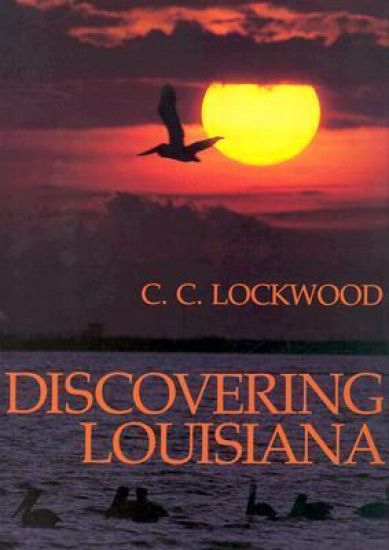
Discovering Louisiana

Discovering Louisiana

C. C. Lockwood

Louisiana State University Press
1986
sidottu
Discovering Louisiana is a beautiful paean to the state's diverse natural habitats, from the hills and piney woods in the north to the thousands of miles of shoreline in the south. As the book's 150 colour photographs reveal, Louisiana is much more than the swamps and marshes with which it is most often associated.C. C. Lockwood, one of the nation's outstanding nature and wildlife photographers and the premier chronicler of the natural wonders of Louisiana and the Gulf region, captures splendid views - both panoramic and intimate: the jagged bluffs of the Tunica Hills in West Feliciana Parish; cascading waterfalls and winding creeks in the Kisatchie National Forest in central Louisiana; and unobstructed autumnal vistas from the summit of Bates Mountain, near Shreveport. Lockwood travels along many of the state's scenic rivers and lakes, photographing the mist-shrouded Bogue Chitto River at dawn; the steep, sandy banks of Saline Bayou, which is bordered by towering hardwood trees; and the vast, blue expanse of Lake Pontchartrain, the state's largest lake. He returns to his beloved Atchafalaya, the swamp area that is home to a teeming abundance of wildlife, including raccoons, nutria, alligators, snakes, turtles, egrets, herons, owls, and eagles. He travels to the state's prairies, bogs, and cheniers, which, though small in size, nonetheless are very important for the state's wildlife community. Finally, he visits the coast, where he photographs an amazing array of birds on the barrier islands.Lockwood augments his breathtaking photographs with an engaging first-person narrative account of his adventures. He describes the idyllic pleasures of a hundred-mile, five-day canoe trip down the Bogue Chitto and West Pearl rivers, the anticipation of climbing the state's highest peak, Driskill Mountain, and the dangers of trying to navigate five-foot swells in Terrebonne Bay. Throughout the book, Lockwood skillfully conveys the magic that he finds in all of Louisiana and the concern he feels for the state's fragile ecosystem.
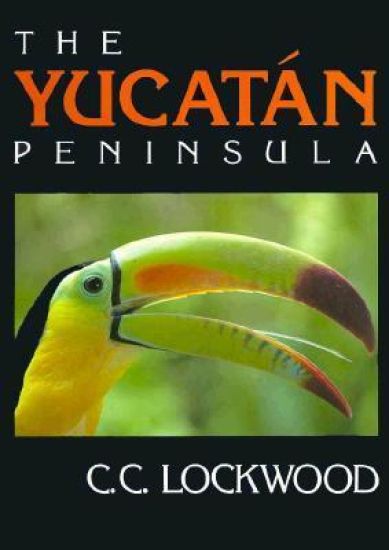
The Yucatan Peninsula

The Yucatan Peninsula

C. C. Lockwood

Louisiana State University Press
1989
sidottu
During the course of his career, photographer C. C. Lockwood has recorded the abundant natural beauty of Louisiana - particularly the Atchafalaya Basin - and the rest of the Gulf Coast, from Florida to Texas. In this book Lockwood travels to the other side of the Gulf to present an unparalleled look at the untamed wonders of the Yucatán Peninsula.The specific emphases of The Yucatán Peninsula are the Mexican states of Campeche, Quintana Roo, and Yucatán. Avoiding such tourist-trampled ports of call as Cozumel and Cancun, Lockwood focuses instead on less accessible wilderness areas. With the assistance of trained explorers as well as native volunteers, Lockwood visited, over a two-year period, such hidden treasures of the Yucatán as Arrecife Alacrán and Banco Chinchorro, two coral-laden reefs; Sian Ka'an, a 1.2-million-acre wildlife refuge; and Calakmul, an area of dense jungle.These expeditions gave Lockwood the perfect opportunity to photograph the peninsula's astonishing array of animal life: rainbow-coloured parrot fish and enormous lobsters, sea turtles and nurse sharks, flamingos and toucans, egrets and brown pelicans, iguanas and spider monkeys. Lockwood also captures the magnificent beauty of the land itself, with evocative shots of shimmering green vegetation, colourful flowers, and jungle sunrises. Stunning photographs of Mayan ruins, open-air markets with brimming stands of fruits and vegetables, and the expressive faces of the Yucatecans themselves complete this picture of unspoiled paradise.Lockwood's informal, yet informative text recounts many of his frequently hilarious, sometimes dangerous, and always interesting adventures. Lockwood also writes about the history of the Yucatán Peninsula and its various ecosystems.The Yucatán Penisula opens a window onto a world that most tourists never see.
Around the Bend

Around the Bend

C. C. Lockwood

Louisiana State University Press
1998
sidottu
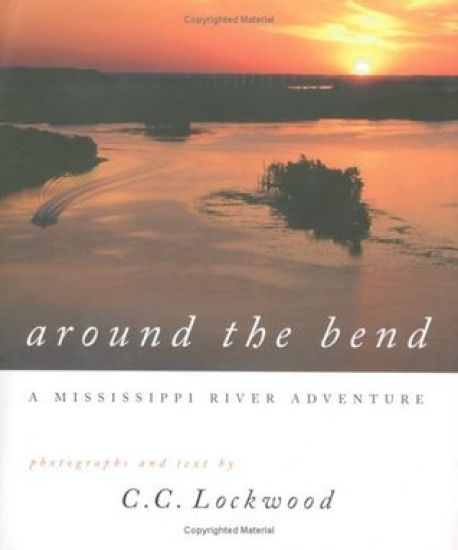
In the summer of 1997 renowned nature photographer C. C. Lockwood embarked on a remarkable adventure. First by canoe and then by Grand Canyon- style pontoon raft, he journeyed the length of the Mississippi River- 2,320 miles- from its source at Lake Itasca, Minnesota, to its mouth at the Gulf of Mexico. Armed with his camera and computer equipment to transmit stories and pictures to schoolchildren, this ""High Tech Huck Finn"" trained his lens on spectacular scenes, creating images that vividly depict the life pulsing in and near this vital American artery- water and lands that touch the lives of every American.As Lockwood shows in these brilliant color photographs, the river has many faces. At its birthplace it is nothing more than a trickle among rocks. But as it serpentines south, it slowly grows until, at its end, it pours daily over 420 billion gallons of water into the Gulf of Mexico. Lockwood captures the river in all of its moods: a ghostly foggy morning on the bank; a bright orange sunset over the bends; a quiet snowfall at the headwaters; a sudden rain shower at dusk. He also offers intimate images of the creatures that make their home in the river or along its shores: a whitetail fawn nestled in underbrush; a curious frog peeking out from beneath reeds; a Canada goose marching in line with her goslings; turtles burying themselves in mud. His depiction of the natural beauty of Old Man River is unparalleled.The river comes to appear as a thriving community because Lockwood introduces the people, both ordinary and extraordinary, who live and journey on it. We meet, among others, a performance artist intent on swimming the river's length; inhabitants of a makeshift houseboat colony near Winona, Minnesota; Tom Sawyer and Becky Thatcher look-alikes in Hannibal, Missouri; and Willie P., who, with the help of thirty-gallon plastic barrels and paddle wheels, employs a most unusual mode of river transportation- a Toyota Celica hatchback. To illustrate the changing riverscape, Lockwood includes images of some of the businesses and industries that line the river's banks: casino river boats glittering in the night; the jumping blues clubs of Memphis' Beale Street; bustling industrial plants and the countless barges and push boats that service them. He also offers a detailed memoir of his trip, as well as his other tours of the river by plane, car, tugboat, and river boat, in a delightful introduction. Lockwood's photographs depict beautifully the varied aspects of the Mississippi River- flourishing community, vital industrial corridor, and priceless environmental treasure. Through this book, readers can join him on his quest to discover the wonders that lie just ""around the bend.
Still Waters

Still Waters

C. C. Lockwood

Louisiana State University Press
2000
sidottu
Renowned for the beauty of his photographs and his love of planet Earth, C. C. Lockwood for thirty years has produced images that dazzle the eye and soothe the soul. Now at life's midpoint, this adventurous outdoor photographer pauses to reflect on the less-trodden career path he's chosen and to assemble the most cherished fruits of his work. Still Waters is a sumptuous retrospective- ""the best 100""- of Lockwood's more than 30,000 total images, chronologically arranged and stunningly displayed. Over half have never been published, and only twenty-four are found in his previous books.These color-lush scenes of sky, water, and land range from Belize to Hawaii to Yellowstone National Park to Portugal and capture the marvel of native flora and fauna (including several Homo sapiens!). Lockwood's signature Louisiana scapes abound, depicting such winsome place-names as Little Pecan Island, Pearl River Swamp, Atchafalaya Basin, Tunica Hills, and Bayou Penchant. Whether absorbed with the utter innocence of a nest of young raccoons (Mutt, Jeff, and Friends), the radiant coolness of a coral reef habitat (Reef Fish), or the essence of a dying sun, all the images exude the almost magical synthesis of light and subject, inspiration and technique, patience and luck, that denotes a Lockwood print.Selected by the artist for their visual grace, hold on memory, and professional impact, the stills of Still Waters are likened by Lockwood to a family photo album: ""the good times show up more than the hard work of raising the kids."" If a picture speaks a thousand words, then Lockwood's 100 raise a chorale. Where argument and cold fact fail to persuade, these works of beauty and love instill a newfound appreciation for our shared earthly habitat.
Louisiana Wild

Louisiana Wild

C. C. Lockwood; Keith Ouchley

Louisiana State University Press
2015
sidottu
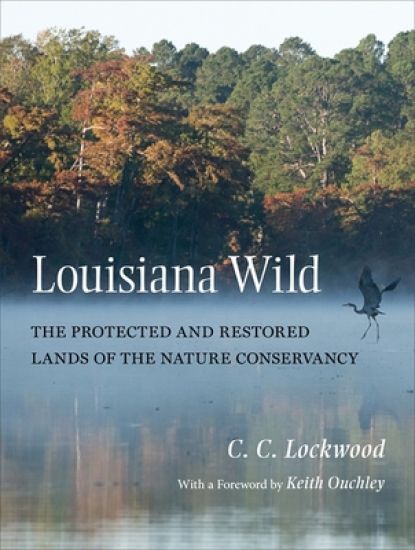
The scenic images that Louisiana brings to mind -- moss-draped cypress, lush marshlands, alligators gliding through bayous, herons coasting across an open sky -- all spring from one of the most diverse and productive ecosystems on the continent. This varied and inviting landscape gives rise to one of the state's many monikers, ""Sportsman's Paradise,"" which rings true whether you are boating on picturesque Lake Martin or bird-watching among the ancient live oaks of Lafitte Woods. From the precious maritime forests of Grand Isle to the steep contours of Tunica Hills, Louisiana's wild outdoors defines each region's sense of place and value.For nearly thirty years, The Nature Conservancy in Louisiana has served as a steward of these ecological riches, protecting and maintaining more than 285,000 acres of the state's land. Now, for the first time, readers can observe the vast array of flora and fauna found in these complex habitats in Louisiana Wild, with the awe-inspiring photography of C. C. Lockwood.After trekking and canoeing through more than sixty properties managed by The Nature Conservancy, Lockwood presents a vivid photo narrative that journeys from the little-known Copenhagen Hills, a prairie habitat with the largest variety of woody plants in Louisiana; to the swampland lake of Cypress Island, with its massive rookery of roseate spoonbills and great egrets; to over a dozen other sites that showcase Louisiana's distinct environs.With 220 color images, Louisiana Wild pays homage to the immeasurable impact of The Nature Conservancy's efforts and will delight anyone who calls Louisiana home.
The Life of Edward E. Ayer

The Life of Edward E. Ayer

Frank C. (Frank Cummins) 1. Lockwood

Hassell Street Press
2021
sidottu
This work has been selected by scholars as being culturally important and is part of the knowledge base of civilization as we know it.This work is in the public domain in the United States of America, and possibly other nations. Within the United States, you may freely copy and distribute this work, as no entity (individual or corporate) has a copyright on the body of the work.Scholars believe, and we concur, that this work is important enough to be preserved, reproduced, and made generally available to the public. To ensure a quality reading experience, this work has been proofread and republished using a format that seamlessly blends the original graphical elements with text in an easy-to-read typeface.We appreciate your support of the preservation process, and thank you for being an important part of keeping this knowledge alive and relevant.