

Kirjahaku
Etsi kirjoja tekijän nimen, kirjan nimen tai ISBN:n perusteella.
1000 tulosta hakusanalla C. E. Reeves

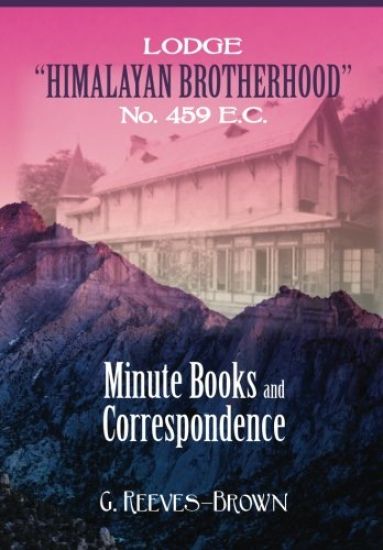
Lodge "Himalayan Brotherhood" No. 459 E.C.: Minute Books and Correspondence
G. Reeves-Brown
Westphalia Press
2014
nidottu
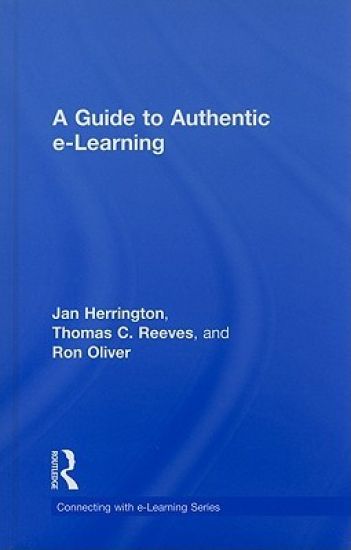
Part of the groundbreaking Connecting with e-Learning series, A Guide to Authentic e-Learning provides effective, working examples to engage learners with authentic tasks in online settings. As technology continues to open up possibilities for innovative and effective teaching and learning opportunities, students and teachers are no longer content to accept familiar classroom or lecture-based pedagogies that rely on information delivery and little else. Situated and constructivist theories advocate that learning is best achieved in circumstances resembling the real-life application of knowledge. While there are multiple learning design models that share similar foundations, authentic e-learning tasks go beyond process to become complex, sustained activities that draw on realistic situations to produce realistic outcomes. A Guide to Authentic e-Learning:develops the conceptual framework for authentic learning tasks in online environments provides practical guidance on design, implementation, and evaluation of authentic e-learning tasks includes case studies and examples of outcomes of using authentic e-learning tasks Written for teaching professionals in Higher Education who teach online, A Guide to Authentic e-Learning offers concrete guidelines and examples for developing and implementing authentic e-learning tasks in ways that challenge students to maximize their learning. This essential book provides effective, working examples to engages learners with authentic tasks in online learning settings.
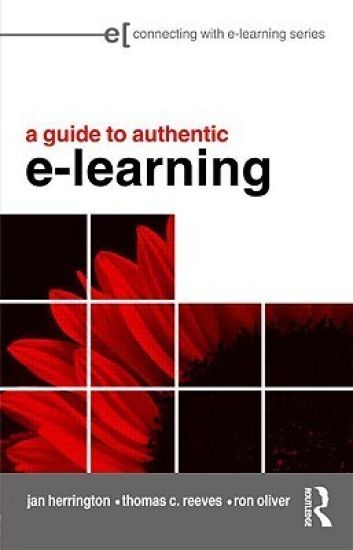
Part of the groundbreaking Connecting with e-Learning series, A Guide to Authentic e-Learning provides effective, working examples to engage learners with authentic tasks in online settings. As technology continues to open up possibilities for innovative and effective teaching and learning opportunities, students and teachers are no longer content to accept familiar classroom or lecture-based pedagogies that rely on information delivery and little else. Situated and constructivist theories advocate that learning is best achieved in circumstances resembling the real-life application of knowledge. While there are multiple learning design models that share similar foundations, authentic e-learning tasks go beyond process to become complex, sustained activities that draw on realistic situations to produce realistic outcomes. A Guide to Authentic e-Learning:develops the conceptual framework for authentic learning tasks in online environments provides practical guidance on design, implementation, and evaluation of authentic e-learning tasks includes case studies and examples of outcomes of using authentic e-learning tasks Written for teaching professionals in Higher Education who teach online, A Guide to Authentic e-Learning offers concrete guidelines and examples for developing and implementing authentic e-learning tasks in ways that challenge students to maximize their learning. This essential book provides effective, working examples to engages learners with authentic tasks in online learning settings.



Reprint of the original, first published in 1873.
Reprint of the original, first published in 1873.

Reprint of the original, first published in 1873.
Reprint of the original, first published in 1873.

This work has been selected by scholars as being culturally important and is part of the knowledge base of civilization as we know it.This work is in the public domain in the United States of America, and possibly other nations. Within the United States, you may freely copy and distribute this work, as no entity (individual or corporate) has a copyright on the body of the work.Scholars believe, and we concur, that this work is important enough to be preserved, reproduced, and made generally available to the public. To ensure a quality reading experience, this work has been proofread and republished using a format that seamlessly blends the original graphical elements with text in an easy-to-read typeface.We appreciate your support of the preservation process, and thank you for being an important part of keeping this knowledge alive and relevant.
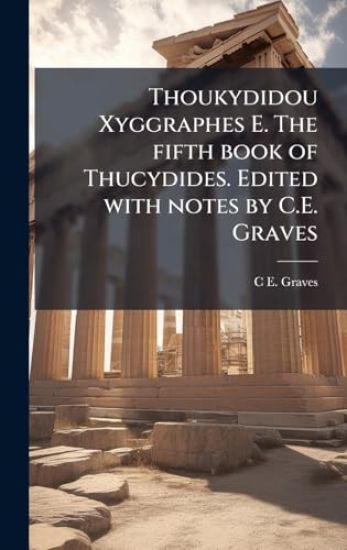
Thoukydidou Xyggraphes E. The fifth book of Thucydides. Edited with notes by C.E. Graves
C. E. 1839-1920 Graves
Hutson Street Press
2025
sidottu
This is an edited edition of the fifth book of Thucydides' "History of the Peloponnesian War", also known as "Thoukydidou Xyggraphes E". Presented in the original Greek, this scholarly edition by C.E. Graves offers valuable insights into the historical context and linguistic nuances of Thucydides' work. Focusing on the events of the Peloponnesian War, the fifth book provides crucial details and analysis of the conflict between Athens and Sparta. This edition is a significant resource for students and scholars of classical history, Greek literature, and ancient warfare, providing a deeper understanding of Thucydides' narrative and its enduring relevance. This work has been selected by scholars as being culturally important, and is part of the knowledge base of civilization as we know it. This work was reproduced from the original artifact, and remains as true to the original work as possible. Therefore, you will see the original copyright references, library stamps (as most of these works have been housed in our most important libraries around the world), and other notations in the work. This work is in the public domain in the United States of America, and possibly other nations. Within the United States, you may freely copy and distribute this work, as no entity (individual or corporate) has a copyright on the body of the work. As a reproduction of a historical artifact, this work may contain missing or blurred pages, poor pictures, errant marks, etc. Scholars believe, and we concur, that this work is important enough to be preserved, reproduced, and made generally available to the public. We appreciate your support of the preservation process, and thank you for being an important part of keeping this knowledge alive and relevant.

Thoukydidou Xyggraphes E. The fifth book of Thucydides. Edited with notes by C.E. Graves
C. E. 1839-1920 Graves
Hutson Street Press
2025
nidottu
This is an edited edition of the fifth book of Thucydides' "History of the Peloponnesian War", also known as "Thoukydidou Xyggraphes E". Presented in the original Greek, this scholarly edition by C.E. Graves offers valuable insights into the historical context and linguistic nuances of Thucydides' work. Focusing on the events of the Peloponnesian War, the fifth book provides crucial details and analysis of the conflict between Athens and Sparta. This edition is a significant resource for students and scholars of classical history, Greek literature, and ancient warfare, providing a deeper understanding of Thucydides' narrative and its enduring relevance. This work has been selected by scholars as being culturally important, and is part of the knowledge base of civilization as we know it. This work was reproduced from the original artifact, and remains as true to the original work as possible. Therefore, you will see the original copyright references, library stamps (as most of these works have been housed in our most important libraries around the world), and other notations in the work. This work is in the public domain in the United States of America, and possibly other nations. Within the United States, you may freely copy and distribute this work, as no entity (individual or corporate) has a copyright on the body of the work. As a reproduction of a historical artifact, this work may contain missing or blurred pages, poor pictures, errant marks, etc. Scholars believe, and we concur, that this work is important enough to be preserved, reproduced, and made generally available to the public. We appreciate your support of the preservation process, and thank you for being an important part of keeping this knowledge alive and relevant.

C. E. Klinkicht And Sohn Publisher: Jahresbericht Der Furste
C. E. Klinkicht And Sohn Publisher
KESSINGER PUBLISHING, LLC
2009
nidottu
C. E. M. Pfeffer Publisher: Burgerliches Gesetzbuch
C. E. M. Pfeffer Publisher
KESSINGER PUBLISHING, LLC
2010
nidottu

The price of love (1914), By: Arnold Bennett, illustrator C. E. Chambers (novel): (Original Classics), Charles Edward Chambers (August 9, 1883 - Nov
C. E. Chambers; Arnold Bennett
Createspace Independent Publishing Platform
2016
nidottu

The morning's war. NOVEL By: C. E. (Charles Edward) Montague (Original Classics)
C. E. (Charles Edward) Montague
Createspace Independent Publishing Platform
2016
nidottu
Charles Edward Montague, (1 January 1867 - 28 May 1928), was an English journalist, known also as a writer of novels and essays.Montague was born and brought up in London, the son of an Irish Roman Catholic priest who had left the church to marry. He was educated at the City of London School and Balliol College, Oxford. 1] At Oxford he gained a First in Classical Moderations (1887) and a Second in Literae Humaniores (1889). In 1890 he was recruited by C. P. Scott to the Manchester Guardian, where he became a noted leader writer and critic; while Scott was an M.P. between 1895-1906 he was de facto editor of the paper. He married Scott's daughter Madeline in 1898. While working at the paper, Montague became a supporter of Irish Home Rule. Montague was against the First World War prior to its commencement, but once it started he believed that it was right to support it in the hope of a swift resolution. In 1914, Montague was 47, which was well over the age for enlistment. But in order to enlist, he dyed his white hair black to enable him to fool the Army into accepting him. H. W. Nevinson would later write that "Montague is the only man I know whose white hair in a single night turned dark through courage." He began as a grenadier-sergeant, and rose to lieutenant and then captain of intelligence in 1915. Later in the war, he became an armed escort for VIPs visiting the battlefield. He escorted such personalities as H.G. Wells and Bernard Shaw. After the end of World War I he wrote in a strong anti-war vein. He wrote that "War hath no fury like a non-combatant." Disenchantment (1922), a collection of newspaper articles about the war, 1] was one of the first prose works to strongly criticise the way the war was fought, and is a pivotal text in the development of literature about the First World War. 3] 4] Disenchantment criticised the British Press' coverage of the war and the conduct of the British generals. Montague accused the latter of being influenced by the "public school ethos" which he condemned as a "gallant robust contempt for "swats" and for all who invented new means to new ends and who trained and used their brains with a will
![Disenchantment. (1922), essays [thoughts on the First World War] By: C. E. (Charles Edward) Montague](/covers/9781539133391.jpg)
Disenchantment. (1922), essays [thoughts on the First World War] By: C. E. (Charles Edward) Montague
C. E. (Charles Edward) Montague
Createspace Independent Publishing Platform
2016
nidottu
Charles Edward Montague, (1 January 1867 - 28 May 1928), was an English journalist, known also as a writer of novels and essays.Montague was born and brought up in London, the son of an Irish Roman Catholic priest who had left the church to marry. He was educated at the City of London School and Balliol College, Oxford. 1] At Oxford he gained a First in Classical Moderations (1887) and a Second in Literae Humaniores (1889). In 1890 he was recruited by C. P. Scott to the Manchester Guardian, where he became a noted leader writer and critic; while Scott was an M.P. between 1895-1906 he was de facto editor of the paper. He married Scott's daughter Madeline in 1898. While working at the paper, Montague became a supporter of Irish Home Rule. Montague was against the First World War prior to its commencement, but once it started he believed that it was right to support it in the hope of a swift resolution. In 1914, Montague was 47, which was well over the age for enlistment. But in order to enlist, he dyed his white hair black to enable him to fool the Army into accepting him. H. W. Nevinson would later write that "Montague is the only man I know whose white hair in a single night turned dark through courage." He began as a grenadier-sergeant, and rose to lieutenant and then captain of intelligence in 1915. Later in the war, he became an armed escort for VIPs visiting the battlefield. He escorted such personalities as H.G. Wells and Bernard Shaw. After the end of World War I he wrote in a strong anti-war vein. He wrote that "War hath no fury like a non-combatant." Disenchantment (1922), a collection of newspaper articles about the war, 1] was one of the first prose works to strongly criticise the way the war was fought, and is a pivotal text in the development of literature about the First World War. 3] 4] Disenchantment criticised the British Press' coverage of the war and the conduct of the British generals. Montague accused the latter of being influenced by the "public school ethos" which he condemned as a "gallant robust contempt for "swats" and for all who invented new means to new ends and who trained and used their brains with a will