Kirjojen hintavertailu. Mukana 11 342 479 kirjaa ja 12 kauppaa.

Kirjahaku

Etsi kirjoja tekijän nimen, kirjan nimen tai ISBN:n perusteella.

1000 tulosta hakusanalla C. Fred Alford

The Psychoanalytic Theory of Greek Tragedy

The Psychoanalytic Theory of Greek Tragedy

C. Fred Alford

Yale University Press
2005
pokkari
Psychoanalytic readings of literature are often reductionist, seeking to find in great works of the past support for current psychoanalytic tenets. In this book C. Fred Alford begins with the possibility that the insights into human needs and aspirations contained in Greek tragedy might be more profound than psychoanalytic theory. He offers his own psychoanalytic interpretation of the tragedies, one that reconstructs the dramatists' views of the world and, when necessary, enlarges psychoanalysis to take these views into account.Alford draws on an eclectic mixture of psychoanalytic theories—in particular the work of Melanie Klein, Robert Jay Lifton, and Jacques Lacan—to help him illuminate the concerns of the Greek poets. He discusses not only well-known tragedies, such as Aeschylus' Oresteia trilogy, Sophocles' Theban plays, and Euripides' Medea and Bacchae, but also lesser-known works, such as Sophocles' Philoctetes and Euripides' so-called romantic comedies. Alford examines the fundamental concerns of the tragedies: how to live in a world in which justice and power often seem to have nothing to do with each other; how to confront death; how to deal with the fear that our aggression will overflow and violate all that we care about; how to make this inhumane world a more human place. Two assumptions of the tragic poets could, he argues, enrich psychoanalysis—that people are responsible without being free, and that pity is the most civilizing connection. The poets understood these things, Alford believes, because they never flinched in the face of the suffering and constraint that are at the center of human existence.
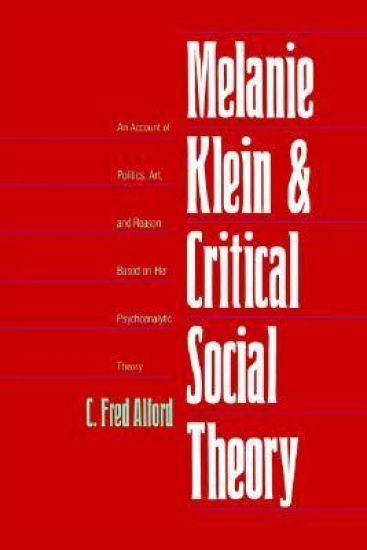
Melanie Klein and Critical Social Theory

Melanie Klein and Critical Social Theory

C. Fred Alford

Yale University Press
2005
pokkari
In this thoughtful and lucid book, C. Fred Alford shows how the psychoanalytic theory of Melanie Klein can be extended to groups and culture and thus can illuminate issues of social theory and moral philosophy of the sort considered by the Frankfurt School. He then applies this expanded theory to the politics of large groups, the appeal of works of art, and the psychological sources of reason.
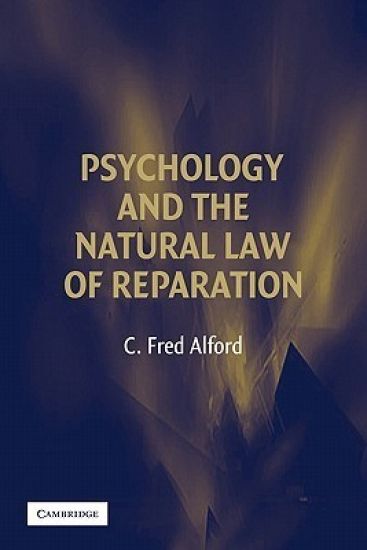
Psychology and the Natural Law of Reparation

Psychology and the Natural Law of Reparation

C. Fred Alford

Cambridge University Press
2011
pokkari
Are there universal values of right and wrong, good and bad, shared by virtually every human? The tradition of natural law argues that there is. Drawing on the work of psychoanalyst Melanie Klein, whose analyses have touched upon issues related to original sin, trespass, guilt, and salvation through reparation, in this 2006 book C. Fred Alford adds an extra dimension to this argument: we know natural law to be true because we have hated before we have loved and have wished to destroy before we have wanted to create. Natural law is built upon the desire to make reparation for the goodness we have destroyed, or have longed to destroy. Through reparation, we earn salvation from the most hateful part of ourselves, that which would destroy what we know to be good.
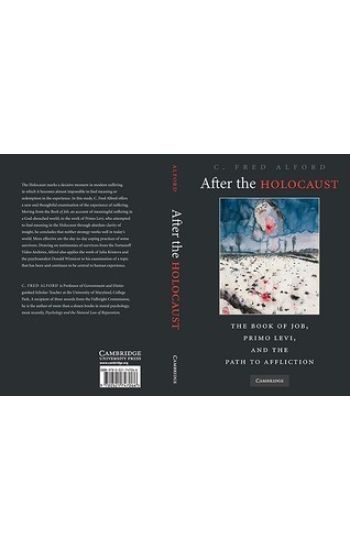
After the Holocaust

After the Holocaust

C. Fred Alford

Cambridge University Press
2009
pokkari
The Holocaust marks a decisive moment in modern suffering in which it becomes almost impossible to find meaning or redemption in the experience. In this study, C. Fred Alford offers a new and thoughtful examination of the experience of suffering. Moving from the Book of Job, an account of meaningful suffering in a God-drenched world, to the work of Primo Levi, who attempted to find meaning in the Holocaust through absolute clarity of insight, he concludes that neither strategy works well in today's world. More effective are the day-to-day coping practices of some survivors. Drawing on testimonies of survivors from the Fortunoff Video Archives, Alford also applies the work of Julia Kristeva and the psychoanalyst Donald Winnicot to his examination of a topic that has been and continues to be central to human experience.
After the Holocaust

After the Holocaust

C. Fred Alford

Cambridge University Press
2009
sidottu
The Holocaust marks a decisive moment in modern suffering in which it becomes almost impossible to find meaning or redemption in the experience. In this study, C. Fred Alford offers a new and thoughtful examination of the experience of suffering. Moving from the Book of Job, an account of meaningful suffering in a God-drenched world, to the work of Primo Levi, who attempted to find meaning in the Holocaust through absolute clarity of insight, he concludes that neither strategy works well in today's world. More effective are the day-to-day coping practices of some survivors. Drawing on testimonies of survivors from the Fortunoff Video Archives, Alford also applies the work of Julia Kristeva and the psychoanalyst Donald Winnicot to his examination of a topic that has been and continues to be central to human experience.
Psychology and the Natural Law of Reparation

Psychology and the Natural Law of Reparation

C. Fred Alford

Cambridge University Press
2006
sidottu
Are there universal values of right and wrong, good and bad, shared by virtually every human? The tradition of natural law argues that there is. Drawing on the work of psychoanalyst Melanie Klein, whose analyses have touched upon issues related to original sin, trespass, guilt, and salvation through reparation, in this 2006 book C. Fred Alford adds an extra dimension to this argument: we know natural law to be true because we have hated before we have loved and have wished to destroy before we have wanted to create. Natural law is built upon the desire to make reparation for the goodness we have destroyed, or have longed to destroy. Through reparation, we earn salvation from the most hateful part of ourselves, that which would destroy what we know to be good.
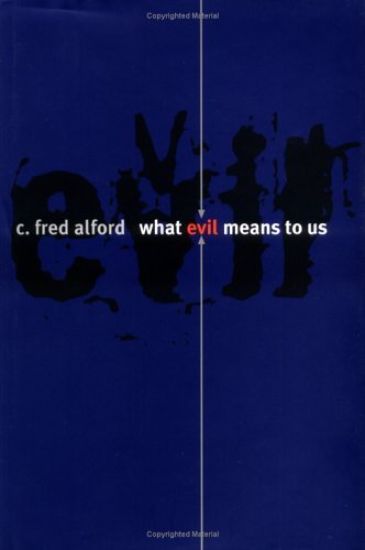
What Evil Means to Us

What Evil Means to Us

C. Fred Alford

Cornell University Press
1997
sidottu
The author of this study interviewed working people, prisoners and students to discover how people experience evil - in themselves, in others and in the world. Drawing on psychoanalytic theory, he argues that the primary experience of evil is not moral but existential, and suggests an alternative.
Think No Evil

Think No Evil

C. Fred Alford

Cornell University Press
1999
sidottu
In this investigation of the contemporary notion of evil, C. Fred Alford asks what we can learn about this concept, and about ourselves, by examining a society where it is unknown—where language contains no word that equates to the English term "evil." Does such a society look upon human nature more benignly? Do its members view the world through rose-colored glasses? Korea offers a fascinating starting point, and Alford begins his search for answers there.In conversations with hundreds of Koreans from diverse religions and walks of life—students, politicians, teachers, Buddhist monks, Confucian scholars, Catholic priests, housewives, psychiatrists, and farmers—Alford found remarkable agreement about the nonexistence of evil. Koreans regard evil not as a moral category but as an intellectual one, the result of erroneous Western thinking. For them, evil results from the creation of dualisms, oppositions between people and ideas.Alford's interviews often led to discussions about imported ways of thinking and the impact of globalization upon society at large. In particular, he was struck by how Koreans' responses to globalization matched Westerners' views about evil. In much of the world, he argues, globalization is the ultimate dualism—attractive for the enlightenment and freedom it brings, terrifying for the great social and personal upheaval it can cause.
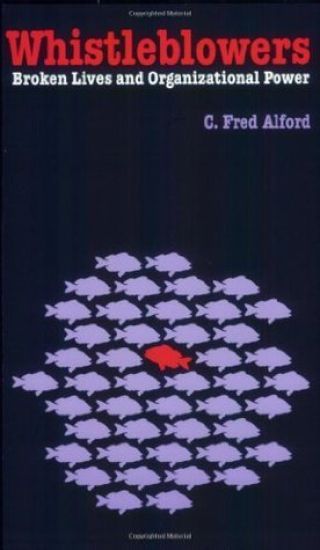
Whistleblowers

Whistleblowers

C. Fred Alford

Cornell University Press
2002
pokkari
In a dark departure from our standard picture of whistleblowers, C. Fred Alford offers a chilling account of the world of people who have come forward to protest organizational malfeasance in government agencies and in the private sector. The conventional story—high-minded individual fights soulless organization, is persecuted, yet triumphs in the end—is seductive and pervasive. In speaking with whistleblowers and their families, lawyers, and therapists, Alford discovers that the reality of whistleblowing is grim. Few whistleblowers succeed in effecting change; even fewer are regarded as heroes or martyrs.Alford mixes narrative analysis with political insight to offer a frank picture of whistleblowing and a controversial view of organizations. According to Alford, the organization as an institution is dedicated to the destruction of the moral individualist. Frequently, he claims, the organization succeeds, which means that the whistleblowers are broken, unable to reconcile their actions and beliefs with the responses they receive from others. In addition to being mistreated by organizations, whistleblowers often do not receive support from their families and communities. In order to make sense of their stories, Alford claims, some whistleblowers must set aside the things they have always believed: that loyalty is larger than the herd instinct, that someone in charge will do the right thing, that the family is a haven from a heartless world. Alford argues that few whistleblowers recover from their experience, and that, even then, they live in a world very different from the one they knew before their confrontation with the organization.
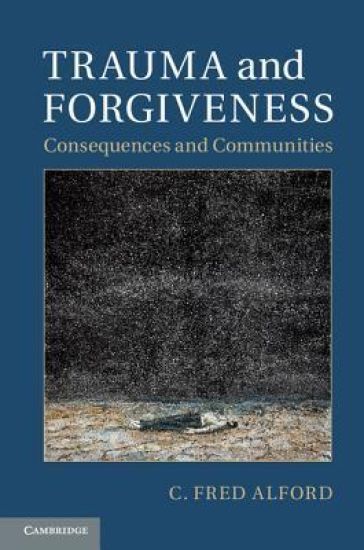
Trauma and Forgiveness

Trauma and Forgiveness

C. Fred Alford

Cambridge University Press
2014
sidottu
Contrary to the view of trauma popularized by literary theorists, Trauma and Forgiveness argues that the traumatized are capable of representing their experience and that we should therefore listen more and theorize less. Using stories and case studies, including testimonies from Holocaust survivors, as well as the victims of 'ordinary' trauma, C. Fred Alford shows that, while the traumatized are generally capable of representing their experience, this does little to heal them. He draws on the British Object Relations tradition in psychoanalysis to argue that forgiveness, which might be expected to help heal the traumatized, is generally an attempt to avoid the hard work of mourning losses that can never be made whole. Forgiveness is better seen as a virtue in the classical sense, a recognition of human vulnerability. The book concludes with an extended case study of the essayist Jean Améry and his refusal to forgive.
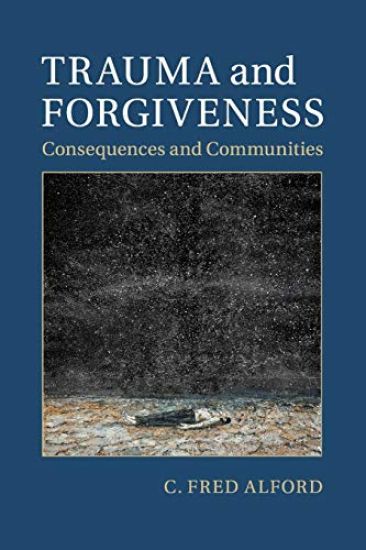
Trauma and Forgiveness

Trauma and Forgiveness

C. Fred Alford

Cambridge University Press
2015
pokkari
Contrary to the view of trauma popularized by literary theorists, Trauma and Forgiveness argues that the traumatized are capable of representing their experience and that we should therefore listen more and theorize less. Using stories and case studies, including testimonies from Holocaust survivors, as well as the victims of 'ordinary' trauma, C. Fred Alford shows that, while the traumatized are generally capable of representing their experience, this does little to heal them. He draws on the British Object Relations tradition in psychoanalysis to argue that forgiveness, which might be expected to help heal the traumatized, is generally an attempt to avoid the hard work of mourning losses that can never be made whole. Forgiveness is better seen as a virtue in the classical sense, a recognition of human vulnerability. The book concludes with an extended case study of the essayist Jean Améry and his refusal to forgive.
Trauma, Culture, and PTSD

Trauma, Culture, and PTSD

C. Fred Alford

Palgrave Macmillan
2016
sidottu
This book examines the social contexts in which trauma is created by those who study it, whether considering the way in which trauma afflicts groups, cultures, and nations, or the way in which trauma is transmitted down the generations. As Alford argues, ours has been called an age of trauma. Yet, neither trauma nor post-traumatic stress disorder (PTSD) are scientific concepts. Trauma has been around forever, even if it was not called that. PTSD is the creation of a group of Vietnam veterans and psychiatrists, designed to help explain the veterans' suffering. This does not detract from the value of PTSD, but sets its historical and social context. The author also confronts the attempt to study trauma scientifically, exploring the use of technologies such as magnetic resonance imagining (MRI). Alford concludes that the scientific study of trauma often reflects a willed ignorance of traumatic experience. In the end, trauma is about suffering.
Trauma, Culture, and PTSD

Trauma, Culture, and PTSD

C. Fred Alford

Palgrave Macmillan
2018
nidottu
This book examines the social contexts in which trauma is created by those who study it, whether considering the way in which trauma afflicts groups, cultures, and nations, or the way in which trauma is transmitted down the generations. As Alford argues, ours has been called an age of trauma. Yet, neither trauma nor post-traumatic stress disorder (PTSD) are scientific concepts. Trauma has been around forever, even if it was not called that. PTSD is the creation of a group of Vietnam veterans and psychiatrists, designed to help explain the veterans' suffering. This does not detract from the value of PTSD, but sets its historical and social context. The author also confronts the attempt to study trauma scientifically, exploring the use of technologies such as magnetic resonance imagining (MRI). Alford concludes that the scientific study of trauma often reflects a willed ignorance of traumatic experience. In the end, trauma is about suffering.
God Now

God Now

C Fred Alford

Resource Publications (CA)
2019
pokkari
In these short, accessible essays, Alford writes about the personal ""Why I Pray,"" as well as the political ""Simone Weil and Donald Trump."" He makes some difficult theologians, such as Karl Barth and Soren Kierkegaard, accessible, while not hesitating to criticize them. Alford argues the genius of Christianity is in God making himself vulnerable so as to know what it is to be human; otherwise, God stands at a terrible distance from humanity. From this perspective, Christianity is about the teachings of Christ, and God's willingness to suffer. The resurrection, so central to most Christians, becomes less important. Myriad religious thinkers are considered, including Albert Camus, Thomas Merton, Reinhold Niebuhr, Rudolf Bultmann, and Paul Tillich, among others, including Simone Weil. Also addressed is the relationship between religion and psychology, as well as the status of natural law. Notable is the author's attitude, which combines respect for great thinkers and a willingness to call them out as wrong, confused, or misguided. Unafraid of atheism, Alford thinks many of the so-called new atheists judge religion as though it were a science, a confusion of categories. Once a philosopher of science, he knows the scope and limits of scientific explanation better than most.
God Now

God Now

C Fred Alford

Resource Publications (CA)
2019
sidottu
In these short, accessible essays, Alford writes about the personal ""Why I Pray,"" as well as the political ""Simone Weil and Donald Trump."" He makes some difficult theologians, such as Karl Barth and Soren Kierkegaard, accessible, while not hesitating to criticize them. Alford argues the genius of Christianity is in God making himself vulnerable so as to know what it is to be human; otherwise, God stands at a terrible distance from humanity. From this perspective, Christianity is about the teachings of Christ, and God's willingness to suffer. The resurrection, so central to most Christians, becomes less important. Myriad religious thinkers are considered, including Albert Camus, Thomas Merton, Reinhold Niebuhr, Rudolf Bultmann, and Paul Tillich, among others, including Simone Weil. Also addressed is the relationship between religion and psychology, as well as the status of natural law. Notable is the author's attitude, which combines respect for great thinkers and a willingness to call them out as wrong, confused, or misguided. Unafraid of atheism, Alford thinks many of the so-called new atheists judge religion as though it were a science, a confusion of categories. Once a philosopher of science, he knows the scope and limits of scientific explanation better than most.
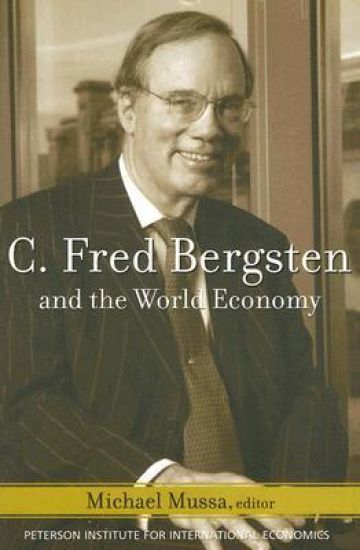
C. Fred Bergsten and the World Economy

C. Fred Bergsten and the World Economy

Michael Mussa

The Peterson Institute for International Economics
2006
nidottu
This engaging and informative book covers the range of issues on which C. Fred Bergsten and the Peterson Institute have distinguished themselves over the last 25 years, including trade liberalization, exchange rate regimes, international financial architecture, debt, economic sanctions and the impact of technology and globalization. Most of the Institute's senior research staff have contributed chapters, which are both retrospective and prescriptive.
Sibley, Fred C., 1963-1965

Sibley, Fred C., 1963-1965

Fred C. Sibley

Hassell Street Press
2021
nidottu
This work has been selected by scholars as being culturally important and is part of the knowledge base of civilization as we know it.This work is in the public domain in the United States of America, and possibly other nations. Within the United States, you may freely copy and distribute this work, as no entity (individual or corporate) has a copyright on the body of the work.Scholars believe, and we concur, that this work is important enough to be preserved, reproduced, and made generally available to the public. To ensure a quality reading experience, this work has been proofread and republished using a format that seamlessly blends the original graphical elements with text in an easy-to-read typeface.We appreciate your support of the preservation process, and thank you for being an important part of keeping this knowledge alive and relevant.
Fred C. Roberts of Tientsin, Or, for Christ and China
Trieste Publishing has a massive catalogue of classic book titles. Our aim is to provide readers with the highest quality reproductions of fiction and non-fiction literature that has stood the test of time. The many thousands of books in our collection have been sourced from libraries and private collections around the world.The titles that Trieste Publishing has chosen to be part of the collection have been scanned to simulate the original. Our readers see the books the same way that their first readers did decades or a hundred or more years ago. Books from that period are often spoiled by imperfections that did not exist in the original. Imperfections could be in the form of blurred text, photographs, or missing pages. It is highly unlikely that this would occur with one of our books. Our extensive quality control ensures that the readers of Trieste Publishing's books will be delighted with their purchase. Our staff has thoroughly reviewed every page of all the books in the collection, repairing, or if necessary, rejecting titles that are not of the highest quality. This process ensures that the reader of one of Trieste Publishing's titles receives a volume that faithfully reproduces the original, and to the maximum degree possible, gives them the experience of owning the original work.We pride ourselves on not only creating a pathway to an extensive reservoir of books of the finest quality, but also providing value to every one of our readers. Generally, Trieste books are purchased singly - on demand, however they may also be purchased in bulk. Readers interested in bulk purchases are invited to contact us directly to enquire about our tailored bulk rates.