Kirjojen hintavertailu. Mukana 11 244 527 kirjaa ja 12 kauppaa.

Kirjahaku

Etsi kirjoja tekijän nimen, kirjan nimen tai ISBN:n perusteella.

1000 tulosta hakusanalla C. G. Jung

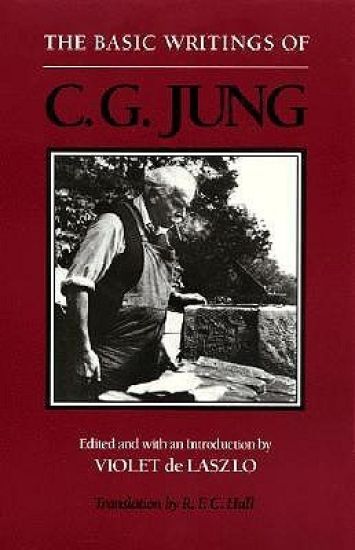
The Basic Writings of C.G. Jung: Revised Edition

The Basic Writings of C.G. Jung: Revised Edition

C. G. Jung

PRINCETON UNIVERSITY PRESS
1991
nidottu
In exploring the manifestations of human spiritual experience both in the imaginative activities of the individual and in the formation of mythologies and of religious symbolism in various cultures, C. G. Jung laid the groundwork for a psychology of the spirit. The excerpts here illuminate the concept of the unconscious, the central pillar of his work, and display ample evidence of the spontaneous spiritual and religious activities of the human mind. This compact volume will serve as an ideal introduction to Jung's basic concepts. Part I of this book, "On the Nature and Functioning of the Psyche," contains material from four works: "Symbols of Transformation," "On the Nature of the Psyche," "The Relations between the Ego and the Unconscious," and "Psychological Types." Also included in Part I are "Archetypes of the Collective Unconscious" and "Psychological Aspects of the Mother Archetype." Part II, "On Pathology and Therapy," includes "On the Nature of Dreams," "On the Pathogenesis of Schizophrenia," and selections from "Psychology of the Transference." In Part III appear "Introduction to the Religious and Psychological Problems of Alchemy" and two sections of "Psychology and Religion." Part IV, called "On Human Development," consists of the essay "Marriage as a Psychological Relationship."
Selected Letters of C.G. Jung, 1909-1961

Selected Letters of C.G. Jung, 1909-1961

C. G. Jung

Princeton University Press
2014
pokkari
This one-volume edition allows the general reader to appreciate Jung's ideas and personality, as they reveal themselves in his comments to his colleagues and to those who approached him with genuine problems of their own, as well as in his communication with personal friends. The correspondence supplies a variety of insights into the genesis of Jung's theories and a running commentary on their development. Originally published in 1984. The Princeton Legacy Library uses the latest print-on-demand technology to again make available previously out-of-print books from the distinguished backlist of Princeton University Press. These editions preserve the original texts of these important books while presenting them in durable paperback and hardcover editions. The goal of the Princeton Legacy Library is to vastly increase access to the rich scholarly heritage found in the thousands of books published by Princeton University Press since its founding in 1905.
Selected Letters of C.G. Jung, 1909-1961

Selected Letters of C.G. Jung, 1909-1961

C. G. Jung

Princeton University Press
2016
sidottu
This one-volume edition allows the general reader to appreciate Jung's ideas and personality, as they reveal themselves in his comments to his colleagues and to those who approached him with genuine problems of their own, as well as in his communication with personal friends. The correspondence supplies a variety of insights into the genesis of Jung's theories and a running commentary on their development. Originally published in 1984. The Princeton Legacy Library uses the latest print-on-demand technology to again make available previously out-of-print books from the distinguished backlist of Princeton University Press. These editions preserve the original texts of these important books while presenting them in durable paperback and hardcover editions. The goal of the Princeton Legacy Library is to vastly increase access to the rich scholarly heritage found in the thousands of books published by Princeton University Press since its founding in 1905.
C.G. Jung

C.G. Jung

C. G. Jung; R. F. C. (TRN) Hull; Jolande (EDT) Jacobi

Princeton University Press
1973
pokkari
Carl Gustav Jung, the great Swiss psychologist, who died in 1961 in his eighty-sixth year, was a profound thinker of extraordinary creativity. In the course of his medical practice he reflected deeply on human nature and human problems, and his prolific writings bear witness to his great wisdom and insight. For this completely revised edition, selections from publications of the years 1945-1961, the last fruitful years of Jung's life, have been added, and the book has been reset in a new compact format. The selections are arranged thematically under four main headings: The Nature and Activity of the Psyche, Man in His Relation to Others, The World of Values, and On Ultimate Things.Jung's reflections frequently have a penetrating relevance to today's (and tomorrow's) problems. On prejudice: "Our unwillingness to see our own faults and the projection of them is the beginning of most quarrels, and is the strongest guarantee that injustice, animosity, and persecution are not ready to die out." On sex: "We are not yet far enough advanced to distinguish between moral and immoral behavior in the realm of free sexual activity." On religion: "No one can know what the ultimate things are. We must therefore take them as we experience them. And if such experience helps to make life healthier, more beautiful, more complete, and more satisfactory to yourself and to those you love, you may safely say: 'This was the grace of God.'"
C.G. Jung Letters, Volume 2: 1951-1961

C.G. Jung Letters, Volume 2: 1951-1961

C. G. Jung

PRINCETON UNIVERSITY PRESS
1976
sidottu
Beginning with Jung's earliest correspondence to associates of the psychoanalytic period and ending shortly before his death, the 935 letters selected for these two volumes offer a running commentary on his creativity. The recipients of the letters include Mircea Eliade, Sigmund Freud, Esther Harding, James Joyce, Karl Kernyi, Erich Neumann, Maud Oakes, Herbert Read, Upton Sinclair, and Father Victor White.
C.G. Jung Letters, Volume 1

C.G. Jung Letters, Volume 1

C. G. Jung

PRINCETON UNIVERSITY PRESS
1992
sidottu
Beginning with Jung's earliest correspondence to associates of the psychoanalytic period and ending shortly before his death, the 935 letters selected for these two volumes offer a running commentary on his creativity. The recipients of the letters include Mircea Eliade, Sigmund Freud, Esther Harding, James Joyce, Karl Kernyi, Erich Neumann, Maud Oakes, Herbert Read, Upton Sinclair, and Father Victor White.
C.g. Jung Set - Answer to Job/Dreams/four Archetypes/Synchronicity/the Undiscovered Self

C.g. Jung Set - Answer to Job/Dreams/four Archetypes/Synchronicity/the Undiscovered Self

C. G. Jung; R. F. C. (TRN) Hull; Sonu (FRW) Shamdasani

Princeton University Press
2010
pokkari
The best of C. G. Jung in one set! These five volumes -- the all-time bestselling editions of Jung's work -- contain popular selections from The Collected Works of C. G. Jung. Each classic volume is newly introduced by Sonu Shamdasani editor of the bestselling The Red Book: Liber Novus and Philemon Professor of Jung History at University College London.
Letters of C. G. Jung

Letters of C. G. Jung

C. G. Jung

Routledge
1973
sidottu
In May 1956, in his eighty-second year, Jung first discussed with Gerhard Adler the question of the publication of his letters. Over many years, Jung had often used the medium of letters to communicate his ideas to others and to clarify the interpretation of his work, quite apart from answering people who approached him with genuine problems of their own and simply corresponding with friends and colleagues. Many of his letters thus contain new creative ideas and provide a running commentary on his work.From some 1,600 letters written by Jung between the years 1906-1961, the editors have selected over 1,000. Volume 1, published in 1973, contains those letters written between 1906 and 1950.
The Psychology of Kundalini Yoga: Notes of the Seminar Given in 1932 by C. G. Jung
"Kundalini yoga presented Jung with a model of something that was almost completely lacking in Western psychology--an account of the development phases of higher consciousness.... Jung's insistence on the psychogenic and symbolic significance of such states is even more timely now than then. As R. D. Laing stated... 'It was Jung who broke the ground here, but few followed him.'"--From the introduction by Sonu Shamdasani Jung's seminar on Kundalini yoga, presented to the Psychological Club in Zurich in 1932, has been widely regarded as a milestone in the psychological understanding of Eastern thought and of the symbolic transformations of inner experience. Kundalini yoga presented Jung with a model for the developmental phases of higher consciousness, and he interpreted its symbols in terms of the process of individuation. With sensitivity toward a new generation's interest in alternative religions and psychological exploration, Sonu Shamdasani has brought together the lectures and discussions from this seminar. In this volume, he re-creates for today's reader the fascination with which many intellectuals of prewar Europe regarded Eastern spirituality as they discovered more and more of its resources, from yoga to tantric texts. Reconstructing this seminar through new documentation, Shamdasani explains, in his introduction, why Jung thought that the comprehension of Eastern thought was essential if Western psychology was to develop. He goes on to orient today's audience toward an appreciation of some of the questions that stirred the minds of Jung and his seminar group: What is the relation between Eastern schools of liberation and Western psychotherapy? What connection is there between esoteric religious traditions and spontaneous individual experience? What light do the symbols of Kundalini yoga shed on conditions diagnosed as psychotic? Not only were these questions important to analysts in the 1930s but, as Shamdasani stresses, they continue to have psychological relevance for readers on the threshold of the twenty-first century. This volume also offers newly translated material from Jung's German language seminars, a seminar by the indologist Wilhelm Hauer presented in conjunction with that of Jung, illustrations of the cakras, and Sir John Woodroffe's classic translation of the tantric text, the Sat-cakra Nirupana. ?
Collected Works of C. G. Jung, Volume 7: Two Essays in Analytical Psychology
This volume has become known as perhaps the best introduction to Jung's work. In these famous essays. "The Relations between the Ego and the Unconscious" and "On the Psychology of the Unconscious," he presented the essential core of his system. Historically, they mark the end of Jung's intimate association with Freud and sum up his attempt to integrate the psychological schools of Freud and Adler into a comprehensive framework. This is the first paperback publication of this key work in its revised and augmented second edition of 1966. The earliest versions of the Two Essays, "New Paths in Psychology" (1912) and "The Structure of the Unconscious" (1916), discovered among Jung's posthumous papers, are published in an appendix, to show the development of Jung's thought in later versions. As an aid to study, the index has been comprehensively expanded.
Collected Works of C. G. Jung, Volume 6: Psychological Types
One of the most important of Jung's longer works, and probably the most famous of his books, Psychological Types appeared in German in 1921 after a "fallow period" of eight years during which Jung had published little. He called it "the fruit of nearly twenty years' work in the domain of practical psychology," and in his autobiography he wrote: "This work sprang originally from my need to define the ways in which my outlook differed from Freud's and Adler's. In attempting to answer this question, I came across the problem of types; for it is one's psychological type which from the outset determines and limits a person's judgment. My book, therefore, was an effort to deal with the relationship of the individual to the world, to people and things. It discussed the various aspects of consciousness, the various attitudes the conscious mind might take toward the world, and thus constitutes a psychology of consciousness regarded from what might be called a clinical angle." In expounding his system of personality types Jung relied not so much on formal case data as on the countless impressions and experiences derived from the treatment of nervous illnesses, from intercourse with people of all social levels, "friend and foe alike," and from an analysis of his own psychological nature. The book is rich in material drawn from literature, aesthetics, religion, and philosophy. The extended chapters that give general descriptions of the types and definitions of Jung's principal psychological concepts are key documents in analytical psychology.
Psyche and Symbol: A Selection from the Writings of C.G. Jung
The archetypes of human experience which derive from the deepest unconscious mind and reveal themselves in the universal symbols of art and religion as well as in the individual symbolic creations of particular people are, for C. G. Jung, the key to the cure of souls, the cornerstone of his therapeutic work. This volume explains the function and origin of these symbols. Here the reader will find not only a general orientation to Jung's point of view but extensive studies of the symbolic process and its integrating function in human psychology as it is reflected in the characteristic spiritual productions of Europe and Asia. Violet de Laszlo has selected for inclusion in Psyche and Symbol five selections from Aion: The Ego, The Shadow, The Syzygy: Anima and Animus, The Self, and Christ, A Symbol of the Self. The book continues with The Phenomenology of the Spirit in Fairy Tales, The Psychology of the Child Archetype, and Transformation Symbolism in the Mass. Also included are the foreword to the Cary Banes translation of the I Ching, two chapters from Synchronicity: An Acausal Connecting Principle, Psychological Commentary on The Tibetan Book of the Dead, and Commentary on The Secret of the Golden Flower.
Collected Works of C. G. Jung, Volume 9 (Part 2): Aion: Researches Into the Phenomenology of the Self
An investigation of the symbolism of the self Aion, originally published in German in 1951, is one of the major works of Jung's later years. The central theme of the volume is the symbolic representation of the psychic totality through the concept of the Self, whose traditional historical equivalent is the figure of Christ. Jung demonstrates his thesis by an investigation of the Allegoria Christi, especially the fish symbol, but also of Gnostic and alchemical symbolism, which he treats as phenomena of cultural assimilation. The first three chapters--on the ego, the shadow, and the anima and animus--provide a valuable summation of these key concepts in Jung's system of psychology.
The Collected Works of C. G. Jung, Volume 9 (Part 1): Archetypes and the Collective Unconscious
A collection of some of Jung's most important essays on the archetypes and the collective unconscious The Archetypes and the Collective Unconscious features many of Jung's most important essays describing and elaborating on these two central, related concepts. The contents are: Archetypes of the Collective Unconscious (1934)The Concept of the Collective Unconscious (1936)Concerning the Archetypes, with Special Reference to the Anima Concept (1936)Psychological Aspects of the Mother Archetype (1938)Concerning Rebirth (1939)The Psychology of the Child Archetype (1940)The Psychological Aspects of the Kore (1941)The Phenomenology of the Spirit in Fairytales (1945)On the Psychology of the Trickster-Figure (1954)Conscious, Unconscious, and Individuation (1939)A Study in the Process of Individuation (1933)Concerning Mandala Symbolism (1950)