Kirjojen hintavertailu. Mukana 12 390 323 kirjaa ja 12 kauppaa.

Kirjahaku

Etsi kirjoja tekijän nimen, kirjan nimen tai ISBN:n perusteella.

1000 tulosta hakusanalla C. Harvey Gardiner

William Hickling Prescott

William Hickling Prescott

C. Harvey Gardiner

University of Texas Press
1970
pokkari
This biography of a distinguished historian and man of letters is the first study of William Hickling Prescott (1796–1859) to be written by a historian who has worked with the very themes explored by Prescott. And it is the first to treat him not only as creative historian but also as family man, as traveler and clubman, as investor and humanitarian, and as private citizen with strong political preferences. Prescott the socialite and Prescott the introvert writer emerge in the round as the magnificent amateur who helped establish canons that have enriched American historical scholarship ever since. Blending history and literature, his multivolume works won Prescott the first significant international reputation to be accorded to an American historian. Working despite persistent obstacles of health and against a penchant for society and leisure that was always part of his personality, Prescott came to be considered the finest interpreter of the Hispanic world produced by the Anglo-Saxon world. His Conquest of Mexico and Conquest of Peru were pronounced classics. C. Harvey Gardiner takes the reader back to the nineteenth century in style and in subject to present William Hickling Prescott, gentleman and scholar, firmly fixed in relationship to his community and his times. But Gardiner's Victorian stance and respect for nineteenth-century historiography do not prevent his presenting Prescott as a whole man, viewed in retrospect, stripped of myth, and evaluated for moderns.
Naval Power in the Conquest of Mexico

Naval Power in the Conquest of Mexico

C. Harvey Gardiner

University of Texas Press
1956
nidottu
In this account of the naval aspect of Hernando Cortés's invasion of the Aztec Empire, C. Harvey Gardiner has added another dimension to the drama of Spanish conquest of the New World and to Cortés himself as a military strategist. The use of ships, in the climactic moment of the Spanish-Aztec clash, which brought about the fall of Tenochtitlán and consequently of all of Mexico, though discussed briefly in former English-language accounts of the struggle, had never before been detailed and brought into a perspective that reveals its true significance. Gardiner, on the basis of previously unexploited sixteenth-century source materials, has written a historical revision that is as colorful as it is authoritative. Four centuries before the term was coined, Cortés, in the key years of 1520–1521, used the technique of "total war." He was able to do so victoriously primarily because of his courage in taking a gamble and his brilliance in tactical planning, but these qualities might well have signified nothing without the fortunate presence in his forces of a master shipwright, Martin López. As the exciting story unrolls, Cortés, López, and the many other participants in the venture of creating and using a navy in the midst of the New World mountains and forests are seen as real personalities, not embalmed historical stereotypes, and the indigenous defenders are revealed as complex human beings facing huge odds. Much of the tale is told in the actual words of the protagonists; Gardiner has probed letters, court records, and other contemporary documents. He has also compared this naval feat of the Spaniards with other maritime events from ancient times to the present. Naval Power in the Conquest of Mexico as a book was itself the result of an interesting combination of circumstances. C. Harvey Gardiner, as teacher, scholar, and writer, had long been interested in Latin American history generally and Mexican history in particular. During World War II, from 1942 to 1946, he served with the U.S. Navy. As he relates: "One day in early autumn 1945, while loafing on the bow of a naval vessel knifing its way southward in the Pacific a few degrees north of the Equator, my thoughts turned to the naval side of the just-ended conflict, and in time the question emerged, 'I wonder how the little ships and the little men will fare in the eventual record?' Then, because I was eager to return to my civilian life of pursuit of Latin American themes, the concomitant question came: 'I wonder what little fighting ships and minor men of early Latin America have been consigned to the oblivion of historical neglect?' As I began later to rummage my way from Columbus toward modem times, I seized upon the Mexican Conquest as the prime period with pay dirt for the researcher in quest of the answer to that latter question."
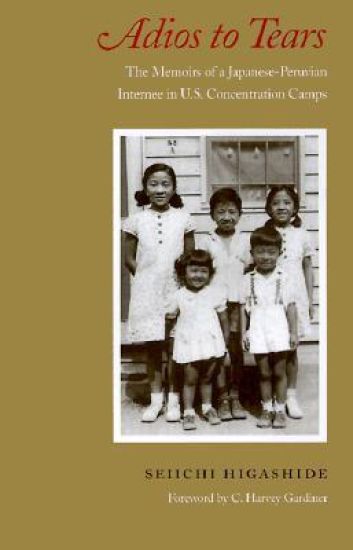
Adios to Tears

Adios to Tears

Seiichi Higashide; C. Harvey Gardiner

University of Washington Press
2000
pokkari
Adios to Tears is the very personal story of Seiichi Higashide (1909–97), whose life in three countries was shaped by a bizarre and little-known episode in the history of World War II. Born in Hokkaido, Higashide emigrated to Peru in 1931. By the late 1930s he was a shopkeeper and community leader in the provincial town of Ica, but following the outbreak of World War II, he—along with other Latin American Japanese—was seized by police and forcibly deported to the United States. He was interned behind barbed wire at the Immigration and Naturalization Service facility in Crystal City, Texas, for more than two years.After his release, Higashide elected to stay in the U.S. and eventually became a citizen. For years, he was a leader in the effort to obtain redress from the American government for the violation of the human rights of the Peruvian Japanese internees.Higashide's moving memoir was translated from Japanese into English and Spanish through the efforts of his eight children, and was first published in 1993. This second edition includes a new Foreword by C. Harvey Gardiner, professor emeritus of history at Southern Illinois University and author of Pawns in a Triangle of Hate: The Peruvian Japanese and the United States; a new Epilogue by Julie Small, cochair of Campaign for Justice–Redress Now for Japanese Latin Americans; and a new Preface by Elsa H. Kudo, eldest daughter of Seiichi Higashide.
Adios to Tears

Adios to Tears

Seiichi Higashide; C. Harvey Gardiner

University of Washington Press
2015
sidottu
Adios to Tears is the very personal story of Seiichi Higashide (1909–97), whose life in three countries was shaped by a bizarre and little-known episode in the history of World War II. Born in Hokkaido, Higashide emigrated to Peru in 1931. By the late 1930s he was a shopkeeper and community leader in the provincial town of Ica, but following the outbreak of World War II, he—along with other Latin American Japanese—was seized by police and forcibly deported to the United States. He was interned behind barbed wire at the Immigration and Naturalization Service facility in Crystal City, Texas, for more than two years.After his release, Higashide elected to stay in the U.S. and eventually became a citizen. For years, he was a leader in the effort to obtain redress from the American government for the violation of the human rights of the Peruvian Japanese internees.Higashide's moving memoir was translated from Japanese into English and Spanish through the efforts of his eight children, and was first published in 1993. This second edition includes a new Foreword by C. Harvey Gardiner, professor emeritus of history at Southern Illinois University and author of Pawns in a Triangle of Hate: The Peruvian Japanese and the United States; a new Epilogue by Julie Small, cochair of Campaign for Justice–Redress Now for Japanese Latin Americans; and a new Preface by Elsa H. Kudo, eldest daughter of Seiichi Higashide.
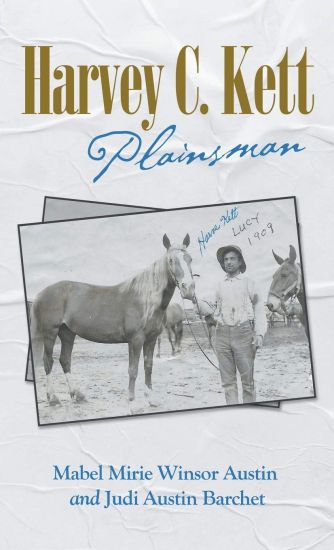
Harvey C. Kett

Harvey C. Kett

Mabel Mirie Austin; Judi Barchet

Liferich
2021
sidottu
Harvey C. Kett-who everyone called Harve-was a key figure in the development of Southeastern Colorado. In 1886, at age three, he travelled by train with his parents, brother, and sister from Massachusetts to the barren, wide open plains of Colorado, a land that would enchant him and capture his heart. He lived there most of his life as a cowboy, rancher, and politician. He helped shape the landscape both literally and figuratively. As he grew, he captured the stories of his life, the people he knew and the adventures he experienced. The vivid pictures were painted by a young man with little formal education, giving voice to a cowboy and plainsman who lived in a little-known corner of Colorado more than a hundred years ago. Written by his grandaughter and great-granddaughter, this book provides a detailed account of an overlooked plainsman, who along with his family, was among Colorado's greatest pioneers.
Harvey C. Kett

Harvey C. Kett

Mabel Mirie Austin; Judi Barchet

Liferich
2021
pokkari
Harvey C. Kett-who everyone called Harve-was a key figure in the development of Southeastern Colorado. In 1886, at age three, he travelled by train with his parents, brother, and sister from Massachusetts to the barren, wide open plains of Colorado, a land that would enchant him and capture his heart. He lived there most of his life as a cowboy, rancher, and politician. He helped shape the landscape both literally and figuratively. As he grew, he captured the stories of his life, the people he knew and the adventures he experienced. The vivid pictures were painted by a young man with little formal education, giving voice to a cowboy and plainsman who lived in a little-known corner of Colorado more than a hundred years ago. Written by his grandaughter and great-granddaughter, this book provides a detailed account of an overlooked plainsman, who along with his family, was among Colorado's greatest pioneers.
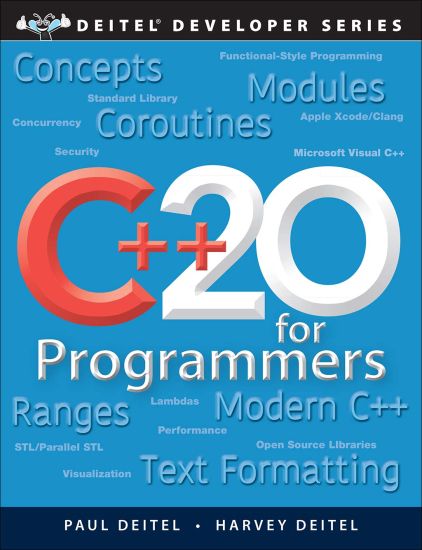
C++20 for Programmers

C++20 for Programmers

Paul Deitel; Harvey Deitel

Addison Wesley
2022
nidottu
The professional programmer's Deitel® guide to C++20 Written for programmers with a background in another high-level language, in this book, you'll learn Modern C++ development hands on using C++20 and its "Big Four" features--Ranges, Concepts, Modules and Coroutines. (For more details, see the Preface, and the table of contents diagram inside the front cover.) In the context of 200+, hands-on, real-world code examples, you'll quickly master Modern C++ coding idioms using popular compilers--Visual C++®, GNU® g++, Apple® Xcode® and LLVM®/Clang. After the C++ fundamentals quick start, you'll move on to C++ standard library containers array and vector; functional-style programming with C++20 Ranges and Views; strings, files and regular expressions; object-oriented programming with classes, inheritance, runtime polymorphism and static polymorphism; operator overloading, copy/move semantics, RAII and smart pointers; exceptions and a look forward to C++23 Contracts; standard library containers, iterators and algorithms; templates, C++20 Concepts and metaprogramming; C++20 Modules and large-scale development; and concurrency, parallelism, the C++17 and C++20 parallel standard library algorithms and C++20 Coroutines. Features Rich coverage of C++20's "Big Four": Ranges, Concepts, Modules and CoroutinesObjects-Natural Approach: Use standard libraries and open-source libraries to build significant applications with minimal codeHundreds of real-world, live-code examplesModern C++: C++20, 17, 14, 11 and a look to C++23Compilers: Visual C++®, GNU® g++, Apple Xcode® Clang, LLVM®/ClangDocker: GNU® GCC, LLVM®/ClangFundamentals: Control statements, functions, strings, references, pointers, files, exceptionsObject-oriented programming: Classes, objects, inheritance, runtime and static polymorphism, operator overloading, copy/move semantics, RAII, smart pointersFunctional-style programming: C++20 Ranges and Views, lambda expressionsGeneric programming: Templates, C++20 Concepts and metaprogrammingC++20 Modules: Large-Scale DevelopmentConcurrent programming: Concurrency, multithreading, parallel algorithms, C++20 Coroutines, coroutines support libraries, C++23 executorsFuture: A look forward to Contracts, range-based parallel algorithms, standard library coroutine support and more "C++20 for Programmers builds up an intuition for modern C++ that every programmer should have in the current software engineering ecosystem. The unique and brilliant ordering in which the Deitels present the material jibes much more naturally with the demands of modern, production-grade programming environments. I strongly recommend this book for anyone who needs to get up to speed on C++, particularly in professional programming environments where the idioms and patterns of modern C++ can be indecipherable without the carefully crafted guidance that this book provides."--Dr. Daisy Hollman, ISO C++ Standards Committee Member "This is a fine book that covers a surprising amount of the very large language that is C++20. An in-depth treatment of C++ for a reader familiar with how things work in other programming languages."--Arthur O'Dwyer, C++ trainer, Chair of CppCon's Back to Basics track, author of several accepted C++17/20/23 proposals and the book Mastering the C++17 STL "Forget about callback functions, bare pointers and proprietary multithreading libraries--C++20 is about standard concurrency features, generic lambda expressions, metaprogramming, tighter type-safety and the long-awaited concepts, which are all demonstrated in this book. Functional programming is explained clearly with plenty of illustrative code listings. The excellent chapter, 'Parallel Algorithms and Concurrency: A High-Level View,' is a highlight of this book."--Danny Kalev, Ph.D. and Certified System Analyst and Software Engineer, Former ISO C++ Standards Committee Member Register your book for convenient access to downloads, updates, and/or corrections as they become available. See inside book for details. Note: eBooks are 4-color and print books are black and white.
C How to Program: With Case Studies in Applications and SystemsProgramming, Global Edition
C How to Program is a user-friendly, code-intensive introduction to C programming with case studies introducing applications and system programming. Like other texts of the Deitels’ How to Program series, the book’s modular presentation serves as a detailed beginner source of information for college students looking to embark on a career in coding, or instructors and software-development professionals seeking to learn how to program with C. The signature Deitel live-code approach presents concepts in the context of 142 full-working programs rather than incomplete snips of code. This gives you a chance to run each program as you study it and see how your learning applies to real-world programming scenarios. Current standards, contemporary practice, and hands-on learning opportunities are integrated throughout the 9th Edition. Over 340 new integrated Self-Check exercises with answers allow you to test your understanding of important concepts — and check your code — as you read. New and enhanced case studies and exercises use real-world data and focus on the latest ACM/IEEE computing curricula recommendations, highlighting security, data science, ethics, privacy, and performance concepts.
C++ How to Program, Global Edition

C++ How to Program, Global Edition

Paul Deitel; Harvey Deitel & Associates

pearson education limited
2025
nidottu
C++ How to Program: An Objects-Natural Approach is a code-intensive, modular introduction to C++ programming. The Deitel live-code approach presents concepts using full working programs rather than code snippets so that you can immediately start to run programs as you read. Interesting, entertaining and challenging examples, exercises and projects help you see how what you're learning applies to real-world scenarios. The 11th Edition presents new features of C++ 20 and even more hands-on application opportunities. Hundreds of new self-checks let you test your code and understanding of key concepts. New case studies and exercises focus on security, data science, ethics and more.
C How to Program

C How to Program

Deitel Paul J.; Deitel Harvey

Prentice Hall
2015
nidottu
For courses in computer programming C How to Program is a comprehensive introduction to programming in C. Like other texts of the Deitels’ How to Program series, the book serves as a detailed beginner source of information for college students looking to embark on a career in coding, or instructors and software-development professionals seeking to learn how to program with C. The Eighth Edition continues the tradition of the signature Deitel “Live Code” approach--presenting concepts in the context of full-working programs rather than incomplete snips of code. This gives readers a chance to run each program as they study it and see how their learning applies to real world programming scenarios.
Visual C# How to Program

Visual C# How to Program

Paul Deitel; Harvey Deitel

PEARSON
2016
nidottu
For all basic-to-intermediate level courses in Visual C# programming. An informative, engaging, challenging and entertaining introduction to Visual C# Created by world-renowned programming instructors Paul and Harvey Deitel, Visual C# How to Program, Sixth Edition introduces students to the world of desktop, mobile and web app development with Microsoft's(R) Visual C#(R) programming language. Students will use .NET platform and the Visual Studio(R) Integrated Development Environment to write, test, and debug applications and run them on a wide variety of Windows(R) devices. At the heart of the book is the Deitel signature live-code approach--rather than using code snippets, the authors present concepts in the context of complete working programs followed by sample executions. Students begin by getting comfortable with the Visual Studio Community edition IDE and basic C# syntax. Next, they build their skills one step at a time, mastering control structures, classes, objects, methods, variables, arrays, and the core techniques of object-oriented programming. With this strong foundation in place, the authors introduce more sophisticated techniques, including searching, sorting, data structures, generics, and collections. Additional practice is provided through a broad range of example programs and exercises selected from computer science, business, education, social issues, personal utilities, sports, mathematics, puzzles, simulation, game playing, graphics, multimedia and many other areas.
Dr. John Harvey Kellogg and the Religion of Biologic Living

Dr. John Harvey Kellogg and the Religion of Biologic Living

Brian C. Wilson

Indiana University Press
2014
sidottu
Purveyors of spiritualized medicine have been legion in American religious history, but few have achieved the superstar status of Dr. John Harvey Kellogg and his Battle Creek Sanitarium. In its heyday, the "San" was a combination spa and Mayo Clinic. Founded in 1866 under the auspices of the Seventh-day Adventist Church and presided over by the charismatic Dr. Kellogg, it catered to many well-heeled health seekers including Henry Ford, John D. Rockefeller, and Presidents Taft and Harding. It also supported a hospital, research facilities, a medical school, a nursing school, several health food companies, and a publishing house dedicated to producing materials on health and wellness. Rather than focusing on Kellogg as the eccentric creator of corn flakes or a megalomaniacal quack, Brian C. Wilson takes his role as a physician and a theological innovator seriously and places his religion of "Biologic Living" in an on-going tradition of sacred health and wellness. With the fascinating and unlikely story of the "San" as a backdrop, Wilson traces the development of this theology of physiology from its roots in antebellum health reform and Seventh-day Adventism to its ultimate accommodation of genetics and eugenics in the Progressive Era.