Kirjojen hintavertailu. Mukana 12 390 323 kirjaa ja 12 kauppaa.

Kirjahaku

Etsi kirjoja tekijän nimen, kirjan nimen tai ISBN:n perusteella.

1000 tulosta hakusanalla C.N. Johns; Denys Pringle

Pilgrims’ Castle (‘Atlit), David’s Tower (Jerusalem) and Qal‘at ar-Rabad (‘Ajlun)
First published in 1997, this collection includes papers on Crusader-era architecture in Palestine with a focus on ‘Atlit, the castle of ‘Ajlun and on the Citadel of Jerusalem, both the papers and sites of which have previously been difficult to access. The volume is presented partly to repair the very real deficit in the literature on Crusader architecture and partly as a fitting memorial to the author, who died in 1992. ‘Atlit in particular held a special significance for C.N. Johns, being the site of his first major project as a field archaeologist. His Guide to ‘Atlit, a masterly summary of his findings, remains the most complete and comprehensive account of the castle and its suburb.The studies collected here pay tribute to their author’s enduring contribution to the medieval archaeology of the Near East. The first part of the book deals with the ‘Pilgrim’s Castle’, the great Templar fortress and town at ’Atlit. The significance of Johns’ excavations at this site has been relatively neglected, because it remains in a military area, inaccessible to visitors, and because almost the entire stock of his major publication was lost in 1947. This ‘Guide to ’Atlit’, a synthesis of historical, archaeological and architectural research on the monument, is reprinted here together with all the interim reports relating to the medieval period. Also included are Johns’ studies on the Citadel of Jerusalem, the ‘Tower of David’, and on the Islamic castle of ‘Ajlun. Together, they represent a fundamental contribution to the study of the period of the Crusades and to the military architecture of the Middle Ages. The notes by Denys Pringle bring the accounts up to date in the light of recent research.
Pilgrims’ Castle (‘Atlit), David’s Tower (Jerusalem) and Qal‘at ar-Rabad (‘Ajlun)
First published in 1997, this collection includes papers on Crusader-era architecture in Palestine with a focus on ‘Atlit, the castle of ‘Ajlun and on the Citadel of Jerusalem, both the papers and sites of which have previously been difficult to access. The volume is presented partly to repair the very real deficit in the literature on Crusader architecture and partly as a fitting memorial to the author, who died in 1992. ‘Atlit in particular held a special significance for C.N. Johns, being the site of his first major project as a field archaeologist. His Guide to ‘Atlit, a masterly summary of his findings, remains the most complete and comprehensive account of the castle and its suburb.The studies collected here pay tribute to their author’s enduring contribution to the medieval archaeology of the Near East. The first part of the book deals with the ‘Pilgrim’s Castle’, the great Templar fortress and town at ’Atlit. The significance of Johns’ excavations at this site has been relatively neglected, because it remains in a military area, inaccessible to visitors, and because almost the entire stock of his major publication was lost in 1947. This ‘Guide to ’Atlit’, a synthesis of historical, archaeological and architectural research on the monument, is reprinted here together with all the interim reports relating to the medieval period. Also included are Johns’ studies on the Citadel of Jerusalem, the ‘Tower of David’, and on the Islamic castle of ‘Ajlun. Together, they represent a fundamental contribution to the study of the period of the Crusades and to the military architecture of the Middle Ages. The notes by Denys Pringle bring the accounts up to date in the light of recent research.
The Deaconship

The Deaconship

C N Willborn; John G Lorimer

Independently Published
2019
pokkari
Classic work on the office of deacon in the Presbyterian church by John G. Lorimer, minister in the Free Church of Scotland in the mid-19th century. This volume provides a comprehensive overview of diaconal ministry from the nature and importance of the office, its divine authority, its history in the church, the biblical qualifications and duties of the deacon, and the practice of the diaconate in the Free Church of Scotland."In this wonderful treatise he traced out the history of the office in the early church, providing OT background, before examining the decline of the office, which plagued his beloved church in his days. One of the most fruitful aspects of the book has to do with his explanation of the reasons for the near extinction of the office in it biblical form. The rationale he offers for the demise of the office seem to revisit the church from time to time and so deserve our study so as to avoid such a travesty." - Rev. Dr. C. N. WillbornExcerpt: "Animated by the spirit of his office, and acting out the character which the counsels of the Word imply, a deacon] will not be haughty, or harsh, or suspicions, he will not be cold, and formal, and repulsive, discharging his work as if it were a burden; he will be frank and easy in his intercourse with the poor and take an interest in their avocations, their health, and welfare; kind, and tender, and sympathising, especially when in sickness; but withal firm, and not easily persuaded to what his judgment does not approve. He will also have a deep conviction of the insufficiency of all his efforts to benefit the poor of his charge without the blessing of God, and hence he will not fail to seek the blessing in the exercise of diligent and persevering prayer for the Holy Spirit."
Nanocrystals:

Nanocrystals:

C.N.R. Rao; P. John Thomas; G.U. Kulkarni

Springer-Verlag Berlin and Heidelberg GmbH Co. K
2007
sidottu
Nanocrystals and Their Mesoscopic Organization is an up-to-date monograph on an important aspect of nanoscience and technology. It opens with an elegant introduction including a brief historical account. Emphasis is then given to diverse synthetic methods, both chemical and physical, in addition to modern hybrid methods. The orientation shifts gradually to properties of nanocrystals that evolve with size; detailed discussions are to be found on mesoscalar assemblies in different dimensions, special cases of core-shell and magic nuclearity nanocrystals. The authors also address applications of nanocrystals, carefully separating out potential applications and those that have already emerged, and cite around 900 references from the literature, most from the last decade. Tables providing information at a glance and schematic diagrams at relevant places, make the monograph appealing to read. Occasionally, the reader is reminded of the contributions of celebrated past masters such as Michael Faraday. In summary, the monograph serves as a general introduction as well as a handy reference for the entire community of researchers and practitioners.
Nanocrystals:

Nanocrystals:

C.N.R. Rao; P. John Thomas; G.U. Kulkarni

Springer-Verlag Berlin and Heidelberg GmbH Co. K
2011
nidottu
Nanocrystals and Their Mesoscopic Organization is an up-to-date monograph on an important aspect of nanoscience and technology. It opens with an elegant introduction including a brief historical account. Emphasis is then given to diverse synthetic methods, both chemical and physical, in addition to modern hybrid methods. The orientation shifts gradually to properties of nanocrystals that evolve with size; detailed discussions are to be found on mesoscalar assemblies in different dimensions, special cases of core-shell and magic nuclearity nanocrystals. The authors also address applications of nanocrystals, carefully separating out potential applications and those that have already emerged, and cite around 900 references from the literature, most from the last decade. Tables providing information at a glance and schematic diagrams at relevant places, make the monograph appealing to read. Occasionally, the reader is reminded of the contributions of celebrated past masters such as Michael Faraday. In summary, the monograph serves as a general introduction as well as a handy reference for the entire community of researchers and practitioners.
The Unlikely Smuggler: An autobiography by John Paju, C.R.N.A
A CRNA who's life story includes childhood miracles, humorous times, touching experiences, Bible smuggling, and many adventures. From becoming a medic in the Air Force and then eventually a CRNA his adventures impact the lives of many throughout his life. He smuggled forbidden bibles and studies to underground Christians behind the lines of Communist China and Russia. He assisted in the unveiling of the "People's Temple" deception prior to the "Jonestown Massacre." Then takes all these exciting adventurous stories to the youth at Juvenile Hall to show them positive life changing possibilities within their own lives.
The Man From U.N.C.L.E. Collectibles

The Man From U.N.C.L.E. Collectibles

John Buss

Amberley Publishing
2019
nidottu
The Man From U.N.C.L.E. was American television at its best. In the sixties, spy series just didn’t come any cooler than this. Almost a direct result of the success of Bond in the cinemas, this series spawned a whole wave of copycat TV shows and its influence is still being felt today. The recent Kingsman films and comics owe more than a passing nod to the show for inspiration. A remarkable array of different products was issued in connection with this series - everything from bubblegum to wristwatches. Few other shows at this time came close to the range of products issued. There were quite possibly more U.N.C.L.E. products issued in the US alone, during the sixties, than for any other TV series being produced at that time. In this book the reader will find a vast array of those items.
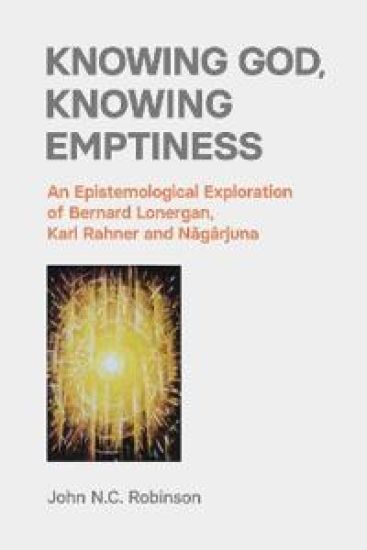
Knowing God, Knowing Emptiness

Knowing God, Knowing Emptiness

John N C Robinson

EQUINOX PUBLISHING LTD
2022
sidottu
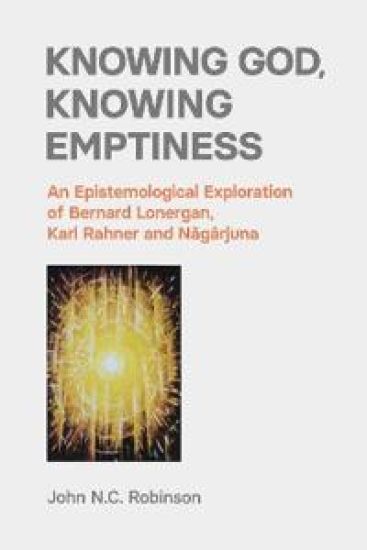
Knowing God, Knowing Emptiness examines the viability of the epistemology proposed by Bernard Lonergan in his seminal work Insight, particularly with regard to its possible application in the field of interreligious dialogue. This enquiry is prompted by an awareness of the epistemological questions raised by the various dialogues taking place between different religions, and it is in light of this that Lonergan's claim to comprehensiveness in his epistemology is examined. The method adopted is that of a dialectical experiment in which Lonergan's epistemology could be tested. Lonergan claims in Insight that as his epistemology is both based on, and corresponds directly to, the structure of human cognition, it is therefore intrinsic to all instances of thought. Accordingly, he claims, it is ideally placed to mutually relate any combination of differing positions. This work seeks to test this claim by applying Lonergan's epistemological categories to Karl Rahner's Foundations of Christian Faith, and Nagarjuna's Mulamadhyamakakarika. Having critically reconstructed Lonergan's position as articulated in Insight, the book does the same for both of the texts selected and then parses them on the basis of the terms laid out by Lonergan in his epistemological system. It examines whether the thought contained in these two works could be fruitfully related on the basis of Lonergan's epistemology, and what, if any, are the implications for the field of interreligious dialogue. These implications are considered both in terms of the theology of religions, and of the more recently developed comparative theology, typified by the approach taken by thinkers such as Francis X. Clooney and others. The book concludes by considering what, if any, are the possible developments that could result from the result of the attempted dialectic.
Knowing God, Knowing Emptiness

Knowing God, Knowing Emptiness

John N C Robinson

EQUINOX PUBLISHING LTD
2022
pokkari
Knowing God, Knowing Emptiness examines the viability of the epistemology proposed by Bernard Lonergan in his seminal work Insight, particularly with regard to its possible application in the field of interreligious dialogue. This enquiry is prompted by an awareness of the epistemological questions raised by the various dialogues taking place between different religions, and it is in light of this that Lonergan's claim to comprehensiveness in his epistemology is examined. The method adopted is that of a dialectical experiment in which Lonergan's epistemology could be tested. Lonergan claims in Insight that as his epistemology is both based on, and corresponds directly to, the structure of human cognition, it is therefore intrinsic to all instances of thought. Accordingly, he claims, it is ideally placed to mutually relate any combination of differing positions. This work seeks to test this claim by applying Lonergan's epistemological categories to Karl Rahner's Foundations of Christian Faith, and Nagarjuna's Mulamadhyamakakarika. Having critically reconstructed Lonergan's position as articulated in Insight, the book does the same for both of the texts selected and then parses them on the basis of the terms laid out by Lonergan in his epistemological system. It examines whether the thought contained in these two works could be fruitfully related on the basis of Lonergan's epistemology, and what, if any, are the implications for the field of interreligious dialogue. These implications are considered both in terms of the theology of religions, and of the more recently developed comparative theology, typified by the approach taken by thinkers such as Francis X. Clooney and others. The book concludes by considering what, if any, are the possible developments that could result from the result of the attempted dialectic.
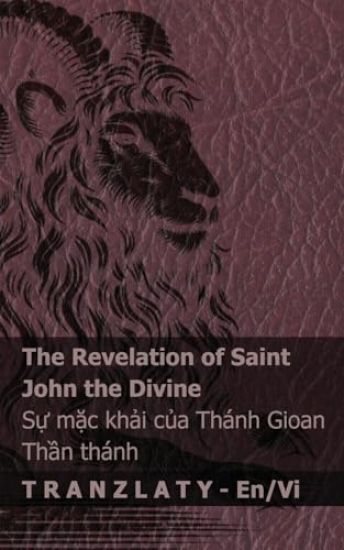
The Revelation of Saint John the Divine / S? m?c kh?i c?a Thánh Gioan Th?n thánh
1:12 And I turned to see the voice that spake with me. And being turned, I saw seven golden candlesticks; 1:12 T i quay lại để xem tiếng n i đ ph n với t i. Khi quay lại, t i thấy bảy ch n đ n bằng v ng; 1:13 And in the midst of the seven candlesticks one like unto the Son of man, clothed with a garment down to the foot, and girt about the paps with a golden girdle. 1:13 V ở giữa bảy ch n đ n c ai giống như Con người, mặc o d i đến ch n, v thắt đai v ng ngang ngực . 1:14 His head and his hairs were white like wool, as white as snow; and his eyes were as a flame of fire; 1:14 Đầu v t c Ng i trắng như l ng chi n, trắng như tuyết; mắt Ng i như ngọn lửa; 1:15 And his feet like unto fine brass, as if they burned in a furnace; and his voice as the sound of many waters. 1:15 B n ch n Ng i như đồng s ng ch i, như thể đang ch y trong l lửa, v tiếng Ng i như tiếng của nhiều d ng nước. 1:16 And he had in his right hand seven stars: and out of his mouth went a sharp two edged sword: and his countenance was as the sun shineth in his strength. 1:16 Tay phải Ng i cầm bảy ng i sao; miệng Ng i th ra thanh gươm sắc b n hai lưỡi; mặt Ng i như mặt trời chiếu s ng hết sức mạnh. 1:17 And when I saw him, I fell at his feet as dead. And he laid his right hand upon me, saying unto me, Fear not; I am the first and the last: 1:17 Khi thấy Người, t i ng xuống ch n Người như chết. Nhưng Người đặt tay phải tr n t i v ph n rằng: Đừng sợ, Ta l Đấng đầu ti n v l Đấng cuối c ng. 1:18 I am he that liveth, and was dead; and, behold, I am alive for evermore, Amen; and have the keys of hell and of death. 1:18 Ta l Đấng sống, ta đ chết; k a, ta sống đời đời v c ng, A-men; ta cầm ch a kh a của m phủ v sự chết.
Five Fur Traders of the Northwest: Being the Narrative of Peter Pond and the Diaries of John Macdonell, Archibald N. McLeod, Hugh Faries, and Thomas C
Five Fur Traders of the Northwest captures the day-to-day life of the fur trader during the late eighteenth and early nineteenth centuries utilizing authentic journals of five fur traders. Peter Pond, a founding partner of the North West Company, makes detailed observations of the region's native peoples. John Macdonell describes with care his first trip over the fur trade route through the Great Lakes and the Minnesota-Ontario border lakes to the region of Lake Winnipeg. Archibald N. McLeod's journal tells of wintering at Fort Alexandria on the Assiniboine River. Hugh Faries writes of life at the North West Company's fort on the Rainy River. Finally, John Sayer records his establishing of a trading post in the St. Croix River country near present-day Pine City, Minnesota. (This diary was originally attributed to Thomas Connor, but research conducted since the 1965 edition has established Sayer as the true author.) These documents offer dramatic, firsthand glimpses of the daily existence of voyageurs and Native Americans and detailed data on canoeing, trading practices, trade goods, and Indigenous customs.