

Kirjahaku
Etsi kirjoja tekijän nimen, kirjan nimen tai ISBN:n perusteella.
1000 tulosta hakusanalla C.S. Jerram

The Lycidas and Epitaphium Damonis of Milton
John Milton; C. S. (EDT) Jerram
Kessinger Pub
2007
pokkari


Easy Selections Adapted From Xenophon: With a Vocabulary, Notes and Map
Xenophon; J. Surtees (James Surtees) Phillpotts; C. S. (Charles Stanger) 1838 Jerram
Hassell Street Press
2021
sidottu
Easy Selections Adapted From Xenophon: With a Vocabulary, Notes and Map
Xenophon; J. Surtees (James Surtees) Phillpotts; C. S. (Charles Stanger) 1838 Jerram
Hassell Street Press
2021
nidottu
![Footprints. [Verses.] by C. S. S.](/covers/9781241536374.jpg)
Title: Footprints. Verses.] By C. S. S.Publisher: British Library, Historical Print EditionsThe British Library is the national library of the United Kingdom. It is one of the world's largest research libraries holding over 150 million items in all known languages and formats: books, journals, newspapers, sound recordings, patents, maps, stamps, prints and much more. Its collections include around 14 million books, along with substantial additional collections of manuscripts and historical items dating back as far as 300 BC.The POETRY & DRAMA collection includes books from the British Library digitised by Microsoft. The books reflect the complex and changing role of literature in society, ranging from Bardic poetry to Victorian verse. Containing many classic works from important dramatists and poets, this collection has something for every lover of the stage and verse. ++++The below data was compiled from various identification fields in the bibliographic record of this title. This data is provided as an additional tool in helping to insure edition identification: ++++ British Library S., C; 1861. viii, 51 p.; 8 . 11646.h.26.
C.S. Lewisâ?? Little Book of Wisdom
Harpercollins Publishers
2018
pokkari
C. S. Lewisâ?? Little Book of Wisdom offers more than 300 bite-size nuggets of inspiration and wisdom from the much-loved author, philosopher, and Christian theologist.
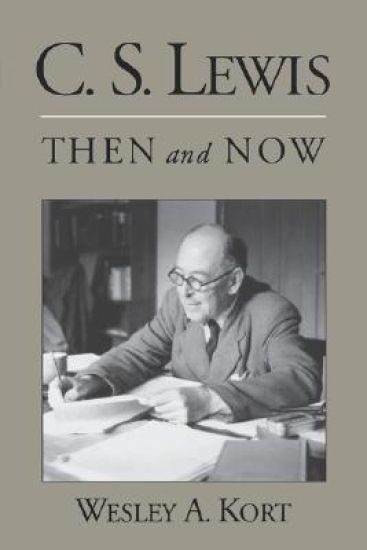
Clive Staples Lewis (1898-1963) was a distinguished scholar of medieval and Renaissance literature who taught at both Oxford University and Cambridge University. After his conversion to Christianity, Lewis began writing Christian apologetic works aimed at a popular audience. It is for these works that Lewis is now best remembered; especially in the U.S., where his books have sold in the millions and continue to be popular today. Perhaps because of this popularity, however, Lewis's Christian writings are generally dismissed by theologians as oversimplified and conceptually flawed. With this book, Wesley A. Kort hopes to rehabilitate Lewis and to demonstrate the value and continuing relevance of his work. Kort not only retrieves Lewis from the now-dated context of his writings, but also wrests him from the hands of evangelicals who have turned his word into gospel and mistaken his attacks on modernity for a retreat from the world. Kort addresses and refutes common prejudices about Lewis and shows that, although Lewis was sharply critical of the materialism and narcissism of modern culture, he nevertheless insisted that only through culture can Christian teachings effectively shape moral character. Lewis's desire for a fruitful, interactive relationship between Christianity and culture sharply distinguishes him from neo-orthodox theology and many contemporary Christian rejections of culture.

C.S. Peirce and the Nested Continua Model of Religious Interpretation
Gary Slater
Oxford University Press
2015
sidottu
This study develops resources in the work of Charles S. Peirce (1839-1914) for the purposes of contemporary philosophy. It contextualizes Peirce's prevailing influences and provides greater context in relation to the currents of nineteenth-century thought. Dr Gary Slater articulates 'a nested continua model' for theological interpretation, which is indebted to Peirce's creation of 'Existential Graphs', a system of diagrams designed to provide visual representation of the process of human reasoning. He investigates how the model can be applied by looking at recent debates in historiography. He deals respectively with Peter Ochs and Robert C. Neville as contemporary manifestations of Peircean philosophical theology. This work concludes with an assessment of the model's theological implications.
Beginning with the publication of The Lion, the Witch and the Wardrobe in 1950 and concluding with the appearance of The Last Battle in 1956, C. S. Lewis's seven-book series chronicling the adventures of a group of young people in the fictional land of Narnia has become a worldwide classic of children's literature.This stimulating collection of original essays by critics in a wide range of disciplines explores the past place, present status, and future importance of The Chronicles of Narnia. With essays ranging in focus from textual analysis to film and new media adaptations, to implications of war/trauma and race and gender, this cutting-edge New Casebook encourages readers to think about this much-loved series in fresh and exciting ways.

Beginning with the publication of The Lion, the Witch and the Wardrobe in 1950 and concluding with the appearance of The Last Battle in 1956, C. S. Lewis's seven-book series chronicling the adventures of a group of young people in the fictional land of Narnia has become a worldwide classic of children's literature.This stimulating collection of original essays by critics in a wide range of disciplines explores the past place, present status, and future importance of The Chronicles of Narnia. With essays ranging in focus from textual analysis to film and new media adaptations, to implications of war/trauma and race and gender, this cutting-edge New Casebook encourages readers to think about this much-loved series in fresh and exciting ways.
Collaborating with the genius of C.S. Lewis, and particularly his brilliant work The Abolition of Man, the authors offer a multi-facetted, interdisciplinary investigation of perennial questions that impact human development and freedom.

In 1997, THE LION, THE WITCH AND THE WARDROBE was voted the most influential book of the twentieth century by teachers, librarians and parents in the UK. The last six US Presidents have all claimed C. S. Lewis to be one of their favourite writers (as have Margaret Thatcher and Tony Blair). He was an acclaimed academic, a renowned Christian thinker and apologist, the author of dozens of non-fiction books and a founder member of The Inklings (with J.R.R. Tolkien). Lewis fought in the First World War trenches and became a famous broadcaster known as 'the apostle to sceptics' during World War II: his newspaper articles and radio programmes were well known. He led what was considered by many of his contemporaries to be a rather bohemian life in Oxford, living with a much older woman, a widow named Janie Moore. Late in life he married an American divorcee who (as documented in the movie SHADOWLANDS) died tragically of cancer four years into their marriage. Michael White's biography is an accessible yet erudite study of a subject who has immense and lasting international appeal.

C.S. Lewis and the Church
T. T.Clark Ltd
2011
sidottu
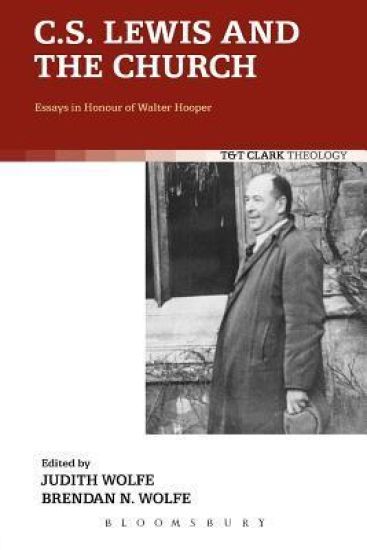
C.S. Lewis, himself a layperson in the Church of England, has exercised an unprecedentedly wide influence on the faithful of Anglican, Roman Catholic, Evangelical and other churches, all of whom tend naturally to claim him as one of their own. One of the reasons for this diverse appropriation is the elusiveness of the church in the sense both of his own denomination and of the wider subject of ecclesiology in Lewis writings. The essays contained in this volume critically examine the place, character and role of the Church in Lewis life. The result is a detailed and scintillating picture of the interactions of one of the most distinctive voices in twentieth-century theology with the contemporaneous development of the Church of England, with key concepts in ecclesiology, and with interdenominational matters.
C.S. Lewis and the Church
T. T.Clark Ltd
2012
nidottu
C.S. Lewis, himself a layperson in the Church of England, has exercised an unprecedentedly wide influence on the faithful of Anglican, Roman Catholic, Evangelical and other churches, all of whom tend naturally to claim him as 'one of their own'. One of the reasons for this diverse appropriation is the elusiveness of the church—in the sense both of his own denomination and of the wider subject of ecclesiology—in Lewis' writings. The essays contained in this volume critically examine the place, character and role of the Church in Lewis' life. The result is a detailed and scintillating picture of the interactions of one of the most distinctive voices in twentieth-century theology with the contemporaneous development of the Church of England, with key concepts in ecclesiology, and with interdenominational matters.
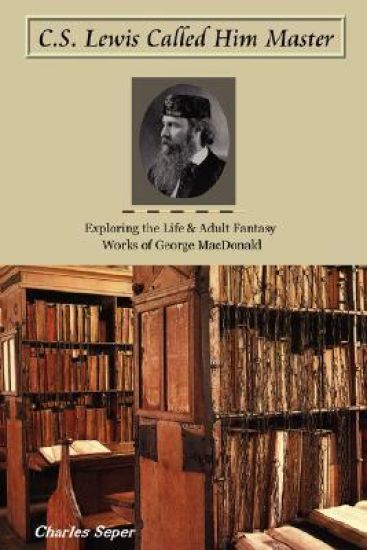
Many readers come to George MacDonald's fantasy literature by way of C.S. Lewis who lauded him as, "my master", or G.K. Chesterton who referred to him as one of the three or four greatest men of the 19th century. However, MacDonald's stories are so complex, so full of twofold meanings, symbolical, metaphorical, and parabolic that many, if not most, readers find themselves perplexed after first coming upon him. "C.S. Lewis Called Him Master" attempts to explain the obscurity behind many of the passages in MacDonald's only two fantasies written for adults, "Lilith", and "Phantastes", while also providing the reader with a brief, but adequate, examination of George MacDonald's life and work. Also contained therein are several rare photos of the MacDonald family, many of them taken by fellow author and family friend Lewis Carroll. "C.S. Lewis Called Him Master" is an essential biography and study aid for students of George MacDonald's most intense works.
Contains the text of letters that the famed author wrote to children, as he shared his feelings about school, writing, and animals, among other topics, and demonstrated his deep understanding of young people. Reprint.
The life and work of C.S. Lewis after his conversion in 1931 is well known and his reputation shows no signs of diminishing. His earlier years have not been so well studied, particularly between the ages of 16 and 22 when he studied privately and at Oxford, served in the British army, was wounded in France, entered into his affair with Janie Moore, and wrote and published his first book of poems. To correct and augment the limited accounts of this period, Lewis’s life is presented with the general and specific background which makes it more meaningful, particularly as it throws light on his character. The romantic myth of him as a "soldier-poet" is dispelled, largely through an extensive review of the poems in "Spirits in Bondage" and the self-centered life that produced them. A valuable comparison—not to the advantage of Lewis—is drawn with two undoubted soldier-poets, Robert Graves and Siegfried Sassoon. The purpose is not to disparage or belittle Lewis but to show what had to be overcome in his limited and unpleasant early moral character in order to produce the devoted Christian of later years.