

Kirjahaku
Etsi kirjoja tekijän nimen, kirjan nimen tai ISBN:n perusteella.
1000 tulosta hakusanalla CARL S WARREN

Working Papers, Chapters 1-14 for Warren/Jones/Tayler's Financial & Managerial Accounting
Carl Warren
CENGAGE LEARNING, INC
2022
nidottu
You'll find the tools you need to help work through end-of-chapter assignments with these working papers. The preformatted files provide a starting point by giving you a basic structure for journal entries and problems.

Working Papers, Chapters 15-28 for Warren/Jones/Tayler's Financial & Managerial Accounting
Carl Warren; James Reeve; Jonathan Duchac
CENGAGE LEARNING, INC
2022
nidottu
You'll find the tools you need to help work through end-of-chapter assignments with these working papers. The preformatted files provide a starting point by giving you a basic structure for journal entries and problems.

Working Papers, Chapters 1-17 for Warren/Reeve/Duchac's Accounting, 27th and Financial Accounting, 15th
Carl Warren; James M. Reeve; Jonathan Duchac
CENGAGE Learning Custom Publishing
2017
nidottu
You'll find the tools you need to help work through end-of-chapter assignments with these working papers. The preformatted files provide a starting point by giving you a basic structure for journal entries and problems.

Working Papers, Chapters 18-26 for Warren/Reeve/Duchac's Accounting, 27E
Carl Warren; James M. Reeve; Jonathan Duchac
CENGAGE Learning Custom Publishing
2017
nidottu
You'll find the tools you need to help work through end-of-chapter assignments with these working papers. The preformatted files provide a starting point by giving you a basic structure for journal entries and problems.
Working Papers, Volume 2, Chapters 15-26 for Warren/Reeve/Duchac's Financial & Managerial Accounting, 14E
Carl Warren; James Reeve; Jonathan Duchac
CENGAGE Learning Custom Publishing
2017
nidottu
You'll find the tools you need to help work through end-of-chapter assignments with these working papers. The preformatted files provide a starting point by giving you a basic structure for journal entries and problems.

Bidrag Till Historien Om Sveriges Yttre Politiska Fur H Llanden Fr N Konung Carl XII.'s S S Till Freden I Traventhal. Afhandling.
Carl Fredrik Israel Wahrenberg
British Library, Historical Print Editions
2011
pokkari
Title: Bidrag till Historien om Sveriges yttre politiska fo rha llanden fra n Konung Carl XII.'s do d till Freden i Traventhal ... Afhandling, etc.Publisher: British Library, Historical Print EditionsThe British Library is the national library of the United Kingdom. It is one of the world's largest research libraries holding over 150 million items in all known languages and formats: books, journals, newspapers, sound recordings, patents, maps, stamps, prints and much more. Its collections include around 14 million books, along with substantial additional collections of manuscripts and historical items dating back as far as 300 BC.The HISTORY OF SOCIAL SCIENCES collection includes books from the British Library digitised by Microsoft. This collection provides histories and analyses of society, culture, education, crime, and family life. Providing a unique perspective of everyday life in the 18th and 19th centuries, readers of these works can study earlier developments that formed our modern society.++++The below data was compiled from various identification fields in the bibliographic record of this title. This data is provided as an additional tool in helping to insure edition identification: ++++ British Library Wahrenberg, Carl Fredrik Israel; 1855. 8 . 9435.dd.18.
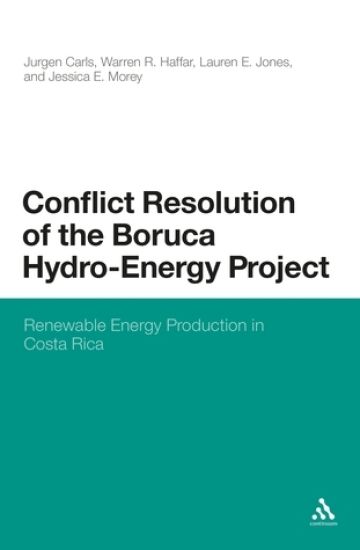
Conflict Resolution of the Boruca Hydro-Energy Project
Jurgen Carls; Warren R. Haffar; Lauren E. Jones; Jessica E. Morey
Continuum Publishing Corporation
2010
sidottu
Conflict Resolution of the Boruca Hydro-Energy Project is a case study that aims to profile best practices for sustainable development, indigenous human rights, and conflict resolution. In 2003, a joint project was developed between the United Nations University of Peace and the International Peace and Conflict Resolution program at Arcadia University to study the Boruca hydroelectrical conflict in Costa Rica. The aim was to bring together theory and practice and to reveal the link between peace and conflict resolution and sustainable development. Through partnerships with the Kan Tan Ecological Project and the indigenous communities in the region, and field studies to the Inter-American Court of Human Rights and local Civil Society Organizations, faculty and students utilized the mediation framework to identify the needs and interests of the primary conflict stakeholders. Conflict Resolution of the Boruca Hydro-Energy Project represents the culmination of this fieldwork and tests the mediation framework as suitable model for the resolution of environmental conflicts in Latin America. The Boruca project, proposed in the 1970s by the state-run corporation Instituto Costarricense De Electridad (ICE), will build a dam in the Boruca Canyon, changing the flow of the Terraba River and creating an artificial lake of 25.000 hectares. The largest of its kind in Central America, this project will generate approximately 1,500 megawatts and increase Costa Rica's energy production capability by as much as 50%. For ICE, not only will the project satisfy national electrical demand, it will also stimulate economic growth, assist in the development of new technological corridors and new tourism projects, increase employment opportunities, and improve the quality of life for indigenous peoples living in Boruca area. For the indigenous population, however, the project represents a violation of their fundamental human rights since it will force the relocation of 2,000 to 3,000 indigenous peoples, flood areas of archeological and cultural significance to them, and affect their livelihood due to the resulting changes in the biodiversity. They also fear the social and environmental impacts of more tourism in the area. The increasingly dysfunctional communication between the Boruca people and ICE over the past 30 years has led to a breakdown of trust and a stalling of the project's development. Conflict Resolution of the Boruca Hydro-Energy Project follows these conflicts and the process by which the government-owned utility tried to find common ground between all stakeholders. Ultimately, it tests the mediation framework as an appropriate approach to the resolution of development conflicts, exploring the transferability of this approach to other countries in Latin America. This case study provides unique insights into Latin American environmental and development politics and will be of interest to any student, faculty, or policymaker looking to assess the mediation framework.
Conflict Resolution of the Boruca Hydro-Energy Project
Jurgen Carls; Warren R. Haffar; Lauren E. Jones; Jessica E. Morey
Continuum Publishing Corporation
2011
nidottu
Conflict Resolution of the Boruca Hydro-Energy Project is a case study that aims to profile best practices for sustainable development, indigenous human rights, and conflict resolution. In 2003, a joint project was developed between the United Nations University of Peace and the International Peace and Conflict Resolution program at Arcadia University to study the Boruca hydroelectrical conflict in Costa Rica. The aim was to bring together theory and practice and to reveal the link between peace and conflict resolution and sustainable development. Through partnerships with the Kan Tan Ecological Project and the indigenous communities in the region, and field studies to the Inter-American Court of Human Rights and local Civil Society Organizations, faculty and students utilized the mediation framework to identify the needs and interests of the primary conflict stakeholders. Conflict Resolution of the Boruca Hydro-Energy Project represents the culmination of this fieldwork and tests the mediation framework as suitable model for the resolution of environmental conflicts in Latin America. The Boruca project, proposed in the 1970s by the state-run corporation Instituto Costarricense De Electridad (ICE), will build a dam in the Boruca Canyon, changing the flow of the Terraba River and creating an artificial lake of 25.000 hectares. The largest of its kind in Central America, this project will generate approximately 1,500 megawatts and increase Costa Rica's energy production capability by as much as 50%. For ICE, not only will the project satisfy national electrical demand, it will also stimulate economic growth, assist in the development of new technological corridors and new tourism projects, increase employment opportunities, and improve the quality of life for indigenous peoples living in Boruca area. For the indigenous population, however, the project represents a violation of their fundamental human rights since it will force the relocation of 2,000 to 3,000 indigenous peoples, flood areas of archeological and cultural significance to them, and affect their livelihood due to the resulting changes in the biodiversity. They also fear the social and environmental impacts of more tourism in the area. The increasingly dysfunctional communication between the Boruca people and ICE over the past 30 years has led to a breakdown of trust and a stalling of the project's development. Conflict Resolution of the Boruca Hydro-Energy Project follows these conflicts and the process by which the government-owned utility tried to find common ground between all stakeholders. Ultimately, it tests the mediation framework as an appropriate approach to the resolution of development conflicts, exploring the transferability of this approach to other countries in Latin America. This case study provides unique insights into Latin American environmental and development politics and will be of interest to any student, faculty, or policymaker looking to assess the mediation framework.

Carl usually comes second or third in the sprint races on sports day, but this year he wants to win an event...just once! To help himself achieve his goal, he sets up a high jump at home.
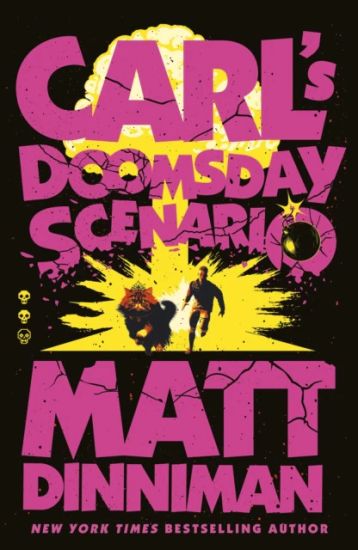

Left alone on Christmas Eve, Carl and his young ward wrap a present for Mom and Dad, frolic in the snow, and then return to the house to wait for Santa Claus

Left alone on Christmas Eve, Carl and his young ward wrap a present for Mom and Dad, frolic in the snow, and then return to the house to wait for Santa Claus

Happy birthday, Carl But can Mom surprise him? No way. As hard as Mom tries, Madeleine and her canine babysitter extraordinaire are hot on her trail, tasting the party punch, peeking at presents, and adding some of their own favorite decorations.
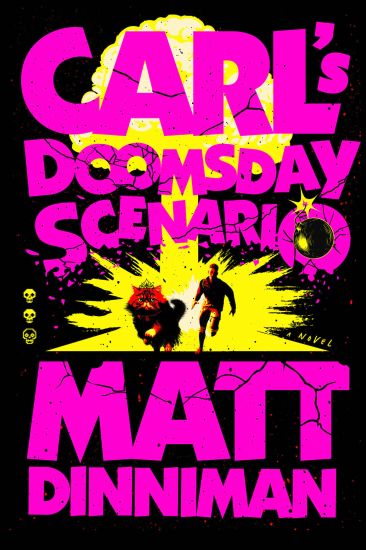
Join Carl and his ex-girlfriend's cat, Princess Donut, as they fight fantastical creatures and deadly mobs to make it to the next level and build the kind of fan following the dungeon masters can't ignore in the second book in the smash-hit Dungeon Crawler Carl series by Matt Dinniman--now with bonus material exclusive to this print edition. "Greetings, Crawlers The training levels have concluded. Now the games may truly begin." The aliens have come, and they've transformed Earth into a multilevel, video game-like dungeon. It's the newest season of the galaxy's most watched game show, Dungeon Crawler World. Now on the third floor, Carl and Donut have to fight harder than ever. They've already proven that a Coast Guard vet and once-and-forever feline royalty are an almost unstoppable team. Their ratings are off the charts. Viewers can't get enough. But the dungeon gets more dangerous each day, and now there's a whole new problem to deal with: Quests. They call it the Over City. A sprawling, once-thriving metropolis devastated by a mysterious calamity. But these streets are far from abandoned. An undead circus trawls the ruins. Murdered women rain from the sky. An ancient spell is finally ready to reveal its dark purpose. Can Carl and Donut solve the mystery in time? And can Carl finally find some pants? Includes part two of the exclusive bonus story "Backstage at the Pineapple Cabaret."


Carl's Little Black Book: The Perfect Dating Companion for a Handsome Man Named Carl. A secret place for names, phone numbers, and addresses.
Wingman Publishing
Independently Published
2019
nidottu
Keep a record of all the girls that catch your eye
Carl's Tour in Main Street
John Stocker Coffin Knowlton; Clarendon Wheelock; Franklin Pierce (CON) Rice
Kessinger Pub
2009
pokkari
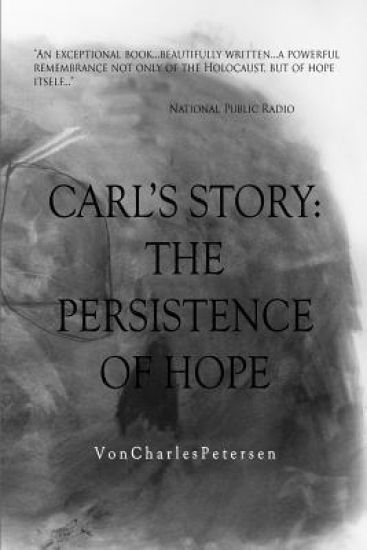
The true story of Kalman Willner, a remarkable man who survived numerous labor camps and the concentration camps of Auschwitz, Buchenwald and Dachau, from the time he was 14 until the age of 20. It is an account of one man's incredible, harrowing journey of courage and undying hope as he struggles to survive mankind's darkest hour, and the miraculous resiliency of the human spirit he imparts. Ultimately, it is a story of hope and grace, for he went on to live a happy and successful life. A must read for anyone interested in the humanity and inhumanity of man and the forces of good and evil. A testimonial for a new generation at a time when the few remaining witnesses of the old are slowly passing from us forever. The ultimate story of survival!