Kirjojen hintavertailu. Mukana 11 238 394 kirjaa ja 12 kauppaa.

Kirjahaku

Etsi kirjoja tekijän nimen, kirjan nimen tai ISBN:n perusteella.

1000 tulosta hakusanalla CHARLES DICKENS
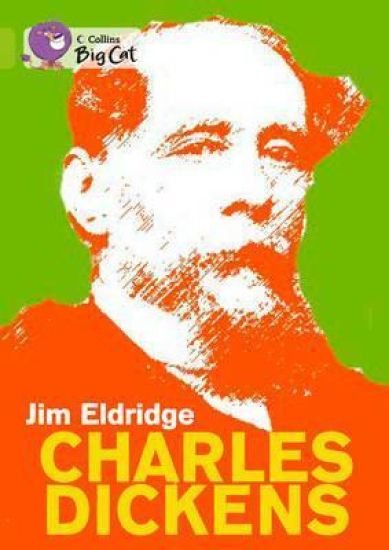
Charles Dickens
Charles Dickens
Jim Eldridge

Collins
2012
nidottu
Build your child’s reading confidence at home with books at the right level Charles Dickens was a famous writer who lived in the 19th century. Discover what life was like for Charles, from spending his childhood working in a factory to finding a job as a law clerk and starting his writing career in this biography by Jim Eldridge. Lime/Band 11 books have longer sentence structures and a greater use of literary languageText type: A biographyPages 30 and 31 present a timeline of Charles Dickens’ life, allowing children to recap the events from the book.Curriculum links: Literacy: Information texts.This book has been quizzed for Accelerated Reader.
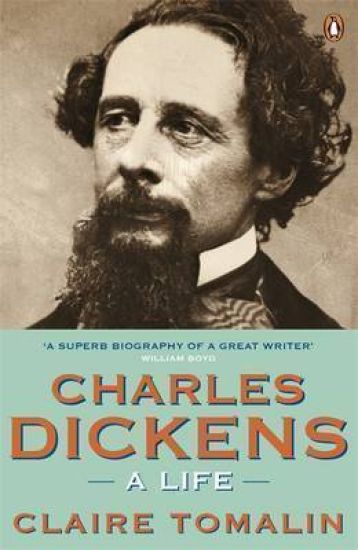
Charles Dickens

Charles Dickens

Claire Tomalin

Penguin Books Ltd
2012
pokkari
Charles Dickens is the acclaimed definitive biography by bestselling author Claire Tomalin Charles Dickens was a phenomenon: a demonicly hardworking journalist, the father of ten children, a tireless walker and traveller, a supporter of liberal social causes, but most of all a great novelist - the creator of characters who live immortally in the English imagination: the Artful Dodger, Mr Pickwick, Pip, David Copperfield, Little Nell, Lady Dedlock, and many more.At the age of twelve he was sent to work in a blacking factory by his affectionate but feckless parents. From these unpromising beginnings, he rose to scale all the social and literary heights, entirely through his own efforts. When he died, the world mourned, and he was buried - against his wishes - in Westminster Abbey.Yet the brilliance concealed a divided character: a republican, he disliked America; sentimental about the family in his writings, he took up passionately with a young actress; usually generous, he cut off his impecunious children. From the award-winning author of Samuel Pepys, Charles Dickens: A Life paints an unforgettable portrait of Dickens, capturing brilliantly the complex character of this great genius. If you loved Great Expectations, Oliver Twist and A Christmas Carol, this book is invaluable reading.'By far the most humane and imaginatively sympathetic account yet for the general reader' Amanda Craig, New Statesman
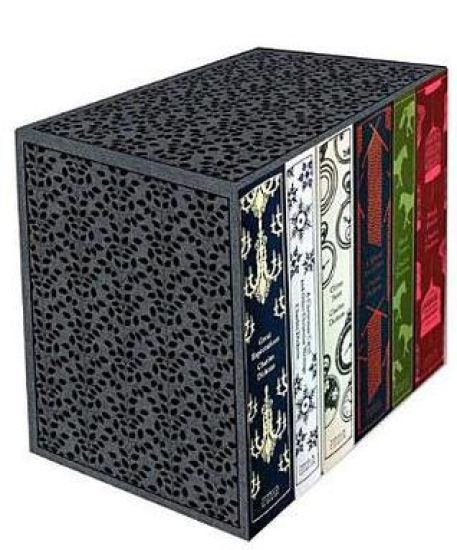
Major Works of Charles Dickens (Boxed Set)

Major Works of Charles Dickens (Boxed Set)

Charles Dickens

Penguin Classics
2011
tuotepaketti
2012 is the two-hundredth anniversary of the birth of one of our greatest and most important novelists, Charles Dickens. To celebrate we're publishing six of his works in this exclusive and sumptuous boxed set of lavish, clothbound editions, designed by Penguin's own award-winning Coralie Bickford-Smith.Part of Penguin's beautiful hardback Clothbound Classics series, designed by the award-winning Coralie Bickford-Smith, these delectable and collectible editions are bound in high-quality colourful, tactile cloth with foil stamped into the design.
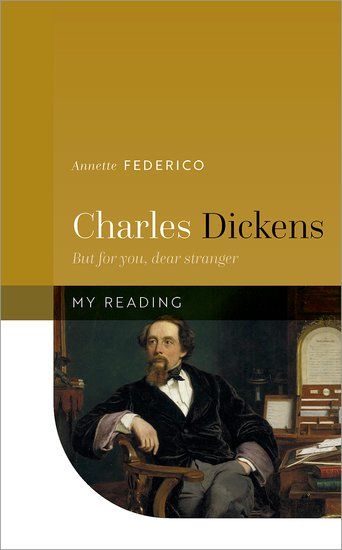
Charles Dickens

Charles Dickens

Annette Federico

Oxford University Press
2022
sidottu
A personal approach to Dickens's art that pays attention to what magnetizes Federico or strikes her as newly relevant to our own world, and to her life, as she explores what Dickens' works are emotionally about. Dickens's first concern in all his fiction is with people's feelings and their imaginations. Everything else--the social criticism, the satire, the comedy--flows from that spring. How does a person begin to imagine, to enter vividly into the life he or she has been given, and into the lives of others? How does someone change, how do they love, give their trust, look forward to the future? These questions make their way into all of Dickens's novels, including the four discussed in this contribution to the My Reading series: Oliver Twist (1837-39), David Copperfield (1849-50), Little Dorrit (1855-57), and A Tale of Two Cities (1859). Consistent with the aims of the series, this book takes a personal approach to Dickens's art. Federico follows her own responses, paying attention to what magnetizes her or strikes her as newly relevant to our own world, and to her life. What is the story emotionally about? This becomes the important question as she reads through Dickens's works. It is the question that opens the door to her own memories, her own stories, as she grows from being an innocent reader of Dickens to a more critical, professionalized one--while still listening confidentially to what Dickens has to teach her about hope, love, and the limits of knowledge.
The British Academy/The Pilgrim Edition of the Letters of Charles Dickens: Volume 9: 1859-1861
This ninth volume presents about 1,100 letters, many unpublished, from the years 1859 to 1861. It records Dickens's writing of two major novels, A Tale of Two Cities and Great Expectations, both published weekly in All the Year Round: the letters give an unusual insight into the inspiration for both. It also shows him planning planning and writing a substantial amount of the three Christmas numbers of this period, `A Haunted House', `A Message from the Sea', and `Tom Tiddler's Ground'. He expends great energy in establishing All the Year Round, to succeed Household Words, and during 1860 writes the first fourteen of his Uncommercial Traveller series. During these three years he gives two provincial tours of readings, in addition to readings in London. He spends a considerable part of his time at Gad's Hill, relying on his daughter Mamie and sister-in-law Georgina Hogarth to act as hostesses; the All the Year Round office becomes his London base. Ellen Ternan continues to act, though with diminishing success; in January 1859 Dickens almost certainly buys a long lease of 2 Houghton Place, Ampthill Square, for the Ternan family.
The British Academy/The Pilgrim Edition of the Letters of Charles Dickens: Volume 10: 1862-1864
This volume presents 918 letters, 435 previously unpublished, for the years 1862 to 1864. Our Mutual Friend, Dickens's main work in the period, comes out monthly from 30 April 1864 to 31 October 1865, illustrated by Marcus Stone, son of Dickens's old friend, the painter Frank Stone; a series of new letters to him shows the immense care Dickens took over his illustrations. The three All the Year Round Christmas numbers, "Somebody's Luggage", "Mrs. Lirriper's Lodgings" and "Mrs. irriper's Legacy", take up much of his energies and are highly successful. Public readings do not occupy so much of his time as in the last volume; but he completes his second provincial tour in January 1862; gives two series weekly in London; and reads for charity in both Rochester and Paris. He declines an offer of £10,000 for an eight months' reading tour in Australia. Gad's Hill plays an increasingly major part in his life: he entertains many of his friends there and makes constant improvements to it. But there is no other period in which he pays so many visits to France, generally alone. The deliberately mystifying language he uses about these visits suggests he was seeing Ellen Ternan either in Paris or Boulogne or both, but there is no evidence to prove it. Long letters to his Swiss friend, W. W. F. de Cerjat, testify to his concern with public issues; several show how much he hated the American Civil War.
The British Academy/The Pilgrim Edition of the Letters of Charles Dickens: Volume 11: 1865-1867
This eleventh volume presents 1158 letters, many previously unpublished or published only in part, for the years 1865 to 1867. Dickens's main work in the period is the completion of the monthly parts of Our Mutual Friend (final part 31 October 1865, for November); unusually, it comes out in two volumes (January and November 1865) during the period of its run. The three All the Year Round Christmas numbers, `Doctor Marigold's Prescriptions', `Mugby Junction', and `No Thoroughfare' (written jointly with Wilkie Collins) are again highly successful. He remains in high demand as chairman of a varied collection of public charitable dinners: they include charities to which he was constantly faithful, such as the Newsvendors' Benevolent Institution and the Royal General Theatrical Fund; but he also presides, for the only time, at the Annual Dinner of the Dramatic, Equestrian, and Musical Sick Fund Association (14 February 1866) and - at the instigation of Charley Dickens, a keen oarsman and Committee member - at the Dinner of the Metropolitan Rowing Club (7 May 1866), making a particularly brilliant speech. The first reference to his swollen left foot, attributed by him to frost-bite, comes in February 1865; but the most dramatic event in this volume is the railway accident at Staplehurst, Kent, on 9 June 1865, in which he is involved on returning from a short visit to France, accompanied by Ellen Ternan and her mother. The frontispiece shows him helping the injured and dying. He gives two provincial reading tours managed by George Dolby of Chappell & Co., in 1866 and 1867, besides frequent readings in London. After a Farewell Dinner to him in London, with Lord Lytton in the Chair, he sails on 9 November 1867 from Liverpool to Boston, to begin his American tour of 75 readings.
The Pilgrim Edition of the Letters of Charles Dickens: Volume 6: 1850-1852
This volume presents 1,592 letters, 668 of them previously unpublished, for the years 1850 to 1852. This was a time of great activity for Dickens, who completed the serial publication of David Copperfield, began work on Bleak House, successfully established the weekly Household Words (in which his own serial A Child's History of England appeared), and wrote about 100 articles and stories for the journal, including many uncollected pieces. In April 1851 he and Sir Edward Bulwer Lytton founded the Guild of Literature and Art, a scheme to help writers and artists. He also suffered a number of personal blows: the deaths of his father, his baby daughter Dora, and two of his close friends, Richard Watson and Alfred D'Orsay; there was also anxiety over the illness of his wife Catherine.
The Pilgrim Edition of the Letters of Charles Dickens: Volume 7: 1853-1855
This volume presents 1,251 letters, 447 previously unpublished, for the years 1853 to 1855; it also includes, as a substantial Appendix of Addenda, over 280 letters of the years 1831 to 1852 which came to light too late for earlier volumes. The period is one of activity remarkable even for Dickens. Besides the continuous editing of Household Words (where his Hard Times appears as a weekly serial), he is still at work on Bleak House until August 1853 and in 1855 is writing the early numbers of Little Dorrit. He manages and acts in children's plays in his little Tavistock House theatre on Twelfth Night, and later takes the leading part in Wilkie Collins's drama The Lighthouse with great effect. Work with Miss Coutts and the troublesome inmates of her `Home' increases, and readings for charity have begun. The Crimean war and the government's mismanagement receive much comment in letters and satirical articles, and lead to one exceptional venture into political life with a speech for the Administrative Reform Association. But his long and happy periods of residence in France with his family encourage a more detached view, and he also revisits Switzerland and Italy on a two-month tour with Collins and the painter Augustus Egg. Friends and family still dominate his personal life, but for a few weeks long-past emotions are revived when he hears from his old love Maria Beadnell, now a middle-aged Mrs Winter.
The British Academy/The Pilgrim Edition of the Letters of Charles Dickens: Volume 8: 1856-1858
This eighth volume presents about 1,500 letters many of them unpublished, from the years 1856 to 1858. This period includes several major changes in Dickens's public and private life, notably in 1858 when he separates from his wife and starts a new career of paid readings from his works. But throughout 1856 and part of 1857, his main preoccupation is the writing of his monthly serial Little Dorrit; for much of 1856 he continues to reside happily in France with his family, both in Boulogne and Paris, giving racy accounts of its theatres and his meetings with writers and artists. At his own amateur theatricals in 1857, his great success in Wilkie Collins's The Frozen Deep has lasting consequences; at the close of his work for the Douglas Jerrold Fund, the play is repeated with professional actresses, including three members of the Ternan family. Later rumours of his relations with a young actress (Ellen Ternan) provoke him to an ill-advised public statement which leads to a breach with his publishers and with one of his closest friends, Mark lemon. Finally, he embarks on the first of many strenuous reading tours, giving 85 readings in over 40 towns, all within three months. His usual activities are not neglected: he makes many speeches for good causes, and continues to edit Household Words (and its successor All the Year Round), with help from his friend and assistant editor Wills. Throughout, there is new material, both in the letters and in the editors' annotation, with some fresh interpretation of controversial matters.
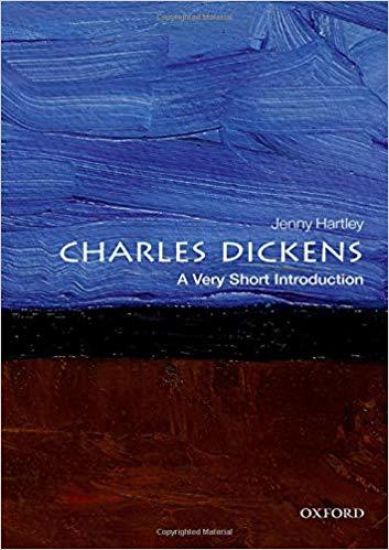
Charles Dickens

Charles Dickens

Jenny Hartley

Oxford University Press
2019
nidottu
Charles Dickens is credited with creating some of the world's best-known fictional characters, and is widely regarded as the greatest novelist of the Victorian age. Even before reading the works of Dickens many people have met him already in some form or another. His characters have such vitality that they have leapt from his pages to enjoy flourishing lives of their own: The Artful Dodger, Miss Havisham, Scrooge, Fagin, Mr Micawber, and many many more. His portrait has been in our pockets, on our ten-pound notes; he is a national icon, indeed himself a generator of what Englishness signifies. In this Very Short Introduction Jenny Hartley explores the key themes running through Dickens's corpus of works, and considers how they reflect his attitudes towards the harsh realities of nineteenth century society and its institutions, such as the workhouses and prisons. Running alonside this is Dickens's relish of the carnivalesque; if there is a prison in almost every novel, there is also a theatre. She considers Dickens's multiple lives and careers: as magazine editor for two thirds of his working life, as travel writer and journalist, and his work on behalf of social causes including ragged schools and fallen women. She also shows how his public readings enthralled the readers he wanted to reach but also helped to kill him. Finally, Hartley considers what we mean when we use the term 'Dickensian' today, and how Dickens's enduring legacy marks him out as as a novelist different in kind from others. ABOUT THE SERIES: The Very Short Introductions series from Oxford University Press contains hundreds of titles in almost every subject area. These pocket-sized books are the perfect way to get ahead in a new subject quickly. Our expert authors combine facts, analysis, perspective, new ideas, and enthusiasm to make interesting and challenging topics highly readable. · This book was previously published in hardback as Charles Dickens: An Introduction
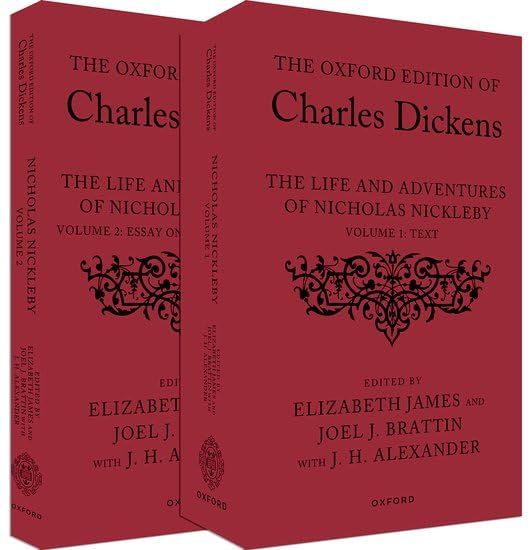
The Oxford Edition of Charles Dickens: The Life and Adventures of Nicholas Nickleby
The Life and Adventures of Nicholas Nickleby, the second volume of the new Oxford Edition of Charles Dickens, is Dickens's third novel, originally published in monthly parts between March 1838 and September 1839. Brilliantly comic, the novel quickly developed a strong strand of social criticism, exploring themes such as love and family, selfishness, work, and charity. It showcases a host of characters, from the earnest and passionate young hero Nicholas, the pathetic Smike, and the brutal schoolmaster Wackford Squeers, to sparkling minor players like John Browdie, Mrs. Squeers, Mr. Mantalini, Mr. Crummles, and the infuriatingly inept Mrs. Nickleby. Solidifying the reputation for comedy and pathos Dickens had established with The Pickwick Papers and Oliver Twist, this novel reached—and delighted—the widest audience Dickens had yet known. The manuscript of Nicholas Nickleby survives only in fragments, with the British Library, the Charles Dickens Museum, and The Rosenbach library holding substantial portions, and the Victoria and Albert Museum, the Free Library of Philadelphia, and the Morgan Library also holding pages. This edition is presented in two volumes: the text in Volume I and Essay on the Text and Notes in Volume 2. The editors have closely examined all the surviving manuscript, recovering scores of deletions and recording all variants of wording in the textual apparatus. The text is based on that of the original serial instalments; all emendations from that text are fully documented. All lifetime British editions (the Cheap, the Library, the Illustrated Library, the People's and the Charles Dickens) have been carefully collated, and all verbal variants are recorded.
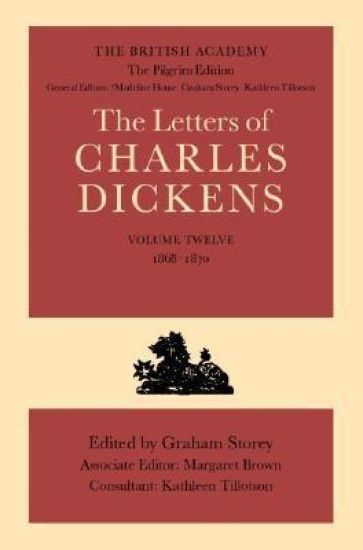
The British Academy/The Pilgrim Edition of the Letters of Charles Dickens: Volume 12: 1868-1870
This final volume presents 1,151 letters, many previously unpublished or published only in part, for the years 1868 to Dickens's death from a stroke on 9 June 1870; also included is an Addenda of 235 letters belonging to earlier volumes, discovered since the publication of the first such collection in Volume 7, and a Cumulative Index of Correspondents for the entire edition. The volume begins with the final four months of Dickens's American tour of 75 readings, which had been conspicuously successful throughout, despite the appalling weather and his sufferings from "American" catarrh. The tour culminated on 18 April 1868 when the American Press held a dinner in his honour in New York. In July he rented Windsor Lodge, Peckham for Ellen Ternan, where she remained until after his death; he was to give two more English reading tours before his collapse at Preston on 22 April 1869. In early January 1869 he was elected President of the Birmingham and Midland Institute; and a dinner in his honour was given in St George's Hall, Liverpool. Between January and March 1870 he gave a series of Farewell readings in London, and on 31 March Edwin Drood, No. 1 was published, illustrated by Luke Fildes; it continued monthly until 31 August. Of the friends who died during this period, much the closest were the painter Daniel Maclise, to whom Dickens paid especial tribute at the Royal Academy Banquet of 30 April 1870; Mark Lemon, who died only 18 days before Dickens himself, and with whom he had a brief reconciliation after their bitter quarrel in 1858; and Chauncy Hare Townshend, who left him £2,000 to publish, as his Literary Executor, Religious Opinions of the Late Chauncy Hare Townshend, which appeared in November 1870.
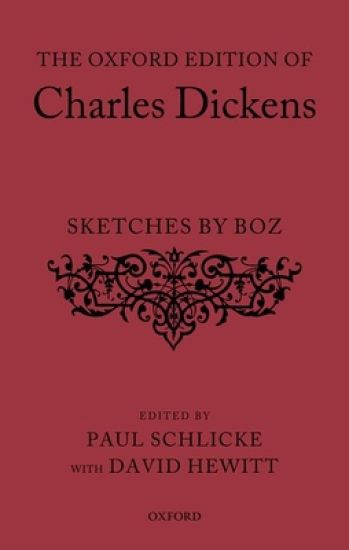
The Oxford Edition of Charles Dickens: Sketches by Boz

The Oxford Edition of Charles Dickens: Sketches by Boz

Charles Dickens

Oxford University Press
2020
sidottu
Sketches by Boz, the first volume of the new Oxford Dickens, was also the title of Dickens's first book. It is a collection of sixty pieces, mostly humorous although there is nothing funny about 'A Visit to Newgate', which first appeared as contributions to magazines and newspapers in the mid 1830s. They are distinguished by his sharp and often satirical observation of social situations and London characters; but, with one exception, they are works of fiction. Fourteen can be described as short stories, but most are sketches presented to us as reportage. They show why Dickens was recognised as a brilliant new talent from the outset of his career. In the absence of any manuscripts, the text of each piece (with one exception) is based upon the first published version. They offer Dickens as he appeared to his very first readers in the mid 1830s, and as he has not been seen since. Dickens edited later editions, cutting contemporary references, oaths and sexual innuendo. The consequence of reading Dickens as he was is startling, for these pieces both offer a direct reflection of the social scene in London of the period, and have a raciness which Dickens excised from later printings. This work rediscovers the young Dickens.