

Kirjahaku
Etsi kirjoja tekijän nimen, kirjan nimen tai ISBN:n perusteella.
153 tulosta hakusanalla Cailean McBride
Johnny Heretic is dead. An era-defining rock legend, turned international icon, the entire world apparently mourns his passing. Not least Belinda Cassidy, fading music journo and Johnny's former childhood friend. But as she delves into her memories and into the history of Johnny's chequered career, is she in danger of finding something much more sinister?Something including murder?

Lord Cailean Dragonsson is the oldest, most powerful, and most reclusive wizard in Belarin. When he sends out a command for a conclave of his fellow practitioners, Edward Red Mage immediately assumes it's because of his own recent misadventure with a coven of vampires. But as a deadly blizzard traps them in the tower, and wizard after wizard is found brutally murdered, Ed begins to fear that Dragonsson has simply gone mad and decided to remove all competition....

Two women are drawn toward a hidden loch where it's rumored the thing you've lost can be returned--at a deadly cost--in this stunning novel exploring love, grief, and fate, perfect for readers of Alix E. Harrow, Erin Morgenstern, and Emma T rzs. A lost lake. Toby has recently lost her husband Ben, and all sense of direction. She knows only that she must still care for their son, Ciaran, and that she's haunted by an impossible childhood memory: standing over a "drowned village," filled with treasures. So when she uncovers someone online who also claims to have seen this strange place, hidden deep in the Scottish Highlands, Toby knows what she should do. A deadly curse. Seventeen-year-old Ash is desperate after the death of her mother, until she stumbles into the mysterious Half-Way House. Here, she finds herself a caretaker of the Mirror Halls: the shadowy realm between the sleeping and the dead. As she learns to walk amongst the Dreamers, she begins to suspect that her discovery of the Halls - and the secrets they conceal - is no accident. How much will you risk? But some places are hidden for a reason. As the two women embark on their separate journeys to the truth, they soon find themselves entangled in a mystery far darker and deeper than either could have imagined. Masterfully blending contemporary fantasy into the forgotten corners of our own world, in the spirit of Alix E. Harrow, Erin Morgenstern, Emma T rzs, and Gareth Brown, The Mirror Halls is an unforgettable exploration of what it means to dream, to die, and to truly live.


'Absorbing, moving, and alarmingly believable, Home is an unforgettable story about identity, family, and the terrifying dynamics of a cult' Carole Johnstone, author of Mirrorland 'Highly engrossing' Heat 'A white-hot gem of a book; brilliantly researched, so gripping and propulsive you’ll want to consume it in one go, but also glowingly, humanly real' Kirstin Innes, author of Scabby Queen Someone has broken into Zoe’s flat. A man she thought she’d never have to see again. They call him the Hand of God. He knows about her job in the cafe, her life in Dublin, her ex-girlfriend, even the knife she’s hidden under the mattress. She thought she’d left him far behind, along with the cult of the Children and their isolated compound Home – but now he’s found her, and Zoe realises she must go back with him if she's to rescue the sister who helped her escape originally. But returning to Home means going back to the enforced worship and strict gender roles Zoe has long since moved beyond. Back to the abuse and indoctrination she’s fought desperately to overcome... Going back will make her question everything she believed about her past – and risk her hard-won freedom. Can she break free a second time? 'An absolute triumph ... .I found myself holding my breath, hoping for the best for her, while expecting the worst. Highly recommended' Laura Shepperson, author of forthcoming debut The Heroines

'Such a good read' Val McDermid 'Absorbing, moving, and alarmingly believable' Carole Johnstone, author of Mirrorland'Home is a white-hot gem of a book; brilliantly researched, so gripping and propulsive you’ll want to consume it in one go' Kirstin Innes, author of Scabby QueenSomeone has broken into Zoe’s flat. A man she thought she’d never have to see again.They call him the Hand of God.He knows about her job in the cafe, her life in Dublin, her ex-girlfriend, even the knife she’s hidden under the mattress.She thought she’d left him far behind, along with the cult of the Children and their isolated compound Home – but now he’s found her, and Zoe realises she must go back with him if she's to rescue the sister who helped her escape originally. But returning to Home means going back to the enforced worship and strict gender roles Zoe has long since moved beyond. Back to the abuse and indoctrination she’s fought desperately to overcome...Going back will make her question everything she believed about her past – and risk her hard-won freedom. Can she break free a second time?'An absolute triumph.... I found myself holding my breath, hoping for the best for her, while expecting the worst. Highly recommended' Laura Shepperson, author of forthcoming debut THE HEROINES


Women make up more than 75 percent of true crime consumers, yet the historical contributions of women at the forefront of crime solving have often been overlooked. In Warrior Sleuths, homicide investigator and criminal behavioralist Sarah Cailean guides readers through both century-old and modern-day crimes and infamous cases that captured the public's imagination as she highlights eight women who defied expectations, shattered stereotypes in the field of true crime, and gave voice to the voiceless.Each woman's work and contributions are viewed through the lens of Cailean's professional expertise. Discover how these women impacted investigations, law enforcement, forensics, and other related fields, as well as how they overcame personal hurdles and adversity, working as women in male-dominated fields and balancing their careers with their own rich personal lives. From fearless investigators to pioneering forensic scientists, these women played pivotal roles in the ongoing renaissance of true crime media. In this collection, you will meet: Kate Warne, the first female professional detective in America Isabella Goodwin, the first female detective in NYCGrace Humiston, who freed an innocent man from death row by using ballistics evidenceMabel Walker Willebrandt, a federal prosecutor who fought corruption and gangsters in the 1920sEunice Hunton Carter, one of the first Black women to work in major prosecutionsFrances Glessner Lee, a criminalist who worked on the Boston Strangler case and developed the Nutshell Studies of Unexplained DeathDr. Ann Wolbert Burgess, a pioneer in forensic psychological profiling and criminologyBarbara Rae-Venter, whose development of forensic genealogy changed cold case work forever
Someone has broken into Zoe's flat. A man she thought she'd never have to see again. They call him the Hand of God. He knows about her job in the cafe, her life in Dublin, her ex-girlfriend, even the knife she's hidden under the mattress. She thought she'd left him far behind, along with the cult of the Children and their isolated compound Home - but now he's found her, and she knows she must go back to rescue the sister who helped her escape all those years before. But returning to Home means going back to the enforced worship and strict gender roles Zoe has long since moved beyond; back to the abuse and indoctrination she's fought desperately to overcome. Going back will make her question everything she believed about her past - but could also risk her hard-won freedom. Can she break free a second time?One - My name is Zoe Two - I am here to rescue my sister Amy Three - Nothing anyone says here is true Four - Four -What is my fourth true thing?
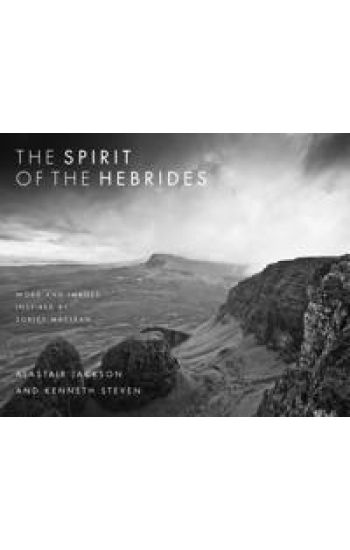
The Spirit of the Hebrides combines the poetry of Kenneth Steven with the photography of Alastair Jackson and features images of Skye and Raasay in homage to one of Scotland’s leading 20th century poets, Sorley McLean. The Spirit of the Hebrides explores islands as places to be discovered; places which shy away from recognition, yet are in some way familiar. Kenneth Steven’s poetry reflects on the link between people and the land; how identity is shaped by wild places; the passing of many of the old ways of the Hebrides; the enduring beauty of these islands; the hospitality of their people and the depth of their spiritual awareness. Alastair Jackson’s photography captures the wilder and remoter parts of Skye and Raasay, often in bad weather, but showing a glimmer of sunshine and hope on the horizon. His wide horizons and stormy sky offer a glimpse into both the turbulent past and the deep spirituality of the Hebrides. This book uniquely captures the spirit of the Hebrides. *Longlisted for the Highland Book Prize 2019. "The result is a beautiful and evocative book that explores the land and seascapes of these islands, their vast skies and their resilient, shifting beauty in all seasons and weathers" -- Highland Book Prize 2019
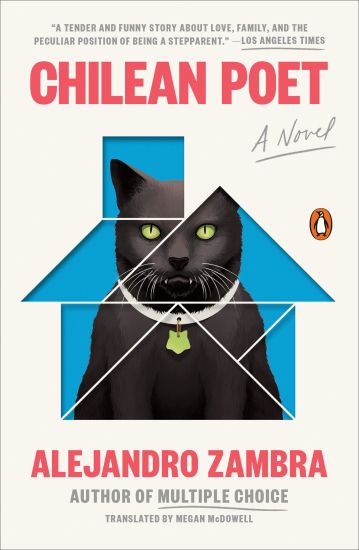
A NEW YORKER BEST BOOK OF THE YEAR A WALL STREET JOURNAL TOP 10 BOOK OF THE YEAR ONE OF NPR'S "BOOKS WE LOVE" "A tender and funny story about love, family and the peculiar position of being a stepparent... Chilean Poet] broadens the author's scope and quite likely his international reputation." --Los Angeles Times "Zambra is] one of the most brilliant Latin American writers of his generation." --The New York Review of Books "Zambra's books have long shown him to be a writer who, at the sentence level, is in a world all his own." --Juan Vidal, NPR.org A writer of "startling talent" (The New York Times Book Review), Alejandro Zambra returns with his most substantial work yet: a story of fathers and sons, ambition and failure, and what it means to make a family After a chance encounter at a Santiago nightclub, aspiring poet Gonzalo reunites with his first love, Carla. Though their desire for each other is still intact, much has changed: among other things, Carla now has a six-year-old son, Vicente. Soon the three form a happy sort-of family--a stepfamily, though no such word exists in their language. Eventually, their ambitions pull the lovers in different directions--in Gonzalo's case, all the way to New York. Though Gonzalo takes his books when he goes, still, Vicente inherits his ex-stepfather's love of poetry. When, at eighteen, Vicente meets Pru, an American journalist literally and figuratively lost in Santiago, he encourages her to write about Chilean poets--not the famous, dead kind, your Nerudas or Mistrals or Bola os, but rather the living, striving, everyday ones. Pru's research leads her into this eccentric community--another kind of family, dysfunctional but ultimately loving. Will it also lead Vicente and Gonzalo back to each other? In Chilean Poet, Alejandro Zambra chronicles with enormous tenderness and insight the small moments--sexy, absurd, painful, sweet, profound--that make up our personal histories. Exploring how we choose our families and how we betray them, and what it means to be a man in relationships--a partner, father, stepfather, teacher, lover, writer, and friend--it is a bold and brilliant new work by one of the most important writers of our time.
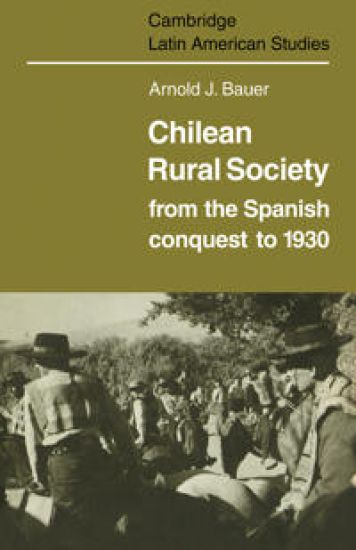
This book attempts to place in historical perspective the evolution of Chilean rural society from its foundation in the sixteenth century to 1975 and especially to explain the unusual result of accelerated economic growth after 1860. The study is placed in the broader context of general Chilean development and the rise of the Atlantic market. Professor Bauer also points out the connections and similarities between the Chilean case and other areas peripheral to the expanding world economy. Chapters are devoted to markets, prices and credit, but the main part of the book is concerned with the social and political impact of economic expansion on rural workers and the land-owning classes. A detailed explanation of agrarian structure and the position and importance of landlord and peon within national development is essential for an understanding of modern Latin America. This book is a contribution to that understanding and people interested in other times and places will find in the experience of Chile an instructive contrast in the larger pattern on modern history.

A NEW YORKER BEST BOOK OF THE YEAR A WALL STREET JOURNAL TOP 10 BOOK OF THE YEAR ONE OF NPR'S "BOOKS WE LOVE" "A tender and funny story about love, family and the peculiar position of being a stepparent... Chilean Poet] broadens the author's scope and quite likely his international reputation." --Los Angeles Times "Zambra is] one of the most brilliant Latin American writers of his generation." --The New York Review of Books "Zambra's books have long shown him to be a writer who, at the sentence level, is in a world all his own." --Juan Vidal, NPR.org A writer of "startling talent" (The New York Times Book Review), Alejandro Zambra returns with his most substantial work yet: a story of fathers and sons, ambition and failure, and what it means to make a family After a chance encounter at a Santiago nightclub, aspiring poet Gonzalo reunites with his first love, Carla. Though their desire for each other is still intact, much has changed: among other things, Carla now has a six-year-old son, Vicente. Soon the three form a happy sort-of family--a stepfamily, though no such word exists in their language. Eventually, their ambitions pull the lovers in different directions--in Gonzalo's case, all the way to New York. Though Gonzalo takes his books when he goes, still, Vicente inherits his ex-stepfather's love of poetry. When, at eighteen, Vicente meets Pru, an American journalist literally and figuratively lost in Santiago, he encourages her to write about Chilean poets--not the famous, dead kind, your Nerudas or Mistrals or Bola os, but rather the living, striving, everyday ones. Pru's research leads her into this eccentric community--another kind of family, dysfunctional but ultimately loving. Will it also lead Vicente and Gonzalo back to each other? In Chilean Poet, Alejandro Zambra chronicles with enormous tenderness and insight the small moments--sexy, absurd, painful, sweet, profound--that make up our personal histories. Exploring how we choose our families and how we betray them, and what it means to be a man in relationships--a partner, father, stepfather, teacher, lover, writer, and friend--it is a bold and brilliant new work by one of the most important writers of our time.

Chilean Cinema in the Twenty-First-Century World
Wayne State University Press
2020
sidottu
Focusing on films from Chile since 2000 and bringing together scholars from South and North America, Chilean Cinema in the Twenty-First-Century World is the first English-language book since the 1970s to explore this small, yet significant, Latin American cinema. The volume questions the concept of "national cinemas" by examining how Chilean film dialogues with trends in genre-based, political, and art-house cinema around the world, while remaining true to local identities.Contributors place current Chilean cinema in a historical context and expand the debate concerning the artistic representation of recent political and economic transformations in contemporary Chile. Chilean Cinema in the Twenty-First-Century World opens up points of comparison between Chile and the ways in which other national cinemas are negotiating their place on the world stage. The book is divided into five parts. "Mapping Theories of Chilean Cinema in the Worl"" examines Chilean filmmakers at international film festivals, and political and affective shifts in the contemporary Chilean documentary. "On the Margins of Hollywood: Chilean Genre Flicks" explores on the emergence of Chilean horror cinema and the performance of martial arts in Chilean films. "Other Texts and Other Lands: Intermediality and Adaptation Beyond Chile(an Cinema)" covers the intermedial transfer from Chilean literature to transnational film and from music video to film. "Migrations of Gender and Genre" contrasts films depicting transgender people in Chile and beyond. "Politicized Intimacies, Transnational Affects: Debating (Post)memory and History" analyzes representations of Chile's traumatic past in contemporary documentary and approaches mourning as a politicized act in postdictatorship cultural production.Intended for scholars, students, and researchers of film and Latin American studies, Chilean Cinema in the Twenty-First-Century World evaluates an active and emergent film movement that has yet to receive sufficient attention in global cinema studies.
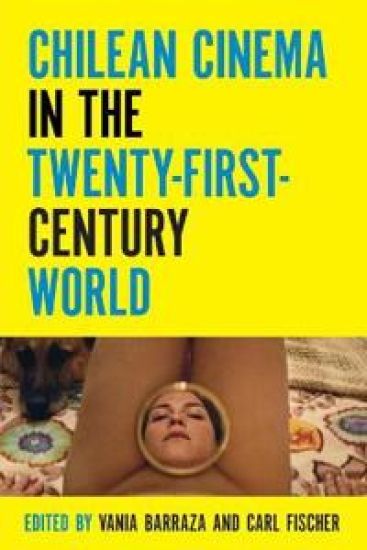
Chilean Cinema in the Twenty-First-Century World
Wayne State University Press
2020
nidottu
Focusing on films from Chile since 2000 and bringing together scholars from South and North America, Chilean Cinema in the Twenty-First-Century World is the first English-language book since the 1970s to explore this small, yet significant, Latin American cinema. The volume questions the concept of "national cinemas" by examining how Chilean film dialogues with trends in genre-based, political, and art-house cinema around the world, while remaining true to local identities. Contributors place current Chilean cinema in a historical context and expand the debate concerning the artistic representation of recent political and economic transformations in contemporary Chile.Chilean Cinema in the Twenty-First-Century World opens up points of comparison between Chile and the ways in which other national cinemas are negotiating their place on the world stage. The book is divided into five parts. "Mapping Theories of Chilean Cinema in the World" examines Chilean filmmakers at international film festivals, and political and affective shifts in the contemporary Chilean documentary. "On the Margins of Hollywood: Chilean Genre Flicks" explores on the emergence of Chilean horror cinema and the performance of martial arts in Chilean films. "Other Texts and Other Lands: Intermediality and Adaptation Beyond Chile(an Cinema)" covers the intermedial transfer from Chilean literature to transnational film and from music video to film. "Migrations of Gender and Genre" contrasts films depicting transgender people in Chile and beyond. "Politicized Intimacies, Transnational Affects: Debating (Post)memory and History" analyzes representations of Chile's traumatic past in contemporary documentary and approaches mourning as a politicized act in postdictatorship cultural production.Intended for scholars, students, and researchers of film and Latin American studies, Chilean Cinema in the Twenty-First-Century World evaluates an active and emergent film movement that has yet to receive sufficient attention in global cinema studies.
Chilean Economic Development under Neoliberalism
Andrés Solimano; Gabriela Zapata-Román
Cambridge University Press
2024
sidottu
This Element examines the process of economic development of the last 50 years or so under the neoliberal model in terms of impacts on growth, inflation, income and wealth distribution and structural change. The analysis includes a historical perspective from the 19th century to the present and combines economic analysis with a political economy approach. This title is also available as Open Access on Cambridge Core.