Kirjojen hintavertailu. Mukana 11 342 296 kirjaa ja 12 kauppaa.

Kirjahaku

Etsi kirjoja tekijän nimen, kirjan nimen tai ISBN:n perusteella.

1000 tulosta hakusanalla Carl E Creasman

Full Throttle

Full Throttle

Carl E Creasman

Carl E. Creasman Jr.
2011
pokkari
Sometimes I think that speakers and authors share a lot about how to achieve your dreams, goal setting and so forth, yet you sometimes wonder if they ever actually do those things too. I mean, are they a famous author because they actually did all the steps in their guide, or just because people like me buy their books? So, I wrote this book for you based on my own recent experience of pursuing my dream to start riding a motorcycle. I know, I know--not really "life-changing" per se, but it meant a lot to me. And, I think if you'll take a few minutes to read along, you'll see strategies that you can implement immediately that will impact your life. You will soon be applying these high octane insights to achieving your own dreams.
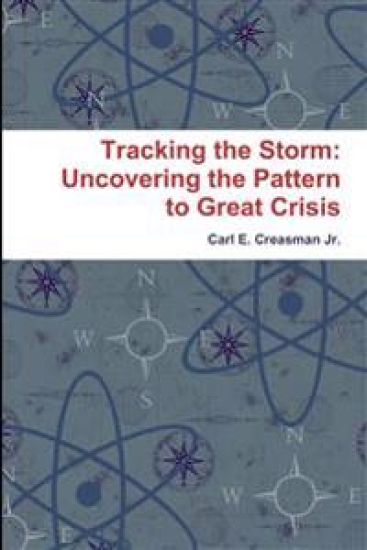
Tracking the Storm

Tracking the Storm

Carl E Creasman

Carl E. Creasman, Jr.
2011
pokkari
Tracking the Storm provides powerful clues about what is coming, rapidly, to the United States. There is little doubt that a storm is approaching the country, the outer edges of the winds already swirling around us. What does that portend for the nation? Through the clues of history, we can find direction and steps to undertake in preparation. Many believe there won't be a storm, or maybe that the worst is over. With history as a guide, Carl E Creasman Jr demonstrates that we haven't yet even reached the Great Crisis. Gripping and "a scary yet necessary read," Tracking the Storm moves through the past 400 years of Anglo-American history to illustrate the various clues provided that show the steps to the coming crisis. Carl E Creasman Jr tells the story of political instability, economic distress, rapid technological changes and a growing philosophical divide that challenged previous generations. At the end of each Great Crisis, the nation had been radically changed.
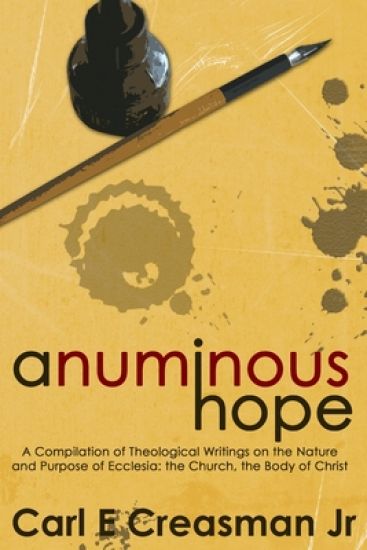
A Numinous Hope

A Numinous Hope

Carl E Creasman

Carl E Creasman Jr
2012
pokkari
Numinous is the name of the Christian ministry started by Carl & Kim Creasman in 1998. At the core of Carl's vision lies a hope, a dream of actually being a united group of fellow nomads on a journey together, experiencing the life of Christian believers connected deeply to one another. That story is the reality of the first church, if the history written in the book of Acts is to be believed. This book, then, is a collection of writings defining the concept of community, explaining why it matters, and demonstrating how Numinous Church does it. These writings challenge long held assumptions about what "church" means and how it is important for today. The compilation contains three selections: a theological exposition of the ideas that inspired the birth of Numinous written in 2003, a shorter collection of Carl's newsletter articles on the theology of community written in 2007, and a collection of Carl's emails to the church body of Numinous over the years since the church's start in 2000.
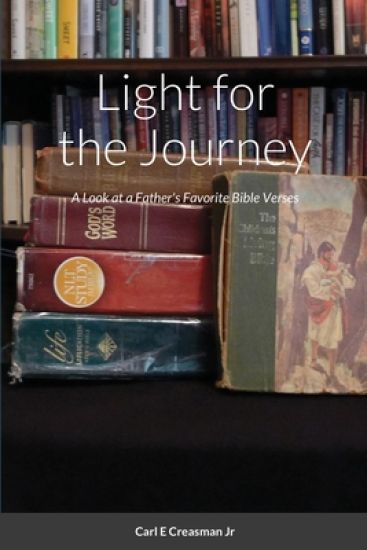
Light for the Journey

Light for the Journey

Carl E Creasman

Carl E Creasman Jr
2020
pokkari
When on an unknown path, seeing clearly is useful. Carl Creasman wrote this book examining 31 Bible verses for his three adult daughters as a light for their journey through life. As a fourth-generation Christian ordained minister, Carl has spent his life deep in God's word, and now shares his favorite verses as a guide to his girls as well as for the many other "spiritual children" he has had the privilege to mentor over three decades of ministry. Since 1985 Carl has been speaking to a wide variety of audiences, combining his teaching skills with his love of working with people. A gifted communicator, one College President stated, "Carl has a gift for making complex ideas easily understood," reaching audiences "with a style and message that transcends the cultural challenges of postmodernism." Currently Carl and his wife Kim live in central Florida where he is a Professor of History at Valencia College. The verses contained in this book provide guidance for how to live in a complex world. Come read these words of love from a father to his children and gain light for your own journey.
Wandering Back-Roads West Virginia with Carl E. Feather
For over four decades, Carl E. Feather periodically wandered The Mountain State's byways to document the stories and lifestyles of its fascinating residents.More than 100 of the resulting photo essays and narratives have appeared in GOLDENSEAL magazine, West Virginia Department of Arts, Culture and History. In this first volume of a series, Carl presents fourteen stories from these myriad excursions into the heart of Central Appalachia. Join him as he walks the streets of Wheeling with a nighttime vigilante known as Moon Dog, discovers the execution tasks required of Moundsville prison guards, spends a day with the father of a Coalwood Rocket Boy, visits with old-timers who recall life in Bloody Mingo, pauses at a memorial chapel to a little boy, shells corn with the owner of an old mill, attends the Country Store Opry, meets a Minnie Pearl impersonator, and much more From the panhandles to the coalfields, Wandering Back-Roads West Virginia is an engaging journey for all who love The Mountain State and its endearing people, culture, and history.
More Wandering Back-Roads West Virginia with Carl E. Feather
Volume II in the Wandering Back-Roads West Virginia with Carl E. Feather series focuses on West Virginians who overcame incredible difficulties and hardships, including those born during the Great Depression, and established popular attractions and traditions. These include O'Hurley's General Store in Sheperdstown, Yokum's Vacationland at Seneca Rocks, Harper's Store, Paradox Book Store, and Singing in the Hills. Along the Way visits include the Eye of Shepherdstown, Nelson Rocks, and Chenoweth covered bridges. Meet the Iron Man of Harrison County whose 18-foot-tall Charlie the Miner is a memorial to coal miners made of water heaters, centenarian Silas Kirk, and a doctor so beloved by his community, they raised a huge obelisk to honor him. And discover the story behind one of the state's strangest discoveries, the largest alluvial diamond ever found in the U.S.
Even More Wandering Back-Roads West Virginia with Carl E. Feather
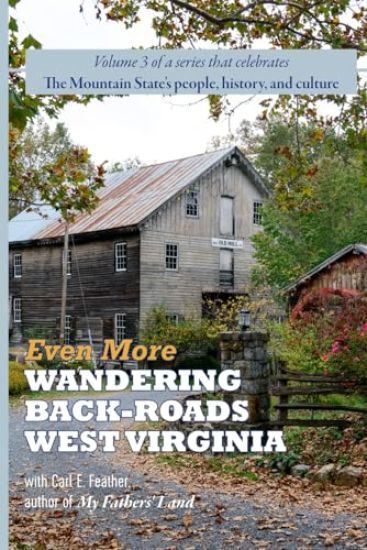
For over four decades, Carl E. Feather periodically wandered The Mountain State's byways to document the stories and passions of its fascinating residents. More than 100 of the resulting photo essays and narratives have appeared in GOLDENSEAL magazine, West Virginia Department of Arts, Culture and History.In this third volume of a series, Carl travels the back roads of the state to discover nostalgia-evoking places and people. His finds include unusual lawn art, the stories behind an old red barn, the nostalgia of drive-in movie theaters, poignant memories of "Traveler's Repose," quirky roadside vendors, the passion of a musician/song catcher, old-fashioned barber shops, an old-time fiddle player, general store, privies, and much more Whether you are nostalgia seeker, native of West Virginia, or just enjoy reading Americana, the entire Wandering Back-Roads West Virginia is a great read
Taxidermy and Sculpture: the Work of Carl E. Akeley in Field Museum of Natural History

Taxidermy and Sculpture: the Work of Carl E. Akeley in Field Museum of Natural History

Chicago [Field Museum of Natural Hist

Hassell Street Press
2023
sidottu
This book showcases the stunning taxidermy and sculpture work of Carl E. Akeley at the Field Museum of Natural History in Chicago. A must-read for those interested in art, natural history, and museum studies.This work has been selected by scholars as being culturally important, and is part of the knowledge base of civilization as we know it.This work is in the "public domain in the United States of America, and possibly other nations. Within the United States, you may freely copy and distribute this work, as no entity (individual or corporate) has a copyright on the body of the work.Scholars believe, and we concur, that this work is important enough to be preserved, reproduced, and made generally available to the public. We appreciate your support of the preservation process, and thank you for being an important part of keeping this knowledge alive and relevant.
Collected Papers Of Carl Wieman

Collected Papers Of Carl Wieman

Carl E Wieman

World Scientific Publishing Co Pte Ltd
2008
sidottu
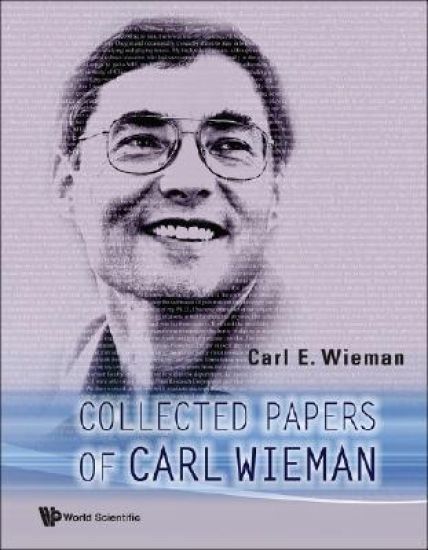
Carl Wieman's contributions have had a major impact on defining the field of atomic physics as it exists today. His ground-breaking research has included precision laser spectroscopy; using lasers and atoms to provide important table-top tests of theories of elementary particle physics; the development of techniques to cool and trap atoms using laser light, particularly in inventing much simpler, less expensive ways to do this; the understanding of how atoms interact with one another and light at ultracold temperatures; and the creation of the first Bose-Einstein condensation in a dilute gas, and the study of the properties of this condensate. In recent years, he has also turned his attention to physics education and new methods and research in that area. This indispensable volume presents his collected papers, with annotations from the author, tracing his fascinating research path and providing valuable insight about the significance of the works.
Collected Papers Of Carl Wieman

Collected Papers Of Carl Wieman

Carl E Wieman

World Scientific Publishing Co Pte Ltd
2008
nidottu
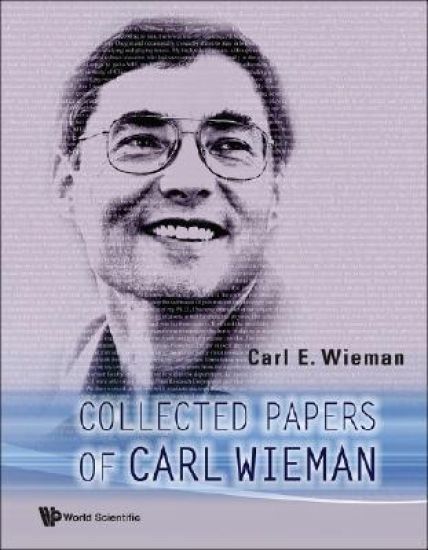
Carl Wieman's contributions have had a major impact on defining the field of atomic physics as it exists today. His ground-breaking research has included precision laser spectroscopy; using lasers and atoms to provide important table-top tests of theories of elementary particle physics; the development of techniques to cool and trap atoms using laser light, particularly in inventing much simpler, less expensive ways to do this; the understanding of how atoms interact with one another and light at ultracold temperatures; and the creation of the first Bose-Einstein condensation in a dilute gas, and the study of the properties of this condensate. In recent years, he has also turned his attention to physics education and new methods and research in that area. This indispensable volume presents his collected papers, with annotations from the author, tracing his fascinating research path and providing valuable insight about the significance of the works.
Brooklyn's Dodgers

Brooklyn's Dodgers

Carl E. Prince

Oxford University Press Inc
1996
sidottu
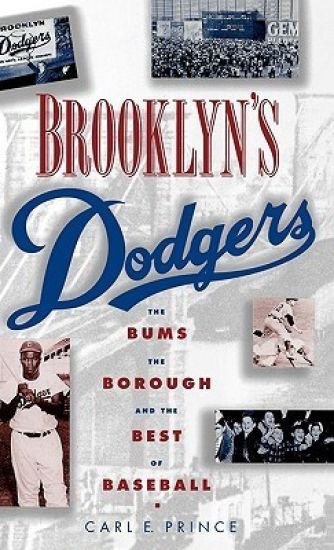
During the 1952 World Series, a Yankee fan trying to watch the game in Brooklyn was told, "Why don't you go back where you belong, Yankee lover?" "I got a right to cheer my team," the intruder responded, "this is a free country." "This ain't no free country, chum," countered the Dodger fan, "this is Brooklyn." All Brooklynites loved their "Bums"--Branch Rickey, Pee Wee Reese, Jackie Robinson, Duke Snider, Roy Campanella, and all the murderous parade of regulars who, after years of struggle, finally won the World Series in 1955. One could not live in Brooklyn and not catch its spirit of devotion to its baseball club. In Brooklyn's Dodgers, Carl E. Prince captures the intensity and depth of the team's relationship to the community and its people in the 1950s. Ethnic and racial tensions were part and parcel of a working class borough; the Dodgers' presence smoothed the rough edges of the ghetto conflict always present in the life of Brooklyn. The Dodger-inspired baseball program at the fabled Parade Grounds provided a path for boys that occasionally led to the prestigious "Dodger Rookie Team," and sometimes, via minor league contracts, to Ebbets Field itself. There were the boys who lined Bedford Avenue on game days hoping to retrieve home run balls and the men in the many bars who were not only devoted fans but collectively the keepers of the Dodger past--as were Brooklyn women, and in numbers. Indeed, women were tied to the Dodgers no less than their husbands, fathers, brothers, and sons; they were only less visible. A few, like Pulitzer Prize-winning poet Marianne Moore and working class stiff Hilda Chester were regulars at Ebbets Field and far from invisible. Prince also explores the underside of the Dodgers--the "baseball Annies," and the paternity suits that went with the territory. The Dodgers' male culture was played out as well in the team's politics, in the owners' manipulation of Dodger male egos, opponents' race-baiting, and the macho bravado of the team (how Jackie Robinson, for instance, would prod Giants' catcher Sal Yvars to impotent rage by signaling him when he was going to steal second base, then taunting him from second after the steal). The day in 1957 when Walter O'Malley, the owner of the Brooklyn Dodgers, announced that the team would be leaving for Los Angeles was one of the worst moments in baseball history, and a sad day in Brooklyn's history as well. The Dodger team was, to a degree unmatched in other major league cities, deeply enmeshed in the life and psyche of Brooklyn and its people. In this superb volume, Carl Prince illuminates this "Brooklyn" in the golden years after the Second World War.
The Practice of Autonomy

The Practice of Autonomy

Carl E. Schneider

Oxford University Press Inc
1999
sidottu
This is a book written across the grain of contemporary ethics, where the principle of autonomy has triumphed.It is an attempt to see the law of medicine, the principles of bioethics, and the encounter between doctor and patient from the patient's point of view. While Schneider agrees that many patients now want to make their own medical decisions, and virtually all want to be treated with dignity and solicitude, he argues that most do not want to assume the full burden of decision-making that some bioethicists and lawyers have thrust upon them. What patients want, according to Schneider, is more ambiguous, complicated, and ambivalent than being "empowered." In this book he tries to chart that ambiguity, to take the autonomy paradigm past current pieties into the uncertain realities of modern medicine.
Brooklyn's Dodgers

Brooklyn's Dodgers

Carl E. Prince

Oxford University Press Inc
1998
nidottu
During the 1952 World Series, a Yankee fan trying to watch the game in a Brooklyn bar was told, "Why don't you go back where you belong, Yankee lover?" "I got a right to cheer my team," the intruder responded, "this is a free country." "This ain't no free country, chum," countered the Dodger fan, "this is Brooklyn." Brooklynites loved their "Bums"--Pee Wee Reese, Jackie Robinson, Duke Snider, Roy Campanella, and all the murderous parade of regulars who, after years of struggle, finally won the World Series in 1955. One could not live in Brooklyn and not catch its spirit of devotion to its baseball club. In Brooklyn's Dodgers, Carl E. Prince captures the intensity and depth of the team's relationship to the community and its people in the 1950s. Ethnic and racial tensions were part and parcel of a working class borough; the Dodgers' presence smoothed the rough edges of the ghetto conflict always present in the life of Brooklyn. The Dodger-inspired baseball program at the fabled Parade Grounds provided a path for boys that occasionally led to the prestigious "Dodger Rookie Team," and sometimes, via minor league contracts, to Ebbets Field itself. There were the boys who lined Bedford Avenue on game days hoping to retrieve home run balls and the men in the many bars who were not only devoted fans but collectively the keepers of the Dodger past--as were Brooklyn women, and in numbers. Indeed, women were tied to the Dodgers no less than their husbands, fathers, brothers, and sons; they were only less visible. A few, like Pulitzer Prize-winning poet Marianne Moore and working class stiff Hilda Chester were regulars at Ebbets Field and far from invisible. Prince also explores the underside of the Dodgers--the "baseball Annies," and the paternity suits that went with the territory. The Dodgers' male culture was played out as well in the team's politics, in the owners' manipulation of Dodger male egos, opponents' race-baiting, and the macho bravado of the team (how Jackie Robinson, for instance, would prod Giants' catcher Sal Yvars to impotent rage by signaling him when he was going to steal second base, then taunting him from second after the steal). The day in 1957 when Walter O'Malley, the owner of the Brooklyn Dodgers, announced that the team would be leaving for Los Angeles was one of the worst moments in baseball history, and a sad day in Brooklyn's history as well. The Dodger team was, to a degree unmatched in other major league cities, deeply enmeshed in the life and psyche of Brooklyn and its people. In this superb volume, Carl Prince illuminates this "Brooklyn" in the golden years after the Second World War.