Kirjojen hintavertailu. Mukana 11 238 005 kirjaa ja 12 kauppaa.

Kirjahaku

Etsi kirjoja tekijän nimen, kirjan nimen tai ISBN:n perusteella.

1000 tulosta hakusanalla Carlo Cellucci

The Making of Mathematics

The Making of Mathematics

Carlo Cellucci

Springer Nature Switzerland AG
2022
sidottu
This book offers an alternative to current philosophy of mathematics: heuristic philosophy of mathematics. In accordance with the heuristic approach, the philosophy of mathematics must concern itself with the making of mathematics and in particular with mathematical discovery. In the past century, mainstream philosophy of mathematics has claimed that the philosophy of mathematics cannot concern itself with the making of mathematics but only with finished mathematics, namely mathematics as presented in published works. On this basis, mainstream philosophy of mathematics has maintained that mathematics is theorem proving by the axiomatic method. This view has turned out to be untenable because of Gödel’s incompleteness theorems, which have shown that the view that mathematics is theorem proving by the axiomatic method does not account for a large number of basic features of mathematics. By using the heuristic approach, this book argues that mathematics is not theorem provingby the axiomatic method, but is rather problem solving by the analytic method. The author argues that this view can account for the main items of the mathematical process, those being: mathematical objects, demonstrations, definitions, diagrams, notations, explanations, applicability, beauty, and the role of mathematical knowledge.
The Making of Mathematics

The Making of Mathematics

Carlo Cellucci

Springer Nature Switzerland AG
2023
nidottu
This book offers an alternative to current philosophy of mathematics: heuristic philosophy of mathematics. In accordance with the heuristic approach, the philosophy of mathematics must concern itself with the making of mathematics and in particular with mathematical discovery. In the past century, mainstream philosophy of mathematics has claimed that the philosophy of mathematics cannot concern itself with the making of mathematics but only with finished mathematics, namely mathematics as presented in published works. On this basis, mainstream philosophy of mathematics has maintained that mathematics is theorem proving by the axiomatic method. This view has turned out to be untenable because of Gödel’s incompleteness theorems, which have shown that the view that mathematics is theorem proving by the axiomatic method does not account for a large number of basic features of mathematics. By using the heuristic approach, this book argues that mathematics is not theorem provingby the axiomatic method, but is rather problem solving by the analytic method. The author argues that this view can account for the main items of the mathematical process, those being: mathematical objects, demonstrations, definitions, diagrams, notations, explanations, applicability, beauty, and the role of mathematical knowledge.
The Theory of Gödel

The Theory of Gödel

Carlo Cellucci

Springer International Publishing AG
2022
sidottu
This book presents Gödel’s incompleteness theorems and the other limitative results which are most significant for the philosophy of mathematics. Results are stated in the form most relevant for use in the philosophy of mathematics. An appendix considers their implications for Hilbert’s Program for the foundations of mathematics. The text is self-contained, all notions being explained in full detail, but of course previous exposure to the very first rudiments of mathematical logic will help.
The Theory of Gödel

The Theory of Gödel

Carlo Cellucci

Springer International Publishing AG
2023
nidottu
This book presents Gödel’s incompleteness theorems and the other limitative results which are most significant for the philosophy of mathematics. Results are stated in the form most relevant for use in the philosophy of mathematics. An appendix considers their implications for Hilbert’s Program for the foundations of mathematics. The text is self-contained, all notions being explained in full detail, but of course previous exposure to the very first rudiments of mathematical logic will help.
A Philosophy for the Future

A Philosophy for the Future

Carlo Cellucci

Springer International Publishing AG
2025
sidottu
This book offers an alternative to the present prevailing approach to philosophy. For, there have never been so many professional philosophers as there are today, yet philosophy has never been so irrelevant. This is because according to today’s dominant philosophy, namely analytic philosophy, philosophy does not advance knowledge, but only aims to understand what we already know. As a result, philosophy deals with artifactual puzzles of no abiding significance. This contrasts with the fact that, at some stages of its historical development, philosophy has played a significant role in the advancement of knowledge. To overcome the present impasse of philosophy, this book proposes a view of philosophy as acquisition of knowledge, according to which philosophy can open new ways to knowledge and lead to the birth of new sciences.
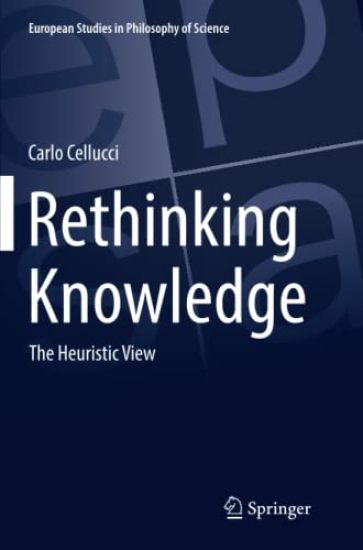
Rethinking Knowledge

Rethinking Knowledge

Carlo Cellucci

Springer International Publishing AG
2017
sidottu
This monograph addresses the question of the increasing irrelevance of philosophy, which has seen scientists as well as philosophers concluding that philosophy is dead and has dissolved into the sciences. It seeks to answer the question of whether or not philosophy can still be fruitful and what kind of philosophy can be such. The author argues that from its very beginning philosophy has focused on knowledge and methods for acquiring knowledge. This view, however, has generally been abandoned in the last century with the belief that, unlike the sciences, philosophy makes no observations or experiments and requires only thought. Thus, in order for philosophy to once again be relevant, it needs to return to its roots and focus on knowledge as well as methods for acquiring knowledge.Accordingly, this book deals with several questions about knowledge that are essential to this view of philosophy, including mathematical knowledge. Coverage examines such issues as the nature of knowledge; plausibility and common sense; knowledge as problem solving; modeling scientific knowledge; mathematical objects, definitions, diagrams; mathematics and reality; and more. This monograph presents a new approach to philosophy, epistemology, and the philosophy of mathematics. It will appeal to graduate students and researchers with interests in the role of knowledge, the analytic method, models of science, and mathematics and reality.
Rethinking Knowledge

Rethinking Knowledge

Carlo Cellucci

Springer International Publishing AG
2018
nidottu
This monograph addresses the question of the increasing irrelevance of philosophy, which has seen scientists as well as philosophers concluding that philosophy is dead and has dissolved into the sciences. It seeks to answer the question of whether or not philosophy can still be fruitful and what kind of philosophy can be such. The author argues that from its very beginning philosophy has focused on knowledge and methods for acquiring knowledge. This view, however, has generally been abandoned in the last century with the belief that, unlike the sciences, philosophy makes no observations or experiments and requires only thought. Thus, in order for philosophy to once again be relevant, it needs to return to its roots and focus on knowledge as well as methods for acquiring knowledge.Accordingly, this book deals with several questions about knowledge that are essential to this view of philosophy, including mathematical knowledge. Coverage examines such issues as the nature of knowledge; plausibility and common sense; knowledge as problem solving; modeling scientific knowledge; mathematical objects, definitions, diagrams; mathematics and reality; and more. This monograph presents a new approach to philosophy, epistemology, and the philosophy of mathematics. It will appeal to graduate students and researchers with interests in the role of knowledge, the analytic method, models of science, and mathematics and reality.
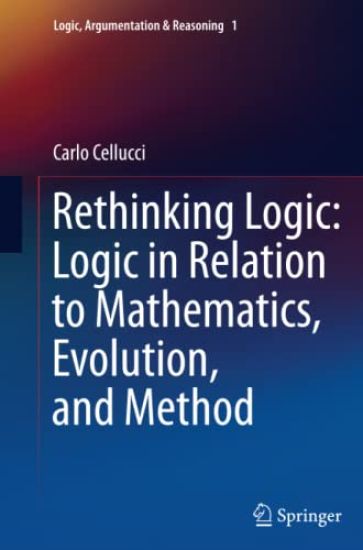
Rethinking Logic: Logic in Relation to Mathematics, Evolution, and Method
This volume examines the limitations of mathematical logic and proposes a new approach to logic intended to overcome them. To this end, the book compares mathematical logic with earlier views of logic, both in the ancient and in the modern age, including those of Plato, Aristotle, Bacon, Descartes, Leibniz, and Kant. From the comparison it is apparent that a basic limitation of mathematical logic is that it narrows down the scope of logic confining it to the study of deduction, without providing tools for discovering anything new. As a result, mathematical logic has had little impact on scientific practice. Therefore, this volume proposes a view of logic according to which logic is intended, first of all, to provide rules of discovery, that is, non-deductive rules for finding hypotheses to solve problems. This is essential if logic is to play any relevant role in mathematics, science and even philosophy. To comply with this view of logic, this volume formulates several rules of discovery, such as induction, analogy, generalization, specialization, metaphor, metonymy, definition, and diagrams. A logic based on such rules is basically a logic of discovery, and involves a new view of the relation of logic to evolution, language, reason, method and knowledge, particularly mathematical knowledge. It also involves a new view of the relation of philosophy to knowledge. This book puts forward such new views, trying to open again many doors that the founding fathers of mathematical logic had closed historically. trigger
Rethinking Logic: Logic in Relation to Mathematics, Evolution, and Method
This volume examines the limitations of mathematical logic and proposes a new approach to logic intended to overcome them. To this end, the book compares mathematical logic with earlier views of logic, both in the ancient and in the modern age, including those of Plato, Aristotle, Bacon, Descartes, Leibniz, and Kant. From the comparison it is apparent that a basic limitation of mathematical logic is that it narrows down the scope of logic confining it to the study of deduction, without providing tools for discovering anything new. As a result, mathematical logic has had little impact on scientific practice. Therefore, this volume proposes a view of logic according to which logic is intended, first of all, to provide rules of discovery, that is, non-deductive rules for finding hypotheses to solve problems. This is essential if logic is to play any relevant role in mathematics, science and even philosophy. To comply with this view of logic, this volume formulates several rules of discovery, such as induction, analogy, generalization, specialization, metaphor, metonymy, definition, and diagrams. A logic based on such rules is basically a logic of discovery, and involves a new view of the relation of logic to evolution, language, reason, method and knowledge, particularly mathematical knowledge. It also involves a new view of the relation of philosophy to knowledge. This book puts forward such new views, trying to open again many doors that the founding fathers of mathematical logic had closed historically. trigger

Breve Storia Della Logica. Dall'umanesimo Al Primo Novecento

Breve Storia Della Logica. Dall'umanesimo Al Primo Novecento

Mirella Capozzi; Carlo Cellucci

Lulu Press Inc
2014
sidottu
Questo libro nasce dall'idea di riprendere i nostri testi preparati per un corso di perfezionamento organizzato nel 1998 dall'Universita di Roma Tor Vergata. L'idea, a sua volta, nasce dalla richiesta degli studenti dei nostri corsi di disporre di un primo strumento per orientarsi nella storia della logica in un arco di tempo molto vasto. Proprio per questo, il libro non ha pretese di completezza e si limita a esaminare alcuni autori e alcuni argomenti cruciali nel periodo considerato.
Carlo

Carlo

Jurgen Glocker

Books on Demand
2015
pokkari
Im Buch eines weltber hmten Wissenschaftlers stie ich auf die These, Katzen seien hochgef hrlich. Wer noch an die Zukunft der Menschheit und der eigenen Familie glaube, solle sich davor h ten, sich Katzen zuzulegen. Es sei unbestritten, da diese Tiere sch n, charmant und klug seien; ihre Intelligenz k nne bisweilen geradezu literarische Z ge annehmen. Vor allem aber seien sie macht-bewu te Ursur-patoren, Diktatoren auf Samtpfoten sozusagen, die es verst nden, ihre Menschen in k rzester Zeit zu willf hrigen Dienern zu degradieren.
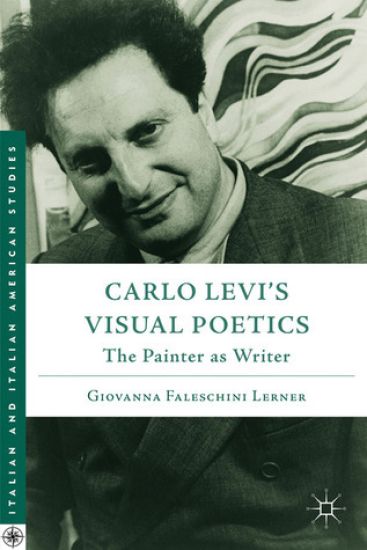
Carlo Levi’s Visual Poetics

Carlo Levi’s Visual Poetics

G. Lerner

Palgrave Macmillan
2012
sidottu
Carlo Levi's Visual Poetics explores the relation of word and image in Carlo Levi's literary works. Lerner investigates the ways in which the dialogue between verbal and iconic systems of representations becomes an instrument of literary and political subversion, and contributes to the definition of Levi's humanistic cultural program.