"Me halaga que me confundan con un escritor de tanta fama; en el examen confundiste el lenguaje y el estilo; si queremos representar a la mayor a social, debemos flexibilizar posturas, sin que ello sea confundido con debilidad; cuando le dije que me visitara se confundi de puerta y entr en otra casa..."Son muchas las personas que dicen conocerme m s sin embargo son muy pocas con las cuales he disfrutado una conversaci n que sobrepase los 10 minutos donde pueda yo ver la transparencia de su alma, su ser. Pues en la s per veloz poca en que vivimos el tiempo aun no es claramente entendido por aquellos que no lo tienen..."Pa' Que No Te Equivoques" te revela un poco de mi modo de pensar...para cuando me veas si as lo deseas me preguntes lo que quieras y as podremos establecer una conversaci n para intercambiar la transparencia de nuestras almas y llegar a ser.
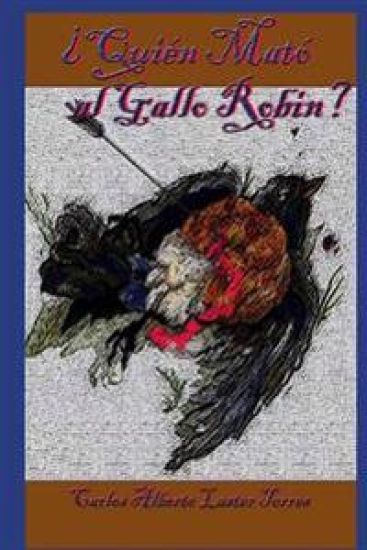
El registro m s antiguo de la rima " Qui n Mat al Gallo Robin?" se encuentra en el "Libro de Bellas Canciones de Tommy Thumb", publicado c. 1744, en el cu l se observa solamente los cuatro primeros versos. La versi n extendida que aqu ver n a continuaci n no se imprimi sino hasta c. 1770. Aunque la canci n no fue registrada hasta mediados del siglo XVIII, existe alguna evidencia de que podr a ser mucho m s antigua. La muerte de un petirrojo por una flecha se representa en un vitral del siglo 15 en la Rector a de Buckland, Gloucestershire, y la rima es similar a una historia titulada, "Philip Sparowe", escrita por John Skelton alrededor del a o 1508. El uso de la rima en ingles de la palabra 'owl' con 'shovel' ('b ho' con 'pala'), seg n los estudiosos del idioma podr a sugerir que se utiliz originalmente en viejas maneras de pronunciaci n del ingl s medio. Las versiones de esta misma historia parecen existir en otros pa ses, entre ellos Alemania. Varias teor as propuestas para explicar el origen de la rima: " Qui n Mat al Gallo Robin?" - De acuerdo con las tradiciones en el calendario celta, "Lugh" es el dios del sol que muere al igual como las noches que se hacen m s largas despu s del solsticio de verano; una fiesta tradicional en su honor se realiza el d a "Lughnasadh o "Lammas" en el primero de Agosto, un d a marcado en el viejo calendario celta pictogr ficamente representado en forma de arco y flecha. Como "Lugh" era el dios principal que representa el sol rojo, su nombre en el lenguaje com n habr a sido "Coch Rhi Ben" anglosajado a "Cock Robin" - un sobrante de la creencia de que las almas se convierten en aves despu s de la muerte. Esta idea todav a se sustenta en la vieja canci n popular " Qui n Mat al Gallo Robin?" en el que el gorri n lo mata con "mi arco y la flecha" como el mismo declara, el gorri n aqu en representaci n de "Bran", la encarnaci n ta ista opuesto de "Lugh" - el dios de invierno. (www.lablit.com/article/341) - La rima registra un suceso mitol gico, como la muerte del dios "Balder" de la mitolog a n rdica, o el sacrificio ritual de una figura del rey, seg n lo propuesto por previos folcloristas como en la teor a del "Cutty Wren" de una "supervivencia pagana" " - Es una parodia de la muerte del rey Guillermo II, que fue muerto por una flecha mientras estaba de caza en el "New Forest" (Hampshire) en el a o 1100, y que era conocido como Guillermo "Rufus", que significa "rojo". - La rima est conectada con la ca da del gobierno de Robert Walpole en 1742, ya que Robin es un diminutivo de Robert y la primera impresi n es cerca de la poca de los hechos mencionados. Todas estas teor as se basan en las similitudes percibidas en el texto a los acontecimientos legendarios o hist ricos, o en las similitudes de nombres. Peter Opie se al que una rima existente podr a haber sido adaptado a las circunstancias de los acontecimientos pol ticos en el siglo XVIII. El tema de la muerte del "Gallo Robin", as como la cadencia distintiva del poema se han convertido en arquetipos, muy utilizado en la ficci n literaria y otras obras de arte, a partir de poemas, para asesinatos misteriosos, a los dibujos animados. La rima ha sido a menudo reimpresa con ilustraciones dicen que como material adecuado de lectura para los ni os peque os. La rima tambi n tiene un final alternativo, en el que el gorri n que mat al Gallo Robin es ahorcado por su crimen. Varias versiones anteriores presentan la imagen de un camachuelo pi onero robusto, fuerte ta endo la campa a, que puede haber sido la intenci n original de la rima. " Qui n Mat al Gallo Robin?"
More than 30 years ago I found the Diaries of Harriet E. Wagner inside a false bottom of an old trunk lying forgotten in an enclosed garage in her house at Sea View Street in the Condado area, San Juan, Puerto Rico, just like many others diaries that have been found in dusty attics and between walls. Along with the diaries were also most treasured possessions, letters, photographs, personal notes and other remembrances of her life. If someone asks me, "It's there a plot in this work?" I will have to respond that this is a recount of a very romantic and ahead of her times woman, about her life and the events that took place in the tropics, in the island of Puerto Rico during the 1920's to 1940's. And that in order to explain and understand it, there is no other way except thru the stories within the story found in her diaries ceaselessly intertwined with the narrative. The characters are real, not dreamed or imagined, and the interconnectedness and intentions, incidents, episodes, and actions taken by the characters revolve in dense and seemingly chaotic texts, as dreams. Texts that represent themselves projecting as inhabited by energies, which ultimately evokes images of desires, which corresponds to the arousals, expectations, suspense, reversals, revaluations, disappointments, embarrassments, fulfillments, and even the incoherence's animated by the reader itself. Repetition is clearly a major operative principle of the story, shaping energy, giving a perspective form, a binding agent for the creation of cohesion - allowing the reader by logic set in motion the plot, and find out whose acts can or not be premeditated, based on a conception of the self which structures and gives meaning to the story itself. On August 27, 1926 she writes, "Elected to Porto Rico today grammar grade (upper English) at only $1,125." Seriously thinking on embarking she took the opportunity to ask various newspapers to serve as a freelance correspondent among them the Herald Tribune. As the date for her departure came close she writes, "Happiness and yet I cannot say I'm really sad. Life adds so little and so much Turned down Porto Rico for the family's sake, Glen, and because of the grade work and past salary. Want to laugh and cry. Should be happy after this vacation. Instead I smile cynically and strive with Orpheus's hands to take hold Eurydice (last year's hopeful philosophy). What the winters bring? Shall put aside diary writing for real writing of newspaper and magazine stories? One can't be utterly conquered at twenty four " Finally on September 24 or 25 1926 as she jot its down says, "Porto Rico. How can I put it into words these first days? Never in my life have I been such a victim of anything. When people spoke of the sensuousness of the tropics I had no idea what they meant. Now I know. I am so glad, glad, and glad now for my German stability. For I need a bracing something to keep me from the things I always said I'd never do..." She was selected with a group of people to come to Puerto Rico to teach on grade school. During those times throughout the island the school system was going thru various changes as the appointees by the president of the United States to the Department of Education were making their efforts to maintain the English language as the primary language of teaching. In the capital San Juan the Central High School was the school for the daughters and sons of the prominent families of the island. She writes, "I am in turmoil over Porto Rico. Hate to leave my dear Mommy, but crave adventure. Sometimes I hate Youth. It leads one to such foolish things and yet so marvelous. One can think anything, be anything, can do anything. I have come to this island to teach school but I have become the most interested pupil". Carlos A. Laster Jr, believes he was chosen by Harriet Wagner herself to discover her works, and commissioned to publish her literary work, present to you the Diaries of Harriet E. Wagner.
Don Carlos A Play, is many of the old classic books which have been considered important throughout the human history. They are now extremely scarce and very expensive antique. So that this work is never forgotten we republish these books in high quality, using the original text and artwork so that they can be preserved for the present and future generations. This whole book has been reformatted, retyped and designed. These books are not made of scanned copies of their original work and hence the text is clear and readable.
Vrais droits de Don Carlos a la couronne d'Espagne en reponse a la note presentee a la cour de Berlin par M. Zea BermudezDate de l'edition originale: 1839Ce livre est la reproduction fidele d'une oeuvre publiee avant 1920 et fait partie d'une collection de livres reimprimes a la demande editee par Hachette Livre, dans le cadre d'un partenariat avec la Bibliotheque nationale de France, offrant l'opportunite d'acceder a des ouvrages anciens et souvent rares issus des fonds patrimoniaux de la BnF.Les oeuvres faisant partie de cette collection ont ete numerisees par la BnF et sont presentes sur Gallica, sa bibliotheque numerique.En entreprenant de redonner vie a ces ouvrages au travers d'une collection de livres reimprimes a la demande, nous leur donnons la possibilite de rencontrer un public elargi et participons a la transmission de connaissances et de savoirs parfois difficilement accessibles.Nous avons cherche a concilier la reproduction fidele d'un livre ancien a partir de sa version numerisee avec le souci d'un confort de lecture optimal. Nous esperons que les ouvrages de cette nouvelle collection vous apporteront entiere satisfaction.Pour plus d'informations, rendez-vous sur www.hachettebnf.fr
Lettre de Don Carlos a ElisabethDate de l'edition originale: 1768Comprend: Laminte du TasseCe livre est la reproduction fidele d'une oeuvre publiee avant 1920 et fait partie d'une collection de livres reimprimes a la demande editee par Hachette Livre, dans le cadre d'un partenariat avec la Bibliotheque nationale de France, offrant l'opportunite d'acceder a des ouvrages anciens et souvent rares issus des fonds patrimoniaux de la BnF.Les oeuvres faisant partie de cette collection ont ete numerisees par la BnF et sont presentes sur Gallica, sa bibliotheque numerique.En entreprenant de redonner vie a ces ouvrages au travers d'une collection de livres reimprimes a la demande, nous leur donnons la possibilite de rencontrer un public elargi et participons a la transmission de connaissances et de savoirs parfois difficilement accessibles.Nous avons cherche a concilier la reproduction fidele d'un livre ancien a partir de sa version numerisee avec le souci d'un confort de lecture optimal. Nous esperons que les ouvrages de cette nouvelle collection vous apporteront entiere satisfaction.Pour plus d'informations, rendez-vous sur www.hachettebnf.fr
«Rabo de anti-nube o sus diarios en general son un caso nico dentro de la literatura de la isla. No s lo por su abundancia, sino porque crea t picos in ditos para el canon cubensis el del viejo ed pico o anciano que a n se siente perseguido por su madre; el de la autobiograf a como fecalidad, resto, autismo; el de la vejez como ejercicio de locura; el de la «atenci n como neurosis o miedo. Y desde este miedo, esta fecalidad, este edipo, esas obsesiones es que Garc a Vega logra construir algo. Algo tan delirante que, bajo su capa de dudas y frases pseudocondenatorias, no nos podemos dejar de preguntar si todo este libro no muestra, en verdad, un trastorno un poquito m s serio (Carlos A. Aguilera).Lorenzo Garc a Vega (Jag ey Grande, 1926-Miami, 2012) integr el consejo de redacci n de la revista Or genes y perteneci a los consejos editoriales de las revistas Escandalar y jule, ambas en el exilio. Sali de Cuba en 1968 para establecerse en New York, luego en Caracas, y por ltimo en Miami (la ya m tica Playa Albina). Public , entre otros, Suite para la espera (1948), Espirales del cuje (1952), Cetrer a del t tere (1960), Ritmos acribillados (1972), Rostros del reverso (1974), Los a os de Or genes (1979), Variaciones a como veredicto para sol de otras dudas (1993), Collages de un notario (1993), Espacios para lo huyuyo (1993), Vilis (1998), El oficio de perder (2004), Cuerdas para Aleister (2005), No mueras sin laberinto (2005), Devastaci n del Hotel San Luis (2007), Erogando trizas donde gotas de lo vario pinto (2011) y El cristal que se desdobla (2016). A su muerte dej in ditos varios libros, entre ellos este tomo de sus diarios.
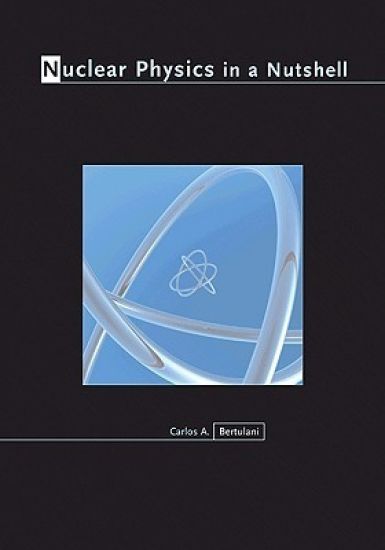
Nuclear Physics in a Nutshell provides a clear, concise, and up-to-date overview of the atomic nucleus and the theories that seek to explain it. Bringing together a systematic explanation of hadrons, nuclei, and stars for the first time in one volume, Carlos A. Bertulani provides the core material needed by graduate and advanced undergraduate students of physics to acquire a solid understanding of nuclear and particle science. Nuclear Physics in a Nutshell is the definitive new resource for anyone considering a career in this dynamic field. The book opens by setting nuclear physics in the context of elementary particle physics and then shows how simple models can provide an understanding of the properties of nuclei, both in their ground states and excited states, and also of the nature of nuclear reactions. It then describes: nuclear constituents and their characteristics; nuclear interactions; nuclear structure, including the liquid-drop model approach, and the nuclear shell model; and recent developments such as the nuclear mean-field and the nuclear physics of very light nuclei, nuclear reactions with unstable nuclear beams, and the role of nuclear physics in energy production and nucleosynthesis in stars. Throughout, discussions of theory are reinforced with examples that provide applications, thus aiding students in their reading and analysis of current literature. Each chapter closes with problems, and appendixes address supporting technical topics.
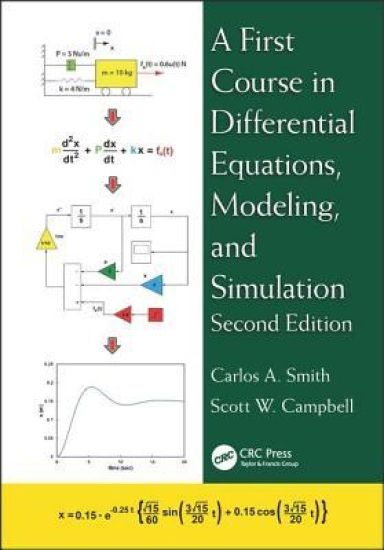
A First Course in Differential Equations, Modeling, and Simulation shows how differential equations arise from applying basic physical principles and experimental observations to engineering systems. Avoiding overly theoretical explanations, the textbook also discusses classical and Laplace transform methods for obtaining the analytical solution of differential equations. In addition, the authors explain how to solve sets of differential equations where analytical solutions cannot easily be obtained. Incorporating valuable suggestions from mathematicians and mathematics professors, the Third Edition:Reworks the chapter “Response of First and Second Order Systems” to include the system response to step changes, impulses, rectangular pulses, and sinusoid forcing functions as well as the response of coupled first and second order ODEs; it also introduces Bode plots to analyze the frequency response of second order ODE and the principle of oscillation modes in coupled second order ODE.Adds a new section on springs and dampers in series or parallel.Includes new content on Simulink and modelling.Contains new exercises that can be used as projects and answers to many of the end-of-chapter problems.Features new end-of-chapter problems and updates throughout.This textbook provides students with a practical understanding of how to apply differential equations in modern engineering and science.A solutions manual and files of all figures in the text are available to adopting professors.
A First Course in Differential Equations, Modeling, and Simulation shows how differential equations arise from applying basic physical principles and experimental observations to engineering systems. Avoiding overly theoretical explanations, the textbook also discusses classical and Laplace transform methods for obtaining the analytical solution of differential equations. In addition, the authors explain how to solve sets of differential equations where analytical solutions cannot easily be obtained.Incorporating valuable suggestions from mathematicians and mathematics professors, the Second Edition: Expands the chapter on classical solutions of ordinary linear differential equations to include additional methodsIncreases coverage of response of first- and second-order systems to a full, stand-alone chapter to emphasize its importanceIncludes new examples of applications related to chemical reactions, environmental engineering, biomedical engineering, and biotechnologyContains new exercises that can be used as projects and answers to many of the end-of-chapter problemsFeatures new end-of-chapter problems and updates throughoutThus, A First Course in Differential Equations, Modeling, and Simulation, Second Edition provides students with a practical understanding of how to apply differential equations in modern engineering and science.
C mic o relato gr fico, basado en el texto "Apuntes para un viaje a Alemania", del escritor Carlos A. Aguilera y el artista Maldito Men ndez, que viaja a trav s de cientos de im genes documentales del siglo XX y XXI, rastreando senderos ocultos entre fen menos tan distantes en el tiempo y el espacio como el fascismo alem n y la revoluci n cubana. Artefacto que mezcla elementos autobiogr ficos e imaginarios de los autores -ambos exiliados cubanos en Europa- con hechos y personajes hist ricos y culturales, y grandes dosis de s tira y humor negro.
Feeling gratitude and experiencing the emotional change that comes with it can help you develop not just positive thinking and motivation, but also the drive to achieve anything you could possibly want in life.In this short book, I'll show you in detail why gratitude is important, and why practicing gratitude is even more important. In fact, by the end of this book, you'll find the techniques I will teach you to be so powerful that you'll wonder why you've never heard of them before
Uma variada e bem humorada, s vezes s ria, abordagem da vital atual, com pitadas dos anos anos 60 a 80. O autor discorre sobre uma s rie de assuntos, como gatos, ensaios em revistas femininas, patos, a vida no exterior, peruas, a inf ncia em S o Paulo, v mito no cinema, sites de relacionamento, patos, doen as. Diversos personagens participam do livro, Jer nimo o an nimo, Silveira, Silva, o doente Ol vio, o homem-pato, Richard do Black-Tie, a atriz Regininha Pimb . Do lado mais s rio, temas como lingu stica e reforma ortogr fica s o discutidos, centrado sempre no bom humor, com uma ponta de cinismo.