Kirjojen hintavertailu. Mukana 11 244 527 kirjaa ja 12 kauppaa.

Kirjahaku

Etsi kirjoja tekijän nimen, kirjan nimen tai ISBN:n perusteella.

1000 tulosta hakusanalla Caroline Picart

The Cinematic Rebirths of Frankenstein

The Cinematic Rebirths of Frankenstein

Caroline Picart

Praeger Publishers Inc
2001
sidottu
The Frankenstein narrative is one of cinema's most durable, and it is often utilized by the studio system and the most renegade independents alike to reveal our deepest aspirations and greatest anxieties. The films have concerned themselves with demarcations of gender, race, and technology, and this new study aims to critique the more traditional interpretations of both the narrative and its sustained popularity. From James Whale's Frankenstein (1931) through Kenneth Branagh's Mary Shelley's Frankenstein (1994), the story remains a nuanced and ultimately ambivalent one and is discussed here in all of its myriad terms: aesthetic, cultural, psychological, and mythic.Beginning with an examination of the narrative's origins in the myth of the birth of Dionysus from the thigh of Zeus, The Cinematic Rebirths of Frankenstein goes on to consider each of the film's many incarnations, from the Universal horror films of the thirties through the British Hammer series and beyond. Moving easily between the scholarly and the popular, the book employs both primary texts-including scripts, posters, and documentation of production histories-and a rigorous, scholarly examination of the many implications of this often-misunderstood subgenre of horror cinema.
The Frankenstein Film Sourcebook

The Frankenstein Film Sourcebook

Caroline Picart; Frank Smoot; Jayne Blodgett

Greenwood Press
2001
sidottu
The endurance of the Frankenstein narrative as a modern cinematic myth is undeniable. Its flexibility has produced classic and contemporary horror film-most notably the Universal films of the thirties-but it has also resulted in unusual hybrids, such as musical horror-comedy (The Rocky Horror Picture Show), hyperbolic parody (Flesh for Frankenstein), and science fiction (the Alien and Terminator series). This sourcebook provides a complete guide to all of the story's filmic incarnations-including essential information such as cast, creative personnel, and plot summaries-and also guides the reader to relevant primary texts such as scripts, posters, production histories, and newspaper clippings. Utilizing an approach that is both popular and scholarly, and including spotlight essays that deal with contemporary academic approaches to the subject, The Frankenstein Film Sourcebook reveals the depth of the cinematic range of interpretations of a classic modern myth.Comprehensive in its scope, The Frankenstein Film Sourcebook provides an alphabetical guide to two hundred films that incorporate the Frankenstein narrative. It also delves into both primary and secondary perspectives and includes discussions of aspects of the films, such as their depiction of women, which is relevant to current scholarly critiques.
Frames of Evil

Frames of Evil

Caroline Joan Picart; David A. Frank; Dominick LaCapra

Southern Illinois University Press
2006
nidottu
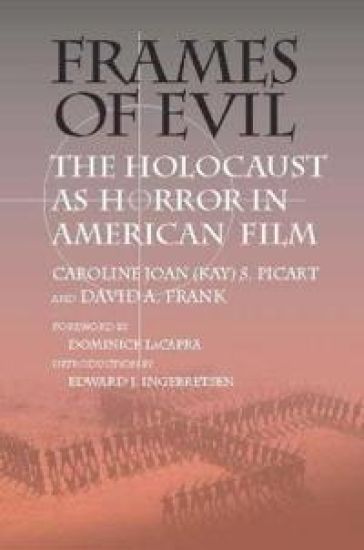
American filmmakers appropriate the ""look"" of horror in Holocaust films and often use Nazis and Holocaust imagery to explain evil in the world, say authors Caroline J. S. Picart and David A. Frank. In ""Frames of Evil: The Holocaust as Horror in American Film"", Picart and Frank challenge this classic horror frame - the narrative and visual borders used to demarcate monsters and the monstrous. After examining the way in which directors and producers of the most influential American Holocaust movies default to this Gothic frame, they propose that multiple frames are needed to account for evil and genocide. Using ""Schindler's List"", ""The Silence of the Lambs"", and ""Apt Pupil"" as case studies, the authors provide substantive and critical analyses of these films that transcend the classic horror interpretation. For example, ""Schindler's List"", say Picart and Frank, has the appearance of a historical docudrama but actually employs the visual rhetoric and narrative devices of the Hollywood horror film. The authors argue that evil has a face: Nazism, which is configured as quintessentially innate and supernaturally crafty. ""Frames of Evil"", which is augmented by thirty-six film and publicity stills, also explores the commercial exploitation of suffering in film and offers constructive ways of critically evaluating this exploitation. The authors suggest that audiences will recognize their participation in much larger narrative formulas that place a premium on monstrosity and elide the role of modernity in depriving millions of their lives and dignity, often framing the suffering of others in a manner that allows for merely ""documentary"" enjoyment.
Frames of Evil

Frames of Evil

Picart Caroline Joan (Kay); Frank David A.

SOUTHERN ILLINOIS UNIVERSITY PRESS
2006
sidottu
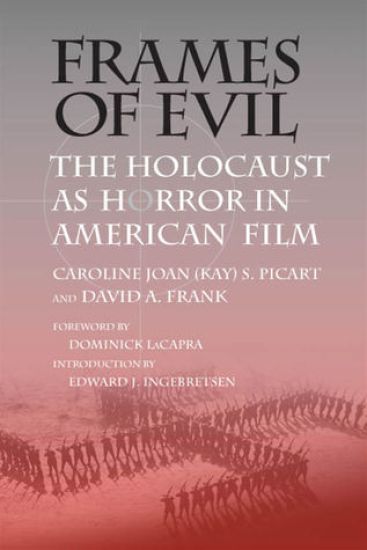
American filmmakers appropriate the "look" of horror in Holocaust films and often use Nazis and Holocaust imagery to explain evil in the world, say authors Caroline J. S. Picart and David A. Frank. In "Frames of Evil: The Holocaust as Horror in American Film", Picart and Frank challenge this classic horror frame - the narrative and visual borders used to demarcate monsters and the monstrous. After examining the way in which directors and producers of the most influential American Holocaust movies default to this Gothic frame, they propose that multiple frames are needed to account for evil and genocide. Using "Schindler's List", "The Silence of the Lambs", and "Apt Pupil" as case studies, the authors provide substantive and critical analyses of these films that transcend the classic horror interpretation. For example, "Schindler's List", say Picart and Frank, has the appearance of a historical docudrama but actually employs the visual rhetoric and narrative devices of the Hollywood horror film. The authors argue that evil has a face: Nazism, which is configured as quintessentially innate and supernaturally crafty. "Frames of Evil", which is augmented by thirty-six film and publicity stills, also explores the commercial exploitation of suffering in film and offers constructive ways of critically evaluating this exploitation. The authors suggest that audiences will recognize their participation in much larger narrative formulas that place a premium on monstrosity and elide the role of modernity in depriving millions of their lives and dignity, often framing the suffering of others in a manner that allows for merely "documentary" enjoyment.
Dracula in Visual Media

Dracula in Visual Media

John Edgar Browning; Caroline Joan (Kay) Picart

McFarland Co Inc
2010
pokkari
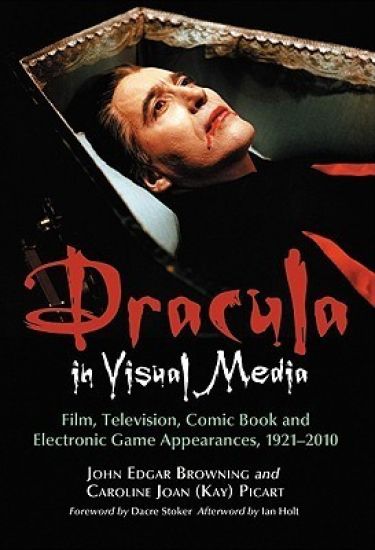
This is a comprehensive sourcebook on the world's most famous vampire, with more than 700 citations of domestic and international Dracula films, television programs, documentaries, adult features, animated works, and video games, as well as nearly a thousand comic books and stage adaptations. While they vary in length, significance, quality, genre, moral character, country, and format, each of the cited works adopts some form of Bram Stoker's original creation, and Dracula himself, or a recognizable vampiric semblance of Dracula, appears in each. The book includes contributions from Dacre Stoker, David J. Skal, Laura Helen Marks, Dodd Alley, Mitch Frye, Ian Holt, Robert Eighteen-Bisang, and J. Gordon Melton.
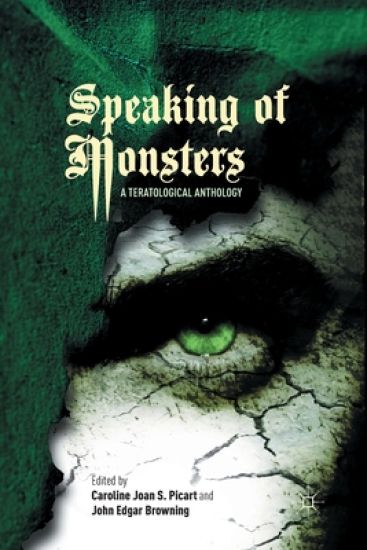
Speaking of Monsters

Speaking of Monsters

Caroline Joan S. Picart; John Edgar Browning

Palgrave Macmillan
2012
sidottu
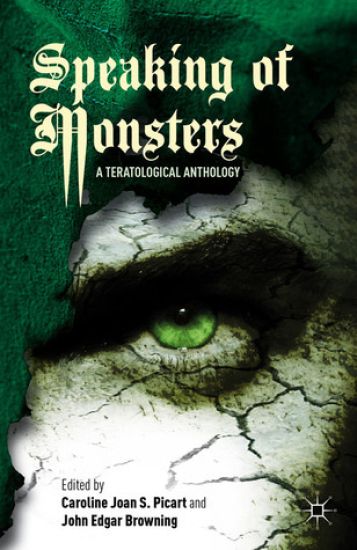
Employing a range of approaches to examine how "monster-talk" pervades not only popular culture but also public policy through film and other media, this book is a "one-stop shop" of sorts for students and instructors employing various approaches and media in the study of "teratologies," or discourses of the monstrous.
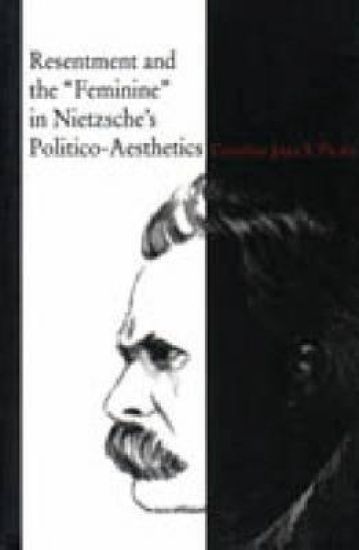
Resentment and the “Feminine” in Nietzsche’s Politico-Aesthetics

Resentment and the “Feminine” in Nietzsche’s Politico-Aesthetics

Caroline Joan S. Picart

Pennsylvania State University Press
1999
sidottu
Nietzsche's remarks about women and femininity have generated a great deal of debate among philosophers, some seeing them as ineradicably misogynist, others interpreting them more favorably as ironic and potentially useful for modern feminism. In this study, Kay Picart uses a genealogical approach to track the way Nietzsche's initial use of "feminine" mythological figures as symbols for modernity's regenerative powers gradually gives way to an increasingly misogynistic politics, resulting in the silencing and emasculation of his earlier configurations of the "feminine."While other scholars have focused on classifying the degree of offensiveness of Nietzsche's ambivalent and developing misogyny, Picart examines what this misogyny means for his political philosophy as a whole. Picart successfully shows how Nietzsche's increasingly derogatory treatment of the "feminine" in his post-Zarathustran works is closely tied to his growing resentment over his inability to revive a decadent modernity.
Resentment and the “Feminine” in Nietzsche’s Politico-Aesthetics

Resentment and the “Feminine” in Nietzsche’s Politico-Aesthetics

Caroline Joan S. Picart

Pennsylvania State University Press
1999
pokkari
Nietzsche's remarks about women and femininity have generated a great deal of debate among philosophers, some seeing them as ineradicably misogynist, others interpreting them more favorably as ironic and potentially useful for modern feminism. In this study, Kay Picart uses a genealogical approach to track the way Nietzsche's initial use of "feminine" mythological figures as symbols for modernity's regenerative powers gradually gives way to an increasingly misogynistic politics, resulting in the silencing and emasculation of his earlier configurations of the "feminine."While other scholars have focused on classifying the degree of offensiveness of Nietzsche's ambivalent and developing misogyny, Picart examines what this misogyny means for his political philosophy as a whole. Picart successfully shows how Nietzsche's increasingly derogatory treatment of the "feminine" in his post-Zarathustran works is closely tied to his growing resentment over his inability to revive a decadent modernity.
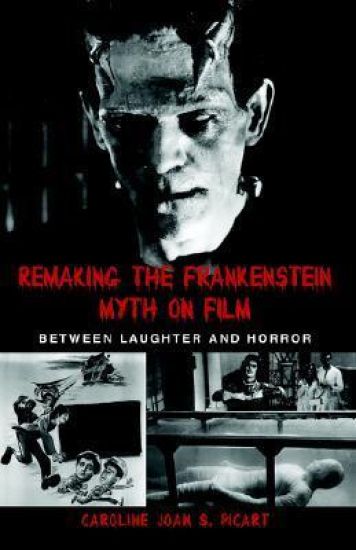
Remaking the Frankenstein Myth on Film

Remaking the Frankenstein Myth on Film

Caroline Joan S. Picart

State University of New York Press
2003
pokkari
Explores how filmmakers and screenwriters have used comedy and science fiction to extend the boundaries of the Frankenstein narrative.Focusing on films outside the horror genre, this book offers a unique account of the Frankenstein myth's popularity and endurance. Although the Frankenstein narrative has been a staple in horror films, it has also crossed over into other genres, particularly comedy and science fiction, resulting in such films as Abbott and Costello Meet Frankenstein, Young Frankenstein, The Rocky Horror Picture Show, Bladerunner, and the Alien and Terminator film series. In addition to addressing horror's relationship to comedy and science fiction, the book also explores the versatility and power of the Frankenstein narrative as a contemporary myth through which our deepest attitudes concerning gender (masculine versus feminine), race (Same versus Other), and technology (natural versus artificial) are both revealed and concealed. The book not only examines the films themselves, but also explores early drafts of film scripts, scenes that were cut from the final releases, publicity materials, and reviews, in order to consider more fully how and why the Frankenstein myth continues to resonate in the popular imagination.
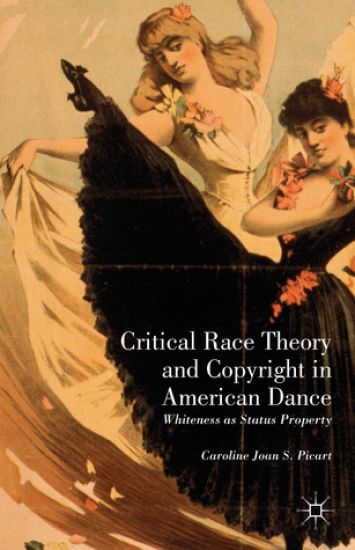
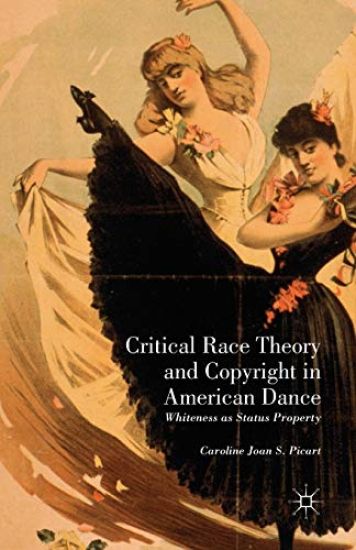
Critical Race Theory and Copyright in American Dance

Critical Race Theory and Copyright in American Dance

Caroline Joan S. Picart

Palgrave Macmillan
2013
sidottu
The effort to win federal protection for dance in the United States was a racialized and gendered contest. Picart traces the evolution of choreographic works from being federally non-copyrightable to becoming a category potentially copyrightable under the 1976 Copyright Act, specifically examining Loíe Fuller, George Balanchine, and Martha Graham.
Speaking of Monsters

Speaking of Monsters

Caroline Joan S. Picart; John Edgar Browning

Palgrave Macmillan
2015
nidottu
Employing a range of approaches to examine how "monster-talk" pervades not only popular culture but also public policy through film and other media, this book is a "one-stop shop" of sorts for students and instructors employing various approaches and media in the study of "teratologies," or discourses of the monstrous.
Critical Race Theory and Copyright in American Dance

Critical Race Theory and Copyright in American Dance

Caroline Joan S. Picart

Palgrave Macmillan
2013
nidottu
The effort to win federal protection for dance in the United States was a racialized and gendered contest. Picart traces the evolution of choreographic works from being federally non-copyrightable to becoming a category potentially copyrightable under the 1976 Copyright Act, specifically examining Loíe Fuller, George Balanchine, and Martha Graham.
Law In and As Culture

Law In and As Culture

Caroline Joan "Kay" S. Picart

Fairleigh Dickinson University Press
2016
sidottu
There are two oppositional narratives in relation to telling the story of indigenous peoples and minorities in relation to globalization and intellectual property rights. The first, the narrative of Optimism, is a story of the triumphant opening of brave new worlds of commercial integration and cultural inclusion. The second, the narrative of Fear, is a story of the endangerment, mourning, and loss of a traditional culture. While the story of Optimism deploys a rhetoric of commercial mobilization and “innovation,” the story of Fear emphasizes the rhetoric of preserving something “pure” and “traditional” that is “dying.” Both narratives have compelling rhetorical force, and actually need each other, in order to move their opposing audiences into action. However, as Picart shows, the realities behind these rhetorically framed political parables are more complex than a simple binary. Hence, the book steers a careful path between hope rather than unbounded Optimism, and caution, rather than Fear, in exploring how law functions in and as culture as it contours the landscape of intellectual property rights, as experienced by indigenous peoples and minorities. Picart uses, among a variety of tools derived from law, critical and cultural studies, anthropology and communication, case studies to illustrate this approach. She tracks the fascinating stories of the controversies surrounding the ownership of a Taiwanese folk song; the struggle over control of the Mapuche’s traditional land in Chile against the backdrop of Chile’s drive towards modernization; the collaboration between the Kani tribe in India and a multinational corporation to patent an anti-fatigue chemical agent; the drive for respect and recognition by Australian Aboriginal artists for their visual expressions of folklore; and the challenges American women of color such as Josephine Baker and Katherine Dunham faced in relation to the evolving issues of choreography, improvisation and copyright. The book also analyzes the cultural conflicts that result from these encounters between indigenous populations or minorities and majority groups, reflects upon the ways in which these conflicts were negotiated or resolved, both nationally and internationally, and carefully explores proposals to mediate such conflicts.
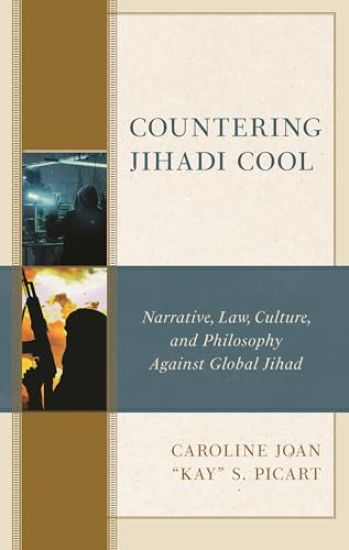
Countering Jihadi Cool

Countering Jihadi Cool

Caroline Joan "Kay" S. Picart; Harry Keyishian

Fairleigh Dickinson University Press
2025
sidottu
Using an aesthetic culture and techniques termed as jihadi cool, terrorist groups have been able to recruit members from around the world, so how do we begin to respond?This book analyzes the rhetorical and ethical dynamics of a culture of jihadi cool/chic, and why these rhetorical and aesthetic techniques have been such a powerful recruitment force for particular transnational terrorist groups. The author uses an evidence-based approach, with frameworks derived from law, politics, philosophy, rhetoric, feminist theory, and communication studies, to examine various attempts to construct counter-narratives to the jihadi cool master narrative. The book closes with an examination of how to begin to respond critically and effectively to the lure of jihadi cool.
Law In and As Culture

Law In and As Culture

Caroline Joan "Kay" S. Picart

Fairleigh Dickinson University Press
2017
nidottu
There are two oppositional narratives in relation to telling the story of indigenous peoples and minorities in relation to globalization and intellectual property rights. The first, the narrative of Optimism, is a story of the triumphant opening of brave new worlds of commercial integration and cultural inclusion. The second, the narrative of Fear, is a story of the endangerment, mourning, and loss of a traditional culture. While the story of Optimism deploys a rhetoric of commercial mobilization and “innovation,” the story of Fear emphasizes the rhetoric of preserving something “pure” and “traditional” that is “dying.” Both narratives have compelling rhetorical force, and actually need each other, in order to move their opposing audiences into action. However, as Picart shows, the realities behind these rhetorically framed political parables are more complex than a simple binary. Hence, the book steers a careful path between hope rather than unbounded Optimism, and caution, rather than Fear, in exploring how law functions in and as culture as it contours the landscape of intellectual property rights, as experienced by indigenous peoples and minorities. Picart uses, among a variety of tools derived from law, critical and cultural studies, anthropology and communication, case studies to illustrate this approach. She tracks the fascinating stories of the controversies surrounding the ownership of a Taiwanese folk song; the struggle over control of the Mapuche’s traditional land in Chile against the backdrop of Chile’s drive towards modernization; the collaboration between the Kani tribe in India and a multinational corporation to patent an anti-fatigue chemical agent; the drive for respect and recognition by Australian Aboriginal artists for their visual expressions of folklore; and the challenges American women of color such as Josephine Baker and Katherine Dunham faced in relation to the evolving issues of choreography, improvisation and copyright. The book also analyzes the cultural conflicts that result from these encounters between indigenous populations or minorities and majority groups, reflects upon the ways in which these conflicts were negotiated or resolved, both nationally and internationally, and carefully explores proposals to mediate such conflicts.
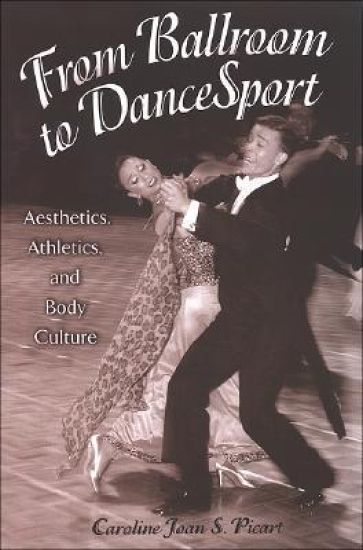
From Ballroom to DanceSport

From Ballroom to DanceSport

Caroline Joan S. Picart

State University of New York Press
2006
pokkari
An insider explores the transformation of ballroom dance into an Olympic sport. Drawing on recent media portrayals and her own experience, author and dancer Caroline Joan S. Picart explores ballroom dancing and its more "sporty" equivalent, DanceSport, suggesting that they are reflective of larger social, political, and cultural tensions. The past several years have seen a resurgence in the popularity of ballroom dance as well as an increasing international anxiety over how and whether to transform ballroom into an Olympic sport. Writing as a participant-critic, Picart suggests that both are crucial sites where bodies are packaged as racialized, sexualized, nationalized, and classed objects. In addition, Picart argues, as the choreography, costuming, and genre of ballroom and DanceSport continue to evolve, these theatrical productions are aestheticized and constructed to encourage commercial appeal, using the narrative frame of the competitive melodrama to heighten audience interest.
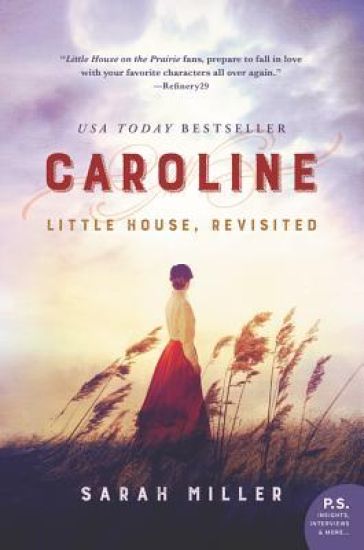
Caroline

Caroline

Sarah Miller

William Morrow Paperbacks
2018
nidottu
USA Today Bestseller!One of Refinery29's Best Reads of SeptemberIn this novel authorized by the Little House Heritage Trust, Sarah Miller vividly recreates the beauty, hardship, and joys of the frontier in a dazzling work of historical fiction, a captivating story that illuminates one courageous, resilient, and loving pioneer woman as never before—Caroline Ingalls, "Ma" in Laura Ingalls Wilder’s beloved Little House books.In the frigid days of February, 1870, Caroline Ingalls and her family leave the familiar comforts of the Big Woods of Wisconsin and the warm bosom of her family, for a new life in Kansas Indian Territory. Packing what they can carry in their wagon, Caroline, her husband Charles, and their little girls, Mary and Laura, head west to settle in a beautiful, unpredictable land full of promise and peril.The pioneer life is a hard one, especially for a pregnant woman with no friends or kin to turn to for comfort or help. The burden of work must be shouldered alone, sickness tended without the aid of doctors, and babies birthed without the accustomed hands of mothers or sisters. But Caroline’s new world is also full of tender joys. In adapting to this strange new place and transforming a rough log house built by Charles’ hands into a home, Caroline must draw on untapped wells of strength she does not know she possesses.For more than eighty years, generations of readers have been enchanted by the adventures of the American frontier’s most famous child, Laura Ingalls Wilder, in the Little House books. Now, that familiar story is retold in this captivating tale of family, fidelity, hardship, love, and survival that vividly reimagines our past.
Caroline

Caroline

Sarah Miller

HARPERCOLLINS PUBLISHERS INC
2017
pokkari
USA Today Bestseller!One of Refinery29's Best Reads of SeptemberIn this novel authorized by the Little House Heritage Trust, Sarah Miller vividly recreates the beauty, hardship, and joys of the frontier in a dazzling work of historical fiction, a captivating story that illuminates one courageous, resilient, and loving pioneer woman as never before—Caroline Ingalls, "Ma" in Laura Ingalls Wilder’s beloved Little House books.In the frigid days of February, 1870, Caroline Ingalls and her family leave the familiar comforts of the Big Woods of Wisconsin and the warm bosom of her family, for a new life in Kansas Indian Territory. Packing what they can carry in their wagon, Caroline, her husband Charles, and their little girls, Mary and Laura, head west to settle in a beautiful, unpredictable land full of promise and peril.The pioneer life is a hard one, especially for a pregnant woman with no friends or kin to turn to for comfort or help. The burden of work must be shouldered alone, sickness tended without the aid of doctors, and babies birthed without the accustomed hands of mothers or sisters. But Caroline’s new world is also full of tender joys. In adapting to this strange new place and transforming a rough log house built by Charles’ hands into a home, Caroline must draw on untapped wells of strength she does not know she possesses.For more than eighty years, generations of readers have been enchanted by the adventures of the American frontier’s most famous child, Laura Ingalls Wilder, in the Little House books. Now, that familiar story is retold in this captivating tale of family, fidelity, hardship, love, and survival that vividly reimagines our past.