The history of Carson-Newman University, the development of rural Appalachia in the nineteenth century, and the rise of the Baptist faith in the South are all inextricably linked. The 120-acre university known today for its high-value liberal arts education and Christian-focused student life, originally founded as Mossy Creek Missionary Baptist Seminary in 1851, is situated in Jefferson County, Tennessee, amidst the foothills of the Great Smoky Mountains. Baptist leaders sought to develop the rechristened Mossy Creek Baptist College to cater to the growing population of East Tennessee. In 1880, the college was renamed again for James Harvey Carson who left his estate to the institution that would become Carson College. Newman College, a separate facility for women’s education operating alongside the all-male Carson, would merge with the latter in 1889 creating, under a new moniker, one of the first coeducational institutions in the South: Carson-Newman. In this expertly told history, Melody Marion and Amanda Ford trace the school’s humble beginnings through two dozen presidents; the turmoil of the American Civil War, Reconstruction, and two world wars; and the contemporary scandals that have plagued the Southern Baptist Convention. Carson-Newman’s history is filled with important players, both courageous and corrupt. Many such players fought tirelessly to grow the campus and maintain a level of excellence at Carson-Newman, but the university’s history is dotted with conflict concerning women’s rights, civil rights, presidents whose questionable actions created firestorms of protest and led to their exits, and modern questions related to its Baptist affiliation. Additionally, Carson-Newman University owes much to its Appalachian heritage, and in an excellent final chapter the authors unpack Carson-Newman’s regional identity past and present. Education in Appalachia historically has fallen behind national standards, but from its start as a seminary through its gender-segregated college days to the integrated orange-and-blue Eagles we know today, the university, with its presidents and academic body has been an agent of demonstrable gain for its students and the region. Today, as new chapters in Carson-Newman’s history are being opened, this text will serve as a record of tradition, world-class education, and lifelong learning within a Christian setting.
Based on a 10-year longitudinal study in the United States, this much-needed text offers insight into the developmental trajectories of people with disabilities from childhood through adulthood using their language and amplifying their voices. Through in-depth interviews with 14 disabled people, the authors learned important lessons about how each individual developed and enacted a sense of life purpose. Their experiences are illustrated through rich and unfiltered narratives about childhood, family interactions, primary and secondary education, college, and work experiences. These life stories also illuminate growth over time, capturing details of educational, identity, relationship, and career trajectories. Featuring discussion questions at the end of each chapter, the book stimulates individual and group reflection and invites readers to engage in action as allies and advocates for equity and inclusion for disabled people. Disability Life Stories is essential reading for everyone—especially educators (in-service and pre-service), disability scholars, families, community organizers, healthcare professionals, and disabled people themselves.
Based on a 10-year longitudinal study in the United States, this much-needed text offers insight into the developmental trajectories of people with disabilities from childhood through adulthood using their language and amplifying their voices. Through in-depth interviews with 14 disabled people, the authors learned important lessons about how each individual developed and enacted a sense of life purpose. Their experiences are illustrated through rich and unfiltered narratives about childhood, family interactions, primary and secondary education, college, and work experiences. These life stories also illuminate growth over time, capturing details of educational, identity, relationship, and career trajectories. Featuring discussion questions at the end of each chapter, the book stimulates individual and group reflection and invites readers to engage in action as allies and advocates for equity and inclusion for disabled people. Disability Life Stories is essential reading for everyone—especially educators (in-service and pre-service), disability scholars, families, community organizations, healthcare professionals, and disabled people themselves.
The partition of Ireland in 1921, and the birth of Northern Ireland as a political entity, was the work of one man above all. Edward Carson, born in Dublin in 1854, was a brilliant lawyer whose cross-questioning of Oscar Wilde at his libel trial brought about Wilde's downfall. An inspiring orator and a political heavyweight at Westminster, his defense of Unionism in the years before the First World War, and of the rights of Ulster not to be swamped in an independent Ireland, made a united Ireland a political impossibility. While some of his actions were denounced in England as close to treason, Carson's idealism and religious tolerance were untypical of the sectarian bigotry that marred the later history of Northern Ireland. "Carson: The Man Who Divided Ireland" is the first modern biography of a major figure in both British and Irish politics.
Carson Gunner is an assassin for the greater good. He is a man with unique gifts. He will deliver justice wherever a costly debt is hiding. He can see what others cannot. He is unable to change the world's ills, but he certainly is trying; "Gunner will find you." EDWARD GARZA
Carson Gunner is an assassin for the greater good. He is a man with unique gifts. He will deliver justice wherever a costly debt is hiding. He can see what others cannot. He is unable to change the world's ills, but he certainly is trying; "Gunner will find you." EDWARD GARZA
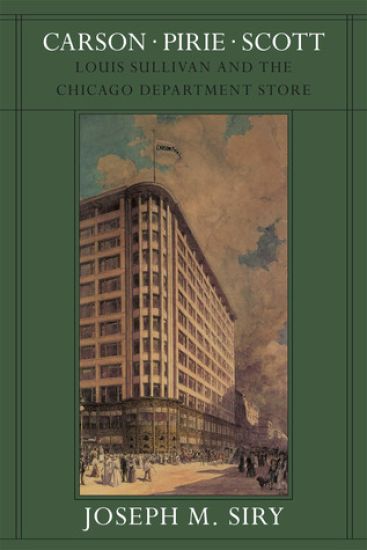
Long recognized as a Chicago landmark, the Carson Pirie Scott Building also represents a milestone in the development of architecture. The last large commercial structure designed by Louis Sullivan, the Carson building reflected the culmination of the famed architect's career as a creator of tall steel buildings. In this study, Joseph M. Siry traces the origins of the building's design and analyzes its role in commercial, urban, and architectural history. Originally constructed to house the Schlesinger and Mayer Store, Sullivan's building was one of a number of large department stores built at the turn of the century along State Street in Chicago's burgeoning retail district. Replacing a generation of commercial architecture that had grown out of the Great Fire of 1871, these new buildings were tall and steel-framed, a construction that posed new aesthetic problems for designers. Handsomely illustrated with more than one hundred photographs and drawings, Carson Pirie Scott provides an illuminating history of a pivotal architectural work and offers an original, revealing assessment of how Sullivan, responding to the commercial culture of his time, created a fresh, distinctive American building.
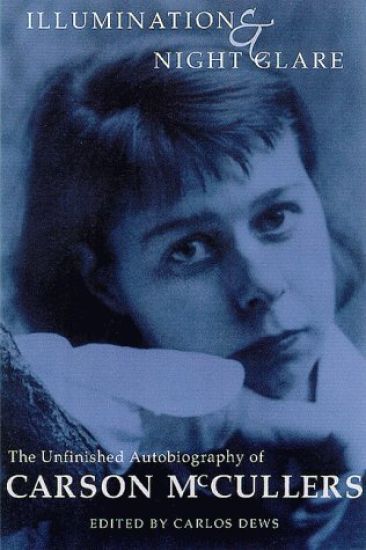
More than thirty years after it was written, the autobiography of Carson McCullers, Illumination and Night Glare, will be published for the first time. McCullers, one of the most gifted writers of her generation--the author of Member of the Wedding, Reflections in a Golden Eye, and The Ballad of Sad Cafe--died of a stroke at the age of fifty before finishing this, her last manuscript. Editor Carlos L. Dews has faithfully brought her story back to life, complete with never-before-published letters between McCullers and her husband Reeves, and an outline of her most famous novel, The Heart Is a Lonely Hunter. Looking back over her life from a precocious childhood in Georgia to her painful decline from a series of crippling strokes, McCullers offers poignant and unabashed remembrances of her early writing success, her family attachments, a troubled marriage to a failed writer, and friendships with literary and film luminaries (Gypsy Rose Lee, Richard Wright, Isak Dinesen, John Huston, Marilyn Monroe), and the intense relationships of the important women in her life.
Window to His Love: The Life Lessons and Wisdom of Carson O. Kimball is an easily digestible two-part book written by American author and religious figure, Carson O. Kimball. In elegant prose, and with a style teeming with detail, Kimball takes readers into the backroads of his past. Along these rugged passages, readers will come to see divine intelligence at work as the groundwork of Mormon Talk is laid years before the concept of the show ever came to fruition. In the second half of the book, readers will dive along with Kimball. During this exploration, readers will pass through the coral reefs of Kimball's many recorded thoughts concerning various topics pertaining to the gospel of Jesus Christ.
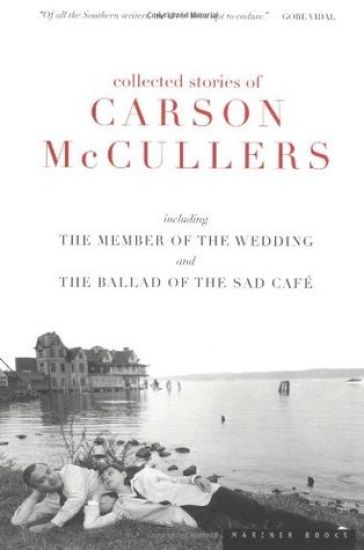
This collection of nineteen stories includes "Madame Zilensky and the King of Finland," "The Haunted Boy," "The Member of the Wedding," "The Ballad of the Sad Cafe," several early stories, and other important works.