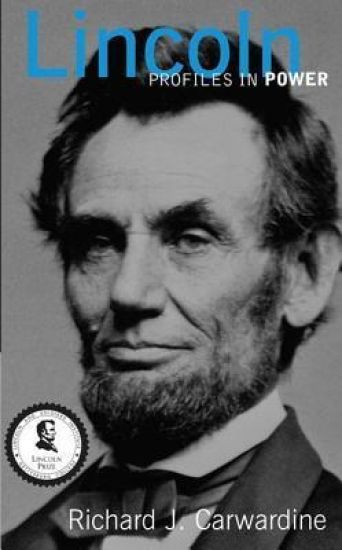
Interest in the American Civil War and the role of Abraham Lincoln has grown dramatically in the last decade. Leader of the anti-slavery Republican coalition and the wartime Union, he has become a model of a particular kind of democratic politician who led rather than followed. Richard J. Carwardine examines Lincoln's rise to power and his achievements as US president. The book explores the wider sources of Lincoln's authority and skills in embracing a broad range of elements within the Republican party. In particular, it looks at Lincoln's shrewd relationship with evangelical Protestantism. His ability to harness and channel the power of the Protestant constituency was key to his winning the presidency and rallying support behind his national and emancipatory vision.
The focus of this book is on English and American evangelicals during the early and mid-19th century, examining the effect of aggressive conversion techniques used by American evangelicals upon the English revival movement.
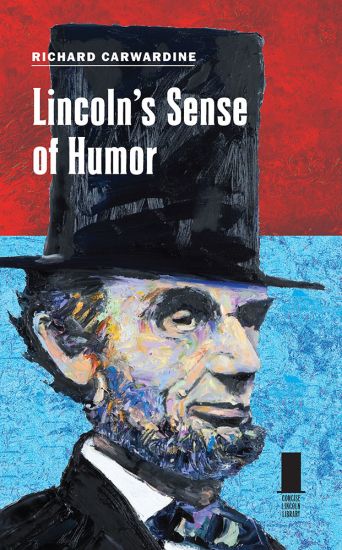
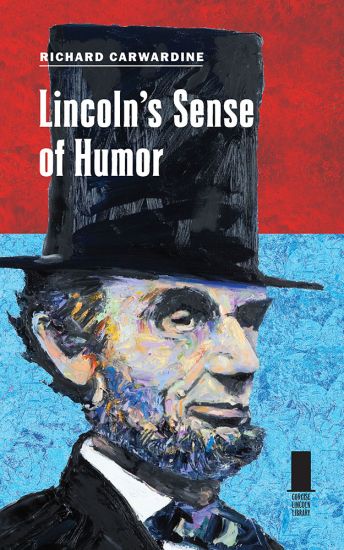
Abraham Lincoln was the first president to make storytelling, jokes, and laughter tools of the office, and his natural sense of humor has become legendary. Lincoln’s Sense of Humor registers the variety, complexity of purpose, and ethical dimension of Lincoln’s humor and pinpoints the political risks Lincoln ran in telling jokes while the nation was engaged in a bloody struggle for existence. Complete with amusing anecdotes, this book shows how Lincoln’s uses of humor evolved as he matured and explores its versatility, range of expressions, and multiple sources: western tall tales, morality stories, bawdy jokes, linguistic tricks, absurdities, political satire, and sharp wit. While Lincoln excelled at self-mockery, nothing gave him greater pleasure than satirical work lampooning hypocrisy and ethical double standards. He particularly enjoyed David R. Locke’s satiric writings by Petroleum V. Nasby, a fictional bigoted secessionist preacher, and the book explores the nuances of Lincoln’s enthusiasm for what he called Locke’s genius, showing the moral springs of Lincoln’s humor. Richard Carwardine methodically demonstrates that Lincoln’s funny stories were the means of securing political or personal advantage, sometimes by frontal assault on opponents but more often by depiction through parable, obfuscation through hilarity, refusal through wit, and diversion through cunning. Throughout his life Lincoln worked to develop the humorist’s craft and hone the art of storytelling. His jokes were valuable in advancing his careers as politician and lawyer and in navigating his course during a storm-tossed presidency. His merriness, however, coexisted with self-absorbed contemplation and melancholy. Humor was his lifeline; dark levity acted as a tonic, giving Lincoln strength to tackle the severe challenges he faced. At the same time, a reputation for unrestrained, uncontrollable humor gave welcome ammunition to his political foes. In fact, Lincoln’s jocularity elicited waves of criticism during his presidency. He was dismissed as a “smutty joker,” a “first rate second rate man,” and a “joke incarnated.” Since his death, Lincoln’s anecdotes and jokes have become detached from the context that had given them their political and cultural bite, losing much of the ironic and satiric meaning that he had intended. With incisive analysis and laugh-inducing examples, Carwardine helps to recapture a strong component of Lincoln’s character and reanimates the good humor of our sixteenth president.
Winner, Abraham Lincoln Institute Book Prize, 2018Winner, ISHS Annual Award for a Scholarly Publication, 2018Abraham Lincoln was the first president to make storytelling, jokes, and laughter tools of the office, and his natural sense of humor has become legendary. Lincoln’s Sense of Humor registers the variety, complexity of purpose, and ethical dimension of Lincoln’s humor and pinpoints the political risks Lincoln ran in telling jokes while the nation was engaged in a bloody struggle for existence.Complete with amusing anecdotes, this book shows how Lincoln’s uses of humor evolved as he matured and explores its versatility, range of expressions, and multiple sources: western tall tales, morality stories, bawdy jokes, linguistic tricks, absurdities, political satire, and sharp wit. While Lincoln excelled at self-mockery, nothing gave him greater pleasure than satirical work lampooning hypocrisy and ethical double standards. He particularly enjoyed David R. Locke’s satiric writings by Petroleum V. Nasby, a fictional bigoted secessionist preacher, and the book explores the nuances of Lincoln’s enthusiasm for what he called Locke’s genius, showing the moral springs of Lincoln’s humor.Richard Carwardine methodically demonstrates that Lincoln’s funny stories were the means of securing political or personal advantage, sometimes by frontal assault on opponents but more often by depiction through parable, obfuscation through hilarity, refusal through wit, and diversion through cunning. Throughout his life Lincoln worked to develop the humorist’s craft and hone the art of storytelling. His jokes were valuable in advancing his careers as politician and lawyer and in navigating his course during a storm-tossed presidency. His merriness, however, coexisted with self-absorbed contemplation and melancholy. Humor was his lifeline; dark levity acted as a tonic, giving Lincoln strength to tackle the severe challenges he faced. At the same time, a reputation for unrestrained, uncontrollable humor gave welcome ammunition to his political foes. In fact, Lincoln’s jocularity elicited waves of criticism during his presidency. He was dismissed as a “smutty joker,” a “first rate second rate man,” and a “joke incarnated.”Since his death, Lincoln’s anecdotes and jokes have become detached from the context that had given them their political and cultural bite, losing much of the ironic and satiric meaning that he had intended. With incisive analysis and laugh-inducing examples, Carwardine helps to recapture a strong component of Lincoln’s character and reanimates the good humor of our sixteenth president.
Interest in the American Civil War and the role of Abraham Lincoln has grown dramatically in the last decade. Leader of the anti-slavery Republican coalition and the wartime Union, he has become a model of a particular kind of democratic politician who led rather than followed. Richard J. Carwardine examines Lincoln's rise to power and his achievements as US president. The book explores the wider sources of Lincoln's authority and skills in embracing a broad range of elements within the Republican party. In particular, it looks at Lincoln's shrewd relationship with evangelical Protestantism. His ability to harness and channel the power of the Protestant constituency was key to his winning the presidency and rallying support behind his national and emancipatory vision.
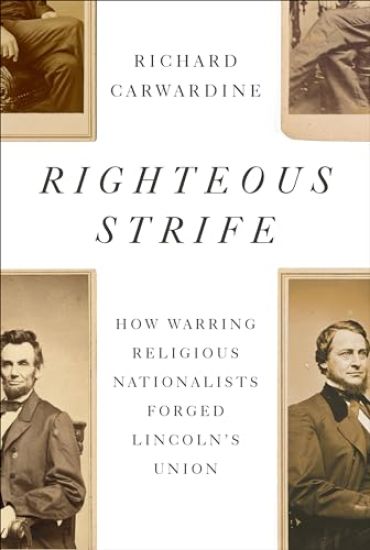
The first major account of the American Civil War to give full weight to the central role played by religion, reframing the conflict through Abraham Lincoln's contentious appeals to faith-based nationalism How did slavery figure in God's plan? Was it the providential role of government to abolish this sin and build a righteous nation? Or did such a mission amount to "religious tyranny" and "pulpit politics," in an effort to strip the southern states of their God-given rights? In 1861, in an already fracturing nation, the tensions surrounding this moral quandary cracked the United States in half, and even formed rifts within the North itself, where antislavery religious nationalists butted heads with conservative religious nationalists over their visions for America's future. At the center of this melee stood Abraham Lincoln, who would turn to his own faith for guidance, proclaiming more days of national fasting and thanksgiving than any other president before or since. These pauses for spiritual reflection provided the inspirational rhetoric and ideological fuel that sustained the war. In Righteous Strife, Richard Carwardine gives renewed attention to this crucible of contending religious nationalisms, out of which were forged emancipation, Lincoln's reelection, and his second inaugural address. No understanding of the American Civil War is complete without accounting for this complex dance between church and state--one that continues to define our nation.
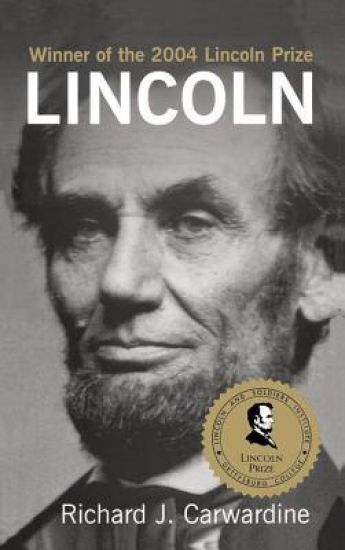
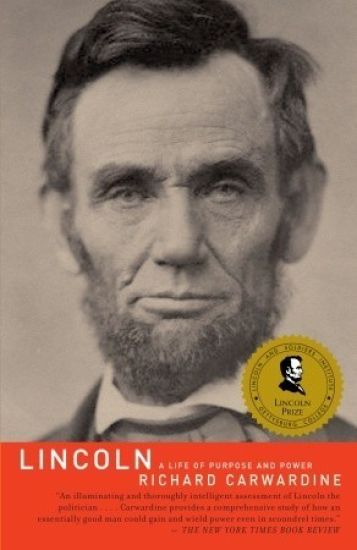
A British scholar offers an original, incisive portrait of America's sixteenth president that follows Lincoln's life, career, and political savvy during his rise to political power and his seminal years in the White House, arguing that he looked beyond the political system to find support in his struggle to end slavery. Winner of the Lincoln Prize. Reprint.
Revivalism has always been an important strain in American Protestantism. At times it has been the dominant influence. Often perceived as a home-grown movement, revivalism actually originated in England and has thrived in both countries with the help of two centuries of intellectual cross-pollination. This book focuses on English and American evangelicals during the early and mid-nineteenth century. Examining, first, American revivalism in the crucial state of its development, from the 1790s to the 1840s - when evangelicals used their most aggressive conversion techniques - it goes on to show the significant effects these developments had on the English revival movement. The revival tradition ultimately became orthodoxy in America; in Britain, however, it failed ever to achieve real respectability. Transatlantic Revivalism examines this contrast. It shows how attitudes and institutions in Britain prevented the flowering of an American style revivalism; conversely, particular American conditions allowed Methodism, which in England exerted only limited influence on Protestantism, to become the largest and most thoroughly revivalistic of all Protestant denominations. Church historians have often under-emphasized or deliberately ignored evangelical life; its emotionalism, disorder, and impropriety were an embarrasment to them. More recent historical scholarship has been primarily interested in tracing the secular implications of revivalism. This study focuses on those major evangelical denominations, particularly the Methodists, which in both countries provided the primary expression of evangelicalism and which gave it its cutting edge.
Many believe that the amusement parks of Southern California are very haunted. For the first time ever, their spooky tales have been collected in one book. Read these ghost stories, and decide for yourself. The book features the phantom folklore of 13 regional theme parks that can be visited along with paranormal accounts from 13 no longer operating amusement parks from the past. Plus, much more. If you like strange history, visiting amusement parks, and reading about ghosts, this is the book for you.
Whales, dolphins and porpoises are among the world's most mysterious and beautiful animals, and there are many opportunities to see them in the seas around Europe. This comprehensive and authoritative guide covers everything you need to know about where, when and how to watch them. Packed with useful information and top tips to help you get the most out of your trip, it includes a thorough account of whale-watching opportunities in every European country where organised whale-watching takes place, as well as detailed accounts of every cetacean species found in Europe and a fascinating introduction to their world.Whether you want to watch Blue Whales in Iceland, Bottlenose Dolphins in Wales, Narwhal in Greenland or Sperm Whales in Greece, this comprehensive guide is the ideal companion.
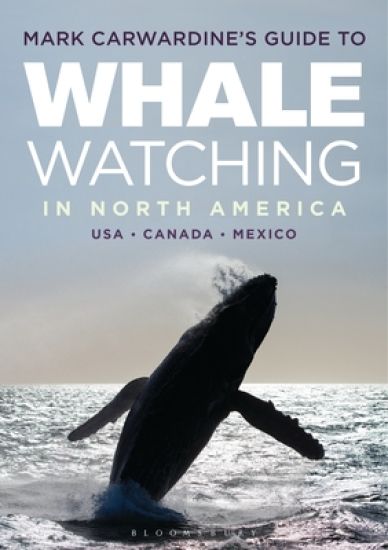
No one ever says 'I can't remember if I've seen a whale.' A close encounter with one of the most enigmatic and remarkable creatures on the planet is a life-changing experience. This comprehensive and authoritative guide covers everything you need to know about where, when and how to watch whales, dolphins and porpoises in North America. Packed with useful information and top tips to help you get the most out of your trip, it includes a thorough account of whale-watching opportunities in some of the world's hotspots, from Hawai'i and Vancouver Island to the Gulf of Maine and Baja California, as well as detailed accounts of every cetacean species found in North America. Whether you want to watch Blue Whales in Monterey Bay, Killer Whales in the San Juan Islands, Narwhals in the high Arctic or North Atlantic Right Whales in the Bay of Fundy, this is an ideal companion.
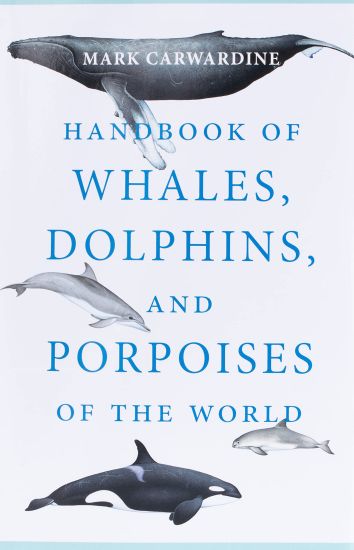
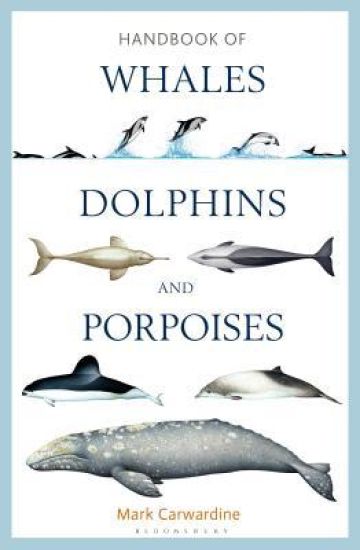
The most authoritative reference guide to every cetacean species and subspecies in the world Handbook of Whales, Dolphins, and Porpoises of the World is the most comprehensive and up-to-date guide to these popular mammals. With nearly 1,000 accurate color illustrations--complete with detailed annotations pointing out significant field marks--this outstanding book covers all 90 species and every subspecies of cetaceans around the globe. Leading cetacean biologists have collaborated with pioneering conservationist Mark Carwardine on the concise text, which is packed with helpful identification tips. From the blue whale to the Indo-Pacific finless porpoise, the illuminating species accounts are accompanied by abundant distribution maps and photographs. Designed to ensure easy access to critical information, Handbook of Whales, Dolphins, and Porpoises of the World is an indispensable resource that every whale watcher and cetacean seeker will find invaluable.Provides details on every species and subspecies of whale, dolphin, and porpoiseFeatures nearly 1,000 meticulous color illustrations and 90 distribution mapsIncludes helpful facts about behavior, life history, and conservation
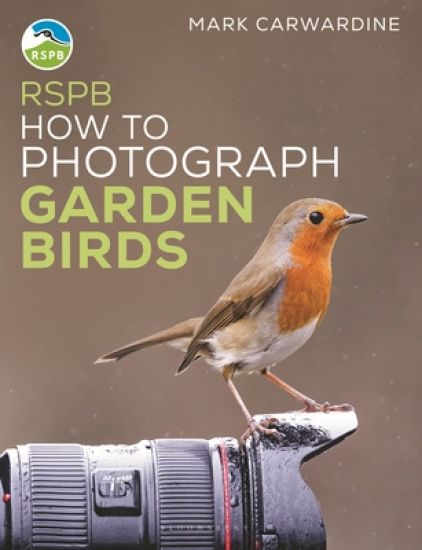
This accessible, practical guide includes everything you need to know to capture fantastic photographs of birds on your doorstep.Celebrated photographer and wildlife writer Mark Carwardine shares his expert advice and insider tips and tricks for capturing the perfect photo. Whether you have a professional camera and a garden filled with birds, or a smartphone and access to a bird table, his guidance will improve your photography in leaps and bounds.Packed with beautiful photographs, this book is a step-by-step masterclass on garden bird photography – from attracting different species to using artificial rain and capturing spectacular images of birds in flight.Once you’ve mastered the basics, you can make garden bird photography as simple or as challenging as you like. A robin perched on a garden spade? Easy. A blackbird feeding among fallen leaves? No problem. A blue tit in flight? Might take some planning but still very achievable.And there’s more. Garden bird photography isn’t only rewarding in its own right – it’s also a sensational way to hone wildlife photography and field skills that you can then adapt to suit any subject anywhere in the world.
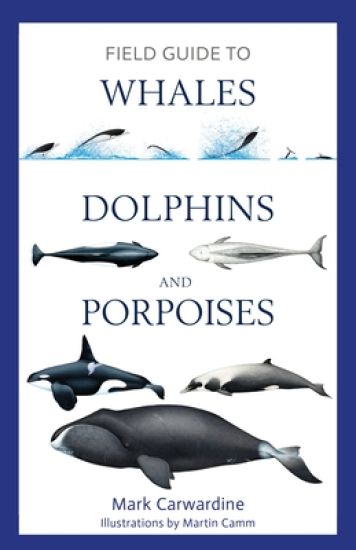
Practical and portable, this is the ultimate field guide for any whale-watcher in North AmericaThis outstanding field guide provides the most comprehensive, authoritative and up-to-date coverage of the whales, dolphins and porpoises that occur off the coasts of North America. Packed with accurate illustrations – complete with detailed annotations pointing out significant field marks – Field Guide to Whales, Dolphins and Porpoises of North America covers all 54 species and every subspecies that occurs in the region.Many of the world’s most respected whale biologists have collaborated on the concise text, which is packed with helpful identification tips from cetacean expert Mark Carwardine. Mark’s informative text is accompanied by up-to-date distribution maps for each species. Beautifully designed to ensure critical information is quickly accessible, this is an indispensable resource that every whale-watcher in the USA, Mexico or Canada will be carrying out to sea in search of these awesome mammals.
'Everyone who loves the sea and what's in it should own this book.' Bill BrysonFrom the blue whale to the Indo-Pacific finless porpoise, this handbook is the most comprehensive, authoritative and up-to-date reference to each of the world's 90 species of cetaceans.With more than 1,000 meticulous and specially commissioned illustrations - complete with flukes, blows and dive sequences - it includes detailed annotations pointing out significant field marks, as well as extensive distribution and migration maps. Many of the world's most respected whale biologists have collaborated on the text, helping to provide the ultimate guide to the identification, distribution, behaviour, life history and conservation of every species and subspecies of whale, dolphin and porpoise.This is an indispensable resource for anyone interested in these truly spectacular animals.
Practical and portable, this is the ultimate field guide to the world's cetaceansThis outstanding field guide to whales, dolphins and porpoises is the most comprehensive, authoritative and up-to-date guide to these popular mammals. With more than 500 accurate illustrations – complete with detailed annotations pointing out the most significant field marks – Field Guide to Whales, Dolphins and Porpoises covers all 93 species and every subspecies in the world.Many of the world’s most respected whale biologists have collaborated on the concise text, which is packed with helpful identification tips from cetacean expert Mark Carwardine. Mark’s informative text is accompanied by up-to-date distribution maps for each species. Beautifully designed to ensure critical information is quickly accessible, this is an indispensable resource that every whale-watcher will want to take with them out to sea.