Kirjojen hintavertailu. Mukana 12 390 323 kirjaa ja 12 kauppaa.

Kirjahaku

Etsi kirjoja tekijän nimen, kirjan nimen tai ISBN:n perusteella.

1000 tulosta hakusanalla Catharine Maria Sedgwick

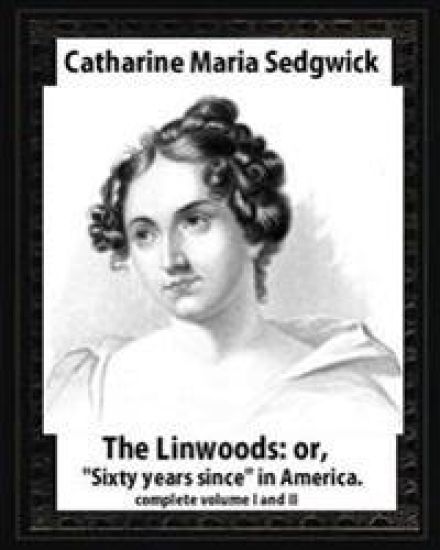
The Linwoods(1835), by Catharine Maria Sedgwick-complete volume I and II: The Linwoods, or, "Sixty years since" in America
Catharine Maria Sedgwick (December 28, 1789 - July 31, 1867), was an American novelist of what is sometimes referred to as "domestic fiction". She promoted Republican motherhood.Catharine Maria Sedgwick was born December 28, 1789 in Stockbridge, Massachusetts. Her mother was Pamela Dwight (1752-1807) of the New England Dwight family, daughter of General Joseph Dwight (1703-1765) and granddaughter of Ephraim Williams, founder of Williams College. Her father was Theodore Sedgwick (1746-1813), a prosperous lawyer and successful politician. He was later elected Speaker of the United States House of Representatives and in 1802 was appointed a justice of the Massachusetts Supreme Judicial Court. As a child, Sedgwick was cared for by Elizabeth Freeman, a former slave whose freedom Theodore Sedgwick helped gain by arguing her case in county court in 1781. After winning her freedom Freeman declined her previous owner's job offer, and instead accepted a job working for the Sedgwick family. As a young woman, Sedgwick attended a finishing school in Boston to complete her education. One of her schoolmates, Susan Anne Ridley Sedgwick (1788-1867), would become her sister-in-law and a published author. Sedgwick was engaged at one point to Harmanus Bleecker, a friend of her father and law partner of her brother Theodore (1780-1839).They did not marry, and Sedgwick turned down several other marriage proposals, instead choosing to remain single and focus on her career.
A New England Tale. (1822) by: Catharine Maria Sedgwick.( INCLUDE: Live and Let Live.(1837) by: Catharine Maria Sedgwick
A New England Tale Jane Elton, orphaned as a young girl, goes to live with her aunt Mrs. Wilson, a selfish and overbearing woman who practices a repressive Calvinism. In their rural New England village, Jane grows up yearning to break free from Mrs. Wilson's tyranny and find her place as a citizen of the evolving American Republic Catharine Maria Sedgwick (December 28, 1789 - July 31, 1867), was an American novelist of what is sometimes referred to as "domestic fiction". She promoted Republican motherhood.Catharine Maria Sedgwick was born December 28, 1789 in Stockbridge, Massachusetts. Her mother was Pamela Dwight (1752-1807) of the New England Dwight family, daughter of General Joseph Dwight (1703-1765) and granddaughter of Ephraim Williams, founder of Williams College.
The Poor Rich Man, and the Rich Poor Man (1836). By: Catharine Maria Sedgwick: Novel

The Poor Rich Man, and the Rich Poor Man (1836). By: Catharine Maria Sedgwick: Novel

Catharine Maria Sedgwick

Createspace Independent Publishing Platform
2017
nidottu
Catharine Maria Sedgwick (December 28, 1789 - July 31, 1867), was an American novelist of what is sometimes referred to as "domestic fiction". She promoted Republican motherhood. Early life: Catharine Maria Sedgwick was born December 28, 1789 in Stockbridge, Massachusetts. Her mother was Pamela Dwight (1752-1807) of the New England Dwight family, daughter of General Joseph Dwight (1703-1765) and granddaughter of Ephraim Williams, founder of Williams College. Her father was Theodore Sedgwick (1746-1813), a prosperous lawyer and successful politician. He was later elected Speaker of the United States House of Representatives and in 1802 was appointed a justice of the Massachusetts Supreme Judicial Court. As a child, Sedgwick was cared for by Elizabeth Freeman, a former slave whose freedom Theodore Sedgwick helped gain by arguing her case in county court in 1781. After winning her freedom Freeman declined her previous owner's job offer, and instead accepted a job working for the Sedgwick family. As a young woman, Sedgwick attended a finishing school in Boston to complete her education. One of her schoolmates, Susan Anne Ridley Sedgwick (1788-1867), would become her sister-in-law and a published author. Sedgwick was engaged at one point to Harmanus Bleecker, a friend of her father and law partner of her brother Theodore (1780-1839). They did not marry, and Sedgwick turned down several other marriage proposals, instead choosing to remain single and focus on her career.
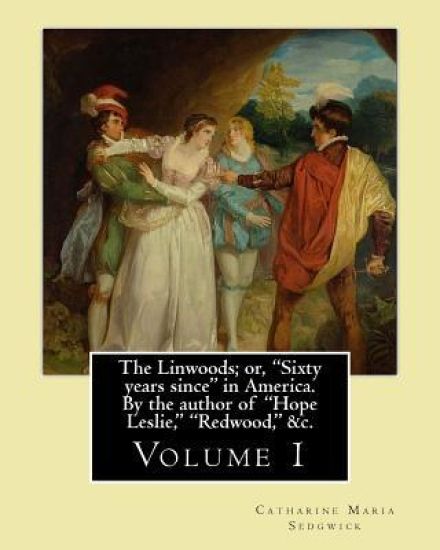
The Linwoods; or, "Sixty years since" in America. By the author of "Hope Leslie," "Redwood," &c. By: Catharine Maria Sedgwick: Volume 1 (in two volume
A story of familial and national discord, conciliation, and redemption, The Linwoods is perhaps the major work of one of the leading writers of early American literature. Set during the American Revolution, Catharine Sedgwick's last historical romance addresses issues of virtuous citizenship, civic identity, and the political development of the nation. The primary narrative thread tells the story of two families: the Linwoods, who are loyalists, and the Lees, who are revolutionaries. Much of the novel narrates the transformation of the Linwood children, especially the heroine, Isabella, from Tory to Rebel. In the process, Isabella not only rebels against British control of the colonies, but challenges the institution of slavery, gender norms, and patriarchal authority. Disguise, intrigues of Rebel and Tory spies, cross-racial and cross-gender passing, as well as cases of mistaken identity not only make for a compelling read, but also foster an anti-aristocratic skepticism of surface appearances and external markers of virtue and identity that resonated with the rhetoric of Jacksonian democracy....... Catharine Maria Sedgwick (December 28, 1789 - July 31, 1867), was an American novelist of what is sometimes referred to as "domestic fiction". She promoted Republican motherhood. Early life: Catharine Maria Sedgwick was born December 28, 1789 in Stockbridge, Massachusetts. Her mother was Pamela Dwight (1752-1807) of the New England Dwight family, daughter of General Joseph Dwight (1703-1765) and granddaughter of Ephraim Williams, founder of Williams College. Her father was Theodore Sedgwick (1746-1813), a prosperous lawyer and successful politician. He was later elected Speaker of the United States House of Representatives and in 1802 was appointed a justice of the Massachusetts Supreme Judicial Court. As a child, Sedgwick was cared for by Elizabeth Freeman, a former slave whose freedom Theodore Sedgwick helped gain by arguing her case in county court in 1781. After winning her freedom Freeman declined her previous owner's job offer, and instead accepted a job working for the Sedgwick family. As a young woman, Sedgwick attended a finishing school in Boston to complete her education. One of her schoolmates, Susan Anne Ridley Sedgwick (1788-1867), would become her sister-in-law and a published author. Sedgwick was engaged at one point to Harmanus Bleecker, a friend of her father and law partner of her brother Theodore (1780-1839). They did not marry, and Sedgwick turned down several other marriage proposals, instead choosing to remain single and focus on her career. Mary Russell Mitford (16 December 1787 - 10 January 1855) was an English author and dramatist. She was born at Alresford in Hampshire. She is best known for Our Village, a series of sketches of village scenes and vividly drawn characters based upon life in Three Mile Cross, a hamlet in the parish of Shinfield, near Reading in Berkshire, where she lived.
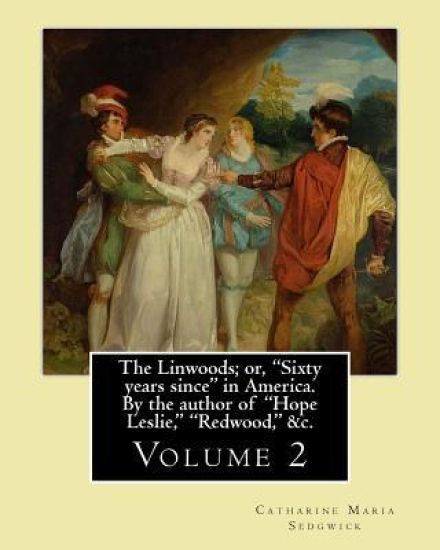
The Linwoods; or, "Sixty years since" in America. By the author of "Hope Leslie," "Redwood," &c. By: Catharine Maria Sedgwick: Volume 2 (in two volume
A story of familial and national discord, conciliation, and redemption, The Linwoods is perhaps the major work of one of the leading writers of early American literature. Set during the American Revolution, Catharine Sedgwick's last historical romance addresses issues of virtuous citizenship, civic identity, and the political development of the nation. The primary narrative thread tells the story of two families: the Linwoods, who are loyalists, and the Lees, who are revolutionaries. Much of the novel narrates the transformation of the Linwood children, especially the heroine, Isabella, from Tory to Rebel. In the process, Isabella not only rebels against British control of the colonies, but challenges the institution of slavery, gender norms, and patriarchal authority. Disguise, intrigues of Rebel and Tory spies, cross-racial and cross-gender passing, as well as cases of mistaken identity not only make for a compelling read, but also foster an anti-aristocratic skepticism of surface appearances and external markers of virtue and identity that resonated with the rhetoric of Jacksonian democracy.... Catharine Maria Sedgwick (December 28, 1789 - July 31, 1867), was an American novelist of what is sometimes referred to as "domestic fiction". She promoted Republican motherhood. Early life: Catharine Maria Sedgwick was born December 28, 1789 in Stockbridge, Massachusetts. Her mother was Pamela Dwight (1752-1807) of the New England Dwight family, daughter of General Joseph Dwight (1703-1765) and granddaughter of Ephraim Williams, founder of Williams College. Her father was Theodore Sedgwick (1746-1813), a prosperous lawyer and successful politician. He was later elected Speaker of the United States House of Representatives and in 1802 was appointed a justice of the Massachusetts Supreme Judicial Court. As a child, Sedgwick was cared for by Elizabeth Freeman, a former slave whose freedom Theodore Sedgwick helped gain by arguing her case in county court in 1781. After winning her freedom Freeman declined her previous owner's job offer, and instead accepted a job working for the Sedgwick family. As a young woman, Sedgwick attended a finishing school in Boston to complete her education. One of her schoolmates, Susan Anne Ridley Sedgwick (1788-1867), would become her sister-in-law and a published author. Sedgwick was engaged at one point to Harmanus Bleecker, a friend of her father and law partner of her brother Theodore (1780-1839). They did not marry, and Sedgwick turned down several other marriage proposals, instead choosing to remain single and focus on her career. Mary Russell Mitford (16 December 1787 - 10 January 1855) was an English author and dramatist. She was born at Alresford in Hampshire. She is best known for Our Village, a series of sketches of village scenes and vividly drawn characters based upon life in Three Mile Cross, a hamlet in the parish of Shinfield, near Reading in Berkshire, where she lived.
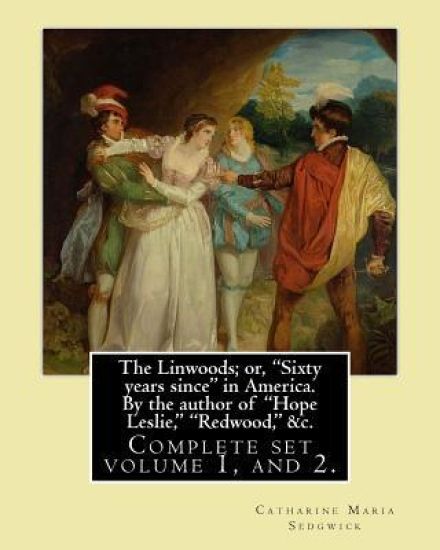
The Linwoods; or, "Sixty years since" in America. By the author of "Hope Leslie," "Redwood," &c. By: Catharine Maria Sedgwick: Complete ser volume 1,
A story of familial and national discord, conciliation, and redemption, The Linwoods is perhaps the major work of one of the leading writers of early American literature. Set during the American Revolution, Catharine Sedgwick's last historical romance addresses issues of virtuous citizenship, civic identity, and the political development of the nation. The primary narrative thread tells the story of two families: the Linwoods, who are loyalists, and the Lees, who are revolutionaries. Much of the novel narrates the transformation of the Linwood children, especially the heroine, Isabella, from Tory to Rebel. In the process, Isabella not only rebels against British control of the colonies, but challenges the institution of slavery, gender norms, and patriarchal authority. Disguise, intrigues of Rebel and Tory spies, cross-racial and cross-gender passing, as well as cases of mistaken identity not only make for a compelling read, but also foster an anti-aristocratic skepticism of surface appearances and external markers of virtue and identity that resonated with the rhetoric of Jacksonian democracy... Catharine Maria Sedgwick (December 28, 1789 - July 31, 1867), was an American novelist of what is sometimes referred to as "domestic fiction". She promoted Republican motherhood. Early life: Catharine Maria Sedgwick was born December 28, 1789 in Stockbridge, Massachusetts. Her mother was Pamela Dwight (1752-1807) of the New England Dwight family, daughter of General Joseph Dwight (1703-1765) and granddaughter of Ephraim Williams, founder of Williams College. Her father was Theodore Sedgwick (1746-1813), a prosperous lawyer and successful politician. He was later elected Speaker of the United States House of Representatives and in 1802 was appointed a justice of the Massachusetts Supreme Judicial Court. As a child, Sedgwick was cared for by Elizabeth Freeman, a former slave whose freedom Theodore Sedgwick helped gain by arguing her case in county court in 1781. After winning her freedom Freeman declined her previous owner's job offer, and instead accepted a job working for the Sedgwick family. As a young woman, Sedgwick attended a finishing school in Boston to complete her education. One of her schoolmates, Susan Anne Ridley Sedgwick (1788-1867), would become her sister-in-law and a published author. Sedgwick was engaged at one point to Harmanus Bleecker, a friend of her father and law partner of her brother Theodore (1780-1839). They did not marry, and Sedgwick turned down several other marriage proposals, instead choosing to remain single and focus on her career.............. Mary Russell Mitford (16 December 1787 - 10 January 1855) was an English author and dramatist. She was born at Alresford in Hampshire. She is best known for Our Village, a series of sketches of village scenes and vividly drawn characters based upon life in Three Mile Cross, a hamlet in the parish of Shinfield, near Reading in Berkshire, where she lived.
A New England Tale (1822). By: Catharine Maria Sedgwick: Jane Elton, orphaned as a young girl, goes to live with her aunt Mrs. Wilson, a selfish and
Jane Elton, orphaned as a young girl, goes to live with her aunt Mrs. Wilson, a selfish and overbearing woman who practices a repressive Calvinism. In their rural New England village, Jane grows up yearning to break free from Mrs. Wilson's tyranny and find her place as a citizen of the evolving American Republic. She is helped by her encounters with characters who embody various shadings of moral, religious, and civic virtue: the affectionate servant Mary Hull, a pious Methodist; Mr. Lloyd, a kind Quaker; Crazy Bet, emotional, sympathetic, but deeply unstable; and Old John, bereaved but wise. Ultimately, A New-England Tale is about the connection between parenting and governing, and the key role women play in shaping a fledgling nation........... Catharine Maria Sedgwick (December 28, 1789 - July 31, 1867) was an American novelist of what is sometimes referred to as "domestic fiction". She promoted Republican motherhood.Early life: Catharine Maria Sedgwick was born December 28, 1789 in Stockbridge, Massachusetts. Her mother was Pamela Dwight (1752-1807) of the New England Dwight family, daughter of General Joseph Dwight (1703-1765) and granddaughter of Ephraim Williams, founder of Williams College. Her father was Theodore Sedgwick (1746-1813), a prosperous lawyer and successful politician. He was later elected Speaker of the United States House of Representatives and in 1802 was appointed a justice of the Massachusetts Supreme Judicial Court. As a child, Sedgwick was cared for by Elizabeth Freeman, a former slave whose freedom Theodore Sedgwick helped gain by arguing her case in county court in 1781. After winning her freedom Freeman declined her previous owner's job offer, and instead accepted a job working for the Sedgwick family. As a young woman, Sedgwick attended a finishing school in Boston to complete her education. One of her schoolmates, Susan Anne Ridley Sedgwick (1788-1867), would become her sister-in-law and a published author. Personal life: Sedgwick was engaged at one point to Harmanus Bleecker, a friend of her father and law partner of her brother Theodore (1780-1839). They did not marry, and Sedgwick turned down several other marriage proposals, instead choosing to remain single and focus on her career. Career: As a young woman, Sedgwick took charge of a school in Lenox. She converted from Calvinism to Unitarianism, which led her to write a pamphlet denouncing religious intolerance. This further inspired her to write her first novel, A New-England Tale. With her work much in demand, from the 1820s to the 1850s, Sedgwick made a good living writing short stories for a variety of periodicals. She died in 1867, and by the end of the 19th century, she had been relegated to near obscurity. There was a rise of male critics who deprecated women's writing as they worked to create an American literature. Interest in Sedgwick's works and an appreciation of her contribution to American literature has been stimulated by the late 20th century's feminist movement. Beginning in the 1960s, feminist scholars began to re-evaluate women's contributions to literature and other arts, and created new frames of reference for considering their work. In addition, the advent of low-cost electronic reproductions, which became available at the end of the 20th century, made Sedgwick and other nineteenth-century authors' work more accessible for study and pleasure. Edgar Allan Poe described Sedgwick in his "The Literati of New York City" (1846)....
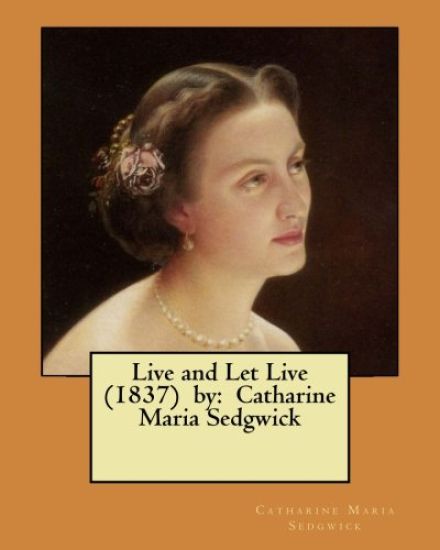
Live and Let Live (1837) by: Catharine Maria Sedgwick

Live and Let Live (1837) by: Catharine Maria Sedgwick

Catharine Maria Sedgwick

Createspace Independent Publishing Platform
2017
nidottu
Catharine Maria Sedgwick (December 28, 1789 - July 31, 1867) was an American novelist of what is sometimes referred to as "domestic fiction". With her work much in demand, from the 1820s to the 1850s, Sedgwick made a good living writing short stories for a variety of periodicals. She became one of the most notable female novelists of her time. She wrote work in American settings, and combined patriotism with protests against historic Puritan oppressiveness. Her topics contributed to the creation of a national literature, enhanced by her detailed descriptions of nature. Sedgwick created spirited heroines who did not conform to the stereotypical conduct of women at the time. She promoted Republican motherhood.Catharine Maria Sedgwick was born December 28, 1789, in Stockbridge, Massachusetts. Her mother was Pamela Dwight (1752-1807) of the New England Dwight family, daughter of General Joseph Dwight (1703-1765) and granddaughter of Ephraim Williams, founder of Williams College. Her father was Theodore Sedgwick (1746-1813), a prosperous lawyer and successful politician. He was later elected Speaker of the United States House of Representatives and in 1802, was appointed a justice of the Massachusetts Supreme Judicial Court.
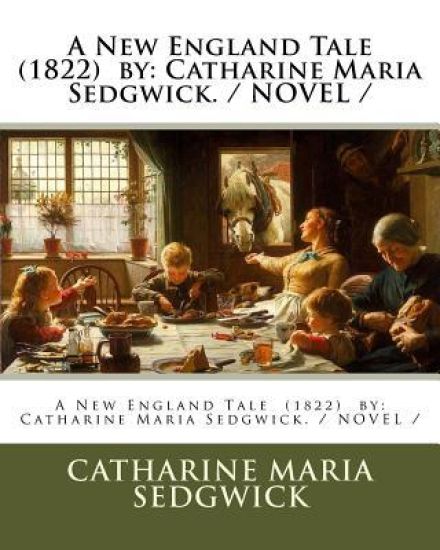
A New England Tale (1822) by: Catharine Maria Sedgwick. / NOVEL /

A New England Tale (1822) by: Catharine Maria Sedgwick. / NOVEL /

Catharine Maria Sedgwick

Createspace Independent Publishing Platform
2017
nidottu
The writer of this tale has made an humble effort to add something to the scanty stock of native American literature. Any attempt to conciliate favour by apologies would be unavailing and absurd. In this free country, no person is under any obligation to write; and the public (unfortunately) is under no obligation to read. It is certainly desirable to possess some sketches of the character and manners of our own country, and if this has been done with any degree of success, it would be wrong to doubt that it will find a reception sufficiently favourable. The original design of the author was, if possible, even more limited and less ambitious than what has been accomplished. It was simply to produce a very short and simple moral tale of the most humble description; and if in the course of its production it has acquired any thing of a peculiar or local cast, this should be chiefly attributed to the habits of the writer's education, and that kind of accident which seems to control the efforts of those who have not been the subjects of strict intellectual discipline, and have not sufficiently premeditated their own designs
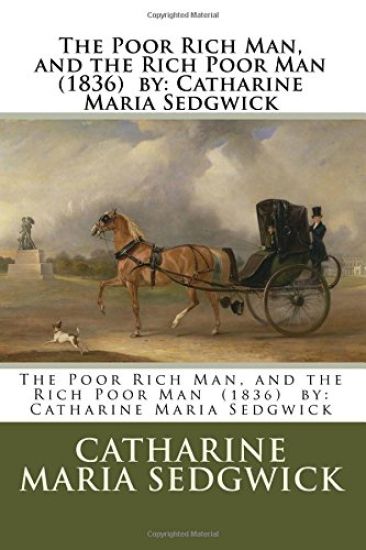
The Poor Rich Man, and the Rich Poor Man (1836) by: Catharine Maria Sedgwick

The Poor Rich Man, and the Rich Poor Man (1836) by: Catharine Maria Sedgwick

Catharine Maria Sedgwick

Createspace Independent Publishing Platform
2017
nidottu
Catharine Maria Sedgwick (December 28, 1789 - July 31, 1867) was an American novelist of what is sometimes referred to as "domestic fiction". With her work much in demand, from the 1820s to the 1850s, Sedgwick made a good living writing short stories for a variety of periodicals. She became one of the most notable female novelists of her time. She wrote work in American settings, and combined patriotism with protests against historic Puritan oppressiveness. Her topics contributed to the creation of a national literature, enhanced by her detailed descriptions of nature. Sedgwick created spirited heroines who did not conform to the stereotypical conduct of women at the time. She promoted Republican motherhood.
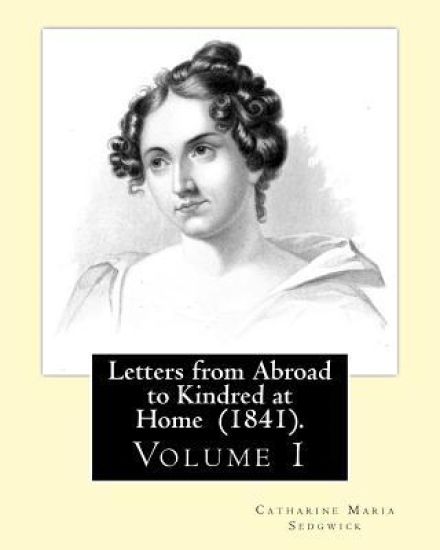
Letters from Abroad to Kindred at Home (1841). By: Miss. Sedgwick: (Volume 1) Catharine Maria Sedgwick
Catharine Maria Sedgwick (December 28, 1789 - July 31, 1867), was an American novelist of what is sometimes referred to as "domestic fiction". She promoted Republican motherhood. Early life: Catharine Maria Sedgwick was born December 28, 1789 in Stockbridge, Massachusetts. Her mother was Pamela Dwight (1752-1807) of the New England Dwight family, daughter of General Joseph Dwight (1703-1765) and granddaughter of Ephraim Williams, founder of Williams College. Her father was Theodore Sedgwick (1746-1813), a prosperous lawyer and successful politician. He was later elected Speaker of the United States House of Representatives and in 1802 was appointed a justice of the Massachusetts Supreme Judicial Court. As a child, Sedgwick was cared for by Elizabeth Freeman, a former slave whose freedom Theodore Sedgwick helped gain by arguing her case in county court in 1781. After winning her freedom Freeman declined her previous owner's job offer, and instead accepted a job working for the Sedgwick family. As a young woman, Sedgwick attended a finishing school in Boston to complete her education. One of her schoolmates, Susan Anne Ridley Sedgwick (1788-1867), would become her sister-in-law and a published author. Sedgwick was engaged at one point to Harmanus Bleecker, a friend of her father and law partner of her brother Theodore (1780-1839). They did not marry, and Sedgwick turned down several other marriage proposals, instead choosing to remain single and focus on her career.
Hope Leslie

Hope Leslie

Catharine Maria Sedgwick

PENGUIN BOOKS LTD
1998
pokkari
Set in seventeenth-century New England in the aftermath of the Pequod War, Hope Leslie not only chronicles the role of women in building the republic but also refocuses the emergent national literature on the lives, domestic mores, and values of American women.For more than seventy years, Penguin has been the leading publisher of classic literature in the English-speaking world. With more than 1,700 titles, Penguin Classics represents a global bookshelf of the best works throughout history and across genres and disciplines. Readers trust the series to provide authoritative texts enhanced by introductions and notes by distinguished scholars and contemporary authors, as well as up-to-date translations by award-winning translators.
A New-England Tale

A New-England Tale

Catharine Maria Sedgwick

Penguin Books Australia
2003
pokkari
Jane Elton, orphaned as a young girl, goes to live with her aunt Mrs. Wilson, a selfish and overbearing woman who practices a repressive Calvinism. In their rural New England village, Jane grows up yearning to break free from Mrs. Wilson's tyranny and find her place as a citizen of the evolving American Republic. She is helped by her encounters with characters who embody various shadings of moral, religious, and civic virtue: the affectionate servant Mary Hull, a pious Methodist; Mr. Lloyd, a kind Quaker; Crazy Bet, emotional, sympathetic, but deeply unstable; and Old John, bereaved but wise. Ultimately, A New-England Tale is about the connection between parenting and governing, and the key role women play in shaping a fledgling nation. For more than seventy years, Penguin has been the leading publisher of classic literature in the English-speaking world. With more than 1,700 titles, Penguin Classics represents a global bookshelf of the best works throughout history and across genres and disciplines. Readers trust the series to provide authoritative texts enhanced by introductions and notes by distinguished scholars and contemporary authors, as well as up-to-date translations by award-winning translators.