Kirjahaku
Etsi kirjoja tekijän nimen, kirjan nimen tai ISBN:n perusteella.
1000 tulosta hakusanalla Catherine Lampert
Born in Berlin in 1931 to Jewish parents, the eight-year-old Auerbach was sent to England in 1939 to escape the Nazi regime. His parents stayed behind and died in a concentration camp in 1943. Now in his eighties, Auerbach is still producing his distinctly sculptural paintings of friends, family and surroundings in north London, where he has made his home since the war. The art historian and curator Catherine Lampert has had unique access to the artist since 1978 when she first became one of his sitters. With an emphasis on Auerbach’s own words, culled from her conversations with him and archival interviews, she provides a rare insight into his professional life, working methods and philosophy. Auerbach also reflects on the places, people and inspirations that have shaped his life. These include his experiences as a refugee child, finding his way in the London art world of the 1950s and 1960s, his friendships with Lucian Freud, Francis Bacon and Leon Kossoff, among many others, and his approaches to looking and painting throughout his career. For anyone interested in how an artist approaches his craft or his method of capturing reality this is essential reading.
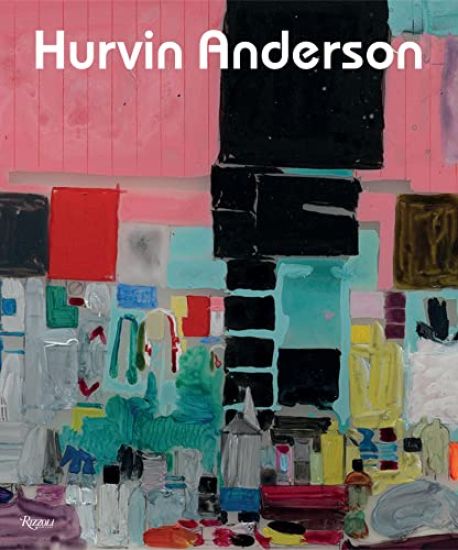
The Birmingham-born, Turner Prize-nominated artist Hurvin Anderson is best known for his brightly painted, densely detailed landscapes and interior scenes, which are drawn from his own photographs, sketches and personal recollections particularly those relating to his upbringing in the Afro-Caribbean community in the Midlands, as well as more recent trips to the Caribbean. Anderson s luscious paintings have hybridity at their heart. A tug-of-war plays out between abstraction and figuration, nature versus the manmade, beauty and menace, and his British and Jamaican heritage. Born in the United Kingdom as a member of the Jamaican diaspora, Anderson relates to the Caribbean as both insider and outsider, aware of the mythmaking that the idea of lost or future paradise generates. Anderson, the youngest of eight children, grew up listening to his family reminisce about their lives in the Caribbean before they moved to England in the 1960s, an emotional through-line to his work, suggesting the longing and loss that keeps certain geographies alive in us. This book, Anderson s first major monograph, has been carefully curated by the artists himself and includes paintings, sketches, source material and ephemera, studio shots, and a series of black-and-white drawings created exclusively for this publication. The volume also features an in-depth and deeply considered essay by art historian Catherine Lampert, a text by poet and writer Roger Robinson, and an illustrated chronology.
Centenary Review
Catherine Lampert; Guy Brett; Marco Livingstone; Jonathan Jones; Juliet Sheyu; Brandon Taylor; Whitechapel Gallery
Whitechapel Gallery
2001
nidottu
This centennial catalogue celebrates the remarkable achievements of the Whitechapel Gallery between 1901-2001. Featuring essays by Jonathan Jones, Jeremy Millar, Guy Brett, Mark Francis, Catherine Lampert, Jon Newman, Juliet Styen, Marco Livingstone, Felicity Lunn, Paul Bonaventura, Rachel Lichtenstein and Alan Dein, Janeen Haythornthwaite and Brandon Taylor. Artists surveyed include Ian McKeever, Tim Head, Alfredo Jaar, Ian Breakwell, Susana Solano, Cathy de Monchaux, Tunga, Boyd Webb, Matthew Higgs and Paul Noble, Zarina Bhimji, Hamish Fulton and John Murphy
The second part of the Lucian Freud catalogue raisonné, recording all of the artist’s oil paintings in four volumes, with detailed entries, new photography, and essays This publication is the first attempt to comprehensively catalogue the oil paintings of the artist Lucian Freud (1922–2011). Over 500 works are presented and fully catalogued by Catherine Lampert and Toby Treves, with separate entries on each work providing essential information, provenance, and history of exhibition and literature, followed by individual remarks. Lampert and Treves provide new analysis of the paintings, informed by their collaborative research and collective knowledge of Freud’s oeuvre. Almost every work is reproduced in colour, including many for the first time. The catalogue contains several essays by contributors, including the critic and Freud specialist Sebastian Smee, National Portrait Gallery research fellow Jacob Simon, and curator and art historian Colin Wiggins. A chronology of Freud’s life and work, comprehensive lists of solo and group exhibitions, and a bibliography provide a full overview of Freud’s career and critical responses to it, making the volumes indispensable for research.
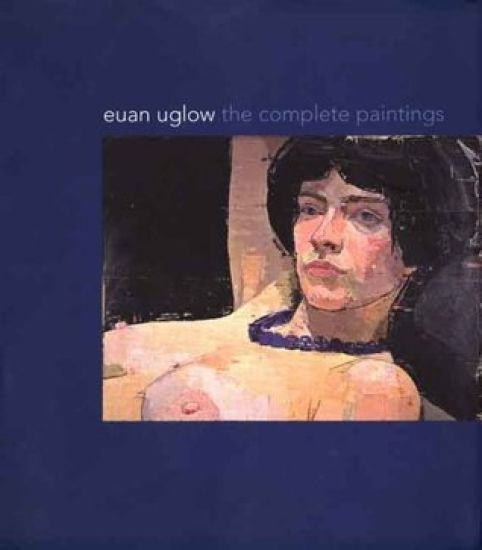
British artist Euan Uglow (1932–2000) maintained a lower profile than others of his generation, yet his beautiful, intelligent, humane, and often witty landscapes, still lifes, and figure studies are today gaining the recognition they so clearly deserve. Many critics and admirers now consider Uglow one of Britain’s greatest post-war artists. This is the first book devoted to Uglow and his oeuvre. Richard Kendall’s essay explores Uglow’s fundamental attitudes, beliefs, and processes in the years 1950 to 1970, and Catherine Lampert looks at the content and personal nature of the artist’s paintings over a lifetime, emphasizing his growing attention to color and light. The volume reproduces every known oil painting by Uglow—a total of more than 400 works--some 80 of which are here reproduced for the first time. In addition to a chronology, bibliography, and exhibition history for each work, the catalogue entries provide many other details and illuminating notes, including the artist’s own observations.Exhibition Schedule:Marlborough Gallery, London (opens May 2007)
Dissident Women, Beguines, and the Quest for Spiritual Authority
Catherine Lambert
TAYLOR FRANCIS LTD
2024
sidottu
Dissident Women, Beguines, and the Quest for Spiritual Authority focuses on the responses of a group of twenty-first-century women to the lives and writings of thirteenth-century beguine mystics, and reveals how the struggle to discover their own inner spiritual authority connects two groups of women across centuries. For contemporary women who are disenchanted with the institutional church and who seek spiritual direction, models deeply rooted within the tradition may not be the most helpful. The author explores the value of exemplars from the fringes, ushering Hadewijch of Brabant, Mechthild of Magdeburg, and Marguerite Porete into the spotlight. The contemporary women studied developed a relationship with the beguines that transformed and influenced their own journeys. Their encounters underline the importance of re-membering the beguine mystics, the value of contemplative engagement with historical mystics, and the need for explicit validation of the richness of the edges of tradition within spiritual direction.Dissident Women, Beguines, and the Quest for Spiritual Authority will be of particular interest to scholars of mysticism and spirituality as well as practical, pastoral, and feminist theology.
The Reeler Mouse as a Model of Brain Development
Catherine Lambert de Rouvroit; Andre M. Goffinet
Springer-Verlag Berlin and Heidelberg GmbH Co. K
1998
nidottu
Only five years ago, nobody in his right mind would have consid ered publishing a book on reeler as a model for brain develop ment. Although this interesting mutation has been with us for half a century, it is fair to say that, in spite of a wave of enthusiasm in the late sixties and early seventies, generated primarily by Sidman, Caviness and colleagues, studies of reeler mice fell pro gressively out of fashion during the next two decades. All that changed almost overnight when the cloning of the reeler gene, dubbed reelin, was reported in Tom Curran's laboratory in 1995. The fact that the same gene was identified at the same time independently by two other groups using positional cloning sug gested strongly that reelin was the right candidate. Although the key experiments of transgenic rescue have not been made (and perhaps will never be), the equation "reeler is reelin" has been established beyond reasonable doubt, as alterations of the reelin gene and/or its expression have been found in at least five alleles of reeler and in the mutation Shaking Rat Kawasaki (SRK), an ortholog of reeler.
The Ancient
Catherine Valenti; Loni Townsend; Bobbi Carol; Sherry Briscoe; Rochelle Cunningham; Marlie Harris; Troy Lambert
Smoking Pen Press LLC
2016
pokkari
Thinking Like a Mathematician
Mary-Lyons Walk Hanks; Jennifer K. Lampert; Katherine Plum
Prufrock Press
2019
nidottu
Thinking Like a Mathematician focuses on high-interest, career-related topics in the elementary curriculum related to mathematics. Students will explore interdisciplinary content, foster creativity, and develop higher order thinking skills with activities aligned to relevant content area standards. Students will engage in exploration activities, complete mathematical challenges, and then apply what they have learned by making real-world connections. Thinking Like a Mathematician reflects key emphases of curricula from the Center for Gifted Education at William & Mary, including the development of process skills in various content areas and the enhancement of discipline-specific thinking and habits of mind through hands-on activities. Grade 3
On 29 March 1912, as Scott and his two companions lay dying in their tent, elsewhere on the polar ice-cap six members of his ill-fated expedition were fighting for their lives. The six men were landed by Terra Nova in January 1911 at Cape Adare, 450 miles north of Scott's base camp at Cape Evans.
Discover the haunting echoes of the past at Barrington Court, a Tudor manor house lying at the edge of the Somerset levels. Follow in the footsteps of the Lyles as, together with the architect J.E. Forbes, they carefully brought the house back to life and filled it with people and parties and an astonishing collection of salvaged woodwork. Alongside the house are ornamental gardens, originally designed by Gertrude Jekyll and now planted sympathetically to her plans, as well as a large, working kitchen garden and vast orchards producing Somerset cider. This guidebook explores Barringtons hidden history, from the surprising origin of some of its star attractions (a staircase from Scotland, a 16th-century screen from Norfolk), to its starring role in the television series, Wolf Hall, to its continued role as a working estate.
The Thackeray Edition proudly announces two additions to its collection: Catherine and The Luck of Barry Lyndon. The Thackeray Edition is the first full-scale scholarly edition of William Makepeace Thackeray's works to appear in over seventy years, and the only one ever to be based on an examination of manuscripts and relevant printed texts. It is also a concrete attempt to put into practice a theory of scholarly editing that gives new insight into Thackeray's own compositional process.Written in 1839-40 for Fraser's Magazine, Catherine was Thackeray's first novel. Although originally intended as a spoof of the 1830s Newgate school of criminal romance, it has intrinsic merit of its own for its cynical narrator and roguish heroine, both of whom harbinger similar creations in Vanity Fair eight years later.
Catherine Currie began writing her diary at Ballan in 1873. Soon afterwards, she left with her husband and young children to take up a selection deep in the forests of west Gippsland. Catherine's life was one of unrelenting daily work, which she recorded faithfully in the diary. As the years wore on and her early pioneering optimism turned to disillusionment and sometimes despair, it also became a private confessional.This beautifully written and engrossing work uses parallel narratives to tell Catherine's story. Five skilfully written chapters catch the cadences of Catherine's diary, interweaving direct quotes with discreet comment and explanation. Between these chapters runs a twentieth century voice, offering thoughtful and lucid reflections on themes such as 'madness' and 'landscape', and illuminating Catherine's life for modern readers through the ideas of historians and theorists such as Michel Foucault and Paul Carter. Catherine is first and foremost a simple and moving story, bringing the reader into direct, vivid and personal contact with Catherine Currie. More subtly, it allows readers to glimpse those fine lines which separate life and text, chance and necessity, sanity and madness. A superb and moving study in both autobiography and biography, Catherine will give great pleasure to those many readers who delight in the subtlety of plain English.
Follows the life of a girl named Catherine. She is lucky to be in love with her best friend. She has a great family and overall a great life but Catherine discovers a dark secret from her family's past. Go on the journey as she uncovers the truth, a journey of life, love, tragedy and hope.