Kirjojen hintavertailu. Mukana 11 244 527 kirjaa ja 12 kauppaa.

Kirjahaku

Etsi kirjoja tekijän nimen, kirjan nimen tai ISBN:n perusteella.

1000 tulosta hakusanalla Catherine de Flavigny

Sainte Catherine de Sienne

Sainte Catherine de Sienne

Catherine de Flavigny

Hachette Livre - BNF
2014
pokkari
Sainte Catherine de Sienne, par la Ctesse de FlavignyDate de l'edition originale: 1895Ce livre est la reproduction fidele d'une oeuvre publiee avant 1920 et fait partie d'une collection de livres reimprimes a la demande editee par Hachette Livre, dans le cadre d'un partenariat avec la Bibliotheque nationale de France, offrant l'opportunite d'acceder a des ouvrages anciens et souvent rares issus des fonds patrimoniaux de la BnF.Les oeuvres faisant partie de cette collection ont ete numerisees par la BnF et sont presentes sur Gallica, sa bibliotheque numerique.En entreprenant de redonner vie a ces ouvrages au travers d'une collection de livres reimprimes a la demande, nous leur donnons la possibilite de rencontrer un public elargi et participons a la transmission de connaissances et de savoirs parfois difficilement accessibles.Nous avons cherche a concilier la reproduction fidele d'un livre ancien a partir de sa version numerisee avec le souci d'un confort de lecture optimal. Nous esperons que les ouvrages de cette nouvelle collection vous apporteront entiere satisfaction.Pour plus d'informations, rendez-vous sur www.hachettebnf.fr
Catherine de Medici: Renaissance Queen of France
A sympathetic portrait of the Renaissance-era queen of France seeks to reveal her skills as a ruler in spite of her violent reputation, describing her suffering at the hands of Henry IV, the power politics that marked her rule, her talents as a strategist and conspirator, and the circumstances that led to the St. Bartholomew's Day Massacre. Reader's Guide available. Reprint. 25,000 first printing.
Catherine de Medici

Catherine de Medici

Jean Heritier

Routledge
2019
sidottu
Originally published in 1968 this book is an unforgettable portrait of an impoverished orphaned daughter of the Medici, pitchforked at the age of fourteen into her royal destiny and having to bear the rivalry of Diane de Poiters and the description ‘the Florentine shopkeeper’ who nevertheless became one of the most powerful characters in the shaping of sixteenth century Europe.
Catherine de Medici

Catherine de Medici

Jean Heritier

Routledge
2021
nidottu
Originally published in 1968 this book is an unforgettable portrait of an impoverished orphaned daughter of the Medici, pitchforked at the age of fourteen into her royal destiny and having to bear the rivalry of Diane de Poiters and the description ‘the Florentine shopkeeper’ who nevertheless became one of the most powerful characters in the shaping of sixteenth century Europe.
Catherine de'Medici

Catherine de'Medici

R J Knecht

Longman
1997
nidottu
Catherine de' Medici (1519-89) was the wife of one king of France and the mother of three more - the last, sorry representatives of the Valois, who had ruled France since 1328. She herself is of preeminent importance to French history, and one of the most controversial of all historical figures. Despised until she was powerful enough to be hated, she was, in her own lifetime and since, the subject of a "Black Legend" that has made her a favourite subject of historical novelists (most notably Alexandre Dumas, whose Reine Margot has recently had new currency on film). Yet there is no recent biography of her in English. This new study, by a leading scholar of Renaissance France, is a major event.Catherine, a neglected and insignificant member of the Florentine Medici, entered French history in 1533 when she married the son of Francis I for short-lived political reasons: her uncle was pope Clement VII, who died the following year. Now of no diplomatic value, Catherine was treated with contempt at the French court even after her husband's accession as Henry II in 1547. Even so, she gave him ten children before he was killed in a tournament in 1559. She was left with three young boys, who succeeded to the throne as Francis II (1559-60), Charles IX (1560-74) and Henry III (1574-89). As regent and queen-mother, a woman and with no natural power-base of her own, she faced impossible odds. France was accelerating into chaos, with political faction at court and religious conflict throughout the land. As the country disintegrated, Catherine's overriding concern was for the interests of her children. She was tireless in her efforts to protect her sons' inheritance, and to settle her daughters in advantageous marriages. But France needed more. Catherine herself was both peace-loving and, in an age of frenzied religious hatred, unbigoted. She tried to use the Huguenots to counterbalance the growing power of the ultra-Catholic Guises but extremism on all sides frustrated her. She was drawn into the violence. Her name is ineradicably associated with its culmination, the Massacre of St Bartholomew (24 August 1572), when thousands of Huguenots were slaughtered in Paris and elsewhere. To this day no-one knows for certain whether Catherine instigated the massacre or not, but here Robert Knecht explores the probabilities in a notably level-headed fashion.His book is a gripping narrative in its own right. It offers both a lucid exposition of immensely complex events (with their profound imact on the future of France), and also a convincing portrait of its enigmatic central character. In going behind the familiar Black Legend, Professor Knecht does not make the mistake of whitewashing Catherine; but he shows how intractable was her world, and how shifty or intransigent the people with whom she had to deal. For all her flaws, she emerges as a more sympathetic - and, in her pragmatism, more modern - figure than most of her leading contemporaries.
Catherine De Medici

Catherine De Medici

Paulson Michael G.

PETER LANG PUBLISHING INC
2002
sidottu
Who was Catherine de Medici? The answer to this question depends largely on one's religion and politics. Catherine de Medici: Five Portraits examines historically this great queen from the standpoint of her contemporaries and later writers. The primary focus is Catherine as seen in five works of French literature: Madame de La Fayette's La Princesse de Cl ves, Honor de Balzac's Sur Catherine de M dicis, Alexandre Dumas p re's La Reine Margot, Henri III et sa cour, and Prosper M rim e's Chronique du r gne de Charles IX. The famous queen and queen-mother are viewed from a multiplicity of perspectives, including that of victim and victimizer.
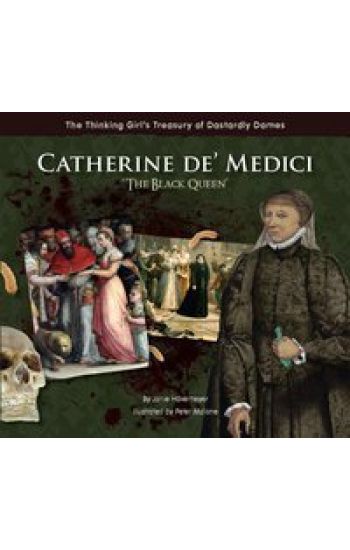
Catherine de' Medici "The Black Queen"

Catherine de' Medici "The Black Queen"

Janie Havemeyer

Goosebottom Books Llc
2011
sidottu
Queen of France, Catherine de' Medici would do anything to keep her family in power, including using poison and black magic. A nation-wide killing spree during her rule earned her the name, The Black Queen. But was she really that bad? Gorgeous illustrations and an intelligent, evocative story bring to life a real dastardly dame who fought to keep her children in power, but ended up blackening their names instead.
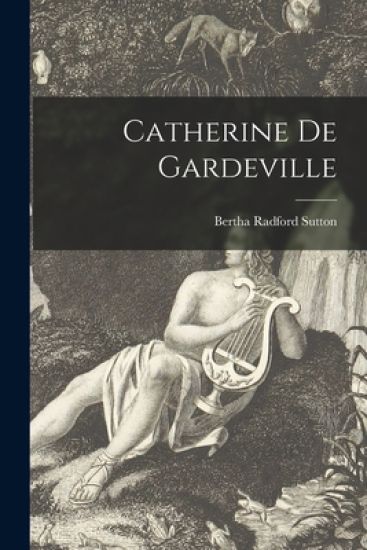
Catherine De Gardeville

Catherine De Gardeville

Bertha Radford Sutton

Hassell Street Press
2021
sidottu
This work has been selected by scholars as being culturally important and is part of the knowledge base of civilization as we know it.This work is in the public domain in the United States of America, and possibly other nations. Within the United States, you may freely copy and distribute this work, as no entity (individual or corporate) has a copyright on the body of the work.Scholars believe, and we concur, that this work is important enough to be preserved, reproduced, and made generally available to the public. To ensure a quality reading experience, this work has been proofread and republished using a format that seamlessly blends the original graphical elements with text in an easy-to-read typeface.We appreciate your support of the preservation process, and thank you for being an important part of keeping this knowledge alive and relevant.
Catherine de'Medici

Catherine de'Medici

R J Knecht

Routledge
2017
sidottu
Catherine de' Medici (1519-89) was the wife of one king of France and the mother of three more - the last, sorry representatives of the Valois, who had ruled France since 1328. She herself is of preeminent importance to French history, and one of the most controversial of all historical figures. Despised until she was powerful enough to be hated, she was, in her own lifetime and since, the subject of a "Black Legend" that has made her a favourite subject of historical novelists (most notably Alexandre Dumas, whose Reine Margot has recently had new currency on film). Yet there is no recent biography of her in English. This new study, by a leading scholar of Renaissance France, is a major event.Catherine, a neglected and insignificant member of the Florentine Medici, entered French history in 1533 when she married the son of Francis I for short-lived political reasons: her uncle was pope Clement VII, who died the following year. Now of no diplomatic value, Catherine was treated with contempt at the French court even after her husband's accession as Henry II in 1547. Even so, she gave him ten children before he was killed in a tournament in 1559. She was left with three young boys, who succeeded to the throne as Francis II (1559-60), Charles IX (1560-74) and Henry III (1574-89). As regent and queen-mother, a woman and with no natural power-base of her own, she faced impossible odds. France was accelerating into chaos, with political faction at court and religious conflict throughout the land. As the country disintegrated, Catherine's overriding concern was for the interests of her children. She was tireless in her efforts to protect her sons' inheritance, and to settle her daughters in advantageous marriages. But France needed more. Catherine herself was both peace-loving and, in an age of frenzied religious hatred, unbigoted. She tried to use the Huguenots to counterbalance the growing power of the ultra-Catholic Guises but extremism on all sides frustrated her. She was drawn into the violence. Her name is ineradicably associated with its culmination, the Massacre of St Bartholomew (24 August 1572), when thousands of Huguenots were slaughtered in Paris and elsewhere. To this day no-one knows for certain whether Catherine instigated the massacre or not, but here Robert Knecht explores the probabilities in a notably level-headed fashion.His book is a gripping narrative in its own right. It offers both a lucid exposition of immensely complex events (with their profound imact on the future of France), and also a convincing portrait of its enigmatic central character. In going behind the familiar Black Legend, Professor Knecht does not make the mistake of whitewashing Catherine; but he shows how intractable was her world, and how shifty or intransigent the people with whom she had to deal. For all her flaws, she emerges as a more sympathetic - and, in her pragmatism, more modern - figure than most of her leading contemporaries.