Kirjojen hintavertailu. Mukana 12 095 822 kirjaa ja 12 kauppaa.

Kirjahaku

Etsi kirjoja tekijän nimen, kirjan nimen tai ISBN:n perusteella.

1000 tulosta hakusanalla Cecilia M Fernandez

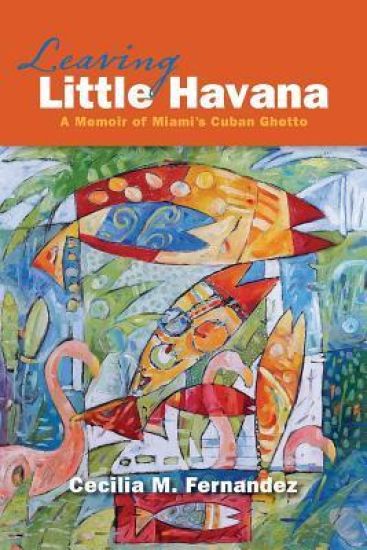
Leaving Little Havana

Leaving Little Havana

Cecilia M Fernandez

Beating Windward Press LLC
2014
pokkari
Literary Nonfiction. Latino/Latina Studies. Women's Studies. Revolution uprooted six-year-old Cecilia from her comfortable middle-class Cuban home and dropped her into the low-income Miami neighborhood of Little Havana. Her philandering father all but abandoned his family to focus on his mistress and rebuilding his career, chasing the American promise of wealth and freedom from the past. Her mother spiraled into madness trying to hold the family together and get him back. Neglected and trapped, Cecilia rebelled against her conservative heritage and embraced the 1960s counter-culture, seeking love and attention anywhere she could get it. And just maybe a place of her own in America. But immigrant children either thrive or self-destruct in a new land. How will Cecilia beat the odds? While most memoirs by Cuban-Americans revolve around childhood scenes in Cuba and explore the experiences of a young man, LEAVING LITTLE HAVANA is the first refugee memoir to focus on a Cuban girl growing up in America, rising above the obstacles and clearing a path to her dream."LEAVING LITTLE HAVANA is the compelling story of a Cuban girl seeking a new life in the U.S. with her family as the Cuban revolution unfolds in the early sixties. 'Cecilita's' personal account, and sexual awakening, is transparent, sad, and triumphant, sprinkled with anecdotes of an emerging Cuban- American landscape. In short, this book is a colorful reminiscence of historical scenes on both sides of the Straits of Florida, providing closure to a Cuban American journalist coming to terms with her turbulent past."--Guarione M. Diaz "LEAVING LITTLE HAVANA is a candid, touching, and engaging memoir of a young Cuban exile's coming of age. Cecilia Fernandez writes with passion and intensity, both of her missteps and her triumphs, casting fresh light on the American experience in the process."--Les Standiford "Every so often along comes a book that seizes you by the collar and arrests you on the spot. From page one, LEAVING LITTLE HAVANA is a brilliant, voice-driven book that will make your heart skip a few beats. My experience reading this book was similar to the first time I read The House on Mango Street by Sandra Cisneros when you instantly know you are reading a classic, a story so achingly beautiful and unforgettable you relish every last word as if it were the buzzing of a hummingbird at your lips feeding you honey. This book is about family, about what happens to family in exile, about how people come into a great world of struggle and manage to get by and survive. The author has a great gift for capturing that world-known enclave of Miami we love and call Little Havana. This might be the book that puts in the literary map for good and forever."--Virgil Suarez

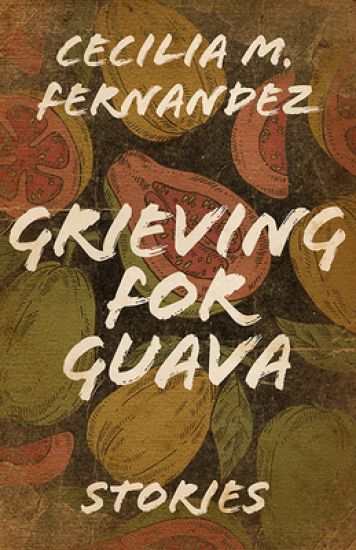
Grieving for Guava

Grieving for Guava

Cecilia M. Fernandez

The University Press of Kentucky
2020
sidottu
Castro's communist regime gained control of Cuba in 1959, sparking a surge of immigration to the United States, particularly Miami, as refugees sought a better life. But for many, Cuba will always be home. The island's stories pass from refugee to refugee, immigrant to grandchild, mingling hope for the future with grief for what's lost. Yet these stories also pass down a deep, unconscious desire for the unattainable, which often results in fractured relationships and a loss of purpose for both young and old. Grieving for Guava revels in the unbroken ties between past and future, Havana and Miami, and recounts the unintended generational costs of immigration. Ten stories explore the lives of Cuban refugees in Miami as they grapple with a longing for the past and a fervent need to move forward. Spanning six decades of the Cuban exile, these stories lay bare a collective struggle to overcome the destabilizing effects of migration and to reassemble splintered identities: A journalist returns to the island for a childhood toy. An investment banker leaves Miami to open a bookstore near the Malecon. A girl with cerebral palsy attempts to swim across the ocean to reach her lost home. Cecilia Fernandez artfully weaves together the complicated lives of her characters to produce an overarching sense of yearning for the past, transforming grief into an even more powerful force: communion.Grieving for Guava captures the heartache and hope that are common in the immigrant experience, adding a dynamic, human voice to the politically charged dialogue surrounding immigration.
Prácticas del Lenguaje en la Escuela Primaria

Prácticas del Lenguaje en la Escuela Primaria

Sandra S Alberdi; María Cecilia Zampatti; M Belén Fernández M

Editorial Academica Espanola
2019
pokkari
Este libro recupera conclusiones del proyecto "Pr cticas de lectura y escritura en el 2do. Ciclo de Educaci n Primaria", Instituto Nacional de Formaci n Docente e ISFD N 22 "Dr. Adolfo Alsina" (Olavarr a, Buenos Aires, Argentina). Indagamos en las pr cticas de lectura y escritura, las intervenciones de docentes orientadores y en formaci n, y las representaciones que subyacen a ellas. Desde una perspectiva cualitativa, la investigaci n articula los Profesorados de Lengua y Literatura y de Educaci n Primaria, en atenci n a las transformaciones te ricas, curriculares y pol ticas que atraviesa la educaci n primaria, de acuerdo al enfoque social de la escritura y en continuidad con niveles superiores. El rea Pr cticas del Lenguaje convoca, asimismo, las m ltiples habilidades comunicativas que los alumnos generan en sus experiencias con las tecnolog as interactivas. Es nuestra intenci n compartir estas reflexiones con la comunidad de docentes formadores, estudiantes e investigadores, como otros lectores interesados en la problem tica ense anza del lenguaje. En especial, cuando su uso competente constituye, m s que nunca, un poderoso dinamizador de igualaci n de oportunidades.
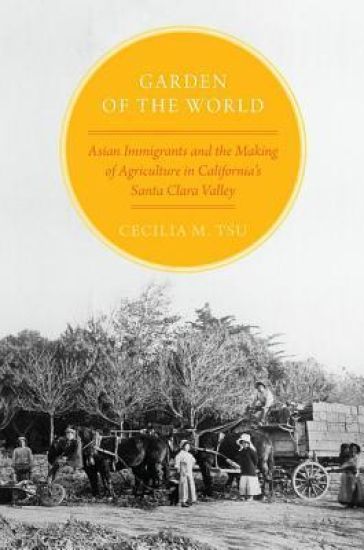
Garden of the World

Garden of the World

Cecilia M. Tsu

Oxford University Press Inc
2013
sidottu
Nearly a century before it became known as Silicon Valley, the Santa Clara Valley was world-renowned for something else: the succulent fruits and vegetables grown in its fertile soil. Virtually all farms were owned by whites, but the soil was largely worked by Asian immigrants. In Harvesting the American Dream, Cecilia Tsu tells the overlooked and intertwined histories of the land of the Santa Clara Valley and the Asian immigrants who cultivated it. Weaving together the story of the three overlapping waves of Asian migration from China, Japan, and the Philippines in the nineteenth and twentieth centuries, Tsu offers a comparative history that sheds light on white and Asian Californians' understandings of race, gender, and national identity. From the mid-nineteenth century on, white farmers had an increased need for labor, and Chinese immigrants willingly and disproportionately filled it. Despite this common labor arrangement, the idea of the independent family farm, worked solely by family members, became even more deeply entrenched, particularly in the West. Farm owners justified the labor of Chinese men as sojourning immigrants disconnected from family, capable of only menial agricultural work. They also viewed Asian crops as marginal, which justified their increasing reliance on foreign workers. Popular belief that the Chinese lacked a coherent family structure was later extended to the Japanese, even though immigrant families began settling in the Valley in the late 1910s. As the earlier family farm framework divided along crop and family lines fell apart, it was adapted, this time barring women from field work. The direct threat of Japanese family farming to the white family farm ideal, Tsu argues, played a significant role in the rise of discrimination against Asians through immigrant exclusion, denial of citizenship, and alien land laws. However, the mutual dependence that characterized Asian-white relations in the Santa Clara Valley prevented the area from becoming a hotbed of racial tension. Efforts to hold on to the white family farm ideal during the Depression led nonwhite laborers, primarily Filipino and Mexican, to be eyed suspiciously, as red-sympathizing foreigners whose involvement in labor militancy revealed a dormant anti-Americanism. Tsu simultaneously tells the story of this agricultural world from the perspectives of the Asian workers who sought to create their own American dream. They saw farming as not just a source of income, but also a way to bolster their community standing. Although they did not share a common heritage, the groups interacted with each other constantly and peacefully, patronizing each others' shops, working for the same landowners, sometimes living in the same area, and encountering many of the same stereotypes.
Garden of the World

Garden of the World

Cecilia M. Tsu

Oxford University Press Inc
2013
nidottu
Nearly a century before it became known as Silicon Valley, the Santa Clara Valley was world-renowned for something else: the succulent fruits and vegetables grown in its fertile soil. Virtually all farms were owned by whites, but the soil was largely worked by Asian immigrants. In Harvesting the American Dream, Cecilia Tsu tells the overlooked and intertwined histories of the land of the Santa Clara Valley and the Asian immigrants who cultivated it. Weaving together the story of the three overlapping waves of Asian migration from China, Japan, and the Philippines in the nineteenth and twentieth centuries, Tsu offers a comparative history that sheds light on white and Asian Californians' understandings of race, gender, and national identity. From the mid-nineteenth century on, white farmers had an increased need for labor, and Chinese immigrants willingly and disproportionately filled it. Despite this common labor arrangement, the idea of the independent family farm, worked solely by family members, became even more deeply entrenched, particularly in the West. Farm owners justified the labor of Chinese men as sojourning immigrants disconnected from family, capable of only menial agricultural work. They also viewed Asian crops as marginal, which justified their increasing reliance on foreign workers. Popular belief that the Chinese lacked a coherent family structure was later extended to the Japanese, even though immigrant families began settling in the Valley in the late 1910s. As the earlier family farm framework divided along crop and family lines fell apart, it was adapted, this time barring women from field work. The direct threat of Japanese family farming to the white family farm ideal, Tsu argues, played a significant role in the rise of discrimination against Asians through immigrant exclusion, denial of citizenship, and alien land laws. However, the mutual dependence that characterized Asian-white relations in the Santa Clara Valley prevented the area from becoming a hotbed of racial tension. Efforts to hold on to the white family farm ideal during the Depression led nonwhite laborers, primarily Filipino and Mexican, to be eyed suspiciously, as red-sympathizing foreigners whose involvement in labor militancy revealed a dormant anti-Americanism. Tsu simultaneously tells the story of this agricultural world from the perspectives of the Asian workers who sought to create their own American dream. They saw farming as not just a source of income, but also a way to bolster their community standing. Although they did not share a common heritage, the groups interacted with each other constantly and peacefully, patronizing each others' shops, working for the same landowners, sometimes living in the same area, and encountering many of the same stereotypes.
French Women Playwrights Before the Twentieth Century
Until recently, French women playwrights had received almost no critical attention and their works were for the most part completely unknown, but this volume is evidence of the important contribution they have made to world literature. It presents an extensive list of the dramatic works of more than 400 French women playwrights from the 16th through 19th centuries and includes brief biographical information, as well as publication, performance, and availability information for nearly 3,000 plays.The volume includes authors who are relatively unknown, as well as more canonical names such as Marguerite de Navarre and George Sand. The book is divided into four chapters, each devoted to a particular century with authors listed alphabetically. Each entry includes basic biographical information about the author, such as pseudonyms, place and date of birth and death, professions or activities for which the author is known, and other genres in which the author wrote. Plays are listed chronologically under the author's name.
French Women Playwrights of the Twentieth Century
This checklist is witness to the vast and varied production of 20th-century French women playwrights. Like Beach's preceding volume, French Women Playwrights Before the Twentieth Century: A Checklist (Greenwood, 1994), this reference book presents an extensive list of dramatic works. Beach provides biographical information about the authors when known, as well as name variations (pseudonyms, maiden name, other marriages, etc.)The plays are listed chronologically under each author's name, followed by a variety of information about each work: genre, the place and date of publication and performances, and the location of over 2000 texts in published or manuscript form in French holding libraries. The checklist also includes a title index and a bibliography. This book provides a useful research tool not only for scholars interested in drama and/or women's literature, but also for theatre professionals.
Breast Imaging: Case Review Series

Breast Imaging: Case Review Series

Cecilia M Brennecke

Saunders
2012
nidottu
Effectively prepare for certification, recertification, and practice with Breast Imaging: Case Review, 2nd Edition! Case studies illustrate how to make confident, final diagnoses through accurate pattern recognition, clinical correlation, and differential diagnosis. It's an ideal way to test and deepen your knowledge of all essential topics in breast imaging. Prepare for the new Board exam format with an updated organization that provides 4-5 multiple-choice review questions for each case. Review 200 cases organized by level of difficulty, with multiple-choice questions, answers, and rationales that mimic the new format of certification and recertification exams. Stay current with the aid of updated cases covering breast MR imaging, digital breast imaging, image-guided biopsy, imaging of high-risk lesions (ADH, LCIS), high-risk patient management, invasive lobular carcinoma, complex cystic cancer, male breast cancer, mucinous carcinoma, MRI of DCIS, desmoid tumors, and much more. See examples of the latest imaging approaches, including digital mammography, MRI, and color Doppler US.
Money and Outpatient Psychiatry

Money and Outpatient Psychiatry

Cecilia M. Mikalac

WW Norton Co
2005
sidottu
Designed for psychiatric clinicians of every profession (including psychologists, psychiatrists, social workers, and nurses) as well as for psychiatric educators and their trainees, Money and Outpatient Psychiatry moves readers toward new, effective, and money-wise practices. The book begins by offering a hands-on approach to assessing money management issues in a professional practice. Mikalac shows readers how to do an overall assessment of their financial situation (including how to estimate how much money must be earned to cover expenses) and how to plan for the inevitable financial ups and downs of private practice. The remainder of the first section deals with core issues such as legal and ethical issues (patient contract; informed consent; ethical principles for billing), accounting (understanding cash flow and keeping proper records), and taxes (including how to select the best form of business proprietorship). In the second section of the book Mikalac covers larger matters that affect the financial health of a psychiatric practice. Insurance, managed care, the effects of drug companies, the role of; incentives, kickbacks, and other potential conflicts of interest—all of these have an impact of the finances and stability of a practice. These issues are also often of paramount importance to patients, but less often thought about by the practitioner. The final part of the book discusses managing money with patients. Mental health professionals need to know how to discuss money and billing with patients, how to negotiate patient fee reductions (and handle increases), how to manage non-payment (how to avoid this happening as well as what to do when it does), and issues of money transference. Mikalac offers guidelines for how to be money-smart when it comes to working with patients. Money and Outpatient Psychiatry is a resource for psychiatric clinicians of every profession. Whether you are new to private practice or have been working for years without a strong financial plan, this book contains all the information you need to make money matters easier and money management more efficient.
Individual Differences in Language Development

Individual Differences in Language Development

Cecilia M. Shore

SAGE Publications Inc
1995
sidottu
Do all children learn language in the same way? Is the apparent "fast" vs. "slow" language learning rate among children a reflection of the individual child's approach to language acquisition? This volume explores the importance that individual differences have in acquiring language and challenges some of the widely held theories of linguistic development. Focusing on children ages one to three, the author describes characteristic differences in terms of vocabulary, grammatical, and phonological development, and considers whether distinctive "styles" of language development can be defined. In addition, the social and cognitive influences that can explain these differences are examined. The book concludes with a look at new language theories such as ecological, chaos, and connectionist approaches and considers what individual differences in development can tell us about the mechanisms of language development. Individual Differences in Language Development is invaluable for professionals and researchers in developmental psychology, family studies, education, psychology, and communication. "Cecilia M. Shore puts forward an alternative theory on differences in language development and offers an important message on the significance of context in children's early language acquisition. The principal theme has significant implications for further research as well as practical implications for teacher trainers, teachers and parents." --Durante's "Cecilia M. Shore writes in a warm and engaging style. . . . It serves her purpose well: to put across complex ideas in a clear and unforgettable form. . . . The content is right on target. Shore covers all the relevant issues in this complex area, and her review is right up to date." --Elizabeth Bates, Professor of Psychology and Professor of Cognitive Science, University of California, San Diego
Individual Differences in Language Development

Individual Differences in Language Development

Cecilia M. Shore

SAGE Publications Inc
1995
nidottu
Do all children learn language in the same way? Is the apparent "fast" vs. "slow" language learning rate among children a reflection of the individual child's approach to language acquisition? This volume explores the importance that individual differences have in acquiring language and challenges some of the widely held theories of linguistic development. Focusing on children ages one to three, the author describes characteristic differences in terms of vocabulary, grammatical, and phonological development, and considers whether distinctive "styles" of language development can be defined. In addition, the social and cognitive influences that can explain these differences are examined. The book concludes with a look at new language theories such as ecological, chaos, and connectionist approaches and considers what individual differences in development can tell us about the mechanisms of language development. Individual Differences in Language Development is invaluable for professionals and researchers in developmental psychology, family studies, education, psychology, and communication. "Cecilia M. Shore puts forward an alternative theory on differences in language development and offers an important message on the significance of context in children's early language acquisition. The principal theme has significant implications for further research as well as practical implications for teacher trainers, teachers and parents." --Durante's "Cecilia M. Shore writes in a warm and engaging style. . . . It serves her purpose well: to put across complex ideas in a clear and unforgettable form. . . . The content is right on target. Shore covers all the relevant issues in this complex area, and her review is right up to date." --Elizabeth Bates, Professor of Psychology and Professor of Cognitive Science, University of California, San Diego
Salvadoran Imaginaries

Salvadoran Imaginaries

Cecilia M. Rivas

Rutgers University Press
2014
nidottu
Ravaged by civil war throughout the 1980s and 1990s, El Salvador has now emerged as a study in contradictions. It is a country where urban call centers and shopping malls exist alongside rural poverty. It is a land now at peace but still grappling with a legacy of violence. It is a place marked by deep social divides, yet offering a surprising abundance of inclusive spaces. Above all, it is a nation without borders, as widespread emigration during the war has led Salvadorans to develop a truly transnational sense of identity.In Salvadoran Imaginaries, Cecilia M. Rivas takes us on a journey through twenty-first century El Salvador and to the diverse range of sites where the nation’s postwar identity is being forged. Combining field ethnography with media research, Rivas deftly toggles between the physical spaces where the new El Salvador is starting to emerge and the virtual spaces where Salvadoran identity is being imagined, including newspapers, literature, and digital media. This interdisciplinary approach enables her to explore the multitude of ways that Salvadorans negotiate between reality and representation, between local neighborhoods and transnational imagined communities, between present conditions and dreams for the future. Everyday life in El Salvador may seem like a simple matter, but Rivas digs deeper, across many different layers of society, revealing a wealth of complex feelings that the nation’s citizens have about power, opportunity, safety, migration, and community. Filled with first-hand interviews and unique archival research, Salvadoran Imaginaries offers a fresh take on an emerging nation and its people.
Salvadoran Imaginaries

Salvadoran Imaginaries

Cecilia M. Rivas

Rutgers University Press
2014
sidottu
Ravaged by civil war throughout the 1980s and 1990s, El Salvador has now emerged as a study in contradictions. It is a country where urban call centers and shopping malls exist alongside rural poverty. It is a land now at peace but still grappling with a legacy of violence. It is a place marked by deep social divides, yet offering a surprising abundance of inclusive spaces. Above all, it is a nation without borders, as widespread emigration during the war has led Salvadorans to develop a truly transnational sense of identity.In Salvadoran Imaginaries, Cecilia M. Rivas takes us on a journey through twenty-first century El Salvador and to the diverse range of sites where the nation’s postwar identity is being forged. Combining field ethnography with media research, Rivas deftly toggles between the physical spaces where the new El Salvador is starting to emerge and the virtual spaces where Salvadoran identity is being imagined, including newspapers, literature, and digital media. This interdisciplinary approach enables her to explore the multitude of ways that Salvadorans negotiate between reality and representation, between local neighborhoods and transnational imagined communities, between present conditions and dreams for the future. Everyday life in El Salvador may seem like a simple matter, but Rivas digs deeper, across many different layers of society, revealing a wealth of complex feelings that the nation’s citizens have about power, opportunity, safety, migration, and community. Filled with first-hand interviews and unique archival research, Salvadoran Imaginaries offers a fresh take on an emerging nation and its people.
Without Strings

Without Strings

Cecilia M Pulliam

Createspace Independent Publishing Platform
2017
pokkari
Living in a famous luxury resort is paradise ... until stolen Russian jewels and an abusive ex-husband appear. Accidental billionaire, Paul Solbrig complicates Mary Conolly's life even more. He isn't accustomed to her generosity. He would rather give than receive, but she wants nothing from him in return, not even his heart. When the poor choices of others throw Mary's world into a tailspin, she realizes her decisions will determine if she will be the victim, the survivor, or the hero. Perhaps all three.