Kirjojen hintavertailu. Mukana 11 213 693 kirjaa ja 12 kauppaa.

Kirjahaku

Etsi kirjoja tekijän nimen, kirjan nimen tai ISBN:n perusteella.

151 tulosta hakusanalla Cees Hamelink

The Ethics of Cyberspace

The Ethics of Cyberspace

Cees Hamelink

SAGE Publications Inc
2000
sidottu
In this book, Cees J Hamelink proposes an answer to - how should democratic societies organize cyberspace? - that puts human-rights, rather than profit, at the top of the agenda. He argues that conventional ethical approaches are all seriously flawed. There is a growing volume of moral rules, netiquettes and codes of conduct, but they are of little help in solving the moral dilemmas raised by the new technologies. In this book the author analyzes the inadeqacies of current global governance policies and structures that underpin them, and argues for standards which put justice, human security and freedom first.
The Ethics of Cyberspace

The Ethics of Cyberspace

Cees Hamelink

SAGE Publications Inc
2000
nidottu
In this book, Cees J Hamelink proposes an answer to - how should democratic societies organize cyberspace? - that puts human-rights, rather than profit, at the top of the agenda. He argues that conventional ethical approaches are all seriously flawed. There is a growing volume of moral rules, netiquettes and codes of conduct, but they are of little help in solving the moral dilemmas raised by the new technologies. In this book the author analyzes the inadeqacies of current global governance policies and structures that underpin them, and argues for standards which put justice, human security and freedom first.
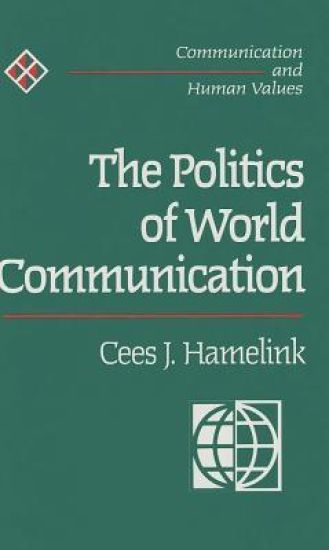
The Politics of World Communication

The Politics of World Communication

Cees Hamelink

SAGE Publications Ltd
1994
sidottu
Communication plays a central part in the increasing global interconnectedness of contemporary societies, nations and economies. In this book Cees J Hamelink examines the political processes and decisions which determine the global communication environment. Mass communication, telecommunication, data traffic, intellectual property and communication technology have all been regulated by agreements within the international community. Examining negotiation processes and their outcomes, the author offers an analysis of the global politics of communication and its implications for specific nations, areas and communities. Underlying the analysis is a fundamental concern with communication as an issue of human rights which raises the question: Do the standards agreed on world communication address the interests of ordinary people in their everyday lives?
The Politics of World Communication

The Politics of World Communication

Cees Hamelink

SAGE Publications Ltd
1994
nidottu
Communication plays a central part in the increasing global interconnectedness of contemporary societies, nations and economies. In this book Cees J Hamelink examines the political processes and decisions which determine the global communication environment. Mass communication, telecommunication, data traffic, intellectual property and communication technology have all been regulated by agreements within the international community. Examining negotiation processes and their outcomes, the author offers an analysis of the global politics of communication and its implications for specific nations, areas and communities. Underlying the analysis is a fundamental concern with communication as an issue of human rights which raises the question: Do the standards agreed on world communication address the interests of ordinary people in their everyday lives?
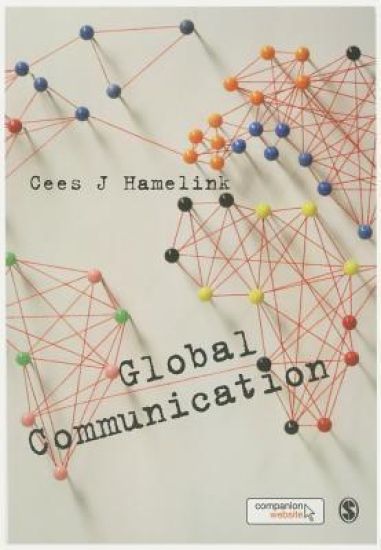
Global Communication

Global Communication

Cees Hamelink

SAGE Publications Ltd
2014
sidottu
"Comprehensive in its scope and scale, rigorously argued and richly illustrated with wide-ranging examples, this clearly written and user-friendly book from a veteran commentator on international communication will be valuable for students and scholars. Strongly recommended." - Daya Thussu, Professor of International Communication, University of Westminster Global Communication explores the history, present and future of global communication, introducing and explaining the theories, stories and flows of information and media that affect us all. Based on his experience teaching generations of students to critically examine the world of communication around them, Cees Hamelink helps readers understand the thinkers, concepts and questions in this changing landscape. This book: Explores the cultural, economic, political and social dimensions and consequences of global communicationIntroduces the key thinkers who have been inspirational to the fieldTeaches you to master the art of asking critical questionsTakes you through concrete cases from UN summits to hot lines and cyber-surveillanceBoosts your essay skills with a guided tour of the literature, including helpful comments and recommendations of what to citeBrings you directly into the classroom with a series of video lectures This book guides students through the complex terrain of global communication, helping you become a critically informed participant in the ever-changing communication landscape. It is essential reading for students of communication and media studies.
Global Communication

Global Communication

Cees Hamelink

SAGE Publications Ltd
2014
nidottu
"Comprehensive in its scope and scale, rigorously argued and richly illustrated with wide-ranging examples, this clearly written and user-friendly book from a veteran commentator on international communication will be valuable for students and scholars. Strongly recommended." - Daya Thussu, Professor of International Communication, University of Westminster Global Communication explores the history, present and future of global communication, introducing and explaining the theories, stories and flows of information and media that affect us all. Based on his experience teaching generations of students to critically examine the world of communication around them, Cees Hamelink helps readers understand the thinkers, concepts and questions in this changing landscape. This book: Explores the cultural, economic, political and social dimensions and consequences of global communicationIntroduces the key thinkers who have been inspirational to the fieldTeaches you to master the art of asking critical questionsTakes you through concrete cases from UN summits to hot lines and cyber-surveillanceBoosts your essay skills with a guided tour of the literature, including helpful comments and recommendations of what to citeBrings you directly into the classroom with a series of video lectures This book guides students through the complex terrain of global communication, helping you become a critically informed participant in the ever-changing communication landscape. It is essential reading for students of communication and media studies.
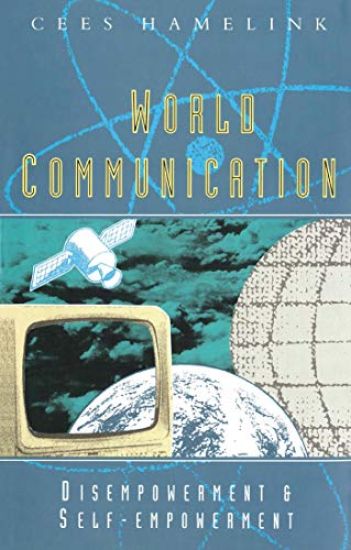
World Communication

World Communication

Cees Hamelink

Zed Books Ltd
1995
nidottu
One of the world‘s leading mass communication researchers here presents an accessible guide to the current state of global communication. He first sets the scene by exploring the notion of the ‘global village‘. He looks at how the media, globally, define ‘newsworthiness‘ as well as the machinations of the international media marketplace. The book then presents a full history of world communication - from carrier pigeons to the Internet - exploring the factors that have shaped that history, including technological development and international relations, state manipulation, and the interests of trans-national corporations. The third section explores recent communication trends that have had the most profound effect on the world‘s people - digitalization, consolidation, deregulation and globalization. Finally, the book looks at the idea of empowerment as applied to communication. It shows how global communication in its current manifestation is profoundly disempowering. The book ends with Professor Hamelink‘s ideas for changing this and a draft ‘People‘s Communication Charter‘.
Media and Conflict

Media and Conflict

Cees Jan Hamelink

Paradigm
2010
sidottu
The world faces explosive conflicts about the distribution and scarcity of resources, about ethnicity and religion, and about the risks of urban life. These conflicts can easily spiral out of control toward mass slaughter-an evil of huge proportions that is often escalated by the media. What should be done to prevent this lethal trend? We need to understand how the 'spiral of escalation' works. How do media create anxiety, provide space for agitation, and disconnect people? Three approaches to the prevention of mass mediated aggression are proposed in this book: an early warning system for incitement to mass destruction, the invitation to disarming conversations in urban space, and the teaching of 'compassionate communication' to children and others. Alertness to the recurrence of collective violence is urgently needed not only in unstable and poor societies, but also in established democracies. Ordinary people can be incited to the mass slaughter of other ordinary people anywhere. Understanding the media's role in this and acting to prevent it are key goals of this book.
Media and Conflict

Media and Conflict

Cees Jan Hamelink

Paradigm
2011
nidottu
The world faces explosive conflicts about the distribution and scarcity of resources, about ethnicity and religion, and about the risks of urban life. These conflicts can easily spiral out of control toward mass slaughter-an evil of huge proportions that is often escalated by the media. What should be done to prevent this lethal trend? We need to understand how the 'spiral of escalation' works. How do media create anxiety, provide space for agitation, and disconnect people? Three approaches to the prevention of mass mediated aggression are proposed in this book: an early warning system for incitement to mass destruction, the invitation to disarming conversations in urban space, and the teaching of 'compassionate communication' to children and others. Alertness to the recurrence of collective violence is urgently needed not only in unstable and poor societies, but also in established democracies. Ordinary people can be incited to the mass slaughter of other ordinary people anywhere. Understanding the media's role in this and acting to prevent it are key goals of this book.
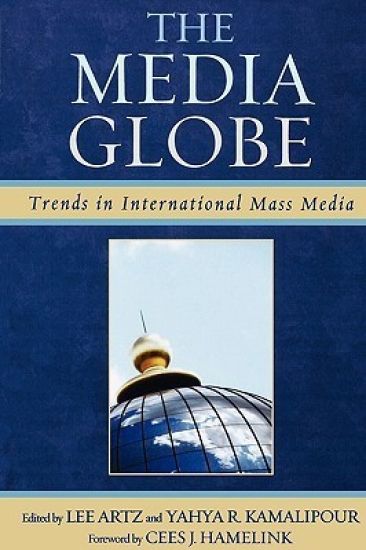
The Media Globe

The Media Globe

Cees J. Hamelink

Rowman Littlefield Publishers
2006
sidottu
The Media Globe is a multifaceted look at contemporary trends in media practices in regions beyond the United States, including Africa, Asia, Europe, the Middle East, Latin America, and Australia. A diverse group of respected scholars follows the emerging patterns in a variety of media worldwide, identifying the existing and developing issues and the potential impacts on democratic communication. They also assess the current tensions between ongoing global media practices and local or regional cultural norms. Using theoretical approaches such as 'glocalization,' hybridity, hegemony, cultural imperialism, and world-systems theory, the authors consider alternative scenarios for global communication that could better mesh with these cultural norms and practices. Given the rapid global consolidation of media and the resulting reform of its regulatory agencies, this reassessment is a timely and important read.
The Media Globe

The Media Globe

Cees J. Hamelink

Rowman Littlefield Publishers
2006
nidottu
The Media Globe is a multifaceted look at contemporary trends in media practices in regions beyond the United States, including Africa, Asia, Europe, the Middle East, Latin America, and Australia. A diverse group of respected scholars follows the emerging patterns in a variety of media worldwide, identifying the existing and developing issues and the potential impacts on democratic communication. They also assess the current tensions between ongoing global media practices and local or regional cultural norms. Using theoretical approaches such as "glocalization," hybridity, hegemony, cultural imperialism, and world-systems theory, the authors consider alternative scenarios for global communication that could better mesh with these cultural norms and practices. Given the rapid global consolidation of media and the resulting reform of its regulatory agencies, this reassessment is a timely and important read.
Communication and Human Rights

Communication and Human Rights

Cees J. Hamelink

JOHN WILEY AND SONS LTD
2023
sidottu
Human rights and communication are deeply connected: human rights need communication to expose violations and to offer platforms for dialogue, while communication needs human rights to provide standards for free speech and confidentiality. Together, they confront the reality of today’s social and international order in which justice and understanding often seem unattainable.In this book, Cees J. Hamelink guides the reader through the historical evolution of communication and human rights. In this original framework, he discusses topics such as the right to communicate and freedom of expression, as well as major challenges posed by the environmental crisis and digital technologies. With authority, he passionately argues that ‘communicative justice’ is the ultimate goal of applying the international human rights regime to different forms of communication. This goal can only be achieved if we manage to move from the prevailing ‘thin’ liberal conception of human rights to a ‘thick’ cosmopolitan conception of them.Written by one of the world’s leading scholars in this area, this wide-ranging book will be of interest to students of media and communication, human rights scholars, as well as practitioners, activists and anyone interested in applying the notion of justice to the basis of human existence: communication.
Communication and Human Rights

Communication and Human Rights

Cees J. Hamelink

JOHN WILEY AND SONS LTD
2023
nidottu
Human rights and communication are deeply connected: human rights need communication to expose violations and to offer platforms for dialogue, while communication needs human rights to provide standards for free speech and confidentiality. Together, they confront the reality of today’s social and international order in which justice and understanding often seem unattainable.In this book, Cees J. Hamelink guides the reader through the historical evolution of communication and human rights. In this original framework, he discusses topics such as the right to communicate and freedom of expression, as well as major challenges posed by the environmental crisis and digital technologies. With authority, he passionately argues that ‘communicative justice’ is the ultimate goal of applying the international human rights regime to different forms of communication. This goal can only be achieved if we manage to move from the prevailing ‘thin’ liberal conception of human rights to a ‘thick’ cosmopolitan conception of them.Written by one of the world’s leading scholars in this area, this wide-ranging book will be of interest to students of media and communication, human rights scholars, as well as practitioners, activists and anyone interested in applying the notion of justice to the basis of human existence: communication.
The Technology Gamble

The Technology Gamble

Cees J. Hamelink

Praeger Publishers Inc
1988
sidottu
This volume concerns decision making in informatics and is suitable as a basic introduction to the field--the technology, the industry, the applications, and the key issues. It deals with the critical question of how to make choices in this rapidly expanding and pervasive field. The author suggests that to date there have not been any valid methods to assess the future social impact of technological development. Therefore, this volume puts forth a new descriptive and normative model of technological choice and offers a critical analysis of efforts to improve decision making through technological assessment or risk analysis.
Mass Communication Research

Mass Communication Research

Cees J. Hamelink

Praeger Publishers Inc
1994
nidottu
This book pays special tribute to Professor James D. Halloran at his retirement after 18 years as president of the International Association for Mass Communication Research. Each chapter is a succinct learning unit in the field of mass communications.
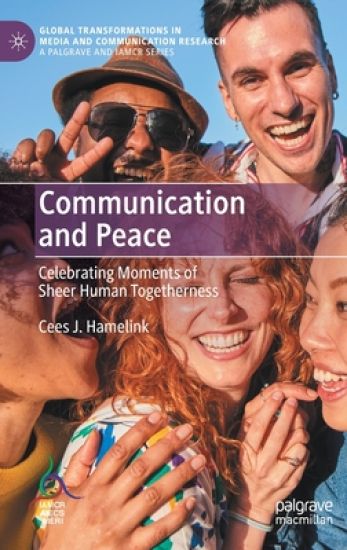
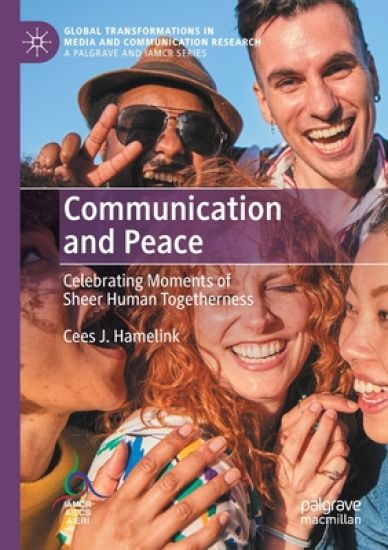
Communication and Peace

Communication and Peace

Cees J. Hamelink

Palgrave Macmillan
2020
sidottu
This book provides a robust conceptualization of peace. Hamelink defines peace as conceived of moments of celebrating human togetherness, with deep fractures that polarize society standing in the way of collectively celebrating togetherness and posing a serious existential risk to humanity. ‘Deep dialogue’ is the form of human cooperative communication that is needed to build communities that can overcome polarization. This is the most difficult form of human conversation as it is based upon trust, mutuality, patience and freedom, and requires safe, non-threatening spaces, but this book explains how to overcome the essential obstacles that prevent this dialogue. To curate a ‘deep dialogue’ we must turn to humanity’s unique resource: our ability to communicate pro-socially and cooperatively.
Communication and Peace

Communication and Peace

Cees J. Hamelink

Palgrave Macmillan
2020
nidottu
This book provides a robust conceptualization of peace. Hamelink defines peace as conceived of moments of celebrating human togetherness, with deep fractures that polarize society standing in the way of collectively celebrating togetherness and posing a serious existential risk to humanity. ‘Deep dialogue’ is the form of human cooperative communication that is needed to build communities that can overcome polarization. This is the most difficult form of human conversation as it is based upon trust, mutuality, patience and freedom, and requires safe, non-threatening spaces, but this book explains how to overcome the essential obstacles that prevent this dialogue. To curate a ‘deep dialogue’ we must turn to humanity’s unique resource: our ability to communicate pro-socially and cooperatively.
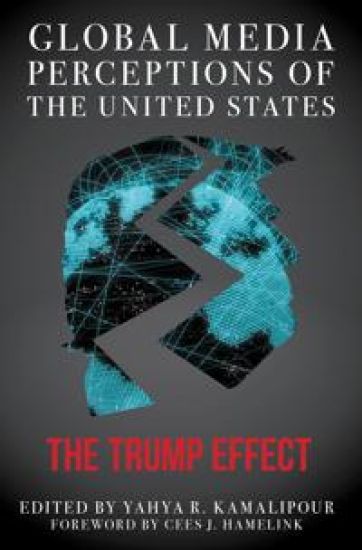
Global Media Perceptions of the United States

Global Media Perceptions of the United States

Cees J. Hamelink

Rowman Littlefield
2021
sidottu
In view of the tumultuous national and global environments and controversial views of Donald J. Trump’s presidency, this timely book is intended to inform readers of various nations’ perceptions and media coverage of the United States. Thirty-six accomplished and prominent media, communication, and journalism scholars--representing 20 countries--will methodically research and assess their respective country’s perceptions of the United States through content and discourse analysis of their major national newspapers, social media, and/or comprehensive public opinion surveys. This book offers a unique cross-cultural approach that interprets and helps students to understand the image of the USA and its current President Donald Trump through the eyes of politicians, media personalities and ordinary people across the globe.Unmatched with any publication, this book will provide a valuable and much-needed global perspective of the US through the eyes of other peoples and cultures. About the Editor A noted global media and communication scholar, Dr. Yahya R. Kamalipour is a professor of communications and former chair of the Department of Journalism and Mass Communication, North Carolina A&T State University. Previously he served, for 28 years, as professor and head of the Department of Communication and Creative Arts, Purdue University Northwest. His areas of interest and research include globalization, media impact, international communication, Middle East media, and new communication technologies. Profiled in the Contemporary Authors, he has published eighteen books, including the acclaimed Global Communication: A Multicultural Perspective (3rd edition), Global Discourse in Fractured Times, and Media, Power, and Politics in the Digital Age. He has served as an international consultant for several colleges and universities and on advisory/editorial boards of a dozen prominent communication journals. He is founding director of the Global Media Journals network and founding president of the Global Communication Association. Kamalipour has visited over sixty-five countries and has been interviewed by major newspapers and broadcast media around the world. He earned his PhD in communication at the University of Missouri-Columbia, MA in mass media at the University of Wisconsin-Superior, and BA in mass communication-public relations at the Minnesota State University. For additional information visit www.kamalipour.com.
Global Media Perceptions of the United States

Global Media Perceptions of the United States

Cees J. Hamelink

ROWMAN LITTLEFIELD
2022
nidottu
As a timely portrait of international perceptions and media coverage of the United States, this comprehensive collection reveals the global effects of the tumultuous environments and controversial views promoted during the Donald J. Trump presidency.More than thirty accomplished and prominent media, communication, and journalism scholars represent twenty countries with methodically researched assessments of their respective country’s major national newspapers, social media, or comprehensive public opinion surveys. Together, these analyses offer a unique cross-cultural approach that helps students and scholars understand the image of the USA and President Trump through the eyes of politicians, media personalities, and ordinary people across the globe.