Kirjojen hintavertailu. Mukana 11 342 296 kirjaa ja 12 kauppaa.

Kirjahaku

Etsi kirjoja tekijän nimen, kirjan nimen tai ISBN:n perusteella.

133 tulosta hakusanalla Chalabi Fadhil J.

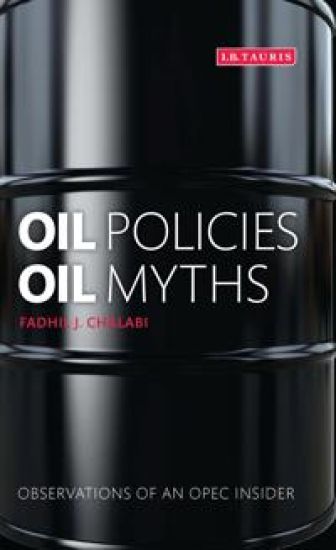
Oil Policies, Oil Myths

Oil Policies, Oil Myths

Chalabi Fadhil J.

I.B. Tauris
2010
sidottu
The Organisation of Petroleum Exporting Countries, commonly known as OPEC, has been a notoriously opaque and mysterious organization. In this book, Fadil J. Chalabi, an insider who spent many years at the heart of the organization as Iraq's permanent undersecretary for oil, invites us to discover the intrigue and arguments that have shaped OPEC policy since its inception in 1960. The author interweaves his analysis with first-hand experiences that give authenticity to momentous events, including the infamous 1975 Vienna hostage-taking when Carlos the Jackal kidnapped a number of OPEC ministers, including the author. From the time of Egypt under Nasser, Gaddafi's Libya, Saddam's Iraq and Khomeini's Iranian revolution, Chalabi uses his unique position and his unparallelled insider knowledge to illuminate an organization that has, at times, been accused of fomenting economic turmoil, political unrest and even military action. Benefiting from the perspective of an insider who understands the inner workings of OPEC and its dramatic impact on world politics and economics, this book is an essential read for those who wish to look beyond the myths of this highly influential and at times controversial organization.
Late for Tea at the Deer Palace

Late for Tea at the Deer Palace

Tamara Chalabi

HARPER PERENNIAL
2012
nidottu
"It's an admirable endeavor to have Iraq addressed by someone who is in so many ways able to approach it from two worlds. . . . Tamara Chalabi has the stuff, in every sense, that is needful to undertake this." --Christopher HitchensIn the tradition of Jung Chang's Wild Swans and Bhutto Benazir's Reconciliation comes Tamara Chalabi's unique memoir of returning to her family's homeland, Iraq. In this epic story of one daughter's journey through the annals of her family's tumultuous history, Chalabi's powerful voice and piercing vision illuminate her country and its people as never before.Just ten days after Baghdad's fall in 2003, Tamara Chalabi arrived in the city after a lifetime in exile--finally entering the homeland she'd known only through stories and her own imagination.Investigating four generations of her family's history at the forefront of Iraqi society, Chalabi offers a rich portrait of Middle Eastern life and a provocative look at a lost Iraq. Unforgettable characters provide glimpses of the end of the Ottoman Empire, the birth of the Iraqi state, the flowering of "the Paris of the Middle East," and Iraq's descent into chaos. At once intimate and magisterial, Chalabi's memoir of return and reclamation vividly captures the rich history of a country shattered by war and a family that has never forgotten its past.
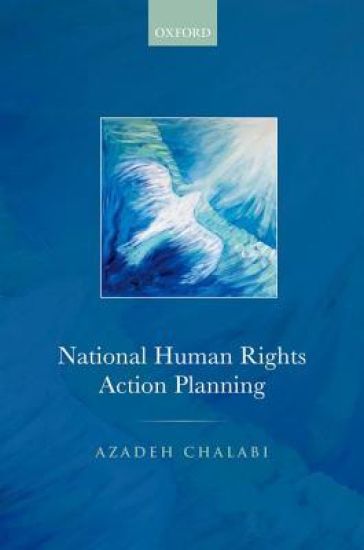
National Human Rights Action Planning

National Human Rights Action Planning

Azadeh Chalabi

Oxford University Press
2018
sidottu
This book deals with human rights action planning, as a largely under-researched area, from theoretical, doctrinal, empirical, and practical perspectives, and as such, provides the most comprehensive studies of human rights planning to date. At the theoretical level, by advancing a novel general theory of human rights planning, it offers an alternative to the traditional state-centric model of planning. This new theory contains four sub-theories: contextual, substantive, procedural, and analytical ones. At the doctrinal level, by conducting a textual analysis of core human rights conventions, it reveals the scope and nature of the states' obligation to adopt a plan of action for implementing human rights. At the empirical level, a cross-case analysis of national human rights action plans of 53 countries is conducted exploring the major problems of these plans in different phases of planning and uncovering the underlying causes of these problems. At the practical level, this volume sets out how these plans should be developed and implemented, how they can be best monitored by international human rights bodies, and how to maximize their effectiveness. With discussions bridging human rights theory and practice and development discourse, this book will be a useful resource for a wide range of audiences, from academics of different disciplines (law, human rights, social policy, political science, political philosophy, legal philosophy, development studies, planning studies, socio-legal studies) to governments, human rights practitioners, and the UN human rights bodies.