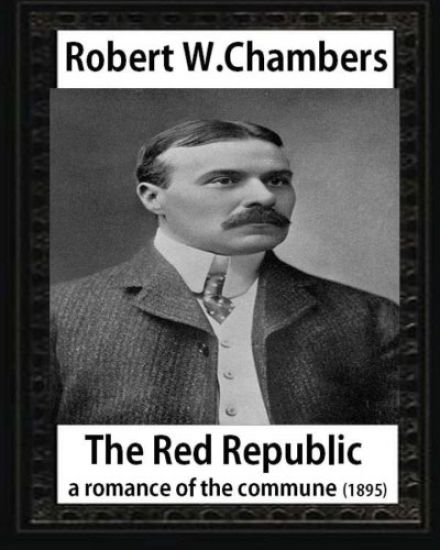
This scarce antiquarian book is a facsimile reprint of the original.This is a pre-1923 historical reproduction.Robert William Chambers (May 26, 1865 - December 16, 1933) was an American artist and fiction writer, best known for his book of short stories entitled The King in Yellow, published in 1895. He was born in Brooklyn, New York, to William P. Chambers (1827-1911), a notable corporate and bankruptcy lawyer, and Caroline Smith Boughton (1842-1913). His parents met when Caroline was twelve years old and William P. was interning with her father, Joseph Boughton, a prominent corporate lawyer. Eventually the two formed the law firm of Chambers and Boughton which continued to prosper even after Joseph's death in 1861. Robert's great-grandfather, William Chambers (birth unknown), a lieutenant in the British Royal Navy, was married to Amelia Saunders, (1765-1822), the great grand daughter of Tobias Saunders, of Westerly, Rhode Island. The couple moved from Westerly, to Greenfield, Massachusetts and then to Galway, New York, where their son, also William Chambers, (1798-1874) was born. The second William graduated from Union College at the age of 18, and then went to a college in Boston, where he studied to be a doctor. Upon graduating he and his wife, Eliza P. Allen, (1793-1880) a direct descendant of Roger Williams, 1] the founder of Providence, Rhode Island were among the first settlers of Broadalbin, New York. His brother was architect Walter Boughton Chambers. Robert was first educated at the Brooklyn Polytechnic Institute, and then entered the Art Students' League at around the age of twenty, where the artist Charles Dana Gibson was his fellow student. Chambers studied at the cole des Beaux-Arts, and at Acad mie Julian, in Paris from 1886 to 1893, and his work was displayed at the Salon as early as 1889. On his return to New York, he succeeded in selling his illustrations to Life, Truth, and Vogue magazines. Then, for reasons unclear, he devoted his time to writing, producing his first novel, In the Quarter (written in 1887 in Munich). His most famous, and perhaps most meritorious, effort is The King in Yellow, a collection of Art Nouveau short stories published in 1895. This included several famous weird short stories which are connected by the theme of a fictitious drama of the same title, which drives those who read it insane. E. F. Bleiler described The King in Yellow as one of the most important works of American supernatural fiction. 3] It was also strongly admired by H. P. Lovecraft and his circle. On July 12, 1898, he married Elsa Vaughn Moller (1882-1939). They had a son, Robert Edward Stuart Chambers (who sometimes used the name Robert Husted Chambers). Robert W. Chambers died on December 16, 1933, after having undergone intestinal surgery three days earlier.
"Do we part here?" I asked, sorry to quit my chance acquaintance of the Johnstown highway. He nodded, yawned again, and removed his round cap of silver-fox fur to scratch his curly head. "We certainly do part at these cross-roads, if you are bound for Varicks'," he said. I waited a moment, then thanked him for the pleasant entertainment his company had afforded me, and wished him a safe journey. "A safe journey?" he repeated, carelessly. "Oh yes, of course; safe journeys are rare enough in these parts. I'm obliged to you for the thought. You are very civil, sir. Good-bye." Robert William Chambers (May 26, 1865 - December 16, 1933) was an American artist and fiction writer, best known for his book of short stories entitled The King in Yellow, published in 1895.He was born in Brooklyn, New York, to William P. Chambers (1827-1911), a notable corporate and bankruptcy lawyer, and Caroline Smith Boughton (1842-1913). His parents met when Caroline was twelve years old and William P. was interning with her father, Joseph Boughton, a prominent corporate lawyer. Eventually the two formed the law firm of Chambers and Boughton which continued to prosper even after Joseph's death in 1861. Robert's great-grandfather, William Chambers (birth unknown), a lieutenant in the British Royal Navy, was married to Amelia Saunders, (1765-1822), the great grand daughter of Tobias Saunders, of Westerly, Rhode Island. The couple moved from Westerly, to Greenfield, Massachusetts and then to Galway, New York, where their son, also William Chambers, (1798-1874) was born. The second William graduated from Union College at the age of 18, and then went to a college in Boston, where he studied to be a doctor. Upon graduating he and his wife, Eliza P. Allen, (1793-1880) a direct descendant of Roger Williams the founder of Providence, Rhode Island were among the first settlers of Broadalbin, New York. His brother was architect Walter Boughton Chambers
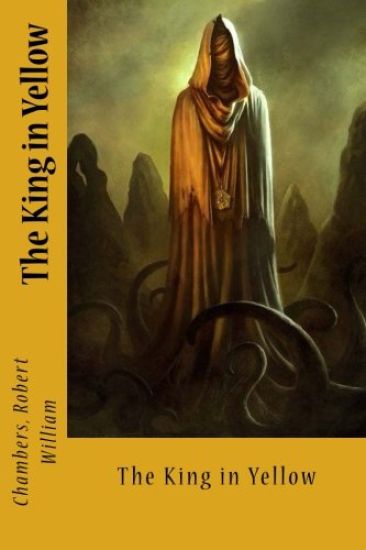
The book is named after a fictional play with the same title which recurs as a motif through some of the stories. The first half of the book features highly esteemed weird stories, and the book is described by S.T. Joshi as a classic in the field of the supernatural. There are 10 stories, the first four of which, "The Repairer of Reputations", "The Mask", "In the Court of the Dragon" and "The Yellow Sign", mention The King in Yellow, a forbidden play which induces despair or madness in those who read it. "The Yellow Sign" inspired a film of the same name released in 2001.
The stories feature a man who searches for lost species -- animals not seen for centuries -- and as we follow him on these journeys we're introduced to a variety of amazing creatures including the half-man, half-amphibian called "the harbor master".
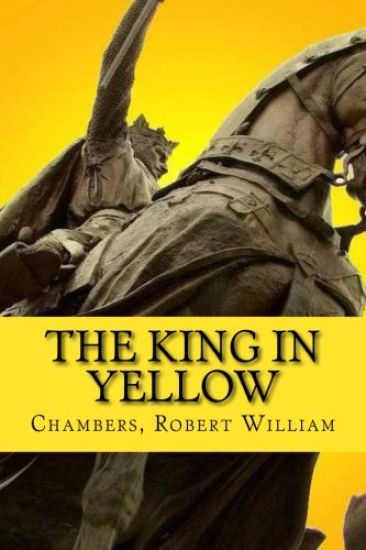
The King in Yellow is a book of short stories by American writer Robert W. Chambers, first published by F. Tennyson Neely in 1895. The book is named after a play with the same title which recurs as a motif through some of the stories. The first half of the book features highly esteemed weird stories, and the book has been described by critics such as E. F. Bleiler, S. T. Joshi and T. E. D. Klein as a classic in the field of the supernatural. There are ten stories, the first four of which ("The Repairer of Reputations", "The Mask", "In the Court of the Dragon", and "The Yellow Sign") mention The King in Yellow, a forbidden play which induces despair or madness in those who read it. "The Yellow Sign" inspired a film of the same name released in 2001.