Kirjojen hintavertailu. Mukana 11 342 296 kirjaa ja 12 kauppaa.

Kirjahaku

Etsi kirjoja tekijän nimen, kirjan nimen tai ISBN:n perusteella.

1000 tulosta hakusanalla Charles B. Hersch

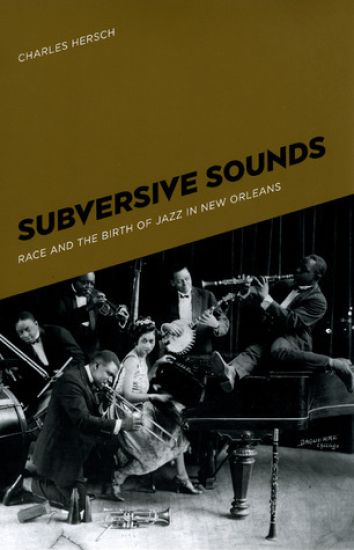
Subversive Sounds

Subversive Sounds

Charles B. Hersch

University of Chicago Press
2008
sidottu
"Subversive Sounds" probes New Orleans' history, uncovering a web of racial interconnections and animosities that was instrumental to the creation of a vital American art form - jazz. Drawing on oral histories, police reports, newspaper accounts, and vintage recordings, Charles Hersch brings to vivid life the neighborhoods and nightspots where jazz was born. This volume shows how musicians such as Jelly Roll Morton, Nick La Rocca, and Louis Armstrong negotiated New Orleans' complex racial rules to pursue their craft and how, in order to widen their audiences, they became fluent in a variety of musical traditions from diverse ethnic sources. These encounters with other music and races subverted their own racial identities and changed the way they played - a musical miscegenation that, in the shadow of Jim Crow, undermined the pursuit of racial purity and indelibly transformed American culture.
Subversive Sounds

Subversive Sounds

Charles B. Hersch

University of Chicago Press
2009
nidottu
"Subversive Sounds" probes New Orleans' history, uncovering a web of racial interconnections and animosities that was instrumental to the creation of a vital American art form - jazz. Drawing on oral histories, police reports, newspaper accounts, and vintage recordings, Charles Hersch brings to vivid life the neighborhoods and nightspots where jazz was born. This volume shows how musicians such as Jelly Roll Morton, Nick La Rocca, and Louis Armstrong negotiated New Orleans' complex racial rules to pursue their craft and how, in order to widen their audiences, they became fluent in a variety of musical traditions from diverse ethnic sources. These encounters with other music and races subverted their own racial identities and changed the way they played - a musical miscegenation that, in the shadow of Jim Crow, undermined the pursuit of racial purity and indelibly transformed American culture.
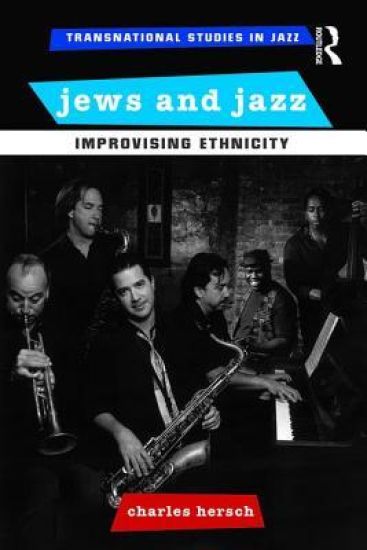
Jews and Jazz

Jews and Jazz

Charles B Hersch

Routledge
2016
sidottu
Jews and Jazz: Improvising Ethnicity explores the meaning of Jewish involvement in the world of American jazz. It focuses on the ways prominent jazz musicians like Stan Getz, Benny Goodman, Artie Shaw, Lee Konitz, Dave Liebman, Michael Brecker, and Red Rodney have engaged with jazz in order to explore and construct ethnic identities. The author looks at Jewish identity through jazz in the context of the surrounding American culture, believing that American Jews have used jazz to construct three kinds of identities: to become more American, to emphasize their minority outsider status, and to become more Jewish. From the beginning, Jewish musicians have used jazz for all three of these purposes, but the emphasis has shifted over time. In the 1920s and 1930s, when Jews were seen as foreign, Jews used jazz to make a more inclusive America, for themselves and for blacks, establishing their American identity. Beginning in the 1940s, as Jews became more accepted into the mainstream, they used jazz to "re-minoritize" and avoid over-assimilation through identification with African Americans. Finally, starting in the 1960s as ethnic assertion became more predominant in America, Jews have used jazz to explore and advance their identities as Jews in a multicultural society.
Jews and Jazz

Jews and Jazz

Charles B Hersch

Routledge
2016
nidottu
Jews and Jazz: Improvising Ethnicity explores the meaning of Jewish involvement in the world of American jazz. It focuses on the ways prominent jazz musicians like Stan Getz, Benny Goodman, Artie Shaw, Lee Konitz, Dave Liebman, Michael Brecker, and Red Rodney have engaged with jazz in order to explore and construct ethnic identities. The author looks at Jewish identity through jazz in the context of the surrounding American culture, believing that American Jews have used jazz to construct three kinds of identities: to become more American, to emphasize their minority outsider status, and to become more Jewish. From the beginning, Jewish musicians have used jazz for all three of these purposes, but the emphasis has shifted over time. In the 1920s and 1930s, when Jews were seen as foreign, Jews used jazz to make a more inclusive America, for themselves and for blacks, establishing their American identity. Beginning in the 1940s, as Jews became more accepted into the mainstream, they used jazz to "re-minoritize" and avoid over-assimilation through identification with African Americans. Finally, starting in the 1960s as ethnic assertion became more predominant in America, Jews have used jazz to explore and advance their identities as Jews in a multicultural society.
Charles B. Stover, July 14, 1861 to April 24, 1929: His Life and Personality
The book ""Charles B. Stover, July 14, 1861 To April 24, 1929: His Life And Personality"" written by James Kirke Paulding is a comprehensive biography of Charles B. Stover, a prominent American businessman, philanthropist, and civic leader. The book covers Stover's life from his birth on July 14, 1861, to his death on April 24, 1929, and explores his personal and professional achievements, as well as his character and values.Through extensive research and interviews with Stover's family, friends, and colleagues, Paulding provides a detailed account of Stover's upbringing, education, and early career. He also delves into Stover's involvement in various industries, including banking, insurance, and real estate, and his contributions to the development of his hometown of Chambersburg, Pennsylvania.In addition to his business pursuits, Stover was known for his philanthropic endeavors, and the book highlights his numerous charitable contributions, including the establishment of the Stover Foundation, which supported education and healthcare initiatives in the local community.Throughout the book, Paulding paints a portrait of Stover as a man of integrity, generosity, and vision, and provides insight into the values and principles that guided his life. Overall, ""Charles B. Stover, July 14, 1861 To April 24, 1929: His Life And Personality"" is a fascinating and engaging biography that offers a unique perspective on the life of a remarkable individual and his impact on his community and society at large.Together With Some Tributes From His Friends.This scarce antiquarian book is a facsimile reprint of the old original and may contain some imperfections such as library marks and notations. Because we believe this work is culturally important, we have made it available as part of our commitment for protecting, preserving, and promoting the world's literature in affordable, high quality, modern editions, that are true to their original work.
Monopoly Mastermind: Charles B. Darrow: Charles B. Darrow
In this engaging biography, readers will learn about the developer of the Monopoly board game, Charles B. Darrow. Follow the story of Darrow as he develops Monopoly from its roots as a tool to demonstrate the benefits of single tax through its evolution to the game we know today. Along the way readers will learn how Monopoly helped prisoners of war escape during World War II Sidebars, historic photos, and a glossary enhance readers' understanding of this topic. Additional features include a table of contents, an index, a timeline and fun facts. Aligned to Common Core Standards and correlated to state standards. Checkerboard Library is an imprint of Abdo Publishing, a division of ABDO.
Lt. Charles Gatewood & His Apache Wars Memoir

Lt. Charles Gatewood & His Apache Wars Memoir

Charles B. Gatewood

Bison Books
2009
pokkari
Lt. Charles B. Gatewood (1853–1896), an educated Virginian, served in the Sixth U.S. Cavalry as the commander of Indian scouts. Gatewood was largely accepted by the Native peoples with whom he worked because of his efforts to understand their cultures. It was this connection that Gatewood formed with the Indians, and with Geronimo and Naiche in particular, that led to his involvement in the last Apache war and his work for Indian rights. Realizing that he had more experience dealing with Native peoples than other lieutenants serving on the frontier, Gatewood decided to record his experiences. Although he died before he completed his project, the work he left behind remains an important firsthand account of his life as a commander of Apache scouts and as a military commandant of the White Mountain Indian Reservation. Louis Kraft presents Gatewood's previously unpublished account, punctuating it with an introduction, additional text that fills in the gaps in Gatewood's narrative, detailed notes, and an epilogue. Kraft's work offers new background information on Gatewood and discusses the manuscript as a fresh account of how Gatewood viewed the events in which he took part.
Lt. Charles Gatewood & His Apache Wars Memoir

Lt. Charles Gatewood & His Apache Wars Memoir

Charles B. Gatewood

Bison Books
2005
sidottu
Lt. Charles B. Gatewood (1853–1896), an educated Virginian, served in the Sixth U.S. Cavalry as the commander of Indian scouts. Gatewood was largely accepted by the Native peoples with whom he worked because of his efforts to understand their cultures. It was this connection that Gatewood formed with the Indians, and with Geronimo and Naiche in particular, that led to his involvement in the last Apache war and his work for Indian rights. Realizing that he had more experience dealing with Native peoples than other lieutenants serving on the frontier, Gatewood decided to record his experiences. Although he died before he completed his project, the work he left behind remains an important firsthand account of his life as a commander of Apache scouts and as a military commandant of the White Mountain Indian Reservation. Louis Kraft presents Gatewood's previously unpublished account, punctuating it with an introduction, additional text that fills in the gaps in Gatewood's narrative, detailed notes, and an epilogue. Kraft's work offers new background information on Gatewood and discusses the manuscript as a fresh account of how Gatewood viewed the events in which he took part.