Kirjojen hintavertailu. Mukana 11 234 096 kirjaa ja 12 kauppaa.

Kirjahaku

Etsi kirjoja tekijän nimen, kirjan nimen tai ISBN:n perusteella.

1000 tulosta hakusanalla Charles Bell

A System of Dissections, Explaining the Anatomy of the Human Body, the Manner of Displaying the Parts, and Their Varieties in Disease. With Plates. By Charles Bell. of 1; Volume 1
The 18th century was a wealth of knowledge, exploration and rapidly growing technology and expanding record-keeping made possible by advances in the printing press. In its determination to preserve the century of revolution, Gale initiated a revolution of its own: digitization of epic proportions to preserve these invaluable works in the largest archive of its kind. Now for the first time these high-quality digital copies of original 18th century manuscripts are available in print, making them highly accessible to libraries, undergraduate students, and independent scholars.Medical theory and practice of the 1700s developed rapidly, as is evidenced by the extensive collection, which includes descriptions of diseases, their conditions, and treatments. Books on science and technology, agriculture, military technology, natural philosophy, even cookbooks, are all contained here.++++The below data was compiled from various identification fields in the bibliographic record of this title. This data is provided as an additional tool in helping to insure edition identification: ++++British LibraryT026196Issued in five parts; parts 2-5 have separate titlepages, but pagination and register are continuous. The imprint to part 2 reads: 'Edinburgh. Printed by John Brown] for J. Johnson, G.G. and J. Robinsons, London: and G. & W. Mudie, Edinburgh. 1798'; parEdinburgh: printed for Mundell and Son; and for J. Mundell, Glasgow: sold in London by Johnson; and Cox, Borough, 1798. xiv, 2],27, 6],28-65, 4],68-90, 5],92-113, 3],4,121-127, 1]p., plates;; 2
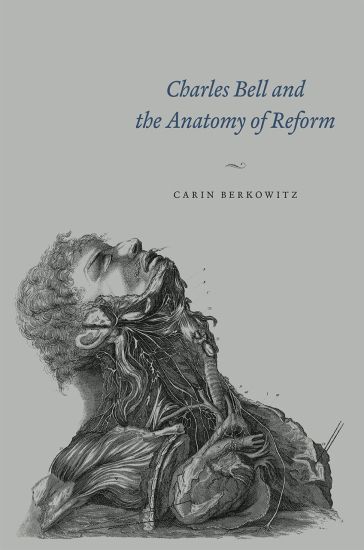
Charles Bell and the Anatomy of Reform

Charles Bell and the Anatomy of Reform

Carin Berkowitz

University of Chicago Press
2015
sidottu
Sir Charles Bell (1774-1842) was a medical reformer in a great age of reform-an occasional and reluctant vivisectionist, a theistic popularizer of natural science, a Fellow of the Royal Society, a surgeon, an artist, and a teacher. He was among the last of a generation of medical men who strove to fashion a particularly British science of medicine; who formed their careers, their research, and their publications through the private classrooms of nineteenth-century London; and whose politics were shaped by the exigencies of developing a living through patronage in a time when careers in medical science simply did not exist. A decade after Bell's death, that world was gone, replaced by professionalism, standardized education, and regular career paths. In Charles Bell and the Anatomy of Reform, Carin Berkowitz takes readers into Bell's world, helping us understand the life of medicine before the modern separation of classroom, laboratory, and clinic. Through Bell's story, we witness the age when modern medical science, with its practical universities, set curricula, and medical professionals, was born.
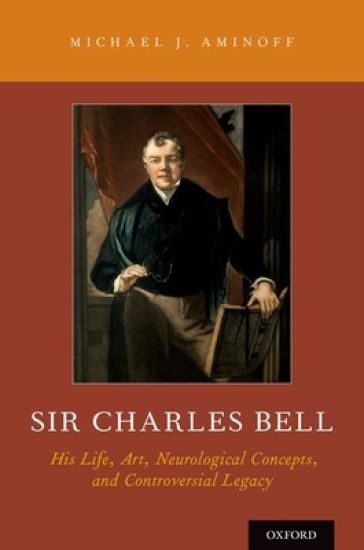
Sir Charles Bell

Sir Charles Bell

Michael J Aminoff

Oxford University Press Inc
2016
sidottu
Sir Charles Bell (1774-1842), the Scottish anatomist-surgeon, was a true polymath. His original ideas on the nervous system have been likened to those of William Harvey on the circulation of blood, and his privately published pamphlet detailing his ideas about the brain has been called the Magna Carta of neurology. He described the separate functions of different parts of the nervous system, new nerves and muscles, and several previously unrecognized neurological disorders, and he characterized the features of the facial palsy and its associated features now named after him. His sketches and paintings of the wounded from the Napoleonic Wars and his essays on the anatomical basis of expression changed the way art students are taught and influenced British and European artists, particularly the Pre-Raphaelites. He was a renowned medical teacher who founded his own private medical school, took over the famous Hunterian school, and helped establish the University of London and the Middlesex Hospital Medical School. So how is it that a man of such influence is virtually unknown today by most neuroscientists, biologists, and clinicians? Sir Charles Bell: His Life, Art, Neurological Concepts, and Controversial Legacy discusses the work and teachings of this brilliant man. His reputation was tarnished by charges of intellectual dishonesty and fraud, but his work changed the way scientists and clinicians think about the nervous system and its operation in health and disease, led directly to the work of Charles Darwin on facial expressions, and influenced the way artists view the human body and depict illnesses and wounds. Masterfully written by Dr. Michael J. Aminoff in his signature approachable style, this is the perfect addition to any library of medical history.
Chargers' Proof in Process Betwixt John Ckuckshank [sic] and Charles Bell, Distillers at Barnshill, Near Linlithgow, Chargers; and Sebastian Henderson, Distiller in Linlithgow, Suspender
The 18th century was a wealth of knowledge, exploration and rapidly growing technology and expanding record-keeping made possible by advances in the printing press. In its determination to preserve the century of revolution, Gale initiated a revolution of its own: digitization of epic proportions to preserve these invaluable works in the largest archive of its kind. Now for the first time these high-quality digital copies of original 18th century manuscripts are available in print, making them highly accessible to libraries, undergraduate students, and independent scholars.This collection reveals the history of English common law and Empire law in a vastly changing world of British expansion. Dominating the legal field is the Commentaries of the Law of England by Sir William Blackstone, which first appeared in 1765. Reference works such as almanacs and catalogues continue to educate us by revealing the day-to-day workings of society.++++The below data was compiled from various identification fields in the bibliographic record of this title. This data is provided as an additional tool in helping to insure edition identification: ++++Bodleian Library (Oxford)T214186"Ckuckshank" should read "Cruckshank." Edinburgh, 1791]. 45, 1]p., plate; 4
Mem. - J. Cruckshank & C. Bell, Against Sebastian Henderson. G. Napier, Agent. Mr Sinclair, clk. Memorial for John Cruckshank and Charles Bell, Distillers at Barnshill, Near Linlithgow, Chargers
The 18th century was a wealth of knowledge, exploration and rapidly growing technology and expanding record-keeping made possible by advances in the printing press. In its determination to preserve the century of revolution, Gale initiated a revolution of its own: digitization of epic proportions to preserve these invaluable works in the largest archive of its kind. Now for the first time these high-quality digital copies of original 18th century manuscripts are available in print, making them highly accessible to libraries, undergraduate students, and independent scholars.This collection reveals the history of English common law and Empire law in a vastly changing world of British expansion. Dominating the legal field is the Commentaries of the Law of England by Sir William Blackstone, which first appeared in 1765. Reference works such as almanacs and catalogues continue to educate us by revealing the day-to-day workings of society.++++The below data was compiled from various identification fields in the bibliographic record of this title. This data is provided as an additional tool in helping to insure edition identification: ++++Bodleian Library (Oxford)T214187Dated at head of the drop-head title: September 8. 1791. Edinburgh, 1791]. 23, 1]p., plate; 4