Reproduction of the original: Smithsonian Report on the Construction of Catalogues of Libraries and their Publication by Means of Seperate, Stereotyped Titles by Charles C. Jewett
Reproduction of the original: Smithsonian Report on the Construction of Catalogues of Libraries and their Publication by Means of Seperate, Stereotyped Titles by Charles C. Jewett
"Plato's Best Thoughts," compiled from Professor Jowett's renowned translation of Plato's dialogues, offers a curated selection of the philosopher's most profound insights. This volume distills the essence of Plato's wisdom, making it accessible to both scholars and general readers interested in delving into ancient Greek philosophy. Featuring the work of translator Benjamin Jowett and compiler C.H.A. Bulkley, this collection presents a comprehensive overview of Plato's enduring contributions to metaphysics, ethics, and political theory. Explore key excerpts from dialogues such as "The Republic," "Symposium," and "Phaedo," thoughtfully arranged to showcase the breadth and depth of Plato's intellectual legacy. This compilation serves as an invaluable resource for understanding the foundations of Western thought and the ongoing relevance of Plato's ideas in contemporary society. A timeless exploration of truth, beauty, and justice, "Plato's Best Thoughts" remains a cornerstone of philosophical literature. This work has been selected by scholars as being culturally important, and is part of the knowledge base of civilization as we know it. This work was reproduced from the original artifact, and remains as true to the original work as possible. Therefore, you will see the original copyright references, library stamps (as most of these works have been housed in our most important libraries around the world), and other notations in the work. This work is in the public domain in the United States of America, and possibly other nations. Within the United States, you may freely copy and distribute this work, as no entity (individual or corporate) has a copyright on the body of the work. As a reproduction of a historical artifact, this work may contain missing or blurred pages, poor pictures, errant marks, etc. Scholars believe, and we concur, that this work is important enough to be preserved, reproduced, and made generally available to the public. We appreciate your support of the preservation process, and thank you for being an important part of keeping this knowledge alive and relevant.
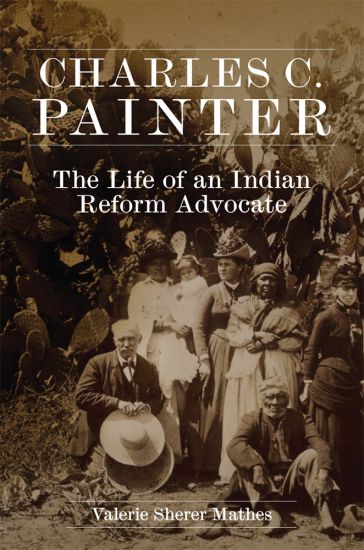
Charles Cornelius Coffin Painter (1833-89), clergyman turned reformer, was one of the foremost advocates and activists in the late-nineteenth-century movement to reform U.S. Indian policy. Very few individuals possessed the influence Painter wielded in the movement, and Painter himself published numerous pamphlets for the Indian Rights Association (IRA) on the Southern Utes, Eastern Cherokees, California Indians, and other Native peoples. Yet this is the first book to fully consider his unique role and substantial contribution. Born in Virginia, Painter spent most of his life in Great Barrington, Massachusetts, commuting to New York City and Washington, D.C., initially as an agent of the American Missionary Association (AMA), later as an appointed member of the Board of Indian Commissions (BIC), and most significant, as the Indian Rights Association's D.C. agent. In these capacities he lobbied presidents and Congress for reform, conducted extensive investigations on reservations, and shaped deliberations in such reform bodies as the BIC and the influential Lake Mohonk conferences. Mining an extraordinary wealth of archival material, Valerie Sherer Mathes crafts a compelling account of Painter as a skilled negotiator with Indians and policymakers and as a tireless investigator who traveled to far-flung reservations, corresponded with countless Indian agents, and drafted scrupulously researched reports on his findings. Recounted in detail, his many adventures and behind-the-scenes activities - promoting education, striving to prevent the removal of the Southern Utes from Colorado, investigating reservation fraud, working to save the Piegans of Montana from starvation - afford a clear picture of Painter's importance to the overall reform effort to incorporate Native Americans into the fabric of American life. No other book so effectively captures the day-to-day and exhausting work of a single individual on the front lines of reform. Like most of his fellow advocates, Painter was an unapologetic assimilationist, a man of his times whose story is a key chapter in the history of the Indian reform movement.
Charles Cornelius Coffin Painter (1833–89), clergyman turned reformer, was one of the foremost advocates and activists in the late-nineteenth-century movement to reform U.S. Indian policy. Very few individuals possessed the influence Painter wielded in the movement, and Painter himself published numerous pamphlets for the Indian Rights Association (IRA) on the Southern Utes, Eastern Cherokees, California Indians, and other Native peoples. Yet this is the first book to fully consider his unique role and substantial contribution. Born in Virginia, Painter spent most of his life in Great Barrington, Massachusetts, commuting to New York City and Washington, D.C., initially as an agent of the American Missionary Association (AMA), later as an appointed member of the Board of Indian Commissions (BIC), and, most significant, as the Indian Rights Association’s D.C. agent. In these capacities he lobbied presidents and Congress for reform, conducted extensive investigations on reservations, and shaped deliberations in such reform bodies as the BIC and the influential Lake Mohonk conferences. Mining an extraordinary wealth of archival material, Valerie Sherer Mathes crafts a compelling account of Painter as a skilled negotiator with Indians and policymakers and as a tireless investigator who traveled to far-flung reservations, corresponded with countless Indian agents, and drafted scrupulously researched reports on his findings. Recounted in detail, his many adventures and behind-the-scenes activities—promoting education, striving to prevent the removal of the Southern Utes from Colorado, investigating reservation fraud, working to save the Piegans of Montana from starvation—afford a clear picture of Painter’s importance to the overall reform effort to incorporate Native Americans into the fabric of American life. No other book so effectively captures the day-to-day and exhausting work of a single individual on the front lines of reform. Like most of his fellow advocates, Painter was an unapologetic assimilationist, a man of his times whose story is a key chapter in the history of the Indian reform movement.
Title: The Log of the "Speranza," 100 ton yawl. (1887.) By Charles C. Laing. With plates.]Publisher: British Library, Historical Print EditionsThe British Library is the national library of the United Kingdom. It is one of the world's largest research libraries holding over 150 million items in all known languages and formats: books, journals, newspapers, sound recordings, patents, maps, stamps, prints and much more. Its collections include around 14 million books, along with substantial additional collections of manuscripts and historical items dating back as far as 300 BC.The GENERAL HISTORICAL collection includes books from the British Library digitised by Microsoft. This varied collection includes material that gives readers a 19th century view of the world. Topics include health, education, economics, agriculture, environment, technology, culture, politics, labour and industry, mining, penal policy, and social order. ++++The below data was compiled from various identification fields in the bibliographic record of this title. This data is provided as an additional tool in helping to insure edition identification: ++++ British Library Anonymous; Laing, Charles C.; 1887. 108 p.; 8 . 10105.dd.3.
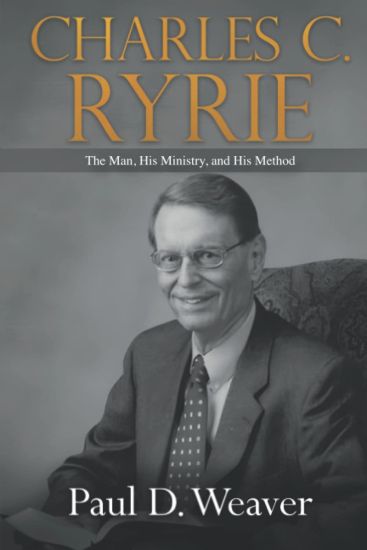
Paul Weaver has performed a vital service by writing this introduction to the life and legacy of Charles Ryrie. He shows why Dr. Ryrie was one of the most important theologians of the twentieth century. He loved the Word of God, and he loved sharing it with others. Though Dr. Ryrie has gone to heaven, his influence lives on around the world. Read this book and see for yourself.


![The Log of the Speranza, 100 Ton Yawl. (1887.) [By Charles C. Laing. with Plates.]](/covers/9781241448592.jpg)
![The Log of the "Speranza," 100 Ton Yawl. (1889.) [By Charles C. Laing.]](/covers/9781241495176.jpg)