

Kirjahaku
Etsi kirjoja tekijän nimen, kirjan nimen tai ISBN:n perusteella.
1000 tulosta hakusanalla Charles C. Jr. Ellis

Historical Sketch of the Chatham Artillery During the Confederate Struggle for Independence. by Charles C. Jones, Jr.
Charles Colcock Jones
University of Michigan Library
2006
pokkari
The Siege Of Savannah In December, 1864, And The Confederate Operations In Georgia And The Third Military District Of South Carolina (1874)
Charles C. Jones Jr.
KESSINGER PUBLISHING, LLC
2008
sidottu

Charles C. Pettijohn, Jr. has met the notable and the notorious, the famous and the infamous. From a childhood surrounded by the stars of Old Hollywood to a career in the golden age of television and film, he has seen it all. Introduced by his daughter, Adrienne, Charles shares personal stories of life among American royalty in this intimate and folksy memoir. Frank and uncensored, Diary of a Rich Man's Kid shows the real side of many larger-than-life figures. Entertainment notables like Carol Burnett, Burt Reynolds, and Red Skelton make appearances as well as world leaders like Franklin D. Roosevelt and John Kennedy. Diary of a Rich Man's Kid presents a funny and heartwarming peek inside a bygone era.

The Life, Literary Labors And Neglected Grave Of Richard Henry Wilde
Charles C. Jones Jr.
KESSINGER PUBLISHING, LLC
2010
sidottu

Antiquities Of The Southern Indians: Particularly Of The Georgia Tribes (1873)
Charles C. Jones Jr.
KESSINGER PUBLISHING, LLC
2008
sidottu

A Thousand Autumns: Part of the De Opresso Liber Series
Charles C. Southerland Jr
Booksurge Publishing
2010
nidottu

On the Scene with Migration and Dictatorship: An Interdisciplinary Approach to the Work of Uruguayan Playwright Dino Armas
Charles C. Christie Jr
Createspace Independent Publishing Platform
2018
nidottu
This book includes works from Uruguayan playwright Dino Armas that deal with migration and dictatorship matters, as well as interpretive essays written by authors who specialize in Latin American literature, theater, psychology, and history. The compilation also includes two interviews with Armas. Examining this group of texts is a way to enter Dino Armas's world in order to inquire into local and universal human conflicts. Each work confronts us with human complexities that intertwine with social and historical realities to provide a profound and authentic commentary on migration and dictatorship issues. The book includes texts from the author that allude to or deal with the European migration to Uruguay during the 19th century and the beginnings of the 20th, and works that examine the realities of the more recent migrations from Uruguay towards Europe, Australia, and other destinations. The former happened mainly as a way to escape the horrors of war and poverty in Europe. The latter were due primarily to political issues (during the military dictatorship years: 1973-1985) and economic ones (especially in the 1980's, and as a consequence of the 2002 crisis).This book constitutes a shared stage of reflection, analysis, collaboration, and affection for the playwright Dino Armas, the Hispanic culture, and a universal multicultural heritage.

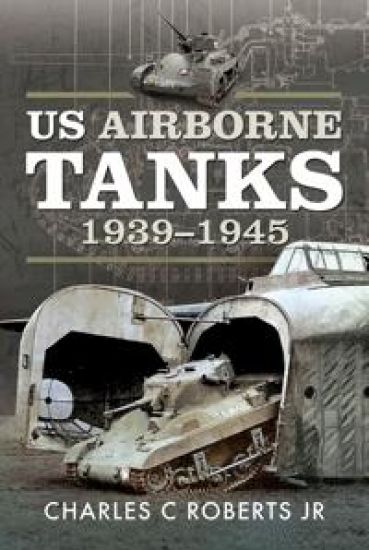
From their first introduction at the Battle of the Somme in the First World War, tanks proved to be one of the most important military developments in the history of warfare. Such was their influence on the battlefield, both as infantry support and as an armoured spearhead, their presence could determine the outcome of any battle. Another significant development during the 1930s was that of airborne forces, with a number of countries experimenting with air-dropped troops. Such a concept offered the possibility of inserting soldiers behind the front lines to sow fear and confusion in the enemy's rear. However, such troops, parachuting from aircraft, could only be lightly armed, thus limiting their effectiveness. It is understandable, therefore, that much thought was given to the practicalities of air-lifting tanks that could be dropped, or deposited, alongside paratroopers. Tanks, though, are heavy, cumbersome vehicles and before there could be any thought of carrying them by air, much lighter models would have to be produced. Charles Roberts' fascinating book opens with an investigation into the efforts in the 1930s by Britain, the Soviet Union and the USA into the development of, or adaptation of, light tanks for airborne operations. It was, inevitably, the start of the Second World War which accelerated efforts to produce an airborne tank and the means of delivery. The use of conventional powered aircraft to carry the tanks, limited their use to existing airfields which negated their employment with airborne troops landing in the open countryside. Another method of delivery had to be found, and this took the form of the glider, which could be landed in a field behind enemy lines. The combination of light tank and glider made the aim of airborne forces being supported by armour a realistic proposition - and as a result, the 28th Airborne Tank Battalion was born. This detailed and comprehensive study deals with every aspect of design and deployment of American airborne tanks from the earliest concepts to their actual use, by British units, on D-Day and during Operation Varsity, the Rhine crossing.

From their first introduction at the Battle of the Somme in the First World War, tanks proved to be one of the most important military developments in the history of warfare. Such was their influence on the battlefield, both as infantry support and as an armoured spearhead, their presence could determine the outcome of any battle. Another significant development during the 1930s was that of airborne forces, with a number of countries experimenting with air-dropped troops. Such a concept offered the possibility of inserting soldiers behind the front lines to sow fear and confusion in the enemy’s rear. However, such troops, parachuting from aircraft, could only be lightly armed, thus limiting their effectiveness. It is understandable, therefore, that much thought was given to the practicalities of air-lifting tanks that could be dropped, or deposited, alongside paratroopers. Tanks, though, are heavy, cumbersome vehicles and before there could be any thought of carrying them by air, much lighter models would have to be produced. Charles Roberts’ fascinating book opens with an investigation into the efforts in the 1930s by Britain, the Soviet Union and the USA into the development of, or adaptation of, light tanks for airborne operations. It was, inevitably, the start of the Second World War which accelerated efforts to produce an airborne tank and the means of delivery. The use of conventional powered aircraft to carry the tanks, limited their use to existing airfields which negated their employment with airborne troops landing in the open countryside. Another method of delivery had to be found, and this took the form of the glider, which could be landed in a field behind enemy lines. The combination of light tank and glider made the aim of airborne forces being supported by armour a realistic proposition – and as a result, the 28th Airborne Tank Battalion was born. This detailed and comprehensive study deals with every aspect of design and deployment of American airborne tanks from the earliest concepts to their actual use, by British units, on D-Day and during Operation Varsity, the Rhine crossing.

Developed in response to the 1899 Hague Convention, the 37-mm gun met the restrictions on the size of weapons that could fire explosive shells, yet was also light and lethal enough to be used in battle. After World War I, in which the French Model 1916 37-mm was used extensively, several countries developed or adopted the 37-mm gun. Behind in their development of an anti-tank gun, the United States relied on the German Pak 36 37-mm design as a basis for development. By the mid 1930s, the US Ordnance Department designed the M3 37-mm gun and M4 carriage resulting in a towed anti-tank gun, the first anti-tank gun in the U.S. Army. This gun proved effective at the beginning of World War II, but as German armour protection increased, it could not penetrate the frontal armuor of many German tanks and was relegated to lesser roles. However, the gun proved effective against the Japanese tanks and Japanese strong points in the Far East. The US military used the gun on several production and experimental armoured vehicles including the M3 Lee Medium Tank, the M3 Stuart Light Tank, the M5 Stuart Light Tank, the M8 Armored Car, the T17E1 Staghound Armored Car and the M3A1E3 Scout Car. The gun was also used on several non-armoured vehicles, the P39 Aeracobra, and selected naval vessels. Despite its small size, the U.S. M3 37-mm gun served throughout the war, on many vehicles and performed exactly as designed. Fully illustrated, this is the first complete account of the development and use of the US 37-mm gun in World War II.

Biographical Sketches of the Delegates from Georgia to the Continental Congress
Jr Charles C Jones
Trieste Publishing
2018
nidottu

Migracion Y Dictadura En Escena: Un Acercamiento Interdisciplinario a la Obra del Dramaturgo Uruguayo Dino Armas
Jr. Charles C. Christie
Createspace Independent Publishing Platform
2017
nidottu
Este libro incluye obras del dramaturgo uruguayo Dino Armas que tratan temas de migraci n y dictadura, as como ensayos interpretativos escritos por autores provenientes de los campos de la literatura hispanoamericana, el teatro, la psicolog a y la historia. La compilaci n tambi n contiene dos entrevistas al dramaturgo. Explorar todo este conjunto de textos es una forma de introducirse en el mundo de Armas para indagar sobre los conflictos humanos locales y universales. Cada una de sus obras nos enfrenta a complejidades humanas que se entrelazan con realidades sociales e hist ricas para brindar un comentario profundo y aut ntico sobre cuestiones relacionadas con la migraci n y la dictadura.Las obras en esta compilaci n giran en torno a la migraci n europea hacia Uruguay durante el siglo XIX y comienzos del XX, y obras que exploran la realidad de las olas migratorias m s recientes desde Uruguay hacia Europa, Australia y otros destinos. La primera se dio primordialmente para escapar de los horrores de las guerras y la pobreza en Europa. Las segundas se dieron principalmente por motivos pol ticos (durante los a os de la dictadura militar, 1973 a 1985) y por motivos econ micos (en particular, en la d cada de 1980 y como consecuencia de la crisis de 2002).Esta compilaci n constituye un escenario compartido de reflexi n, an lisis, colaboraci n y afecto hacia el dramaturgo Dino Armas, la herencia cultural hisp nica y un acervo multicultural universal.

The Beat! was the first book to explore the musical, social, and cultural phenomenon of go-go music. In this new edition, updated by a substantial chapter on the current scene, authors Kip Lornell and Charles C. Stephenson, Jr., place go-go within black popular music made since the middle 1970s--a period during which hip-hop has predominated. This styling reflects the District's African American heritage. Its super-charged drumming and vocal combinations of hip-hop, funk, and soul evolved and still thrive on the streets of Washington, D.C., and in neighboring Prince George's County, making it the most geographically compact form of popular music. Go-go--the only musical form indigenous to Washington, D.C.--features a highly syncopated, nonstop beat and vocals that are spoken as well as sung. The book chronicles its development and ongoing popularity, focusing on many of its key figures and institutions, including established acts such as Chuck Brown (the Godfather of Go-Go), Experience Unlimited, Rare Essence, and Trouble Funk; well-known DJs, managers, and promoters; and filmmakers who have incorporated it into their work. Now updated and back in print, The Beat! provides longtime fans and those who study American musical forms a definitive look at the music and its makers.

West Virginia University
William Doherty Jr; Festus P. Summers; Charles C. Wise Jr.
West Virginia University Press
2013
sidottu
First published in 1982, West Virginia University: Symbol of Unity in a Sectionalize State details the history of WVU from before its inception as the Agricultural College of West Virginia in 1867 to its expansion and development in the 1980s. This comprehensive history includes an index of people, places and events; photographs and illustrations; and in-depth descriptions of campuses, buildings, colleges, and academic and sports programs. A joint effort between William T Doherty, Jr., a Professor Emeritus History at WVU and Festus P. Summers, the first University Librarian who passed away before this project was complete, this new edition once again grants access to the diverse and complex elements which shaped the institution.


C. O. Handley, Jr., Arctic Operations, Summer 1946, Journal and Bird / Mammal Notes
Charles O. (Charles Overton) Handley
Hassell Street Press
2021
nidottu

The Autobiography of Junior Hodge: His Life in Washington D.C.
Charles R. Hodge Jr
Booksurge Publishing
2005
nidottu