

Kirjahaku
Etsi kirjoja tekijän nimen, kirjan nimen tai ISBN:n perusteella.
1000 tulosta hakusanalla Charles D Johnson



More Than Just a Game tells the story of the 100-year football rivalry between NCA&T and NCCU through never-before-seen photographs and images. The work seeks to honor the many coaches, players, and participants in this storied rivalry. These vintage images illustrate the importance of the schools' rare and special rivalry, something students and alumni already know. Written with the fans of both institutions in mind, this book seeks to recount the jubilant victories and heartbreaking losses of each school. It is the story of HBCUs at their best and documents their contributions to the state of North Carolina and the nation. It is a story of perseverance, accomplishment, and pride.
Mansfield Hardwood Lumber Co., Petitioner, V. Hattie A. Johnson et al. U.S. Supreme Court Transcript of Record with Supporting Pleadings
Charles D Egan; Ned A Stewart
Gale, U.S. Supreme Court Records
2011
pokkari



The Writer's Notebook
Dorothy Allison; Anna Keesey; Jim Shepard; Aimee Bender; Kate Bernheimer; Susan Bell; Denis Johnson; Matthea Harvey; Nick Flynn; D. A. Powell; Charles D'Ambrosio; Chris Offutt
Tin House Books
2009
pokkari
The Writer's Notebook compiles the best craft seminars in the history of the Tin House Summer Writers Workshop, along with a variety of craft essays from some of Tin House's favorite writers. The cast of deeply respected poets and prose writers explore topics that vary from writing dialogue to the dos and don'ts of writing about sex. With how-tos, close readings, and personal anecdotes, The Writer's Notebook offers aspiring scribes advice and inspiration to hone their own craft.
The Life of Samuel Johnson, LL.D
Charles Grosvenor Osgood; James Boswell
Createspace Independent Publishing Platform
2015
nidottu
Graphic Illustrations of the Life and Times of Samuel Johnson, LL.D.
Charles John Smith
Createspace Independent Publishing Platform
2016
nidottu

Graphic Illustrations of the Life and Times of Samuel Johnson, LL.D.
Charles Smith
Antigonos Verlag
2025
nidottu
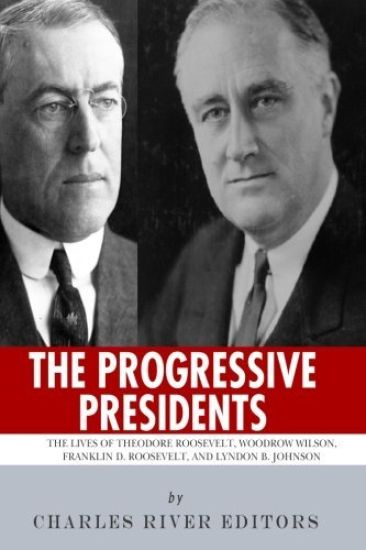
The Progressive Presidents: The Lives of Theodore Roosevelt, Woodrow Wilson, Franklin D. Roosevelt, and Lyndon B. Johnson
Charles River
Createspace Independent Publishing Platform
2013
nidottu
*Weaves the lives of the 4 progressive presidents into one entertaining and educational narrative. *Includes pictures of the presidents and important people, places, and events in their lives. *Includes some of the presidents' most colorful quotes. *Includes a Bibliography for further reading. When President McKinley was assassinated in 1901, young Vice President Theodore Roosevelt was thrust into the presidency, one that would earn him a place on Mount Rushmore, Roosevelt's "Square Deal" domestic policies favored average citizens while busting trusts and monopolies. Roosevelt also promoted conservation as an environmental stance, while his "speak softly and carry a big stick" foreign policy is still an oft used phrase today. Roosevelt even earned a Nobel Prize during his presidency. By the time Roosevelt died in 1919, he was an American icon. As one of the most influential men of the 20th century, there is no shortage of adjectives to use when describing Woodrow Wilson's two terms as president of the United States. Wilson was a pioneer of the Progressive movement both before and during his presidency, becoming a populist champion a generation before Franklin Roosevelt's New Deal. He ran for reelection by touting his neutrality during World War I, only to lead his nation into the war and become the architect of a world body that would lead to greater inter-connection among nations. Today Wilson is best remembered for his Fourteen Points, one of the most forceful arguments for an idealistic foreign policy in American history, and his fight for the League of Nations, which set the model for today's United Nations. Franklin Delano Roosevelt might be America's greatest 20th century president, but there's no question that he was the most unique. A well-connected relative of Theodore Roosevelt, FDR was groomed for greatness until he was struck down by what was widely believed to be polio at the time. Nevertheless, he persevered, rising through New York politics to reach the White House just as the country faced its greatest challenge since the Civil War, beginning his presidency with one of the most iconic lines ever spoken during an inaugural address. For over a decade, President Roosevelt threw everything he had at the Great Depression, and then threw everything the country had at the Axis powers during World War II. Ultimately, he succumbed to illness in the middle of his fourth term, just before the Allies won the war. Kennedy has been nostalgically and fondly remembered for his youth, vigor and sense of unfinished potential, but it would be President Johnson who would bring much of the agenda to fruition. To the surprise of many, the Southern Democrat relied on his wealth of Senate experience and dogged determination to help push through an ambitious and progressive social agenda that formed the backbone of modern American society. Known as the Great Society, President Johnson's legislation included the landmark Civil Rights Act of 1964, as well as the establishment of Medicare, Medicaid, environmental protection, and the "War on Poverty." Everything from the National Endowment for the Arts to the Environmental Protection Agency has its roots in Johnson's presidency. Had Johnson's presidency included just his domestic agenda, he would have unquestionably been one of America's greatest presidents. Unfortunately, as he was engineering a new social contract at home, he was ramping up American military participation in a tiny country thousands of miles away in Southeast Asia. The Progressive Presidents chronicles the lives of each president and weaves their stories and accomplishments into one entertaining narrative, examining their records and analyzing their legacies. Along with pictures of important people, places, and events, you will learn about America's most important progressive presidents like you never have before.
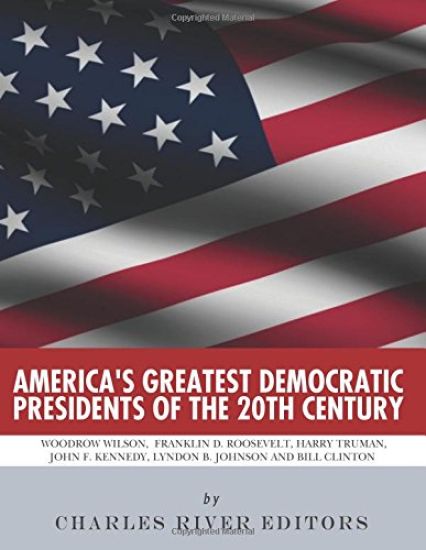
America's Greatest Democratic Presidents of the 20th Century: Woodrow Wilson, Franklin D. Roosevelt, Harry Truman, John F. Kennedy, Lyndon B. Johnson
Charles River
Createspace Independent Publishing Platform
2017
nidottu
*Weaves the lives and presidencies of all 6 Democratic Presidents into one entertaining and educational narrative. *Includes dozens of pictures of the presidents and important people, places, and events in their lives. *Analyzes the legacies and accomplishments of each president. The Democrats who were elected president in the 20th century were responsible for a seemingly never ending list of accomplishments. Woodrow Wilson established the blueprint for the progressive presidents that would follow him, particularly Franklin Roosevelt and Lyndon Johnson, while guiding the nation through World War I. FDR expanded that vision with his New Deal, completely revolutionizing the social contract between Americans and their federal government. While combating the Great Depression and the Axis powers in World War II, FDR has widely been considered one of the greatest presidents in history. When Roosevelt died in April 1945, Vice President Truman, somewhat unprepared for the Presidency, now had to fill some of the biggest shoes in American history. The new president had to usher America through victory in Europe in his first month and decide to drop atomic bombs on Hiroshima and Nagasaki a few months later, but the end of World War II produced only the first of many consequential decisions Truman would face during his nearly 8 years in office. As president, Truman would lay the groundwork for the next 50 years of American foreign policy, as the architect of Cold War containment, the man who signed off on the Marshall Plan, and the commander-in-chief during much of the Korean War. In many ways, John Fitzgerald Kennedy and his young family were the perfect embodiment of the '60s. The decade began with a sense of idealism, personified by the attractive Kennedy, his beautiful and fashionable wife Jackie, and his young children. Months into his presidency, Kennedy exhorted the country to reach for the stars, calling upon the nation to send a man to the Moon and back by the end of the decade. In 1961, Kennedy made it seem like anything was possible, and Americans were eager to believe him. The Kennedy years were fondly and famously labeled "Camelot," by Jackie herself, suggesting an almost mythical quality about the young President and his family. While Kennedy represented lofty ideals, it was LBJ who got in the weeds and made things happen. . To the surprise of many, the Southern Democrat relied on his wealth of Senate experience and dogged determination to help push through an ambitious and progressive social agenda that formed the backbone of modern American society. Known as the Great Society, President Johnson's legislation included the landmark Civil Rights Act of 1964, as well as the establishment of Medicare, Medicaid, environmental protection, and the "War on Poverty." Everything from the National Endowment for the Arts to the Environmental Protection Agency has its roots in Johnson's presidency. The most popular Democrat alive today is "The Comeback Kid", Bill Clinton.Widely hailed as the greatest politician of his era, Clinton proved to be his own worst enemy, creating unnecessary scandals through his womanizing. Clinton was one of the first politicians to truly connect with young adults, yet in the process he provided ludicrous soundbytes like "I did not inhale." Long considered the Democratic Party's greatest spokesman and surrogate, Clinton's presidency was defined by centrist "triangulation". And though he is still publicly popular and considered a great president, Clinton became just the second president to be impeached in the House of Representatives. America's Greatest Democratic Presidents of the 20th Century looks at the lives and presidencies of these historic men and analyzes their legacies. Along with pictures and a Table of Contents, you will learn about them like you never have before.

The Progressive Presidents: The Lives of Theodore Roosevelt, Woodrow Wilson, Franklin D. Roosevelt, and Lyndon B. Johnson
Charles River
Createspace Independent Publishing Platform
2018
nidottu
*Weaves the lives of the 4 progressive presidents into one entertaining and educational narrative. *Includes pictures of the presidents and important people, places, and events in their lives. *Includes some of the presidents' most colorful quotes. *Includes a Bibliography for further reading. When President McKinley was assassinated in 1901, young Vice President Theodore Roosevelt was thrust into the presidency, one that would earn him a place on Mount Rushmore, Roosevelt's "Square Deal" domestic policies favored average citizens while busting trusts and monopolies. Roosevelt also promoted conservation as an environmental stance, while his "speak softly and carry a big stick" foreign policy is still an oft used phrase today. Roosevelt even earned a Nobel Prize during his presidency. By the time Roosevelt died in 1919, he was an American icon. As one of the most influential men of the 20th century, there is no shortage of adjectives to use when describing Woodrow Wilson's two terms as president of the United States. Wilson was a pioneer of the Progressive movement both before and during his presidency, becoming a populist champion a generation before Franklin Roosevelt's New Deal. He ran for reelection by touting his neutrality during World War I, only to lead his nation into the war and become the architect of a world body that would lead to greater inter-connection among nations. Today Wilson is best remembered for his Fourteen Points, one of the most forceful arguments for an idealistic foreign policy in American history, and his fight for the League of Nations, which set the model for today's United Nations. Franklin Delano Roosevelt might be America's greatest 20th century president, but there's no question that he was the most unique. A well-connected relative of Theodore Roosevelt, FDR was groomed for greatness until he was struck down by what was widely believed to be polio at the time. Nevertheless, he persevered, rising through New York politics to reach the White House just as the country faced its greatest challenge since the Civil War, beginning his presidency with one of the most iconic lines ever spoken during an inaugural address. For over a decade, President Roosevelt threw everything he had at the Great Depression, and then threw everything the country had at the Axis powers during World War II. Ultimately, he succumbed to illness in the middle of his fourth term, just before the Allies won the war. Kennedy has been nostalgically and fondly remembered for his youth, vigor and sense of unfinished potential, but it would be President Johnson who would bring much of the agenda to fruition. To the surprise of many, the Southern Democrat relied on his wealth of Senate experience and dogged determination to help push through an ambitious and progressive social agenda that formed the backbone of modern American society. Known as the Great Society, President Johnson's legislation included the landmark Civil Rights Act of 1964, as well as the establishment of Medicare, Medicaid, environmental protection, and the "War on Poverty." Everything from the National Endowment for the Arts to the Environmental Protection Agency has its roots in Johnson's presidency. Had Johnson's presidency included just his domestic agenda, he would have unquestionably been one of America's greatest presidents. Unfortunately, as he was engineering a new social contract at home, he was ramping up American military participation in a tiny country thousands of miles away in Southeast Asia. The Progressive Presidents chronicles the lives of each president and weaves their stories and accomplishments into one entertaining narrative, examining their records and analyzing their legacies. Along with pictures of important people, places, and events, you will learn about America's most important progressive presidents like you never have before.

The Great Events by Famous Historians
Charles F (Charles Francis) Horne; Rossiter Johnson; John LL D Rudd
Anson Street Press
2025
pokkari

The Great Events by Famous Historians
Charles F (Charles Francis) Horne; Rossiter Johnson; John LL D Rudd
Anson Street Press
2025
sidottu

The Great Events by Famous Historians
Charles F (Charles Francis) Horne; Rossiter Johnson; John LL D Rudd
Anson Street Press
2025
pokkari

The Great Events by Famous Historians
Charles F (Charles Francis) Horne; Rossiter Johnson; John LL D Rudd
Anson Street Press
2025
sidottu

The Great Events by Famous Historians
Charles F (Charles Francis) Horne; Rossiter Johnson; John LL D Rudd
Anson Street Press
2025
pokkari