
Kirjahaku
Etsi kirjoja tekijän nimen, kirjan nimen tai ISBN:n perusteella.
1000 tulosta hakusanalla Charles E. Morris
Progressive Democracy of James M. Cox
Charles E. Morris
Createspace Independent Publishing Platform
2016
nidottu
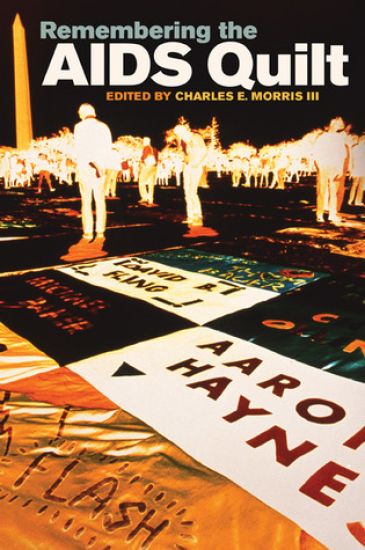
A collaborative creation unlike any other, the Names Project Foundation's AIDS Memorial Quilt has played an invaluable role in shattering the silence and stigma that surrounded the epidemic in the first years of its existence. Designed by Cleve Jones, the AIDS Quilt is the largest ongoing community arts project in the world. Since its conception in 1987, the Quilt has transformed the cultural and political responses to AIDS in the U.S. Representative of both marginalized and mainstream peoples, the Quilt contains crucial material and symbolic implications for mourning the dead, and the treatment and prevention of AIDS. However, the project has raised numerous questions concerning memory, activism, identity, ownership, and nationalism, as well as issues of sexuality, race, class, and gender. As thought-provoking as the Quilt itself, this diverse collection of essays by ten prominent rhetorical scholars provides a rich experience of the AIDS Quilt, incorporating a variety of perspectives, critiques, and interpretations.

The Progressive Democracy of James M. Cox
Charles E (Charles Eugene) Morris
Anson Street Press
2025
pokkari

The Progressive Democracy of James M. Cox, is a classical book and has been considered important throughout the human history. So that this book is never forgotten we at Alpha Editions have made efforts in its preservation by republishing this again in a modern format book for present and future generations. This whole book has been reformatted, retyped and designed. These books are not made of scanned copies of their original work and hence the text is clear and readable.
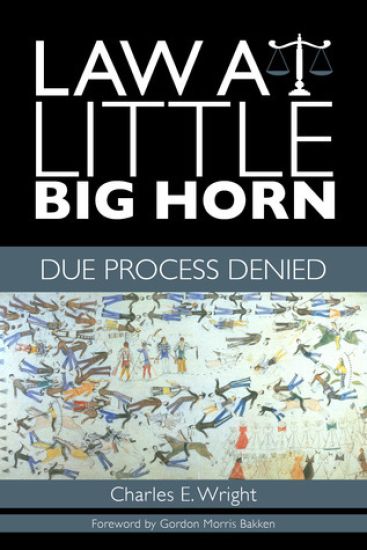
During the nineteenth century, the rights of American Indians were frequently violated by the president and ignored or denied enforcement by federal courts. However, at times Congress treated the Indians with good faith and honoured due process, which prohibits the government from robbing any person of life, liberty, or property without a fair hearing before an impartial judge or jury. These due process requirements protect all Americans and were in effect when President Grant launched the Great Sioux War in 1876—without a formal declaration of war by Congress.Charles E. Wright analyzes the legal backdrop to the Great Sioux War, asking the hard questions of how treaties were to be honoured and how the US government failed to abide by its sovereign word. Until now, little attention has been focused on how the events leading up to and during the Battle of Little Big Horn violated American law. While other authors have analyzed George Armstrong Custer’s tactics and equipment, Wright is the first to investigate the legal and constitutional issues surrounding the United States’ campaign against the American Indians.This is not just another Custer book. Its contents will surprise even the most accomplished Little Big Horn scholar.
How to Get Industrial and Business Publicity
Charles E. St Thomas; Richard H. Morris
Literary Licensing, LLC
2012
nidottu

The Japanese Diet and the U.S. Congress have in common many of the characteristics of democratic institutions, similarities that can be seen in the way the two legislative bodies are constituted, in what they do, and in how they do it. At the same time, there are disparities that stem from each nation's unique cultural background and political experiences. Both the similarities and the differences are treated in this unique study. The authors, well-known japanese and U.S. scholars, illuminate significant factors that not only underlie the differing roles of the Diet and the Congress in the two governments and the style of each government, but also help shape the nature of the interaction between japan and the U.S.

The Japanese Diet and the U.S. Congress have in common many of the characteristics of democratic institutions, similarities that can be seen in the way the two legislative bodies are constituted, in what they do, and in how they do it. At the same time, there are disparities that stem from each nation's unique cultural background and political experiences. Both the similarities and the differences are treated in this unique study. The authors, well-known japanese and U.S. scholars, illuminate significant factors that not only underlie the differing roles of the Diet and the Congress in the two governments and the style of each government, but also help shape the nature of the interaction between japan and the U.S.

Peace Through Strength
Morris V. Rosenbloom; Eleanor Roosevelt; Charles E. Wilson
Kessinger Pub
2006
pokkari
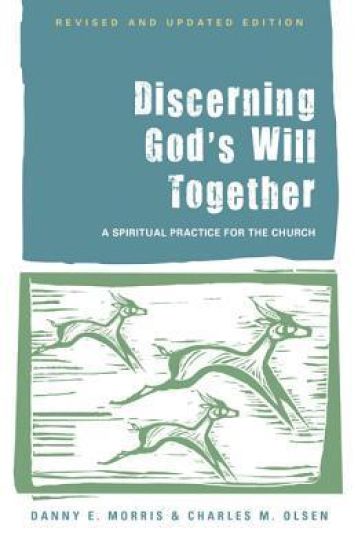
Bible study, research, and fieldwork merge in this book of practical principles for decision making by spiritual discernment. The step-by-step approach can be used to help any size group learn a new way to make decisions--a way that is interactive, spiritual, and rooted in faith practices and community. Small groups, committees, church boards, church leaders at all levels, and seminary professors will find this book valuable. This is a revised and updated version of the book, originally published in 1997. This new version inclused revised and updated material, as well as a new introduction by Charles Olsen.
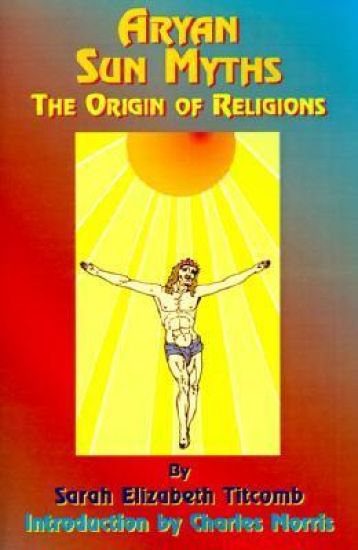
Thirteenth Century Prose Tales: Ten Cent Pocket Series, No. 352
William Morris; E. Haldeman-Julius; Charles J. Finger
Literary Licensing, LLC
2012
nidottu

Here are most of the previously unpublished writings of Charles E. Ives: a primary source book on this unique American composer. These "Memos," as Ives called them, were on separate leaves and dealt with his music, composition, criticism, autobiography, biography, and many other topics. During his lifetime Ives rearranged them, lent them out, mislaid and tucked them away in books so that, in the late 1940s, only about three-fifths of them were available to his biographer. After his death in 1954, Ives's papers were gradually put in order, and in time most of the remaining leaves came to light. These two "batches" are here dovetailed into a three-part form by John Kirkpatrick, who has devotedly arranged, edited, and annotated them. Part One, "Pretext," sets forth Ives's aims, his views on music, critics and criticism. In part Two, "Scrapbook," Ives discusses his music. Part Three, "Memories," is devoted to biographical and autobiographical remembrances.
Charles E. Maddry: an Autobiography
Charles Edward 1876-1962 Maddry; Broadman Press
Hassell Street Press
2021
nidottu
This work has been selected by scholars as being culturally important and is part of the knowledge base of civilization as we know it.This work is in the public domain in the United States of America, and possibly other nations. Within the United States, you may freely copy and distribute this work, as no entity (individual or corporate) has a copyright on the body of the work.Scholars believe, and we concur, that this work is important enough to be preserved, reproduced, and made generally available to the public. To ensure a quality reading experience, this work has been proofread and republished using a format that seamlessly blends the original graphical elements with text in an easy-to-read typeface.We appreciate your support of the preservation process, and thank you for being an important part of keeping this knowledge alive and relevant.