Title: The Antiquities of Richborough, Reculver and Lymne, in Kent ... Illustrated by F. W. Fairholt.Publisher: British Library, Historical Print EditionsThe British Library is the national library of the United Kingdom. It is one of the world's largest research libraries holding over 150 million items in all known languages and formats: books, journals, newspapers, sound recordings, patents, maps, stamps, prints and much more. Its collections include around 14 million books, along with substantial additional collections of manuscripts and historical items dating back as far as 300 BC.The GENERAL HISTORICAL collection includes books from the British Library digitised by Microsoft. This varied collection includes material that gives readers a 19th century view of the world. Topics include health, education, economics, agriculture, environment, technology, culture, politics, labour and industry, mining, penal policy, and social order. ++++The below data was compiled from various identification fields in the bibliographic record of this title. This data is provided as an additional tool in helping to insure edition identification: ++++ British Library Smith, Charles Roach; Fairholt, Frederick William; 1850. 4 . 10350.d.17.
This collection originally published in 1985. This volume contains two of Charles F. Parham’s influential works; A Voice Crying in the Wilderness and Everlasting Gospel. Charles F. Parham was an American preacher and evangelist, and was one of the two central figures in the development of the early spread of Pentecostalism. He was also the first preacher to articulate Pentecostalism's distinctive doctrine of evidential tongues. This title will be of interest to students of nineteenth-century religious and social history.
This collection originally published in 1985. This volume contains two of Charles F. Parham’s influential works; A Voice Crying in the Wilderness and Everlasting Gospel. Charles F. Parham was an American preacher and evangelist, and was one of the two central figures in the development of the early spread of Pentecostalism. He was also the first preacher to articulate Pentecostalism's distinctive doctrine of evidential tongues. This title will be of interest to students of nineteenth-century religious and social history.
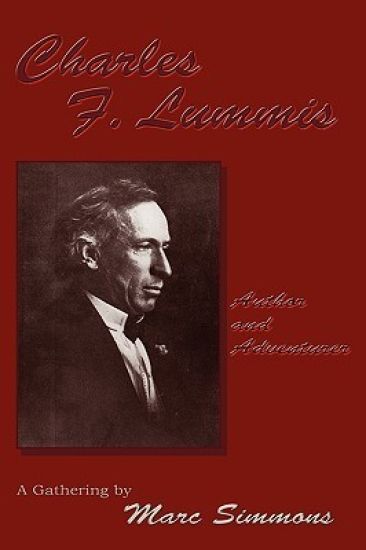
Charles Fletcher Lummis (March 1, 1859, in Lynn, Massachusetts - November 24, 1928, in Los Angeles, California) was a United States journalist and an activist for Indian rights and historic preservation. A traveler in the American Southwest, he settled in Los Angeles, California, where he also became known as a historian, photographer, ethnographer, archaeologist, poet and librarian.Charles Fletcher Lummis was born in 1859 in Lynn, Massachusetts. He lost his mother at age 2 and was homeschooled by his father, who was a schoolmaster. Lummis enrolled in Harvard for college and was a classmate of Theodore Roosevelt, but dropped out during his senior year. While at Harvard he worked during the summer as a printer and published his first work, Birch Bark Poems. This small volume was printed on paper-thin sheets of birch bark; he won acclaim from Life magazine and recognition from some of the day's leading poets. He sold the books by subscription and used the money to pay for college. His best poem from the work, "My Cigarette", highlighted tobacco as one of his life's obsessions.
This is the autobiography of Charles Franklin Gill, Jr. beginning in 1835 when the Gills and Haynes arrived in Richwood, Ohio and played a major role in the establishment and administration of the community. It continues with the arrival of the Foxes and LeMasters from West Virginia and the union of those two families. My story tells of my birth, childhood, moving to Reno, Nevada, college, Vietnam, and later my life in Saratoga, California as a businessman. I have included an extensive appendix containing articles in the Union County History archives and family trees of the Gills, Haynes, Foxes and LeMasters families. Part I is largely historical. I have attempted to make it readable with lots of photos. Part II is my story and I will let it speak for itself. These anecdotes and stories are derived from the sources stated in the appendixes as well as my own life experiences.