This book is an introductory text that charts the recent developments in the area of Whitney-type extension problems and the mathematical aspects of interpolation of data. It provides a detailed tour of a new and active area of mathematical research. In each section, the authors focus on a different key insight in the theory. The book motivates the more technical aspects of the theory through a set of illustrative examples. The results include the solution of Whitney’s problem, an efficient algorithm for a finite version, and analogues for Hölder and Sobolev spaces in place of C m .The target audience consists of graduate students and junior faculty in mathematics and computer science who are familiar with point set topology, as well as measure and integration theory. The book is based on lectures presented at the CBMS regional workshop held at the University of Texas at Austin in the summer of 2019.
This book develops and applies a theory of the ambient metric in conformal geometry. This is a Lorentz metric in n+2 dimensions that encodes a conformal class of metrics in n dimensions. The ambient metric has an alternate incarnation as the Poincar metric, a metric in n+1 dimensions having the conformal manifold as its conformal infinity. In this realization, the construction has played a central role in the AdS/CFT correspondence in physics. The existence and uniqueness of the ambient metric at the formal power series level is treated in detail. This includes the derivation of the ambient obstruction tensor and an explicit analysis of the special cases of conformally flat and conformally Einstein spaces. Poincar metrics are introduced and shown to be equivalent to the ambient formulation. Self-dual Poincar metrics in four dimensions are considered as a special case, leading to a formal power series proof of LeBrun's collar neighborhood theorem proved originally using twistor methods. Conformal curvature tensors are introduced and their fundamental properties are established. A jet isomorphism theorem is established for conformal geometry, resulting in a representation of the space of jets of conformal structures at a point in terms of conformal curvature tensors. The book concludes with a construction and characterization of scalar conformal invariants in terms of ambient curvature, applying results in parabolic invariant theory.
Princeton University's Elias Stein was the first mathematician to see the profound interconnections that tie classical Fourier analysis to several complex variables and representation theory. His fundamental contributions include the Kunze-Stein phenomenon, the construction of new representations, the Stein interpolation theorem, the idea of a restriction theorem for the Fourier transform, and the theory of Hp Spaces in several variables. Through his great discoveries, through books that have set the highest standard for mathematical exposition, and through his influence on his many collaborators and students, Stein has changed mathematics. Drawing inspiration from Stein's contributions to harmonic analysis and related topics, this volume gathers papers from internationally renowned mathematicians, many of whom have been Stein's students. The book also includes expository papers on Stein's work and its influence. The contributors are Jean Bourgain, Luis Caffarelli, Michael Christ, Guy David, Charles Fefferman, Alexandru D. Ionescu, David Jerison, Carlos Kenig, Sergiu Klainerman, Loredana Lanzani, Sanghyuk Lee, Lionel Levine, Akos Magyar, Detlef Muller, Camil Muscalu, Alexander Nagel, D. H. Phong, Malabika Pramanik, Andrew S. Raich, Fulvio Ricci, Keith M. Rogers, Andreas Seeger, Scott Sheffield, Luis Silvestre, Christopher D. Sogge, Jacob Sturm, Terence Tao, Christoph Thiele, Stephen Wainger, and Steven Zelditch.
*Includes pictures *Includes accounts of the fighting *Includes a bibliography for further reading In the summer of 1866, Colonel Henry B. Carrington set out from Fort Laramie to establish a series of forts along the Bozeman Trail with the goal of protecting migrants moving along the trail. The Bozeman Trail ran through the Powder River country, which included the traditional hunting grounds of Lakota, Cheyenne, and Arapaho peoples. Carrington had about 1,000 people in his column, of which about 700 were soldiers and 300 were civilians, likely soldiers' families and migrants. The colonel established Fort Phil Kearny as his headquarters and based 400 troops and most of the civilians there. During the construction of Fort Kearny, which lasted months, Native Americans killed several dozen soldiers and civilians in some 50 separate attacks. The attacks were largely focused on the "wood trains", comprised of soldiers and civilians harvesting lumber from the surrounding forest for the construction of the fort. Though younger warriors like Crazy Horse conducted the actual attack, Red Cloud and other, older leaders would help plan and direct the harassment and interdiction campaign against the construction of Fort Kearny. By October 1866, Carrington's officers and men pressured him to go on the offensive and take the fight to the Native Americans. The pressure was increased by the arrival of a company of sixty-three cavalry troopers led by Lieutenant Horatio S. Bingham in early November. Civil War veterans Captain William J. Fetterman and Captain James W. Powell accompanied the cavalry troopers and were assigned to Fort Kearny as infantry officers, but despite having a distinguished war record, Fetterman had no experience fighting Native Americans. Nevertheless, that lack of experience did not keep Fetterman from criticizing the conservative and defensive posture Carrington had established at Fort Kearny, adding to an already growing chorus of criticism. Fetterman also repeatedly displayed utter contempt for the Native Americans. On December 19, another wood train was attacked, and Carrington dispatched a mixed company of cavalry and mounted infantry led by Captain Powell. This time, the cautious officer followed Carrington explicit orders not to pursue the Native Americans over the ridge and out of sight of the fort. Powell was successful and returned to the fort unscathed. Carrington continued to emphasize the need for caution until reinforcements and horse arrived from Fort Laramie. Two days later, Native Americans again attacked a wood train, and Carrington dispatched a mixed force of about 50 infantrymen and nearly 30 cavalry troopers and Colonel Carrington again chose Captain Powell to lead the relieving force, but Fetterman asserted his seniority to Powell and was thus given command of the soldiers. Again, Carrington ordered the troops not to pursue the warriors over the nearby ridge and out of sight of the fort. Meanwhile, the Native American warriors had deployed a group of decoying riders, including Crazy Horse, who lured Fetterman's troops over the ridge and into the waiting ambush. About midday, soldiers at Fort Kearny heard a large volume of gunfire coming from the north, the direction where Fetterman had led his troops. Carrington dispatched 75 troops towards the gunfire and soon afterwards sent another 48. About an hour later, as the troops topped the ridgeline, they saw a group of some 1,000 warriors in the valley below. Warriors approached and taunted the soldiers, but soon they began to disperse and disappear. Captain Ten Eyck, leading the relief force, cautiously moved onto the battlefield and found Fetterman and his men dead, stripped, and mutilated. Until that time, the Fetterman Massacre, as U.S. newspapers labeled the event, was the greatest defeat (in terms of the number of U.S. soldiers killed) experienced by the Army at the hands of Native Americans.
*Includes pictures *Includes accounts of the fighting *Includes online resources and a bibliography for further reading In the summer of 1866, Colonel Henry B. Carrington set out from Fort Laramie to establish a series of forts along the Bozeman Trail with the goal of protecting migrants moving along the trail. The Bozeman Trail ran through the Powder River country, which included the traditional hunting grounds of Lakota, Cheyenne, and Arapaho peoples. Carrington had about 1,000 people in his column, of which about 700 were soldiers and 300 were civilians, likely soldiers' families and migrants. The colonel established Fort Phil Kearny as his headquarters and based 400 troops and most of the civilians there. During the construction of Fort Kearny, which lasted months, Native Americans killed several dozen soldiers and civilians in some 50 separate attacks. The attacks were largely focused on the "wood trains", comprised of soldiers and civilians harvesting lumber from the surrounding forest for the construction of the fort. Though younger warriors like Crazy Horse conducted the actual attack, Red Cloud and other, older leaders would help plan and direct the harassment and interdiction campaign against the construction of Fort Kearny. On December 21, Native Americans again attacked a wood train, and Carrington dispatched a mixed force of about 50 infantrymen and nearly 30 cavalry troopers and Colonel Carrington again chose Captain Powell to lead the relieving force, but Fetterman asserted his seniority to Powell and was thus given command of the soldiers. Again, Carrington ordered the troops not to pursue the warriors over the nearby ridge and out of sight of the fort. When Fetterman left the fort, he immediately disobeyed orders and took the trail that followed the ridgeline. Meanwhile, the Native American warriors had deployed a group of decoying riders, including Crazy Horse, who lured Fetterman's troops over the ridge and into the waiting ambush. At the time, the Fetterman Massacre, as U.S. newspapers labeled the event, was the greatest defeat (in terms of the number of U.S. soldiers killed) experienced by the Army at the hands of Native American warriors. On the morning of June 25, 1876, George Custer's scouts discovered a Native American village about 15 miles away in the valley of the Little Bighorn River. Choosing to disregard his superiors' orders to wait for a concerted effort, the grandstanding Custer intended to deliver his own decisive victory by dividing his command into three units, an extremely bold tactic when done in the face of a much larger force. Due to their belief in the inferiority of the Plains Indians, and mindful of previous Indian tactics that sought to avoid pitched battle, Custer and his men were most concerned with forcing the action and failed to understand the true nature of the situation they had entered. The Native American gathering, centered around the famous Sioux chief Sitting Bull, numbered roughly 8,000 individuals, and about 2,000 of them were warriors. Custer's forces amounted to a mere 31 officers, 566 troopers, and 50 scouts and civilians, and they had been split into three columns in order to stop a possible retreat. Before the battle, it is believed Custer thought he was facing a group of about 800, which was Sitting Bull's strength in the weeks before the battle. However, the Army's Native American scouts and civilian scouts had not adequately informed the Army of the reinforcements that arrived, and at Little Bighorn, Custer's three-pronged attack was completely overwhelmed. How Custer met his fate, and whether there even was a Last Stand, remain subjects of debate, but what is known is that the Battle of the Little Bighorn was one of the U.S. military's biggest debacles. All told, the 7th Cavalry suffered over 50% casualties, with over 250 men killed and over 50 wounded.
*Includes pictures *Includes accounts of the fighting *Includes online resources and a bibliography for further reading In the summer of 1866, Colonel Henry B. Carrington set out from Fort Laramie to establish a series of forts along the Bozeman Trail with the goal of protecting migrants moving along the trail. The Bozeman Trail ran through the Powder River country, which included the traditional hunting grounds of Lakota, Cheyenne, and Arapaho peoples. Carrington had about 1,000 people in his column, of which about 700 were soldiers and 300 were civilians, likely soldiers' families and migrants. The colonel established Fort Phil Kearny as his headquarters and based 400 troops and most of the civilians there. During the construction of Fort Kearny, which lasted months, Native Americans killed several dozen soldiers and civilians in some 50 separate attacks. The attacks were largely focused on the "wood trains", comprised of soldiers and civilians harvesting lumber from the surrounding forest for the construction of the fort. Though younger warriors like Crazy Horse conducted the actual attack, Red Cloud and other, older leaders would help plan and direct the harassment and interdiction campaign against the construction of Fort Kearny. On December 21, Native Americans again attacked a wood train, and Carrington dispatched a mixed force of about 50 infantrymen and nearly 30 cavalry troopers and Colonel Carrington again chose Captain Powell to lead the relieving force, but Fetterman asserted his seniority to Powell and was thus given command of the soldiers. Again, Carrington ordered the troops not to pursue the warriors over the nearby ridge and out of sight of the fort. When Fetterman left the fort, he immediately disobeyed orders and took the trail that followed the ridgeline. Meanwhile, the Native American warriors had deployed a group of decoying riders, including Crazy Horse, who lured Fetterman's troops over the ridge and into the waiting ambush. At the time, the Fetterman Massacre, as U.S. newspapers labeled the event, was the greatest defeat (in terms of the number of U.S. soldiers killed) experienced by the Army at the hands of Native American warriors. On the morning of June 25, 1876, George Custer's scouts discovered a Native American village about 15 miles away in the valley of the Little Bighorn River. Choosing to disregard his superiors' orders to wait for a concerted effort, the grandstanding Custer intended to deliver his own decisive victory by dividing his command into three units, an extremely bold tactic when done in the face of a much larger force. Due to their belief in the inferiority of the Plains Indians, and mindful of previous Indian tactics that sought to avoid pitched battle, Custer and his men were most concerned with forcing the action and failed to understand the true nature of the situation they had entered. The Native American gathering, centered around the famous Sioux chief Sitting Bull, numbered roughly 8,000 individuals, and about 2,000 of them were warriors. Custer's forces amounted to a mere 31 officers, 566 troopers, and 50 scouts and civilians, and they had been split into three columns in order to stop a possible retreat. Before the battle, it is believed Custer thought he was facing a group of about 800, which was Sitting Bull's strength in the weeks before the battle. However, the Army's Native American scouts and civilian scouts had not adequately informed the Army of the reinforcements that arrived, and at Little Bighorn, Custer's three-pronged attack was completely overwhelmed. How Custer met his fate, and whether there even was a Last Stand, remain subjects of debate, but what is known is that the Battle of the Little Bighorn was one of the U.S. military's biggest debacles. All told, the 7th Cavalry suffered over 50% casualties, with over 250 men killed and over 50 wounded.
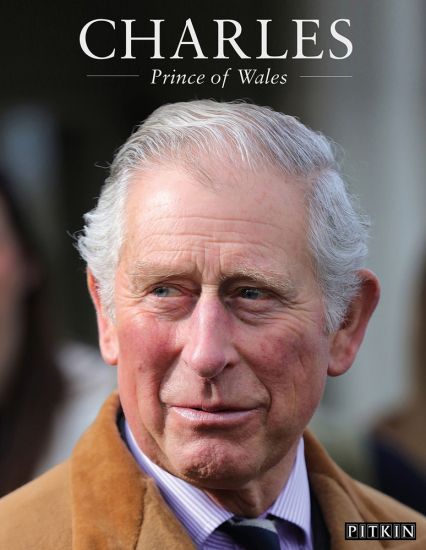
Heir. Prince. King. Discover the real Charles - our King - in the definitive biography from the bestselling author of Elizabeth the Queen 'Brilliant, startling. The royal biography everyone's talking about' Daily Mail_________His destiny was to become King. But for 70 years, he was a Prince.From his declared heirdom aged three to his years spent fulfilling royal duty in support of his mother, Queen Elizabeth II, Charles has spent his entire life serving the nation. But there is still so much we don't know.In this fascinating exploration of his public and private lives, Sally Bedell Smith - the acclaimed, bestselling biographer of Elizabeth the Queen - has drawn extensively on her access to the Royal Family's inner circle to reveal a portrait of a misunderstood prince.Beginning with his lonely childhood, Smith details his intellectual quests, his entrepreneurial pursuits, and his love affairs, from the tragedy of his marriage to Diana to his eventual reunion with Camilla, as well as his relationship with the next generation of royals, including Will, Kate, Harry, and his beloved grandchildren. As this sweeping and definitive biography shows, Prince Charles is more than a king - he is a son, father, husband, servant, prince - who spent his life preparing to follow in his mother's footsteps._________ 'For all we know about Prince Charles, there is so much we didn't know - until now' Tom Brokaw
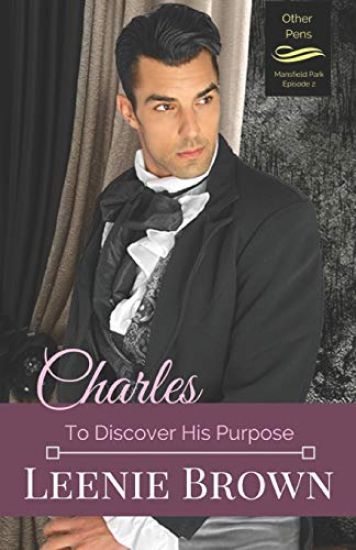
All he wanted was a kiss, but what he got was so much more.Charles Edwards is no stranger to scandal. He lives an easy, carefree life, floating from one moment of pleasure to another. Or, at least, he did until one fateful night when two young ladies asked him to come to their aid. Since then, Charles has been hiding from society until his injuries heal, which is what he was attempting to do when one of those ladies - the one with the kissable lips - re-enters his life.Evelyn Barrett loves nothing better than assisting others. Therefore, when she is presented with the possibility of guiding a shiftless gentleman toward improving himself, she just can't refuse. It should be an easy task. All she needs to do is sidestep his charm and ignore is good looks while pointing him in the right direction.However, Charles has no intention of taking Evelyn's advice and then leaving her alone. A gentleman determined to claim a kiss from a lady must ingratiate himself with the lady. And that is where the trouble begins.As the two spend time together, desires increase, affections are engaged, and Charles's end goal shifts. But will his scandalous past be the very thing which keeps him from achieving what he desires, or will he find himself at the beginning of a new scheme and direction for his life?Charles: To Discover His Purpose is the second episode in Leenie Brown's Mansfield Park Continuation found in her Other Pens Collection of books. If you like well-written stories of sweet redemption, then you will love this story of facing the challenges that reformation can bring and discovering the pleasure that only deep, abiding love can provide.So, put the kettle on, grab your copy of Charles: To Discover His Purpose, and let this sweet romance inspire a hope that even the most reprobate, wandering heart can, with care and proper direction, be transformed into that of a worthy gentleman ready to forge a new path in his life.
The expertly written text offers an insight into the private and public life of the heir to the throne of England, from his early years at Buckingham Palace through to his education at Gordonstoun and Trinity College, Cambridge, as well as his time in the Royal Navy. With a wide range of humanitarian and social interests, Charles is patron to a number of charities and organisations, including The Princes’s Trust, founded in 1976. He has played a central role as father to Princes William and Harry and his devotion and dedication to his mother, Queens Elizabeth II, is outstanding. This beautifully illustrated biography is part of the Pitkin Royal Collection series, celebrating the lives of the British royal family. Other notable titles in this insightful series include Royal Babies, The Queen and Her Family and Queen Elizabeth II.
Du suspense et de l'humour Charles est un jeune chercheur peureux, anxieux, hypocondriaque, timide, terrifi par la mort, obs d par la question de l'existence de Dieu, passionn de politique et de cin ma. Et perdument amoureux de la secr taire de son laboratoire. Il ne souhaite qu'une chose: mener la vie la plus paisible possible. Par malheur, un destin sournois l'entra ne sans cesse dans de p rilleuses et angoissantes enqu tes o il risque sa vie face des truands professionnels... Un roman humoristique et picaresque, empli de personnages pittoresques, qui immerge le lecteur dans un univers original, dr le et attachant.
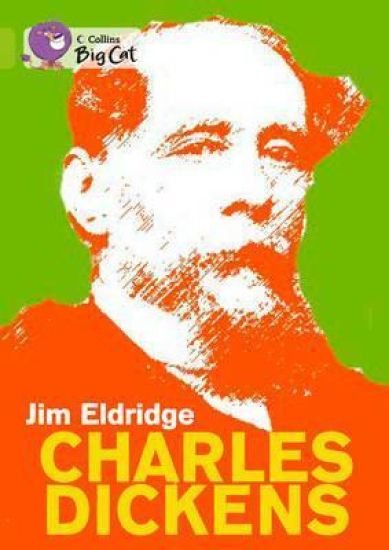
Build your child’s reading confidence at home with books at the right level Charles Dickens was a famous writer who lived in the 19th century. Discover what life was like for Charles, from spending his childhood working in a factory to finding a job as a law clerk and starting his writing career in this biography by Jim Eldridge. Lime/Band 11 books have longer sentence structures and a greater use of literary languageText type: A biographyPages 30 and 31 present a timeline of Charles Dickens’ life, allowing children to recap the events from the book.Curriculum links: Literacy: Information texts.This book has been quizzed for Accelerated Reader.
Build your child’s reading confidence at home with books at the right level Collins Big Cat is a guided reading series for ages 4–11 edited by Cliff Moon. Top children's authors and illustrators have created fiction and non-fiction books that your children will love to read, banded to help you choose the right book for every child. Practical ideas for guided reading are included at the back of each book. Pearl/Band 18 books offer fluent readers a complex, substantial text with challenging themes to facilitate sustained comprehension, bridging the gap between a reading programme and longer chapter books.Text type:Curriculum links:
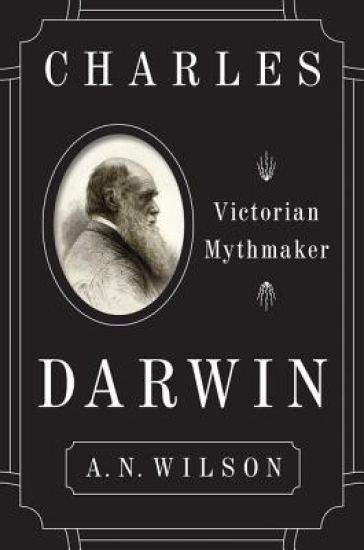
A radical reappraisal of Charles Darwin from the bestselling author of Victoria: A Life.With the publication of On the Origin of Species, Charles Darwin--hailed as the man who "discovered evolution"--was propelled into the pantheon of great scientific thinkers, alongside Galileo, Copernicus, and Newton. Eminent writer A. N. Wilson challenges this long-held assumption. Contextualizing Darwin and his ideas, he offers a groundbreaking critical look at this revered figure in modern science.In this beautifully written, deeply erudite portrait, Wilson argues that Darwin was not an original scientific thinker, but a ruthless and determined self-promoter who did not credit the many great sages whose ideas he advanced in his book. Furthermore, Wilson contends that religion and Darwinism have much more in common than it would seem, for the acceptance of Darwin's theory involves a pretty significant leap of faith.Armed with an extraordinary breadth of knowledge, Wilson explores how Darwin and his theory were very much a product of their place and time. The "Survival of the Fittest" was really the Survival of Middle Class families like the Darwins--members of a relatively new economic strata who benefited from the rising Industrial Revolution at the expense of the working classes. Following Darwin's theory, the wretched state of the poor was an outcome of nature, not the greed and neglect of the moneyed classes. In a paradigm-shifting conclusion, Wilson suggests that it remains to be seen, as this class dies out, whether the Darwinian idea will survive, or whether it, like other Victorian fads, will become a footnote in our intellectual history.Brilliant, daring, and ambitious, Charles Darwin explores this legendary man as never before, and challenges us to reconsider our understanding of both Darwin and modern science itself.
"Reading Wright is a steep, stinging pleasure."--Dwight Garner, New York TimesIn this incisive, satirical collection of three classic American novels by Charles Wright--hailed by the New York Times as "malevolent, bitter, glittering"--a young, black intellectual from the South struggles to make it in New York City. This special compilation includes a foreword by acclaimed poet and novelist Ishmael Reed, who calls Wright, "Richard Pryor on paper."As fresh and poignant as when originally published in the sixties and seventies, The Messenger, The Wig, and Absolutely Nothing to get Alarmed About form Charles Wright's remarkable New York City trilogy. By turns brutally funny and starkly real, these three autobiographical novels create a memorable portrait of a young, working-class, black intellectual--a man caught between the bohemian elite of Greenwich Village and the dregs of male prostitution and drug abuse. Wright's fiction is searingly original in bringing to life a special time, a special place, and the remarkable story of a man living in two worlds. This updated edition shines a spotlight once again on this important writer--a writer whose work is so crucial to our times.