Kirjojen hintavertailu. Mukana 11 717 486 kirjaa ja 12 kauppaa.

Kirjahaku

Etsi kirjoja tekijän nimen, kirjan nimen tai ISBN:n perusteella.

1000 tulosta hakusanalla Charles K. Armstrong

The Koreas

The Koreas

Charles K. Armstrong

Routledge
2013
sidottu
Presenting a succinct, historically informed introduction to North and South Korea, the second edition of The Koreas considers the radically different ways these countries have dealt with the growing challenges of globalization. Since the first edition’s publication, the economic, political, and social differences have only intensified, making evident the relevancy and importance of Armstrong’s work, in understanding the Koreas now and in the future. Ultimately, The Koreas is a crisp, engaging primer of Korea and the Korean people in the contemporary world. This book is ideal for many courses in a variety of disciplines, including politics, history, international business, and Asian studies.
The Koreas

The Koreas

Charles K. Armstrong

Routledge
2013
nidottu
Presenting a succinct, historically informed introduction to North and South Korea, the second edition of The Koreas considers the radically different ways these countries have dealt with the growing challenges of globalization. Since the first edition’s publication, the economic, political, and social differences have only intensified, making evident the relevancy and importance of Armstrong’s work, in understanding the Koreas now and in the future. Ultimately, The Koreas is a crisp, engaging primer of Korea and the Korean people in the contemporary world. This book is ideal for many courses in a variety of disciplines, including politics, history, international business, and Asian studies.
The North Korean Revolution, 1945–1950

The North Korean Revolution, 1945–1950

Charles K. Armstrong

Cornell University Press
2004
pokkari
North Korea, despite a shattered economy and a populace suffering from widespread hunger, has outlived repeated forecasts of its imminent demise. Charles K. Armstrong contends that a major source of North Korea's strength and resiliency, as well as of its flaws and shortcomings, lies in the poorly understood origins of its system of government. He examines the genesis of the Democratic People's Republic of Korea (DPRK) both as an important yet rarely studied example of a communist state and as part of modern Korean history. North Korea is one of the last redoubts of "unreformed" Marxism-Leninism in the world. Yet it is not a Soviet satellite in the East European manner, nor is its government the result of a local revolution, as in Cuba and Vietnam. Instead, the DPRK represents a unique "indigenization" of Soviet Stalinism, Armstrong finds. The system that formed under the umbrella of the Soviet occupation quickly developed into a nationalist regime as programs initiated from above merged with distinctive local conditions. Armstrong's account is based on long-classified documents captured by U.S. forces during the Korean War. This enormous archive of over 1.6 million pages provides unprecedented insight into the making of the Pyongyang regime and fuels the author's argument that the North Korean state is likely to remain viable for some years to come.
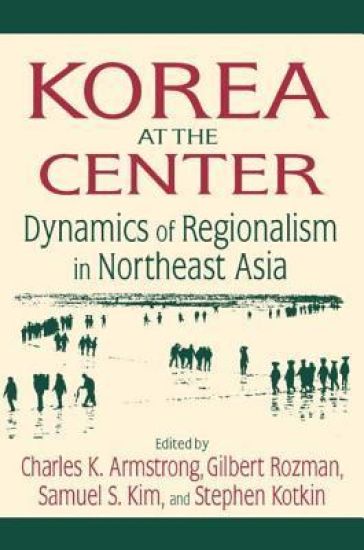
Korea at the Center: Dynamics of Regionalism in Northeast Asia

Korea at the Center: Dynamics of Regionalism in Northeast Asia

Charles K. Armstrong; Gilbert Rozman; Samuel S. Kim; Stephen Kotkin

Routledge
2006
sidottu
The common images of Korea view the peninsula as a long-standing battleground for outside powers and the Cold War's last divided state. But, Korea's location at the very center of Northeast Asia gives it a pivotal role in the economic integration of the region and the dynamic development of its more powerful neighbors. A great wave of economic expansion, driven first by the Japanese miracle and then by the ascent of China, has made South Korea - an economic powerhouse in its own right - the hub of the region once again, a natural corridor for railroads and energy pipelines linking Asiatic Russia to China and Japan. And, over the horizon, an opening of North Korea, with multilateral support, would add another major push toward regional integration. Illuminating the role of the Korean peninsula in three modern historical periods, the eminent international contributors to this volume offer a fresh and stimulating appraisal of Korea as the key to the coalescence of a broad, open Northeast Asian regionalism in the twenty-fifth century.
Korea at the Center: Dynamics of Regionalism in Northeast Asia

Korea at the Center: Dynamics of Regionalism in Northeast Asia

Charles K. Armstrong; Gilbert Rozman; Samuel S. Kim; Stephen Kotkin

Routledge
2005
nidottu
The common images of Korea view the peninsula as a long-standing battleground for outside powers and the Cold War's last divided state. But, Korea's location at the very center of Northeast Asia gives it a pivotal role in the economic integration of the region and the dynamic development of its more powerful neighbors. A great wave of economic expansion, driven first by the Japanese miracle and then by the ascent of China, has made South Korea - an economic powerhouse in its own right - the hub of the region once again, a natural corridor for railroads and energy pipelines linking Asiatic Russia to China and Japan. And, over the horizon, an opening of North Korea, with multilateral support, would add another major push toward regional integration. Illuminating the role of the Korean peninsula in three modern historical periods, the eminent international contributors to this volume offer a fresh and stimulating appraisal of Korea as the key to the coalescence of a broad, open Northeast Asian regionalism in the twenty-fifth century.
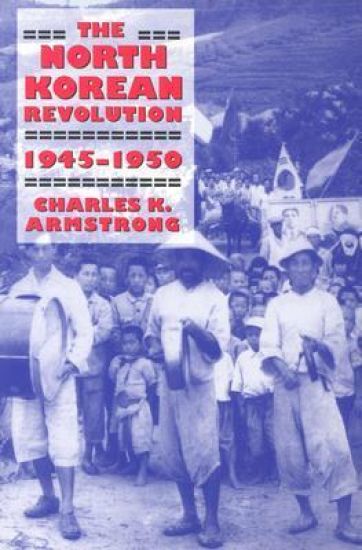
The North Korean Revolution, 1945–1950

The North Korean Revolution, 1945–1950

Armstrong Charles K.

CORNELL UNIVERSITY PRESS
2002
sidottu
North Korea, despite a shattered economy and a populace suffering from widespread hunger, has outlived repeated forecasts of its imminent demise. Charles K. Armstrong contends that a major source of North Korea's strength and resiliency, as well as of its flaws and shortcomings, lies in the poorly understood origins of its system of government. He examines the genesis of the Democratic People's Republic of Korea (DPRK) both as an important yet rarely studied example of a communist state and as part of modern Korean history. North Korea is one of the last redoubts of "unreformed" Marxism-Leninism in the world. Yet it is not a Soviet satellite in the East European manner, nor is its government the result of a local revolution, as in Cuba and Vietnam. Instead, the DPRK represents a unique "indigenization" of Soviet Stalinism, Armstrong finds. The system that formed under the umbrella of the Soviet occupation quickly developed into a nationalist regime as programs initiated from above merged with distinctive local conditions.Armstrong's account is based on long-classified documents captured by U.S. forces during the Korean War. This enormous archive of over 1.6 million pages provides unprecedented insight into the making of the Pyongyang regime and fuels the author's argument that the North Korean state is likely to remain viable for some years to come.
Charles K. McClatchy and the Golden Era of American Journalism

Charles K. McClatchy and the Golden Era of American Journalism

Steven M. Avella

University of Missouri Press
2016
sidottu
Charles K. McClatchy was twenty-five when he inherited The Sacramento Bee from his father, and his ensuing career as the paper’s editor extended well beyond the newsroom. Until his death in 1936, McClatchy was a consistent advocate for Progressive politics, a crusader for urban reform, a staunch isolationist, and a voice for Northern California. This biography explores his career as the long-time editor of the Bee in a work that weaves the history of Northern California with that of American newspapers.
Nathaniel Bolton, a Forgotton New England Poet, by Charles K. Bolton.

Nathaniel Bolton, a Forgotton New England Poet, by Charles K. Bolton.

Charles Knowles 1867-1950 Bolton

Hassell Street Press
2021
nidottu
This work has been selected by scholars as being culturally important and is part of the knowledge base of civilization as we know it.This work is in the public domain in the United States of America, and possibly other nations. Within the United States, you may freely copy and distribute this work, as no entity (individual or corporate) has a copyright on the body of the work.Scholars believe, and we concur, that this work is important enough to be preserved, reproduced, and made generally available to the public. To ensure a quality reading experience, this work has been proofread and republished using a format that seamlessly blends the original graphical elements with text in an easy-to-read typeface.We appreciate your support of the preservation process, and thank you for being an important part of keeping this knowledge alive and relevant.
The Reminiscences of Adm. Charles K. Duncan, USN (Ret.), vol. IV
Admiral Duncan was XO of the USS Hutchins (DD-476) in 1942 in combat action in the Aleutians and South Pacific, then CO of the USS Wilson (DD-408) taking part in action in the South and Central Pacific. After World War II, he served as XO of the USS Wisconsin (BB-64) and CO of the Chilton (APA-38), Assistant Chief of Staff for Operations CinCPac, Commander Amphibious Group One, and Commander Amphibious Training Command, Pacific Fleet. Discussions in his oral history cover various naval topics: neutrality patrol in the Atlantic, transfer of 50 destroyers to the Royal Navy, planning for CinCLant and newly established SACLant command, amphibious warfare in its early stages and later developments, naval education, and Navy Reservists. Volume II gives detailed coverage of the admiral's tours of duty as Assistant Chief of the Bureau of Naval Personnel (1962–1964) and as Chief of the Bureau (1968–1970). This position includes a notable account of the admiral's years as liaison of BuPers with Rickover and the nuclear program of the Navy. Included in the volume is coverage of several large sea commands that span a significant period in history: Atlantic Fleet Cruiser-Destroyer Force (1964–65); Atlantic Fleet Amphibious Force (1965–67); the Second Fleet (1967–68). In Volume III, Admiral Duncan provides a wealth of detail on his service as Chief of Naval Personnel from 1968 through 1970 and as NATO's Supreme Allied Commander Atlantic from 1970 until his retirement in 1972. In discussing both tours, he provides explanations of what the jobs entail and illustrates with examples from his own tenure. As chief of BuPers, he managed the Navy's manpower, justified programs before Congress, and dealt with budgetary considerations. Included was the requirement to reduce sharply the manpower allocations to meet budget requirements in 1969-1970. Serving as SACLant was one of three jobs the admiral held simultaneously, and he tells in this volume of the NATO billet. He worked with both high-ranking civilians and military officers in other countries, was involved in planning, and in the conduct of NATO exercises. The concluding Volume IV covers Admiral Duncan's duties in two of the three "hats" he wore from 1970 through 1972. In Volume III, he told of his NATO hat. At the same time, he had the U.S. joint-service title of Commander in Chief Atlantic and the U.S. Navy billet as Commander in Chief Atlantic Fleet. The admiral explains the differing concerns that went with each job and makes a case for having them held by two different admirals, as is done in the Pacific. As in the previous volume, he explains what the jobs entailed and illustrated through his experiences from his own service. This volume concludes with a detailed recounting of Admiral Duncan's involvement with Admiral Elmo Zumwalt, who was Chief of Naval Operations during Duncan's final years on active duty. The relationship began in BuPers when Zumwalt was a lieutenant commander, ten years junior to Duncan, and concluded when Zumwalt was Duncan's senior.
The Reminiscences of Adm. Charles K. Duncan, USN (Ret.), vol. III
Admiral Duncan was XO of the USS Hutchins (DD-476) in 1942 in combat action in the Aleutians and South Pacific, then CO of the USS Wilson (DD-408) taking part in action in the South and Central Pacific. After World War II, he served as XO of the USS Wisconsin (BB-64) and CO of the Chilton (APA-38), Assistant Chief of Staff for Operations CinCPac, Commander Amphibious Group One, and Commander Amphibious Training Command, Pacific Fleet. Discussions in his oral history cover various naval topics: neutrality patrol in the Atlantic, transfer of 50 destroyers to the Royal Navy, planning for CinCLant and newly established SACLant command, amphibious warfare in its early stages and later developments, naval education, and Navy Reservists. Volume II gives detailed coverage of the admiral's tours of duty as Assistant Chief of the Bureau of Naval Personnel (1962–1964) and as Chief of the Bureau (1968–1970). This position includes a notable account of the admiral's years as liaison of BuPers with Rickover and the nuclear program of the Navy. Included in the volume is coverage of several large sea commands that span a significant period in history: Atlantic Fleet Cruiser-Destroyer Force (1964–65); Atlantic Fleet Amphibious Force (1965–67); the Second Fleet (1967–68). In Volume III, Admiral Duncan provides a wealth of detail on his service as Chief of Naval Personnel from 1968 through 1970 and as NATO's Supreme Allied Commander Atlantic from 1970 until his retirement in 1972. In discussing both tours, he provides explanations of what the jobs entail and illustrates with examples from his own tenure. As chief of BuPers, he managed the Navy's manpower, justified programs before Congress, and dealt with budgetary considerations. Included was the requirement to reduce sharply the manpower allocations to meet budget requirements in 1969-1970. Serving as SACLant was one of three jobs the admiral held simultaneously, and he tells in this volume of the NATO billet. He worked with both high-ranking civilians and military officers in other countries, was involved in planning, and in the conduct of NATO exercises. The concluding Volume IV covers Admiral Duncan's duties in two of the three "hats" he wore from 1970 through 1972. In Volume III, he told of his NATO hat. At the same time, he had the U.S. joint-service title of Commander in Chief Atlantic and the U.S. Navy billet as Commander in Chief Atlantic Fleet. The admiral explains the differing concerns that went with each job and makes a case for having them held by two different admirals, as is done in the Pacific. As in the previous volume, he explains what the jobs entailed and illustrated through his experiences from his own service. This volume concludes with a detailed recounting of Admiral Duncan's involvement with Admiral Elmo Zumwalt, who was Chief of Naval Operations during Duncan's final years on active duty. The relationship began in BuPers when Zumwalt was a lieutenant commander, ten years junior to Duncan, and concluded when Zumwalt was Duncan's senior.

The Reminiscences of Adm. Charles K. Duncan, USN (Ret.), vol. II
Admiral Duncan was XO of the USS Hutchins (DD-476) in 1942 in combat action in the Aleutians and South Pacific, then CO of the USS Wilson (DD-408) taking part in action in the South and Central Pacific. After World War II, he served as XO of the USS Wisconsin (BB-64) and CO of the Chilton (APA-38), Assistant Chief of Staff for Operations CinCPac, Commander Amphibious Group One, and Commander Amphibious Training Command, Pacific Fleet. Discussions in his oral history cover various naval topics: neutrality patrol in the Atlantic, transfer of 50 destroyers to the Royal Navy, planning for CinCLant and newly established SACLant command, amphibious warfare in its early stages and later developments, naval education, and Navy Reservists. Volume II gives detailed coverage of the admiral's tours of duty as Assistant Chief of the Bureau of Naval Personnel (1962–1964) and as Chief of the Bureau (1968–1970). This position includes a notable account of the admiral's years as liaison of BuPers with Rickover and the nuclear program of the Navy. Included in the volume is coverage of several large sea commands that span a significant period in history: Atlantic Fleet Cruiser-Destroyer Force (1964–65); Atlantic Fleet Amphibious Force (1965–67); the Second Fleet (1967–68). In Volume III, Admiral Duncan provides a wealth of detail on his service as Chief of Naval Personnel from 1968 through 1970 and as NATO's Supreme Allied Commander Atlantic from 1970 until his retirement in 1972. In discussing both tours, he provides explanations of what the jobs entail and illustrates with examples from his own tenure. As chief of BuPers, he managed the Navy's manpower, justified programs before Congress, and dealt with budgetary considerations. Included was the requirement to reduce sharply the manpower allocations to meet budget requirements in 1969-1970. Serving as SACLant was one of three jobs the admiral held simultaneously, and he tells in this volume of the NATO billet. He worked with both high-ranking civilians and military officers in other countries, was involved in planning, and in the conduct of NATO exercises. The concluding Volume IV covers Admiral Duncan's duties in two of the three "hats" he wore from 1970 through 1972. In Volume III, he told of his NATO hat. At the same time, he had the U.S. joint-service title of Commander in Chief Atlantic and the U.S. Navy billet as Commander in Chief Atlantic Fleet. The admiral explains the differing concerns that went with each job and makes a case for having them held by two different admirals, as is done in the Pacific. As in the previous volume, he explains what the jobs entailed and illustrated through his experiences from his own service. This volume concludes with a detailed recounting of Admiral Duncan's involvement with Admiral Elmo Zumwalt, who was Chief of Naval Operations during Duncan's final years on active duty. The relationship began in BuPers when Zumwalt was a lieutenant commander, ten years junior to Duncan, and concluded when Zumwalt was Duncan's senior.
The Reminiscences of Adm. Charles K. Duncan, USN (Ret.), vol. I
Admiral Duncan was XO of the USS Hutchins (DD-476) in 1942 in combat action in the Aleutians and South Pacific, then CO of the USS Wilson (DD-408) taking part in action in the South and Central Pacific. After World War II, he served as XO of the USS Wisconsin (BB-64) and CO of the Chilton (APA-38), Assistant Chief of Staff for Operations CinCPac, Commander Amphibious Group One, and Commander Amphibious Training Command, Pacific Fleet. Discussions in his oral history cover various naval topics: neutrality patrol in the Atlantic, transfer of 50 destroyers to the Royal Navy, planning for CinCLant and newly established SACLant command, amphibious warfare in its early stages and later developments, naval education, and Navy Reservists. Volume II gives detailed coverage of the admiral's tours of duty as Assistant Chief of the Bureau of Naval Personnel (1962–1964) and as Chief of the Bureau (1968–1970). This position includes a notable account of the admiral's years as liaison of BuPers with Rickover and the nuclear program of the Navy. Included in the volume is coverage of several large sea commands that span a significant period in history: Atlantic Fleet Cruiser-Destroyer Force (1964–65); Atlantic Fleet Amphibious Force (1965–67); the Second Fleet (1967–68). In Volume III, Admiral Duncan provides a wealth of detail on his service as Chief of Naval Personnel from 1968 through 1970 and as NATO's Supreme Allied Commander Atlantic from 1970 until his retirement in 1972. In discussing both tours, he provides explanations of what the jobs entail and illustrates with examples from his own tenure. As chief of BuPers, he managed the Navy's manpower, justified programs before Congress, and dealt with budgetary considerations. Included was the requirement to reduce sharply the manpower allocations to meet budget requirements in 1969-1970. Serving as SACLant was one of three jobs the admiral held simultaneously, and he tells in this volume of the NATO billet. He worked with both high-ranking civilians and military officers in other countries, was involved in planning, and in the conduct of NATO exercises. The concluding Volume IV covers Admiral Duncan's duties in two of the three "hats" he wore from 1970 through 1972. In Volume III, he told of his NATO hat. At the same time, he had the U.S. joint-service title of Commander in Chief Atlantic and the U.S. Navy billet as Commander in Chief Atlantic Fleet. The admiral explains the differing concerns that went with each job and makes a case for having them held by two different admirals, as is done in the Pacific. As in the previous volume, he explains what the jobs entailed and illustrated through his experiences from his own service. This volume concludes with a detailed recounting of Admiral Duncan's involvement with Admiral Elmo Zumwalt, who was Chief of Naval Operations during Duncan's final years on active duty. The relationship began in BuPers when Zumwalt was a lieutenant commander, ten years junior to Duncan, and concluded when Zumwalt was Duncan's senior.
Petition [of C. K. W. and Others]. Report and Bill on the Subject of a Monument in Honor of William French, Etc.
Title: Petition of C. K. W. and others]. Report and Bill on the subject of a Monument in honor of William French, etc.Publisher: British Library, Historical Print EditionsThe British Library is the national library of the United Kingdom. It is one of the world's largest research libraries holding over 150 million items in all known languages and formats: books, journals, newspapers, sound recordings, patents, maps, stamps, prints and much more. Its collections include around 14 million books, along with substantial additional collections of manuscripts and historical items dating back as far as 300 BC.The MILITARY HISTORY & WARFARE collection includes books from the British Library digitised by Microsoft. This series offers titles on warfare from ancient to modern times. It includes detailed accounts of campaigns, battles, weapons, as well as the soldiers and commanders who devised, initiated, and supported war efforts throughout history. Specific analyses discuss the impact of war on societies, cultures, economies, and changing international relationships. ++++The below data was compiled from various identification fields in the bibliographic record of this title. This data is provided as an additional tool in helping to insure edition identification: ++++ British Library Williams, Charles K.; 1852. 15 p.; 8 . 9602.d.17.
The Genealogy of Violence

The Genealogy of Violence

Charles K. Bellinger

Oxford University Press Inc
2001
sidottu
In this book, Charles Bellinger draws on the thought of Søren Kierkegaard and Rene Girard in search of a Christian understanding of the roots of violence. Utilizing Kierkegaard's idea of sin as the evasion of the call to become oneself before God, he argues that the basic motive that impels human beings toward acts of violence is a refusal to grow spiritually. He finds congruencies between Kierkegaard's concept and the Girardian theory of mimetic desire and scapegoating. From these two sources he creates a model which he applies to a consideration of the problem of violent acts committed by Christians throughout history. Such episodes as the Crusades and the Inquisition, says Bellinger, reveal the failure of ostensible Christians to live in accordance with the insights of biblical revelation.
Economic Contractions in the United States

Economic Contractions in the United States

Charles K. Rowley; Nathanael Smith

Institute of Economic Affairs
2009
nidottu
This monograph provides a detailed explanation how the Great Depression and the current financial crisis and economic contraction in the United States were both caused by and exacerbated by government, not by capitalism. The monograph provides a well-reasoned free market alternative to current statist policies with respect to economic recovery in the United States.
The British Monopolies Commission

The British Monopolies Commission

Charles K. Rowley

Routledge
2003
sidottu
This book is a key example of the emergence of public choice theory by an economist who was to become one of its major exponents. It combines a detailed, critical study of the Monopolies Commission, with an analysis of the economic issues involved in monopoly supervision and control.