Kirjojen hintavertailu. Mukana 11 342 296 kirjaa ja 12 kauppaa.

Kirjahaku

Etsi kirjoja tekijän nimen, kirjan nimen tai ISBN:n perusteella.

1000 tulosta hakusanalla Charles K. Wolfe

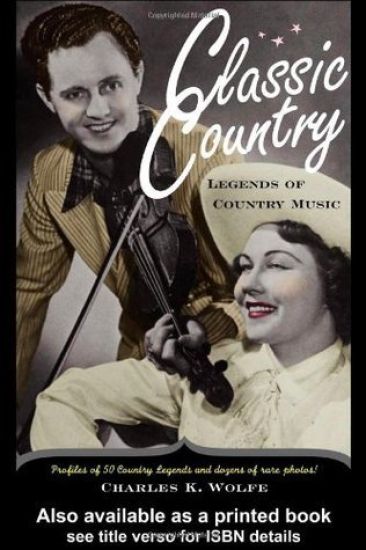
Classic Country

Classic Country

Charles K. Wolfe

Routledge
2000
nidottu
Now for the first time, country music authority Charles K. Wolfe gathers together his profiles of 50 legends of country music, including Bill Monroe, Lefty Frizzell, and Kitty Wells.
Tennessee Strings

Tennessee Strings

Charles K. Wolfe

University of Tennessee Press
1977
nidottu
Country music grew up in Tennessee, drawing from sources in the white rural music of East and Middle Tennessee, from the church music of country singing conventions, and from the black music of the Memphis area. The author traces the vital role played by Tennessee and its musicians in the development of this unique American art form.
Folk Songs Middle Tennessee

Folk Songs Middle Tennessee

Charles K. Wolfe

University of Tennessee Press
1997
sidottu
"Folk Songs of Middle Tennessee ... is superior to most collections because Boswell cast a wide net in his collecting, recording many items from people not usually thought of as folksingers, and because, unlike most collectors of his day, he was equally skilled at music and lyric transcription". -- W. K. McNeil, The Ozark Folk CenterThis volume brings together, for the first time, more than one hundred traditional songs from Middle Tennessee -- a region that is synonymous in the popular mind with music but one that has been curiously neglected in folksong scholarship. The songs presented here were originally collected in the late 1940s and early 1950s by George Boswell, a distinguished scholar and field researcher who died in 1995.While living in Nashville, Boswell scoured the city and surrounding counties for old ballads and folk songs.Sometimes using a wire or tape recorder, at other times employing a stenographer, he visited numerous singers and transcribed the words and tunes to hundreds of songs. Even after moving from Tennessee to assume a teaching position at the University of Mississippi, Boswell continued to work on his collection, annotating and comparing texts, and publishing occasional samples. In 1950, he noted that Tennessee, virtually alone among southern states, had no published collection of its folk songs. That has remained the case until now.The songs chosen for this book are presented with musical notation and extensive backgound notes, including biographical data on the original informants (many of whom were business and professional people) and fascinating histories of each song. A number of the songs are rare and previously uncollected; others arelocal variants of long-popular ballads. The publication of this volume -- the first major collection of southern folk songs in many years -- is not only a testament to Boswell's scholarship but a marvelous contribution to our understanding of southern folk culture and the ways in which it has interacted with popular culture.
Folk Songs Middle Tennessee

Folk Songs Middle Tennessee

Charles K. Wolfe

University of Tennessee Press
1997
nidottu
"Folk Songs of Middle Tennessee ... is superior to most collections because Boswell cast a wide net in his collecting, recording many items from people not usually thought of as folksingers, and because, unlike most collectors of his day, he was equally skilled at music and lyric transcription". -- W. K. McNeil, The Ozark Folk CenterThis volume brings together, for the first time, more than one hundred traditional songs from Middle Tennessee -- a region that is synonymous in the popular mind with music but one that has been curiously neglected in folksong scholarship. The songs presented here were originally collected in the late 1940s and early 1950s by George Boswell, a distinguished scholar and field researcher who died in 1995.While living in Nashville, Boswell scoured the city and surrounding counties for old ballads and folk songs.Sometimes using a wire or tape recorder, at other times employing a stenographer, he visited numerous singers and transcribed the words and tunes to hundreds of songs. Even after moving from Tennessee to assume a teaching position at the University of Mississippi, Boswell continued to work on his collection, annotating and comparing texts, and publishing occasional samples. In 1950, he noted that Tennessee, virtually alone among southern states, had no published collection of its folk songs. That has remained the case until now.The songs chosen for this book are presented with musical notation and extensive backgound notes, including biographical data on the original informants (many of whom were business and professional people) and fascinating histories of each song. A number of the songs are rare and previously uncollected; others arelocal variants of long-popular ballads. The publication of this volume -- the first major collection of southern folk songs in many years -- is not only a testament to Boswell's scholarship but a marvelous contribution to our understanding of southern folk culture and the ways in which it has interacted with popular culture.
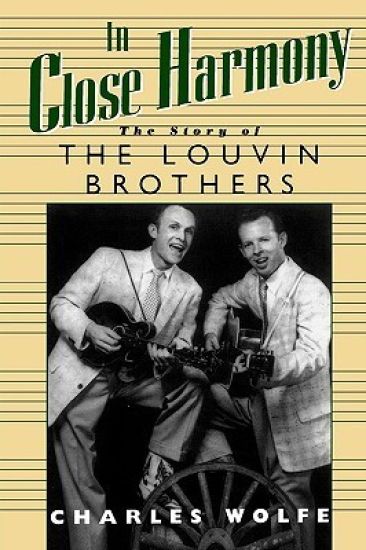
In Close Harmony: The Story of the Louvin Brothers

In Close Harmony: The Story of the Louvin Brothers

Charles K. Wolfe

UNIVERSITY PRESS OF MISSISSIPPI
1996
nidottu
The authoritative Grove Dictionary of American Music says they are "probably the greatest traditional country duo in history." The music of the Louvin Brothers has influenced almost all revered rock 'n' roll and country singers, from the Everly Brothers to Emmylou Harris. The essence of country music for many aficionados is harmony singing, and country harmony, for most of these, is synonymous with the blended voices of Ira and Charles Louvin. This book is the first full study of the Louvin Brothers' remarkable career and of their rich, complex music. Based on extensive research, including substantial interviews with Charles, the surviving brother, In Close Harmony provides a detailed portrait of the Louvins and the turbulent country music world of the 1950s.
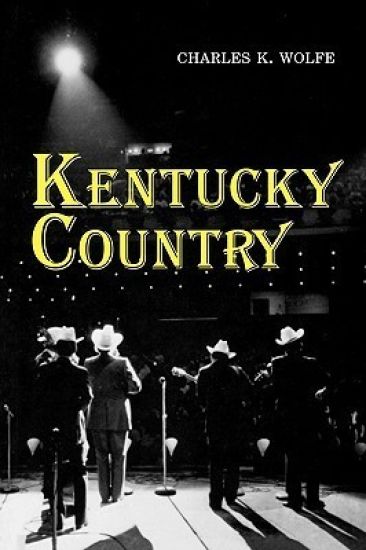
Kentucky Country

Kentucky Country

Charles K. Wolfe

The University Press of Kentucky
1996
nidottu
A lively tour of the state's music, from the days of string bands through hillbilly, western swing, gospel, bluegrass, and honkey-tonk to through the Nashville Sound and beyond. Through personal interviews with many of the living legends of Kentucky music, Charles K. Wolfe illuminates a fascinating and important area of American culture. The list of country music stars who hail from Kentucky is a long and glittering one. Red Foley, Bill Monroe, Loretta Lynn, Tom T. Hall, the Judds, Dwight Yaokum, Billy Ray Cyrus, Ricky Skaggs, John Michael Montgomery, and Keith Whitely -- all these and many others have called Kentucky home. Kentucky Country is the story of these stars and dozens more. It is also the story of many Kentucky musicians whose contributions have been little known or appreciated, and of those collectors, promoters, and entrepreneurs who have worked behind the scenes to bring Kentucky music to national attention.
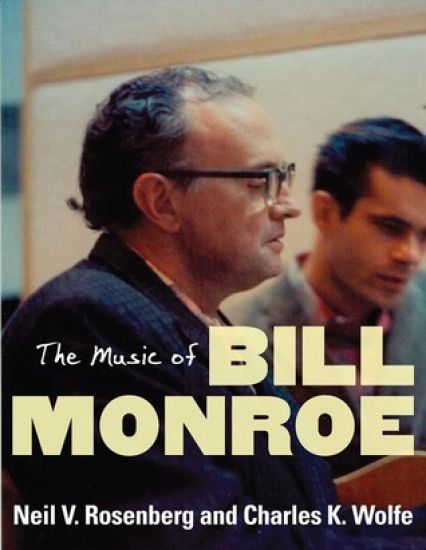
The Music of Bill Monroe

The Music of Bill Monroe

Neil V. Rosenberg; Charles K. Wolfe

University of Illinois Press
2007
sidottu
Spanning over 1,000 separate performances, The Music of Bill Monroe presents a complete chronological list of all of Bill Monroe’s commercially released sound and visual recordings. Each chapter begins with a narrative describing Monroe’s life and career at that point, bringing in producers, sidemen, and others as they become part of the story. The narratives read like a “who’s who” of bluegrass, connecting Monroe to the music’s larger history and containing many fascinating stories. The second part of each chapter presents the discography. Information here includes the session’s place, date, time, and producer; master/matrix numbers, song/tune titles, composer credits, personnel, instruments, and vocals; and catalog/release numbers and reissue data.The only complete bio-discography of this American musical icon, The Music of Bill Monroe is the starting point for any study of Monroe’s contributions as a composer, interpreter, and performer.
Proceedings of the 6th Annual RAND-China Reform Forum Conference, August 28-29, 2003

Proceedings of the 6th Annual RAND-China Reform Forum Conference, August 28-29, 2003

Charles Wolf; Bijian Zheng; William H. Overholt; Edward E. Leamer; Benjamin Zycher; K.C. Yeh; John Despres; Harold Brown

RAND
2005
pokkari
Contains papers and discussants' comments from a conference on economic and political-security subjects of mutual concern to China and the United States. Since 1998, the China Reform Forum in Beijing and The RAND Corporation have jointly organized an annual conference of experts from China and the United States. The conference focuses on economic and political-security subjects of mutual concern to China and the United States. It seeks to enhance mutual understanding among scholars and policymakers from both nations. This volume contains papers and discussant comments from the 2003 conference.
Charles K. McClatchy and the Golden Era of American Journalism

Charles K. McClatchy and the Golden Era of American Journalism

Steven M. Avella

University of Missouri Press
2016
sidottu
Charles K. McClatchy was twenty-five when he inherited The Sacramento Bee from his father, and his ensuing career as the paper’s editor extended well beyond the newsroom. Until his death in 1936, McClatchy was a consistent advocate for Progressive politics, a crusader for urban reform, a staunch isolationist, and a voice for Northern California. This biography explores his career as the long-time editor of the Bee in a work that weaves the history of Northern California with that of American newspapers.
Nathaniel Bolton, a Forgotton New England Poet, by Charles K. Bolton.

Nathaniel Bolton, a Forgotton New England Poet, by Charles K. Bolton.

Charles Knowles 1867-1950 Bolton

Hassell Street Press
2021
nidottu
This work has been selected by scholars as being culturally important and is part of the knowledge base of civilization as we know it.This work is in the public domain in the United States of America, and possibly other nations. Within the United States, you may freely copy and distribute this work, as no entity (individual or corporate) has a copyright on the body of the work.Scholars believe, and we concur, that this work is important enough to be preserved, reproduced, and made generally available to the public. To ensure a quality reading experience, this work has been proofread and republished using a format that seamlessly blends the original graphical elements with text in an easy-to-read typeface.We appreciate your support of the preservation process, and thank you for being an important part of keeping this knowledge alive and relevant.
The Reminiscences of Adm. Charles K. Duncan, USN (Ret.), vol. IV
Admiral Duncan was XO of the USS Hutchins (DD-476) in 1942 in combat action in the Aleutians and South Pacific, then CO of the USS Wilson (DD-408) taking part in action in the South and Central Pacific. After World War II, he served as XO of the USS Wisconsin (BB-64) and CO of the Chilton (APA-38), Assistant Chief of Staff for Operations CinCPac, Commander Amphibious Group One, and Commander Amphibious Training Command, Pacific Fleet. Discussions in his oral history cover various naval topics: neutrality patrol in the Atlantic, transfer of 50 destroyers to the Royal Navy, planning for CinCLant and newly established SACLant command, amphibious warfare in its early stages and later developments, naval education, and Navy Reservists. Volume II gives detailed coverage of the admiral's tours of duty as Assistant Chief of the Bureau of Naval Personnel (1962–1964) and as Chief of the Bureau (1968–1970). This position includes a notable account of the admiral's years as liaison of BuPers with Rickover and the nuclear program of the Navy. Included in the volume is coverage of several large sea commands that span a significant period in history: Atlantic Fleet Cruiser-Destroyer Force (1964–65); Atlantic Fleet Amphibious Force (1965–67); the Second Fleet (1967–68). In Volume III, Admiral Duncan provides a wealth of detail on his service as Chief of Naval Personnel from 1968 through 1970 and as NATO's Supreme Allied Commander Atlantic from 1970 until his retirement in 1972. In discussing both tours, he provides explanations of what the jobs entail and illustrates with examples from his own tenure. As chief of BuPers, he managed the Navy's manpower, justified programs before Congress, and dealt with budgetary considerations. Included was the requirement to reduce sharply the manpower allocations to meet budget requirements in 1969-1970. Serving as SACLant was one of three jobs the admiral held simultaneously, and he tells in this volume of the NATO billet. He worked with both high-ranking civilians and military officers in other countries, was involved in planning, and in the conduct of NATO exercises. The concluding Volume IV covers Admiral Duncan's duties in two of the three "hats" he wore from 1970 through 1972. In Volume III, he told of his NATO hat. At the same time, he had the U.S. joint-service title of Commander in Chief Atlantic and the U.S. Navy billet as Commander in Chief Atlantic Fleet. The admiral explains the differing concerns that went with each job and makes a case for having them held by two different admirals, as is done in the Pacific. As in the previous volume, he explains what the jobs entailed and illustrated through his experiences from his own service. This volume concludes with a detailed recounting of Admiral Duncan's involvement with Admiral Elmo Zumwalt, who was Chief of Naval Operations during Duncan's final years on active duty. The relationship began in BuPers when Zumwalt was a lieutenant commander, ten years junior to Duncan, and concluded when Zumwalt was Duncan's senior.
The Reminiscences of Adm. Charles K. Duncan, USN (Ret.), vol. III
Admiral Duncan was XO of the USS Hutchins (DD-476) in 1942 in combat action in the Aleutians and South Pacific, then CO of the USS Wilson (DD-408) taking part in action in the South and Central Pacific. After World War II, he served as XO of the USS Wisconsin (BB-64) and CO of the Chilton (APA-38), Assistant Chief of Staff for Operations CinCPac, Commander Amphibious Group One, and Commander Amphibious Training Command, Pacific Fleet. Discussions in his oral history cover various naval topics: neutrality patrol in the Atlantic, transfer of 50 destroyers to the Royal Navy, planning for CinCLant and newly established SACLant command, amphibious warfare in its early stages and later developments, naval education, and Navy Reservists. Volume II gives detailed coverage of the admiral's tours of duty as Assistant Chief of the Bureau of Naval Personnel (1962–1964) and as Chief of the Bureau (1968–1970). This position includes a notable account of the admiral's years as liaison of BuPers with Rickover and the nuclear program of the Navy. Included in the volume is coverage of several large sea commands that span a significant period in history: Atlantic Fleet Cruiser-Destroyer Force (1964–65); Atlantic Fleet Amphibious Force (1965–67); the Second Fleet (1967–68). In Volume III, Admiral Duncan provides a wealth of detail on his service as Chief of Naval Personnel from 1968 through 1970 and as NATO's Supreme Allied Commander Atlantic from 1970 until his retirement in 1972. In discussing both tours, he provides explanations of what the jobs entail and illustrates with examples from his own tenure. As chief of BuPers, he managed the Navy's manpower, justified programs before Congress, and dealt with budgetary considerations. Included was the requirement to reduce sharply the manpower allocations to meet budget requirements in 1969-1970. Serving as SACLant was one of three jobs the admiral held simultaneously, and he tells in this volume of the NATO billet. He worked with both high-ranking civilians and military officers in other countries, was involved in planning, and in the conduct of NATO exercises. The concluding Volume IV covers Admiral Duncan's duties in two of the three "hats" he wore from 1970 through 1972. In Volume III, he told of his NATO hat. At the same time, he had the U.S. joint-service title of Commander in Chief Atlantic and the U.S. Navy billet as Commander in Chief Atlantic Fleet. The admiral explains the differing concerns that went with each job and makes a case for having them held by two different admirals, as is done in the Pacific. As in the previous volume, he explains what the jobs entailed and illustrated through his experiences from his own service. This volume concludes with a detailed recounting of Admiral Duncan's involvement with Admiral Elmo Zumwalt, who was Chief of Naval Operations during Duncan's final years on active duty. The relationship began in BuPers when Zumwalt was a lieutenant commander, ten years junior to Duncan, and concluded when Zumwalt was Duncan's senior.
The Reminiscences of Adm. Charles K. Duncan, USN (Ret.), vol. II
Admiral Duncan was XO of the USS Hutchins (DD-476) in 1942 in combat action in the Aleutians and South Pacific, then CO of the USS Wilson (DD-408) taking part in action in the South and Central Pacific. After World War II, he served as XO of the USS Wisconsin (BB-64) and CO of the Chilton (APA-38), Assistant Chief of Staff for Operations CinCPac, Commander Amphibious Group One, and Commander Amphibious Training Command, Pacific Fleet. Discussions in his oral history cover various naval topics: neutrality patrol in the Atlantic, transfer of 50 destroyers to the Royal Navy, planning for CinCLant and newly established SACLant command, amphibious warfare in its early stages and later developments, naval education, and Navy Reservists. Volume II gives detailed coverage of the admiral's tours of duty as Assistant Chief of the Bureau of Naval Personnel (1962–1964) and as Chief of the Bureau (1968–1970). This position includes a notable account of the admiral's years as liaison of BuPers with Rickover and the nuclear program of the Navy. Included in the volume is coverage of several large sea commands that span a significant period in history: Atlantic Fleet Cruiser-Destroyer Force (1964–65); Atlantic Fleet Amphibious Force (1965–67); the Second Fleet (1967–68). In Volume III, Admiral Duncan provides a wealth of detail on his service as Chief of Naval Personnel from 1968 through 1970 and as NATO's Supreme Allied Commander Atlantic from 1970 until his retirement in 1972. In discussing both tours, he provides explanations of what the jobs entail and illustrates with examples from his own tenure. As chief of BuPers, he managed the Navy's manpower, justified programs before Congress, and dealt with budgetary considerations. Included was the requirement to reduce sharply the manpower allocations to meet budget requirements in 1969-1970. Serving as SACLant was one of three jobs the admiral held simultaneously, and he tells in this volume of the NATO billet. He worked with both high-ranking civilians and military officers in other countries, was involved in planning, and in the conduct of NATO exercises. The concluding Volume IV covers Admiral Duncan's duties in two of the three "hats" he wore from 1970 through 1972. In Volume III, he told of his NATO hat. At the same time, he had the U.S. joint-service title of Commander in Chief Atlantic and the U.S. Navy billet as Commander in Chief Atlantic Fleet. The admiral explains the differing concerns that went with each job and makes a case for having them held by two different admirals, as is done in the Pacific. As in the previous volume, he explains what the jobs entailed and illustrated through his experiences from his own service. This volume concludes with a detailed recounting of Admiral Duncan's involvement with Admiral Elmo Zumwalt, who was Chief of Naval Operations during Duncan's final years on active duty. The relationship began in BuPers when Zumwalt was a lieutenant commander, ten years junior to Duncan, and concluded when Zumwalt was Duncan's senior.
The Reminiscences of Adm. Charles K. Duncan, USN (Ret.), vol. I
Admiral Duncan was XO of the USS Hutchins (DD-476) in 1942 in combat action in the Aleutians and South Pacific, then CO of the USS Wilson (DD-408) taking part in action in the South and Central Pacific. After World War II, he served as XO of the USS Wisconsin (BB-64) and CO of the Chilton (APA-38), Assistant Chief of Staff for Operations CinCPac, Commander Amphibious Group One, and Commander Amphibious Training Command, Pacific Fleet. Discussions in his oral history cover various naval topics: neutrality patrol in the Atlantic, transfer of 50 destroyers to the Royal Navy, planning for CinCLant and newly established SACLant command, amphibious warfare in its early stages and later developments, naval education, and Navy Reservists. Volume II gives detailed coverage of the admiral's tours of duty as Assistant Chief of the Bureau of Naval Personnel (1962–1964) and as Chief of the Bureau (1968–1970). This position includes a notable account of the admiral's years as liaison of BuPers with Rickover and the nuclear program of the Navy. Included in the volume is coverage of several large sea commands that span a significant period in history: Atlantic Fleet Cruiser-Destroyer Force (1964–65); Atlantic Fleet Amphibious Force (1965–67); the Second Fleet (1967–68). In Volume III, Admiral Duncan provides a wealth of detail on his service as Chief of Naval Personnel from 1968 through 1970 and as NATO's Supreme Allied Commander Atlantic from 1970 until his retirement in 1972. In discussing both tours, he provides explanations of what the jobs entail and illustrates with examples from his own tenure. As chief of BuPers, he managed the Navy's manpower, justified programs before Congress, and dealt with budgetary considerations. Included was the requirement to reduce sharply the manpower allocations to meet budget requirements in 1969-1970. Serving as SACLant was one of three jobs the admiral held simultaneously, and he tells in this volume of the NATO billet. He worked with both high-ranking civilians and military officers in other countries, was involved in planning, and in the conduct of NATO exercises. The concluding Volume IV covers Admiral Duncan's duties in two of the three "hats" he wore from 1970 through 1972. In Volume III, he told of his NATO hat. At the same time, he had the U.S. joint-service title of Commander in Chief Atlantic and the U.S. Navy billet as Commander in Chief Atlantic Fleet. The admiral explains the differing concerns that went with each job and makes a case for having them held by two different admirals, as is done in the Pacific. As in the previous volume, he explains what the jobs entailed and illustrated through his experiences from his own service. This volume concludes with a detailed recounting of Admiral Duncan's involvement with Admiral Elmo Zumwalt, who was Chief of Naval Operations during Duncan's final years on active duty. The relationship began in BuPers when Zumwalt was a lieutenant commander, ten years junior to Duncan, and concluded when Zumwalt was Duncan's senior.

Petition [of C. K. W. and Others]. Report and Bill on the Subject of a Monument in Honor of William French, Etc.
Title: Petition of C. K. W. and others]. Report and Bill on the subject of a Monument in honor of William French, etc.Publisher: British Library, Historical Print EditionsThe British Library is the national library of the United Kingdom. It is one of the world's largest research libraries holding over 150 million items in all known languages and formats: books, journals, newspapers, sound recordings, patents, maps, stamps, prints and much more. Its collections include around 14 million books, along with substantial additional collections of manuscripts and historical items dating back as far as 300 BC.The MILITARY HISTORY & WARFARE collection includes books from the British Library digitised by Microsoft. This series offers titles on warfare from ancient to modern times. It includes detailed accounts of campaigns, battles, weapons, as well as the soldiers and commanders who devised, initiated, and supported war efforts throughout history. Specific analyses discuss the impact of war on societies, cultures, economies, and changing international relationships. ++++The below data was compiled from various identification fields in the bibliographic record of this title. This data is provided as an additional tool in helping to insure edition identification: ++++ British Library Williams, Charles K.; 1852. 15 p.; 8 . 9602.d.17.
The Genealogy of Violence

The Genealogy of Violence

Charles K. Bellinger

Oxford University Press Inc
2001
sidottu
In this book, Charles Bellinger draws on the thought of Søren Kierkegaard and Rene Girard in search of a Christian understanding of the roots of violence. Utilizing Kierkegaard's idea of sin as the evasion of the call to become oneself before God, he argues that the basic motive that impels human beings toward acts of violence is a refusal to grow spiritually. He finds congruencies between Kierkegaard's concept and the Girardian theory of mimetic desire and scapegoating. From these two sources he creates a model which he applies to a consideration of the problem of violent acts committed by Christians throughout history. Such episodes as the Crusades and the Inquisition, says Bellinger, reveal the failure of ostensible Christians to live in accordance with the insights of biblical revelation.